Iranian-American Dies In Evin Prison Due To Lack Of Medical Care
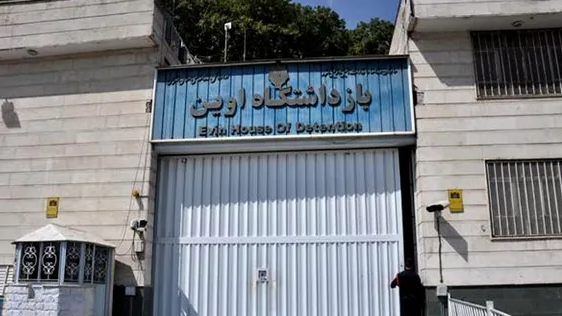
Faramarz Javidzad, an Iranian-American citizen, died in the notorious Evin Prison on Saturday as his physical health deteriorated due to a lack of medical attention.
Faramarz Javidzad, an Iranian-American citizen, died in the notorious Evin Prison on Saturday as his physical health deteriorated due to a lack of medical attention.
On Friday night, after several days of declining health, Javidzad was transferred to the prison clinic. However, after a medical examination, he was returned to his cell, as prison authorities prevented his transfer to a hospital, as reported by IranWire.
It remains unclear what he was convicted of, and whether the United States raised his case during recent negotiations for a prisoner exchange with Iran.
On Saturday, despite his blood pressure reaching a critical level, prison authorities continued to prevent his transfer to a hospital.
The 60-year-old had reportedly lived in the United States for two decades before returning to Iran a few years ago.
Since the establishment of the Islamic Republic in 1979, a significant number of prisoners have lost their lives due to a lack of access to proper medical care.

Although remarks by the defense ministry’s spokesman did not mention the two neighboring countries, currently perceived threats from Azerbaijani to invade southern Armenia bordering Iran is the only critical issue in the region.
“We have announced that we will not permit any border changes in the region. In some of our border points, they wanted to make alterations, but they did not dare and will not dare,” ministry’s spokesman Gen. Reza Talainik (Tala-ee-nik) was quoted as saying by Fars news website affiliated with the Revolutionary Guard (IRGC). He added that when Iran shouts borders should not change, it means it relies on certain bases of support, such as its military power.
After losing a war fought on Azerbaijani territory in 2020, Armenia has become vulnerable to a possible invasion in the south by its more powerful neighbor. In such a scenario, Iran will lose a safe land corridor to the north, through Georgia to Russia. Tehran has repeatedly warned it will not tolerate such a move by Azerbaijan and has sent additional forces to the border to make its point.

Earlier on Sunday, Gen. Kyumars Haydari, commander of the Iranian army’s ground forces told the local media that they have stationed ten brigades in critical border regions, including the area near Armenia and Azerbaijan.
Gen. Haydari did not clarify if these forces all belonged to Iran’s traditional army or also include unites from the Revolutionary Guard’s ground forces. He also did not provide a numerical estimate of the forces, but a brigade is usually around 3,000-4,000 troops. He said that these brigades are stationed in the northwest, west, southwest, and northeast to confront “enemies”. Iran has been projecting military power along its borders with Iraq to deter what it calls separatist Kurds using Iraqi territory as a base, and also against the Taliban in the east, in addition to Azerbaijan.
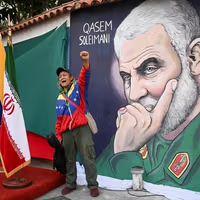
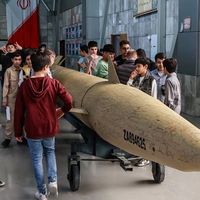
The defense ministry spokesman Talainik also spoke about Iran’s Qassem ballistic missile, calling it an “Israel-busting” weapon. The missile was first unveiled in July 2020 with a range of 1,400-1,800 kilometers. It is believed to be a newer version of the Fateh-100 missile. It is named after Qassem Soleimani, the Iranian regime’s operative in the Middle East who was killed in a targeted US air strike in Baghdad in January 2020.

Incidentally, Israel has been supplying weapons to Azerbaijan and the Islamic Republic has often voiced its dissatisfaction with Baku, accusing its neighbor of allowing Israelis to use its territory against Iran.
Talainik also claimed that “no equation in the Middle East is manageable without Iran's role, because of the country's defensive power.” However in the past three years two Persian Gulf Arab countries, the United Arab Emirates and Bahrain have made peace with Israel and Saudi Arabia is also moving toward that direction, despite Iran’s opposition.
The United States in July dispatched additional warplanes and naval forces to the region, warning Iran not to interfere with maritime traffic, after it stopped or harassed more than 15 commercial vessels in the past two years.


The hacker group Ghiyam ta Sarnegouni (Uprising till Overthrow) which is affiliated to the People's Mojahedin Khalq Organization (MEK) made the announcement Saturday, the first day of the new academic year in Iran and said it had acquired access to over 20,000 documents.
Some of the documents hackers have published on their Instagram and Telegram accounts are related to purging academics who are critical of the government or have supported the Women, Life, Freedom movement.
The purge has opened the way for hiring 15,000 pro-regime professors and other staff in universities. Authorities also plan to adopt new student selection procedures and expelling thousands of students who have been part of the protest movement. They have even greenlighted the acceptance of Iraq’s Shiite Hashd al-Shaabi militias and other proxies in Iranian universities.
The ministry’s public relations in a statement Saturday claimed “vigilant technical experts” had managed to repel the cyber-attack and shut down the ministry’s website temporarily to investigate the incident.
In the past year, MEK-affiliated hackers have targeted the portals of several other government agencies including Tehran Municipality, the state broadcasting corporation (IRIB), the Presidential Office, and the ministries of Foreign Affairs, Agriculture, and Islamic Guidance and published thousands of documents.

A "very confidential” document published by hackers this time reveals the proceedings of a Supreme Council of Cultural Revolution meeting including demographic data about last year’s nationwide protests based on data from intelligence agencies, including the Ministry of Intelligence and the Revolutionary Guards (IRGC) Intelligence Organization (SAS).
Dated October 5, 2022, approximately three weeks after the death of 22-year-old Mahsa Amini in custody sparked nationwide anti-government protests, the document emphasizes that 82 percent of detainees in the first two weeks of the protests were teenagers and young people under the age of thirty, with men comprising the majority at 88 percent of all detainees.
The document also states that authorities had no records related to 93 percent of detainees and that protesters promoted civil disobedience in places such as bazaars, metros and city buses. According to the same document, “hatred towards the Islamic Republic, hostility and civil disobedience” had been observed among protesters.
In a classified letter to President Ebrahim Raisi that hackers claim to have accessed, Higher Education Minister Mohammad-Ali Zolfigol says some university chancellors were reluctant to cooperate with security bodies in suppressing the students and that some academic officials who had signed statements against such measures had been fired.
Zolfigol said in the letter that Sharif University of Technology, one of the top universities in Iran, “had come completely under the control of rioters” and added that the National Security Council (NSC) and Supreme National Security Council (SNSC) officially demanded the chancellor of the university to be sacked.
Sharif University required “fundamental changes” without which it could not be controlled if there was more unrest in the future, the minister said in his letter to the President.
Students in at least 150 universities across Iran held protests during last year’s several-month-long unrest and in many cases were supported by their professors. Documents acquired by hackers from the IRGC-affiliated Fars News Agency in December indicated that at least 51% of the students at state universities had participated in Women, Life, Freedom protests.
The recent purge of academia in Iranian universities dubbed as ‘the second cultural revolution’ has shaken many Iranians who are already grappling with various pressures. The purge comes amid loss of hope in improvement of the country’s circumstances, including its economy, relations with the international community and removal of sanctions, as well as even relative social and political freedoms.