Iran Faces Internet Disruption Amid Mysterious Tremor In West
NetBlocks, a watchdog organization that monitors cybersecurity, has once again reported a disruption in Iran's internet service.

NetBlocks, a watchdog organization that monitors cybersecurity, has once again reported a disruption in Iran's internet service.
Network traffic data revealed a significant disruption in internet connectivity in Iran, marking the third such incident this month. According to NetBlocks, the disruption occurred at 1:00 AM local time and resulted in connectivity dropping to 82% of its usual levels.
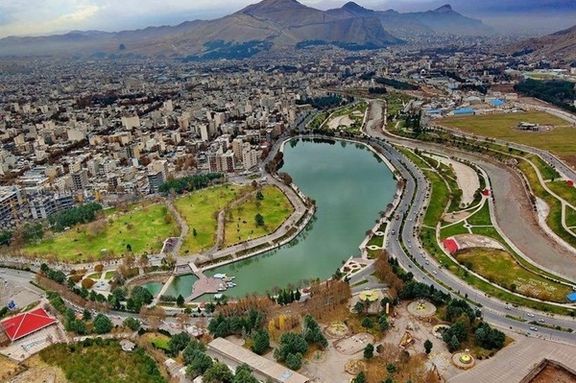
The development coincides with an unusual event in Khorramabad, western Iran, where a powerful tremor accompanied by a loud noise occurred on Monday night. Local authorities have been unable to identify the source of the disturbance, and Iranian media and officials have provided vague and contradictory statements about the incident. While there have been no reports of visible damage or civilian casualties, officials are conducting an investigation.
Markedly, there is a presence of an underground IRGC ballistic missile base near Khorramabad, a fact that has raised eyebrows among observers and independent media outside Iran.
Earlier this month, in the lead-up to the death anniversary of Mahsa Amini, Iran experienced a significant disruption to its internet services for two consecutive nights, with connectivity plummeting to 71% of its normal levels.
The incident highlights Iran's long-standing practice of imposing strict censorship on internet access, limiting citizens' access to information by blocking various foreign and domestic websites, including reputable news sources. However, the restrictions have been circumvented by the widespread use of Virtual Private Networks (VPNs) and anti-filtering software.

A powerful tremor accompanied by a loud noise shook the city of Khorramabad in western Iran on Monday night, as local officials say the source has not been identified.
Iranian media and officials are buzzing with vague and contradictory statements about the 'terrible sound,' which has apparently not resulted in any visible damage to urban areas or civilian casualties.
One thing which local and central officials emphasize is that no “earthquake or explosion” took place in the city, and they are investigating the incident.
According to Iranian media and residents commenting on social media, the incident occurred around 10PM local time on Monday, when people heard the loud sound and felt the ground was shaking. In the first few hours, some government media in Iran called the incident “an earthquake” and headlined their news, “Khorramabad shook.”
Tasnim news agency affiliated with the Revolutionary Guard (IRGC) wrote: "The intense jolts, accompanied by a terrifying sound, caused tremors in parts of Khorramabad city, instilling fear and disrupting the nighttime tranquility of the people." Tasnim added that residents first thought an earthquake had happened, but as the seismological center in Tehran did not register a tremor, they began speculating about an explosion. However, hours later, state official began denying any earthquake or explosion.
Observers and independent media outside Iran began reminding the public that there is a large underground IRGC ballistic missile base near Khorramabad. One Iranian military blogger in Europe posted on social media saying that the incident was “a successful Israeli operation,” without citing his sources.
Since July 2020, Israel has launched successful sabotage and drone attacks against sensitive military and industrial targets in Iran, including at least three major operations that inflicted heavy damage on nuclear installations.
In April 2021, as world power began negotiation with Iran in Vienna to revive the 2015 JCPOA nuclear agreement, a huge explosion hit the underground Natanz uranium enrichment site in central Iran. This was the second destructive incident in less than a year, which wiped out a significant part of enrichment machines called centrifuges.
The Islamic Republic blamed Israel for these attacks, while successive Israeli governments have remained silent and never accepted responsibility. However, they have repeatedly warned that Israel will lose all resources, including military attack to stop Iran from developing nuclear weapons.
Last week, another mysterious incident took place in northern Iran, when people in the city of Gorgan heard loud explosions and pieces of unidentified military objects fell on the city. Officials on that occasion also voiced contradictory statements. However, a deputy-governor in the province said that “a drone had crashed” and wounded two people.

Many had warned of a potential mass migration of Iranian elites due to the suppression of dissent and neglect of young Iranians' demands over the past year.
A recent photo that went viral on social media shows 13 students of the prestigious Sharif University at the Tehran International Airport before leaving the country for good. Sharif University is one of the best of its kind in Iran and many of its graduates have relocated to the United States to continue their studies.
During the Women, Life Freedom protests in October 2022, security forces violently attacked the university in downtown Tehran and injured and arrested several dozen students.
A report on Khabar Online website told the story of Sharif University students at the airport and quoted one of the students as saying that "at least 10 of them left Iran on that night." He said, "With the students who were there to see off their friends, the departure hall looked more like the Sharif University than the Imam Khomeini Airport."
The report added that up to 100 of the 120 students admitted to Sharif University last year have left Iran for good. The viral photo which was mainly posted by reformist politicians on X, Instagram and Telegram, and the comments made by social media users have created a wave of sad sentiments on social media.

The exact number of students who left the country that night is a matter of dispute, but there is no doubt that scores have left in the past few weeks.
Accounts by Sharif students indicated that many more of their classmates have already left or planning to leave. Mohammad, one of the students, told Khabar Online that when he entered the airport hall, it looked like the university's courtyard. Upon his arrival, Mohammad saw some 20 of his classmates as well as many graduates of other universities who were all waiting to depart and fly to a third country before the last leg of their travel to the United States. He said with a degree of certainty that at least 6 of those in the picture left that night.
Earlier, Shahin Akhundzadeh, a professor at the Tehran University's school of medicine told Khabar Online that at least 50 of the students that were admitted to that school in 2014, later left Iran for good. However, according to the report, there is no reliable official statistics about student migration.
Mohammad told Khabar Online that some of the student resolved to leave Iran after the security police locked them in the university last October and badly battered them. He said during the past years, some of the students left Iran with a clear intention to return after graduation, but their families encourage to stay abroad.
Earlier in September, Iran’s former President Hassan Rouhani criticized the harsh treatment of the elite, alleging that some officials are pleased that they are leaving the country. Rouhani added that an expatriate, apparently with high qualifications, who returned after this meeting with Iranian students in the United States in 2014 was arrested at the airport, presumably by security forces taking their orders from places other than his government.
Shahriyar Haydari, the deputy chairman of the parliament’s National Security and Foreign Policy Committee has said: “We would not be facing this level of emigration if effective action had been taken by the government,” adding that “Most of the emigrants are gifted and expert individuals.”
Meanwhile, Dr Saeid Moidfar, chairman of the Iranian Sociological Association, told the press early September that a new wave of emigration, sparked by the crackdown on last year's nationwide protests and a deep economic crisis, is reaching a critical point. Moidfar warned that Iran is now on the threshold of a very intense wave of emigration because those who want to leave believe that political and economic circumstances are not going to improve in Iran, the society’s values are degrading, and corruption and crime are on the rise.

A member of the Iranian parliament says the Expediency Council has exempted the executive and judicial branches from the transparency law.
The "Transparency of the Three Branches" draft law was presented by a group of parliament members in April 2022. After several debates between the parliament and the Guardian Council, the Expediency Council ultimately took responsibility for the final decision.
The Expediency Discernment Council is an administrative assembly appointed by the Supreme Leader with supervisory powers over all branches of the government. The Guardian Councilis 12-memberbody – half of whomwere directly appointed by Khamenei – that also has veto power over legislation passed by the parliament.
According to Abolfazl Torabi, the Expediency Council had previously exempted itself and the Supreme Supervisory Board from transparency, leaving only the legislative branch subject to it, which was already transparent.
He stated that the parliament's sessions are currently broadcast openly, and the people are informed of them. Additionally, 220 representatives have voluntarily declared their willingness for their votes to be transparent.
The Expediency Council, with opposition from President Ebrahim Raisi's administration and the judiciary to the transparency of their resolutions and documents, excluded these two branches from the transparency law.
In the parliament's draft, which was approved last year, the armed forces, the ministry of Intelligence, and the Atomic Energy Organization were also exempted from the law's jurisdiction.
In its annual report in February, Transparency International declared that Iran ranks 147th out of 180 countries in terms of corruption prevalence.

The spokesperson for Iran's Revolutionary Guards has threatened a vigorous response to counter the “hostile activities of the enemy in the media sphere.”
Ramezan Sharif called for launching an offensive against anti-regime media as the revolutionary tide continues to deepen and threaten the Islamic Republic's stability.
Iranian regime authorities, including commanders from the Revolutionary Guard, have frequently issued threats against media outlets operating abroad, such as Iran International.
During his address on Monday, Sharif alleged that media outlets globally are under the control of individuals who shape the narrative for their respective organizations while pursuing their own vested interests.
Last week, Iran's Intelligence Minister, Esmaeil Khatib, issued a stark warning to Persian-language media outlets operating outside Iran, asserting that support from other nations will not dissuade Tehran from pursuing "aggressive" actions against them.
The intelligence ministry had previously labeled Iran International employees as "enemies of the state," vowing punishment for those who allegedly serve foreign interests and betray their country.
The threats come amid widespread arrests of journalists in Iran, particularly during the "Women, Life, Freedom" protests, part of a harsh crackdown on dissent.
International human rights organizations consistently rank Iran among the world's foremost oppressors of journalists and free speech.

As the new academic year begins in Iran, reports confirm the detention of at least seven students across various cities as new rules come into effect over the likes of dress code and conduct.
There have been further instances of suspension and expulsion affecting both students and university professors.
According to reports from student media outlets, Sahar Salehian, a nursing student at Sanandaj University of Medical Sciences, was apprehended by Iranian security forces in Saqqez on Saturday.
The recent surge in student arrests began with the detention of Mahsa Saeidi, a PhD student at Yazd University, on September 11.
Ali Gholami, a student activist at the University of Science and Industry in Tehran, was also arrested three days later. The wave of detentions continued with the apprehension of Ali Rezvani, a student at Khajeh Nasir Toosi University in Tehran, Farhad Hosseini, a student of management at Azad University in Zanjan, Mohammad Mehdi Vosoughian, a student at Esfahan University of Medical Sciences, and Armita Pavir, a student at Azarbaijan Madani University.
Concurrently, there has been a widespread summons of students to disciplinary committees, resulting in suspension and expulsion orders, often justified under the pretext of "non-compliance with dress codes," new rules announced this week.
Furthermore, in recent cases of professor suspension and expulsion, Mostafa Azarakhshi, a faculty member of the theology and religious studies department at Baqiyatallah University of Medical Sciences in Tehran, faced suspension.
The decision has faced strong criticism from student unions, who view it as part of an ongoing effort to suppress and remove professors. They emphasize that this suspension follows the signing of a statement by one hundred professors demanding the release of detained students during the Women, Freedom, Life protests.