Iran Begins Legal Action Against 97 Suspects Involved In Soleimani Killing
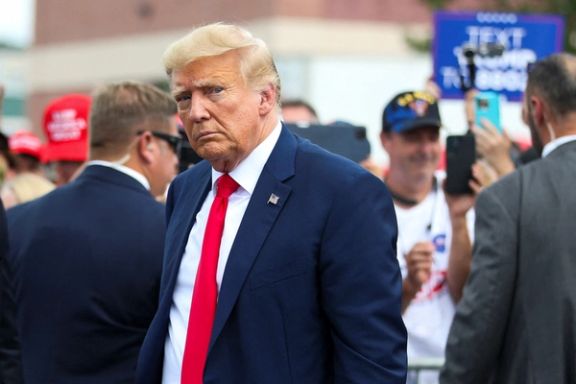
Iran's judiciary says it has identified 97 suspects in the assassination of IRGC Quds Force commander Qassem Soleimani, including former US President, Donald Trump.
Iran's judiciary says it has identified 97 suspects in the assassination of IRGC Quds Force commander Qassem Soleimani, including former US President, Donald Trump.
Mohammad Mosaddegh, Deputy Chief of Iran's Judiciary, announced on Wednesday that "legal measures have been initiated against 73 Americans" including Trump and former secretary of state, Mike Pompeo.
On January 3, 2020, President Donald Trump ordered a drone strike near Baghdad International Airport that resulted in the death of Soleimani. The US justified the action by claiming Soleimani was actively planning attacks against American diplomats and military personnel in Iraq and the broader region.
Mosaddegh called Soleimani's killing “a threat to Iran's national security” and claimed this week that “the judiciary has already dispatched 800 official letters to legal authorities and compiled 12,000 legal documents related to the matter".
Soleimani, who held a prominent role in Iran's military and intelligence operations abroad, oversaw the support and coordination of various militant proxy groups, including Lebanon's Hezbollah and Shiite militias in Iraq, which frequently targeted US forces.
Starting in January 2021, Tehran openly indicated its readiness to carry out deadly missions within the United States to seek revenge for the killing. It consistently singled out Trump, Pompeo, and former CENTCOM Commander General Kenneth McKenzie as top-priority targets for potential retaliation.
Mosaddegh claimed that Iran has independently sent requests for judicial cooperation to nine countries suspected of involvement in coordinating the terrorist attack, and they have received several responses.
Last year, President Ebrahim Raisi told the UN Donald Trump should face trial for his role in the Soleimani killing, and this year, continues to call for "vengeance" to the military man's killers.

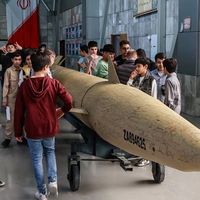
The network has facilitated shipments and financial transactions in support of the powerful Islamic Revolutionary Guards Corps' (IRGC) procurement of a critical component used in Iran's Shahed-136 drones, the Treasury Department said in a statement.
The move is the latest in a series of recent Western sanctions on Iran for supplying hundreds of kamikaze Shahed drones to Russia. Moscow has used the lethal weapon to attack civilian and infrastructure targets, as well as to overwhelm Ukrainian air defenses during large missile attacks.
Wednesday's action targets entities and individuals in Iran, China, Turkey and the United Arab Emirates (UAE), the department said.
"Iranian-made UAVs continue to be a key tool for Russia in its attacks in Ukraine, including those that terrorize Ukrainian citizens and attack its critical infrastructure," Treasury official Brian Nelson said in a statement. He added, “The United States, in coordination with our allies and partners, will persist in holding accountable those who contribute to Iran’s proliferation of its UAVs to Russia, its proxies in the Middle East, and other destabilizing actors.”
The statement said this network facilitated shipments and financial transactions in support of the Islamic Revolutionary Guard Corps Aerospace Force Self Sufficiency Jihad Organization’s (IRGC ASF SSJO) procurement of servomotors, a critical component used in Iran’s Shahed-series UAVs.
Iran-based Pishgam Electronic Safeh Company has been the main procurement vehicle for the regime and topped the list of those sanctioned Wednesday. HongKong Himark Electron Model Limited was one of the suppliers along with two Turkish companies.

The implications of the sanctions is that all properties and assets belonging to these entities and individuals involved within the United States will be blocked.
“In addition, persons that engage in certain transactions with the individuals or entities designated today may themselves be exposed to sanctions. Furthermore, any foreign financial institution that knowingly facilitates a significant transaction or provides significant financial services for any of the individuals or entities designated today pursuant to E.O. 13382 could be subject to U.S. sanctions, The Treasury’s statement said.
A confidential report from the Ukrainian government, revealed on Wednesday, exposed the utilization of European components in Iranian kamikaze drones used against Ukraine.
The document, shared with Western allies, advocates for the procurement of long-range missiles to target drone production facilities in Russia, Iran, and Syria, as reported by The Guardian on Wednesday.
The comprehensive 47-page report, delivered to G7 nations in August, discloses that over the past three months, more than 600 drone assaults leveraged unmanned aerial vehicles (UAVs) incorporating Western technology. Notably, the Shahed-131 and Shahed-136 drone models, containing 52 and 57 electrical components, respectively, sourced from Western companies, have been at the forefront.
Several reports in the past year have outlined also US and Canadian parts being used by Iran, including an engine originally developed by a Quebec-based company Bombardier Recreational Products (BRP).

Al-Ansari stressed Doha's openness to hosting any direct negotiations between Washington and Tehran on the Iranian nuclear file, in the next few weeks.
He elaborated that “After the recent agreement between the two countries, which was concluded with Qatari mediation (the release of American prisoners and the lifting of the freeze on Iranian funds in South Korea), international interest in the Iranian file increased, and the possibility of reaching new understandings about it that would ease tension in the region."
Western and Iranian media have been reporting secret indirect talks in recent months that aim to de-escalate tensions, with Iran slowing down its nuclear program in return for financial rewards by Washington, including lax sanctions enforcement.
Qatar is among the nations to step forward and offer to be the intermediary in talks to revive the nuclear deal known as the JCPOA, including Oman and according to Iran, also Japan.
However, the US has denied the claims, even suggesting that Iran is far from ready to come to the diplomatic table. During Tuesday's State Department press briefing, spokesman Matthew Miller said Iran must take de-escalatory steps if it wants to reduce tensions and create a space for diplomacy.

“We have not yet seen indications, despite some of these public comments, that Iran is serious about addressing the concerns that we have, the concerns that other countries have about its nuclear program,” Miller told reporters.
Referring to the decision this month to ban one third of the Atomic Energy Agency Inspectors from Iran, Miller said the regime is only undermining the IAEA’s ability to do its work.
“If Iran really is serious about taking de-escalatory steps, the first thing it could do would be to cooperate with the IAEA. We have not seen them fully do that,” he said.
On the topic of direct talks, Miller remained tight-lipped, saying that while the US is open to diplomacy, he was unwilling to talk about how that would transpire. It would first of all, be conditional on Iran’s taking de-escalatory steps such as allowing all necessary access to the IAEA’s team.
“I could give you a long list of things we would like Iran to take in terms of changed behavior, but I’m speaking specifically with respect to the nuclear program right now,” he said on Tuesday in Washington.
Iran's foreign ministry Tuesday dismissed reports suggesting direct negotiations with the United States over sanctions relief have been given the green light by the Supreme Leader.
A website in the UK had earlier claimed that Iran was planning to engage in direct talks with the US in Oman concerning its nuclear program, given the go-ahead by Iran's Supreme Leader, Ali Khamenei.
The Qatari foreign minister’s statement is questionable at best, not backed up by anything substantial from either the US or even Iran, which is always only too happy to portray itself as the pillar of diplomacy, as was seen most recently at the UN where President Ebrahim Raisi even denied the country’s nuclear ambitions in spite of plentiful evidence otherwise.
It perhaps suggests the nation which is now managing Iran’s $6bn freed up from South Korea as a result of a prisoner swap deal this month which saw five wrongfully imprisoned American-Iranians exchanged for five regime agents, is once again trying to position itself as the region’s ‘peacemaker’.
Qatar has a history of engaging with terror groups in the name of diplomacy, hosting both the Taliban and Hamas, while claiming to be acting as mediator. During the four-year blockade of Qatar by the Persian Gulf states, Qatar grew closer to Iran, and the two nations share the world’s largest gas field. During the recent World Cup 2022, dissidents were harassed in Qatar by regime agents openly operating on Qatari soil.
Meanwhile, as the expiration of the United Nations’ sanctions on Iran approaches next month, a bipartisan group of senators have written a joint letter asking the governments of the UK, France and Germany, known as the E3, to prevent the sanctions on Iran’s drone and missile program’s expiration.
The letter, addressed to the ambassadors of the three nations, signed by 31 lawmakers including members of the Senate Foreign Affairs Committee, thanked them for deciding to maintain their own sanctions beyond the deal’s expiry in October, but calling on them to help prevent the collapse of the sanctions.

The report, published in two versions simultaneously by Iran International and Semafor on Tuesday, depicts a close yet lopsided relationship between the Islamic Republic and three associates of Robert Malley, Biden’s special envoy on Iran, who’s been suspended and is under investigation by the FBI for his handling of classified documents.
Within hours of the report’s publication, several prominent members of the Congress had weighed in on the subject.
Ted Cruz, member of the Senate Foreign Relations Committee, called the revelations ‘indescribably troubling’ and asked for a “halt in secret Iran negotiations.”
“Americans have rightly been asking why the current administration is so friendly with the Iranian regime,” he said in a press release, “and why Biden administration officials have so single-mindedly enabled Iranian nuclear progress and terrorism. These reports and emails suggest a vast Iranian influence operation that goes to the very top of the administration.”

Jim Banks, the Republican congressman whose Iran-related MAHSA Act passed the House earlier this month, reposted the report on X: “When Republicans warned that the Biden admin’s desperate attempt to revive Obama’s failed nuclear deal was a gift for the Iranian regime we weren’t exaggerating…”
A series of emails by Iranian diplomats cited in the report reveal close cooperation and coordination between IR Foreign Ministry officials and individuals of Iranian origin who seem more than willing to be the regime’s eyes, ears and mouth on the international stage.
Senator Lindsey Graham also expressed his concern. "If the allegations in this story are remotely accurate, it would be stunning on so many levels."
Republican Senator Tom Cotton wrote on X, "Senior officials in both the Biden and Obama administrations were likely party to an Iranian-backed PR campaign."

“As an Iranian, based on my national and patriotic duty, I have not hesitated to help you in any way,” reads an email from Ali Vaez of the Crisis Group to Javad Zarif, the then Foreign Minister of the Islamic Republic, “from proposing to Your Excellency a public campaign against the notion of breakout, to assisting your team in preparing reports on practical needs of Iran.”
Vaez challenged on Tuesday the evidence that Iran’s Foreign Ministry oversaw the initiative.
“The Iranian correspondence on the IEI is a one-sided and self-congratulatory load of nonsense,” he said in a long thread on X, formerly called Twitter. He added that he shared a draft of one of his opinion pieces with Iranian officials before publication, as a courtesy. He also said Tehran had accused him of being too harsh to their position.
Another ‘expert’, Ariane Tabatabaei, reports on two invitations from Israel and Saudi Arabia and seeks advice from IR Foreign Ministry officials whether she should accept those.
Tabatabaei was another close associate of Malley, who served on his Iran nuclear negotiating team in 2021. She is currently the chief of staff for the Assistant Secretary of Defense for Special Operations, a position that requires a US government security clearance.
Sen. Cruz referred to Tabatabai without mentioning her name, calling for those linked to these emails to “have their security clearances pulled until these allegations are fully resolved and accountability is imposed.”
Perhaps more worrying for Tabatabaei, the chairmen of the House Armed Services Committee and House Subcommittee on Intelligence and Special Operations, jointly wrote Defense Secretary Lloyd Austin, asking for her security clearance to be reviewed.
“Was the Department aware of Ms. Tabatabai’s participation in Iranian government-sponsored influence networks, such as the Iran Experts Initiative?” Reps. Mike Rogers and Jack Bergman asked. They gave the Pentagon one week to answer this and six other questions.
Another question reads: “Are you aware of any instances of Ms. Tabatabai communicating with the Iranian regime, either in her official capacity or unofficially? Are you aware of any communications Ms. Tabatabai had with the Iranian regime prior to her employment?”
As a high-ranking official in the Pentagon, Tabatabai’s case seems to be the most serious of all names mentioned in the exposé. The letter to the Defense Secretary all but guarantees more headache for the Biden administration –already under pressure to provide clarity on Robert Mally’s suspension.
President Biden’s Iran policy has been heavily criticized in recent months, especially after he agreed to unblock $6 billion of Iran’s frozen oil revenues to bring back five Iranian-Americans held hostage by the Islamic Republic.
Many have berated his administration’s approach towards the regime in Iran, which now seems more emboldened than ever.
The revelations seem to have shed some light on the hows and whys of the decision-making in the Biden’s administration. The whole saga is “unbelievable. And yet, totally believable,” as Ilan Berman, Senior VP of the American Foreign Policy Council, says.
The revelations appear to provide insight into the decision-making process within the Biden administration that has led to so much criticism. The entire saga is described as "unbelievable, yet entirely plausible," according to Ilan Berman, Senior VP of the American Foreign Policy Council.