UK Minister Welcomes Iran International’s Reopening In London
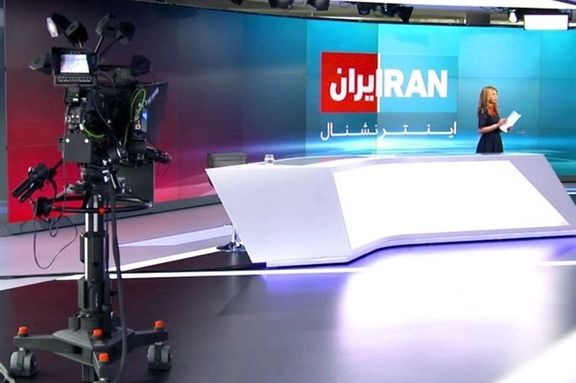
Tom Tugendhat, UK's security minister and an MP, welcomed the reopening of Iran International's office in London, after threats had led to a temporary relocation earlier this year.

Tom Tugendhat, UK's security minister and an MP, welcomed the reopening of Iran International's office in London, after threats had led to a temporary relocation earlier this year.
In a post on social media platform X in Persian, Tugendhat addressed Iran International saying, "Welcome back."
Following security threats emanating from Iranian agents against Iran International last year, Tugendhat was among British officials who provided extensive support to the network.
After the closure of Iran International's London office, Tugendhat strongly condemned the Iranian government's threats against the network in a parliamentary session, stating that the UK would continue to support the network and provide a secure space for its activities.
The Deputy Security Minister of the United Kingdom, in another response to threats against Iran International's staff, addressed Persian-language journalists on Twitter in February, saying, "Welcome to Britain; we will keep you safe."
Iran International resumed its broadcasts from its new studio in London on Monday after moving all broadcast operation to Washington DC.
Mahmoud Enayat, the General Manager of Iran International TV, stated in a message celebrating the resumption of the network's activities from its new building in London: "Britain is the home of free speech. The resumption of our programs from this country is evidence that we will not abandon independent and uncensored journalism to the people of Iran."
Previously, when Iran International reported credible threats against its journalists by the Islamic Revolutionary Guard Corps in November, James Cleverly, the UK's Foreign Secretary, summoned Mehdi Hosseini Matin, Iran's Charge d'Affaires in London.

The Jordanian army on Tuesday downed two drones carrying drugs from Syria in the latest incident raising concerns over increased smuggling by Iran-backed militias.
The army statement said the drones had crossed into its territory and their hauls of crystal methamphetamine were seized. It warned it would act forcefully to prevent any attempt to destabilize the country's security.
Jordanian officials blame Iranian-backed militias that hold sway in southern Syria. In August, Jordan shot down drones on three occasion.
Iran’s ally Syria is accused by Arab governments and the West of producing the highly addictive and lucrative amphetamine captagon and other drugs, and organizing its smuggling into the Gulf, with Jordan a main transit route.
President Bashar al-Assad's government denies allegations of Syria's involvement in drug-making and smuggling, as well as any complicity by Iranian-backed militias protected by units within the Syrian army and security forces.
Iran says the allegations are part of a Western plot against the country.
Jordanian officials say talks with senior Syrian officials to curb Iranian-run smuggling networks have reached a dead end.
Jordan's King Abdullah said last week that Iran and elements within the Syrian government were benefiting from the drug trade, adding he was not sure if Assad was fully in charge of the country.
"We are fighting every single day on our border to stop massive amounts of drugs coming into our country," Abdullah said.
"And this is a major issue that all the parties, including some people inside the (Syrian) regime, and the Iranians and their proxies, are all taking advantage of," the monarch was quoted as saying at the Middle East Global Summit conference in New York.
General Mark Milley, the chairman of the US Joint Chiefs of Staff has stated that Washington was working closely with its ally to provide equipment, training and advice to deal with the growing drug trafficking threat.
With reporting by Reuters

Politicians in Iran are engaged in speculation regarding their odds and opportunities as they look ahead to the country's parliamentary election in March 2024.
Amid their political calculations, all are more or less aware that the true course of events leading to the election depends solely on Supreme Leader Ali Khamenei's decision. The aging ruler can prevent anyone’s candidacy through a no0n-democratic and opaque screening process that disqualified hundreds in the 2020 and 2021 elections.
A prominent conservative figure in Iran suggested that former President Hassan Rouhani and former Parliamentary Speaker Ali Larijani are likely to present a joint list of candidates for the upcoming Majles election.
Expediency Council member Mohammad-Reza Bahonar made this statement during an interview with the IRGC-linked Tasnim News Agency on Saturday. However, Bahonar added that Larijani is no godfather for any political group in Iran.
According to Tasnim, Bahonar who has been absent from the parliament for eight years, has decided to run in the March election. Bahonar has been a member of the parliament for several terms and was the deputy speaker three times. He leads his own political group, “The Followers of the Imam [Rouhollah Khomeini].”

Bahonar denied that he had been disqualified in the previous round of Majles election, and criticized those who would run in every election until death prevents them from running. He emphasized that in this round of the election, a high turnout is far more important than the election itself.
He mentioned that he had encouraged many reformist figures to participate in the early registration and announce their candidacy. However, he clarified that he contacted only the reformists who do not believe in regime change. Nonetheless Bahonar said that to the best of his knowledge no prominent reformist figures have registered their candidacy, but he mentioned that several moderate conservative figures, such as former Vice President Mohammad Bagher Nobakht have already registered their candidacy at the Interior Ministry.
In the interview, he expressed concerns about discord among conservatives ahead of the election. Bahonar pointed out that the ultraconservative Paydari Party does not believe in an accord among conservatives and will present its own separate list of candidates.
Bahonar also suggested that the Islamic Republic should allow lawful gatherings to prevent protests. He further mentioned that the nationwide protests in 2022 would have occurred anyway, but Mahsa Amini's death in Morality Police custody triggered an early protest. However, he characterized the protests as "riots."
In another development, reformist figure Mohammad Reza Khabbaz said in an interview with Khabar Online that Iran's reformists can send at least 30 reformist figures to the next parliament. However, he said that this will be best feasible if reformists form an alliance with moderate conservatives close to Rouhani and Larijani.
Khabbaz added that reformists are unlikely to secure parliamentary seats if only 8 to 10 percent of voters turn out at the polls in Tehran. Khabbaz, a member of the reformist National Trust Party and a former Governor General of Khorasan Province, has already registered his candidacy with the Interior Ministry.
Addressing rumors of reformists boycotting the elections, Khabbaz stated that five reformist political parties—the National Trust Party, the Executives of Construction Party, Neda-ye Iranian Party, the Labor Party, and the Workers House—have encouraged their members to register their candidacy if they believe they have the potential to serve in the next parliament. However, 25 other reformist parties have announced that they will not field any candidates in the upcoming election.
Khabbaz noted that there are currently four or five reformist members in the parliament, including Masoud Pezeshkian, a lawmaker from Tabriz.

Reactions to Iran International’s report revealing a Tehran-linked network of individuals influencing US officials are bubbling up with calls for accountability.
During a press briefing on Tuesday, US Department of State Spokesman Matthew Miller tried to reduce the problem to only one of the aides of Robert Malley, President Joe Biden's former special envoy for Iran. Malley has been put on unpaid leave since June and his security credentials suspended in an investigation not yet fully explained.
"From my reading of it (the report), it looked like an account of things that happened almost a decade ago, most of which involve people that are not currently working for the government,” he said, tacitly acknowledging the existence of an Iranian lobby in US policy centers.
“The one current US government official that I did see mentioned in that story has written critically of Iran on a number of occasions before joining the government," Miller said without naming her. Ariane Tabatabai is a senior policy advisor to the Department of Defense.
In a joint investigative project with Semafor, Iran International’s Bozorgmehr Sharafedin combed through thousands of emails from Iranian diplomats revealing an Islamic Republic network of academics and journalists – under the aegis of the Iran Experts Initiative (IEI) -- established by the Iranian foreign ministry in 2014 to extend Tehran's soft power. The IEI members simultaneously worked for top Western think tanks and gave advice to the US and Europe. At least three aides of Robert Malley were part of the esoteric clan.
Miller added that she “underwent a thorough background investigation to attain a security clearance before joining the State Department. She now works at the defense department.”
Asked if the revelations in the report were related to the current FBI investigation of Malley, Miller said, “I am reluctant to say anything at all about the investigation.”
In response to a question about how he would explain that these individuals were seeking directions and advice directly from Tehran to influence the US government, Miller said he does not know the context and repeated the same line that “This happened almost a decade ago.”
Daniel Roth from the United Against Nuclear Iran group said on X that “Miller doesn't 'know the entire context' but is confident there's nothing to see here,” pointing to revelations in the detailed report.
Another UANI fellow Jason Brodsky said that “dismissing the story due to the time period in question and the fact that some do not work in the US government is an inadequate response.” “Some who do not hold USG jobs and don't have security clearances are regularly quoted in media as being briefed on ongoing negotiations with Iran's regime," he underlined.
Andrew Ghalili, with the National Union for Democracy in Iran, called Miller’s response “irresponsible,” and called for clarification after some investigations.
Just hours after the publication of the report, the Chairs of the House Armed Services Committee Mike Rogers (R-AL) and its Subcommittee on Intelligence (R-MI) wrote to US Secretary of Defense Lloyd Austin demanding answers on why DoD’s Chief of Staff for Special Operations was a part of the Iranian FM’s “Iran Experts Initiative”.
Later on Tuesday, Senator Ted Cruz (R-TX) released a statement, calling for a halt to secret negotiations with Iran seeing the investigative report. “These reports and the emails they expose are indescribably troubling,” adding that “They have agreed to secret nuclear side deals that are being kept from Congress, including ransom deals worth additional billions of dollars,” he said.

Iran's foreign ministry has dismissed reports suggesting direct negotiations with the United States over sanctions relief have been given the green light by the Supreme Leader.
Amwaj Media, based in the UK, claimed that Iran was planning to engage in direct talks with the US in Oman concerning its nuclear program, given the go-ahead by Iran's Supreme Leader, Ali Khamenei.
However, the foreign ministry called the claims "media hype and political theatrics, which are usually employed for political manipulation".
The UK report also claimed that Ali Baqeri-Kani, the chief nuclear negotiator, is prepared to meet with Brett McGurk, the White House Coordinator for the Middle East and North Africa, in Oman within the coming weeks.
It was suggested that the subsequent step would involve a meeting between Iran and the five permanent members of the UN Security Council (Britain, France, China, Russia, and the US) along with Germany.
There is speculation that if such a gathering occurs, it could occur after 'Transition Day' under the Joint Comprehensive Plan of Action (JCPOA), specifically on October 18.
Vienna talks, that began in April 2021 as an attempt to salvage the nuclear agreement, encountered obstacles and stalled last August.
US officials have consistently asserted that their attention has shifted away from the JCPOA negotiations. Instead, Washington's primary focus is on the Islamic Republic's alleged oppression of its citizens and its military assistance to Russia during the Ukraine invasion.

Iranian children are being forced out of school and into the workplace as families struggle to make ends meet in the country's worst economic crisis in decades.
Bahram Zonoubi Tabar, the head of the Labor Coordination Council in Fars Province, said that the escalating inflation rate and the steep costs of essential goods are causing significant hardships meaning children are increasingly being forced into the workplace.
Recently, Iran's Parliament Research Center released a report indicating a concerning surge in the number of working children. The report revealed that 15% of school age children are now working, depriving them of crucial educational prospects.
Tabar said, "With the commencement of the school year, numerous workers are grappling with difficulties enrolling their children," adding that the country's 100% increase in commodity prices within a year, compared to the annual wage increments of around 20% for workers, has made conditions unbearable for large numbers of Iranian families. Even basic necessities such as chicken and meat are becoming unaffordable for many.
While the precise number of working children in Iran remains undisclosed, the Ministry of Labor reported in 2017 that out of the country's nine million children, 499,000 were categorized as "active," signifying that nearly half a million Iranian children were either employed or actively seeking work. The number is believed to be far higher as global sanctions continue to wreak financial havoc on the country.


Tweet unavailable