Iran Deploys Forces To Zahedan Ahead Of Bloody Friday Anniversary
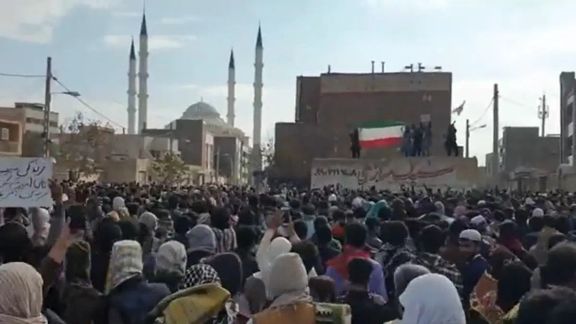
The Iranian regime has deployed a significant number of military forces to Zahedan in the southeast of the country ahead of the anniversary of Bloody Friday.
The Iranian regime has deployed a significant number of military forces to Zahedan in the southeast of the country ahead of the anniversary of Bloody Friday.
The Bloody Friday massacre in Zahedan, the capital of Sistan and Baluchestan Province, last September, saw security forces kill at least 93 protesters with dozens more injured.
Zahedan is one of the few Sunni-majority cities in predominantly Shiite Iran.
According to Halvash, the deployment of military personnel and convoys of vehicles saw a significant increase, particularly on Wednesday.
Halvash stated, "Dozens of military vehicles have entered the cities of Baluchestan from the provinces of Kerman, Hormozgan, and South Khorasan since Monday."
Over the past year, Zahedan has been the site of weekly protests against the regime, often occurring on Fridays.
Mowlavi Abdolhamid, the Sunni leader of Zahedan known for his outspoken criticism of the regime, addressed the death of Mahsa Amini during his Friday sermons.
Mahsa Amini's tragic death on September 16th last year at the hands of the morality police triggered months of anti-government protests, representing one of the most significant challenges to the Islamic regime since its establishment in 1979.
In recent weeks, the regime has intensified its efforts to quell dissent as part of a broader campaign to discourage protests. This has led to the arrest of dozens of individuals in the past week. Heavily armed military forces have been deployed in restive regions, and anti-riot police forces have become increasingly visible on the streets of major cities.


In recent weeks, videos of large numbers of Afghans passing Iran’s eastern borders have surfaced, adding to speculation about the authorities’ intent to increase the populations of immigrants from Afghanistan in a bid to boost the shrinking population and bolster regime support via an elaborate incentive scheme.
There are multiple estimates regarding the size of the Afghan diaspora population in Iran, but precise numbers are scarce due to Afghans' reluctance to participate in official counts and registrations, stemming from concerns about potential deportation and other repercussions. Most are economic migrants, hoping to earn money to send back to families in Afghanistan in a collapsing economy, while filling jobs once done by the huge swathes of Iranians fleeing the regime.
On Wednesday, lawmaker Mohsen Pirhadi stated, "The matter of Afghan migration to Iran should not be exclusively seen through a negative or problematic lens, nor should it be regarded as an undesirable social phenomenon."
A monthly magazine in Tehran recently published an article suggesting that Afghan migrants are considering running for seats in the Iranian parliament. The magazine argued that "given their growing population, Afghans believe they should be entitled to a share of rights and privileges in this country."

Recently, Iran's education minister made an unsupported claim that 600,000 “foreign” students are enrolled in Iranian schools. Iranian authorities and some media usually refer to Afghan immigrants and refugees as “foreign nationals.” Rezamorad Sahraei’s remarks have triggered various speculations about the Afghan population, ranging between five and 15 million.
Another statistic causing concern among Iranians is the illegal arrival of approximately 10,000 Afghans to the country per day. Earlier this month, the conservative Jomhuri Eslami newspaper reported that unofficial statistics indicate that last fall out of 300 babies born at the hospital of Kavar, a small town near Shiraz, capital of southern Fars province, 297 belonged to Afghan families. “Security officials must be concerned that the presence of so many foreign nationals will entail many threats [to national security],” Jomhuri Eslami wrote. The media outlet stated that the population of Afghans in Iran is eight million.
According to the latest figures communicated by the Government of Iran to the UN's refugee commission (UNHCR), 762,000 refugees live in Iran, of which 750,000 are Afghans and 12,000 are Iraqis. Around 586,000 Afghan passport holders with Iranian visas also live in Iran. The UNHCR claims that in 2022, the government of Iran undertook a headcount of all undocumented Afghan nationals in the country, including those who newly arrived following the Taliban takeover in 2021, through which some 2.6 million Afghans were registered. According to official figures from Iran, at least 500,000 undocumented Afghans did not participate in the headcount.
In April 2021, Foreign Minister Hossein Amir-Abdollahian said one million more Afghans had entered Iran since the Taliban took power in August the previous year, bringing Iran’s official number of refugees and economic migrants to five million.
In a commentary in July, Aftab News, a website close to former President Hassan Rouhani and the moderate conservative Moderation and Development Party, warned that “the massive increase in the number of Afghans” is the result of authorities' active policy to encourage the growth of the Afghan population including allowing them the right to buy property and access to services such as education and healthcare.
Aftab News alleged that factors such as a lack of control at eastern borders of the country, issuing thousands of tourist visas daily when applicants do not intend to return to their home country, automatic renewal of tourist, pilgrimage and other types of visas, elimination or reduction of cash fines for illegal entry and stay, indicate “targeted planning” by the authorities.
Reformist website Ensaf News has published several reports about the Afghan colonies in Iran during the past few months, revealing details about their lives in southern Tehran. The website quoted journalist Hadi Kasaizadeh as saying, "These individuals have their own judges, prosecutors, and investigators; when an Afghan commits a crime, they try and punish them within their own system.” He specifically studied a colony of Afghans in Kahrizak district, in the south of Tehran province, relating the stories of how about 15 to 30 Afghans rent an apartment there and live as a commune. "If Afghans residing in Iran decide to revolt, our work is done," Kasaizadeh claims.
Several hardline media, including those affiliated with the Revolutionary Guards, openly promote acceptance of more Afghans in Iran to increase the country’s population as a solution to the falling birth rate among Iranians and the rising trend of emigration in society. Iran's population growth rate has dropped to around 0.7 percent in the past few years, while the zeitgeist of the country points to a mass migration of Iranian elites due to the suppression of dissent and neglect of young Iranians' demands.

A deputy of the Iranian president’s special representative for Afghanistan rejected reports of lax enforcement of border security earlier this week, denying claims the country plans to increase the number of Afghan refugees. Meysam Mehdipour also called for coordination among different relevant bodies to decide whether the issue is “a threat or an opportunity.”
Iranian officials are divided about how to deal with the growing population of illegal Afghan immigrants. Iranian lawmaker Hassan Hemmati, a member of the National Security Committee of the parliament, warned of the possible rise of crime and worsening unemployment unless there is a control over the issue. He argued that as so many are not registered, it is more difficult to pursue them if they engage in criminal activities.
“I am opposed to the entry of unauthorized foreigners into the country, and this issue is more commonly discussed in relation to unauthorized Afghan nationals," he said, noting that a significant number of Afghans entered Iran illegally, especially after the rise of the Taliban and ISIS in Afghanistan. Hemmati said that the “presence of unauthorized foreigners could potentially pose significant problems for our country, such as the alteration of the [social] fabric and identity of regions.”
Supreme Leader Ali Khamenei has repeatedly stressed that the country’s population should rise to at least 150 million, presumably to strengthen the Shiite-ruled Muslim state. The Islamic Republic may eye accepting more Afghan Hazaras who are Shiites like Iranians, but if more Sunnis come to Iran, their population may sway the absolute majority of Shiites in the country, where Sunni Muslims constitute approximately 10 percent of its nearly 88-million population. Hazaras make up the biggest ethnic group among Afghan immigrants to Iran followed by Sunni Tajiks, Pashtuns and Uzbeks.