Handwritten Notes Reveal Torture In Iranian Prisons

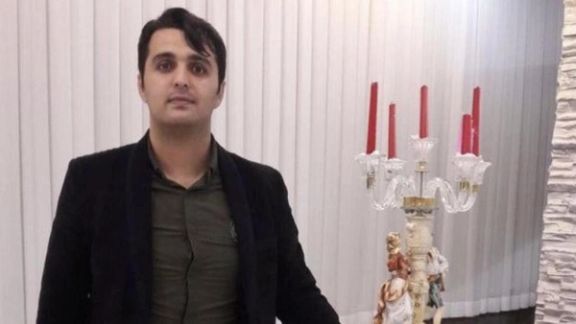
Handwritten notes from Javad Rouhi, who died in Nowshahr prison due to medical neglect, show the brutal torture he endured in the hands of state security.

Handwritten notes from Javad Rouhi, who died in Nowshahr prison due to medical neglect, show the brutal torture he endured in the hands of state security.
Atena Daemi, a human rights activist, has since his recent death, made the notes public, drawing attention to the dire plight of inmates in Iran's penitentiaries.
Rouhi, who was apprehended during the nationwide protests, died under suspicious circumstances while in custody on August 31. He had been sentenced to death alongside two other teenagers, on charges of allegedly setting fire to a police station.
The notes written by Rouhi reveal that during his 44 days of incarceration at the Intelligence Department of Mazandaran Province facility, he was subjected to repeated instances of interrogation torture including electric shock and beatings. In one incident, his feet were beaten for three consecutive nights, leading to paralysis and numbness in his right foot.
Rouhi emphasized that all his confessions regarding allegations such as "burning the Quran, insulting sanctities, and damaging government properties" were extracted under duress and the looming threat to his life.
On August 31, the Mizan News Agency, the judiciary's official media outlet, reported his transfer to a hospital due to a "seizure" within Nowshahr Prison, where he ultimately died.
In response to the tragic event, a multitude of users have labeled his suspicious death as a "state murder."

Phrases like ‘an eye for freedom' have become synonymous with the protesters who since last year lost eyes to shotgun pellets or rubber bullets.
Blinding protesters since last year’s Woman, Life, Freedom uprising, has become a nationwide phenomena, a state-sanctioned tactic to suppress those who dare to step out and defy the regime.
Security forces resorted to the same brutal technique to quell segments of the anti-regime protest rallies in Iran in November 2019. However, it seems that targeting the demonstrators’ eyes was employed in a more systematic manner as a strategy for suppressing the mass rallies which followed the death in morality police custody of Mahsa Amini.
On November 25, 2022, a letter issued by some 140 ophthalmologists and addressed to the head of the Iranian Ophthalmology Association, warned that numerous protesters had been taken to medical centres hit by rubber bullets and metal pellets as well as paintball bullets in their eyes, leading to the loss of eyesight in one or both eyes.
Referring to multiple cases of protesters sustaining injuries in the face and eyes, the Norwegian-based NGO “Iran Human Rights” announced on February 4 that such actions by regime agents had been carried out “intentionally and systematically”.
The precise number of protesters who suffered eye injuries during the regime crackdown remains uncertain, but the New York Times reported in November that at least 580 protesters had sustained serious eye wounds, citing ophthalmologists of three hospitals in the capital Tehran, and several doctors in Kurdistan province.
Based on media reports, in some cases, Iranian regime security forces obstructed surgeons from completing surgery on the injured demonstrators or pressured them to discharge patients before they had fully recovered.
Mersedeh Shahinkar was among the first individuals who openly talked about what had befallen her on her Instagram account.
On October 15, she lost an eye after being shot by Iranian security forces after she and her mother joined the protest on Sattar Khan Avenue in the western part of the capital. The impact of the incident had such a profound effect on her and her family’s lives, she has now been forced into exile.
She is not alone. Others forced into exile include Raheleh Amiri, Mersedeh Shahinkar, and Elaheh Tavakolian, who have all left Iran for foreign countries, ordinary citizens whose lives and worlds changed dramatically in a matter of a few seconds and plunged into darkness.
The protesters who have endured traumatic eye injuries come from all walks of life, encompassing workers, students and teachers, athletes, coaches, and artists.
Kowsar Eftekhari, a theatre actress, continues to defy compulsory hijab. Recent photos depicting her walking in public without a hijab have garnered considerable appreciation and attention from users on Instagram and X. The Iranian regime has brought charges against her for her acts of defiance, and she is expected to stand trial for the alleged offences.
According to reports, in the past several months, at least seven protesters with eye injuries have been detained and some of them were subsequently released on bail. The actual number of the detainees is likely higher. However, some of them are reluctant for this issue to be raised in the media, while others have received such petrifying threats that they refrain from updating their social media accounts and posting new content regarding their situation.
Once again, the regime has not only displayed zero tolerance towards the bereaved families of the protest victims who are seeking justice for their lost loved ones, but it has failed to give the slightest chance to those who have endured permanent injures to speak up against the injustices they have suffered and to demand accountability.
Asal Jazideh, just 18-years-old, recently published the painful account of the day she got injured. "There has not been a day when I have not hidden the left side of my face beneath my hair. But I have no regrets for what I did. I believe in the ‘Woman, Life, Freedom’ slogan, in the people and in this revolution... in the hope of achieving freedom and the triumph of light over darkness."
Like many, they wear their injuries as a mark of defiance, to shame the regime’s brutality while they wear their courage with pride. Raheleh Amiri, like Jazideh, has openly said on her Instagram account she has no regrets for protesting, in spite of the devastating injuries she will now suffer for the rest of her life. She even said that if given the chance to turn back time, she would make the same choice again.
A young woman, whose eye was shot in Tehran, told Iran International of the harassment she has since suffered from state security. Speaking on condition of anonymity, she told of the ordeal when after posting a photo of her lost eye and explaining what happened, intelligence agents came to her home and forced her into silence, warned against filing a complaint or speaking out about her injury.
"I do not regret taking part in the protests because it was my right. However, every day I wish it had been my hand or my foot that was injured, not my eye… perhaps I might change my mind at some point in the future,” she said.
For some, their new found darkness goes far beyond their vision, seeping into their mental wellbeing and even bringing feelings of regret. A young victim in his 20s, however, does not feel the same way.
Speaking to Iran International on condition of anonymity, the young man from the north of Iran, said: "I paid a heavy price, one of my eyes, it is not something trivial. Now I am under tremendous psychological pressure to state that it was worth it. But in reality, it was not, especially since we did not emerge victorious, and the regime did not fall. Even if the Iranian regime were to collapse, I wish I could have witnessed the beautiful day of freedom with both eyes.”
(This is an article by Maryam Moqaddam and Masoud Kazemi, journalists at Iran International)
The Iranian regime has deployed a significant number of military forces to Zahedan in the southeast of the country ahead of the anniversary of Bloody Friday.
The Bloody Friday massacre in Zahedan, the capital of Sistan and Baluchestan Province, last September, saw security forces kill at least 93 protesters with dozens more injured.
Zahedan is one of the few Sunni-majority cities in predominantly Shiite Iran.
According to Halvash, the deployment of military personnel and convoys of vehicles saw a significant increase, particularly on Wednesday.
Halvash stated, "Dozens of military vehicles have entered the cities of Baluchestan from the provinces of Kerman, Hormozgan, and South Khorasan since Monday."
Over the past year, Zahedan has been the site of weekly protests against the regime, often occurring on Fridays.
Mowlavi Abdolhamid, the Sunni leader of Zahedan known for his outspoken criticism of the regime, addressed the death of Mahsa Amini during his Friday sermons.
Mahsa Amini's tragic death on September 16th last year at the hands of the morality police triggered months of anti-government protests, representing one of the most significant challenges to the Islamic regime since its establishment in 1979.
In recent weeks, the regime has intensified its efforts to quell dissent as part of a broader campaign to discourage protests. This has led to the arrest of dozens of individuals in the past week. Heavily armed military forces have been deployed in restive regions, and anti-riot police forces have become increasingly visible on the streets of major cities.

Makeup, tattoos, and the wearing of high-heeled shoes and boots have been officially banned by Allameh Tabatabai University in Tehran.
It is the latest institution in the country to adhere to new rules restricting students as the new academic year begins. The university's regulations prohibit the wearing of short scarves, shawls, and hats without veils for students.
The university has made formal the new regulations, including banning “unconventional jewelry in body parts such as the nose, tongue, lips, and eyebrows is strictly forbidden.” It also states that students are not permitted to wear “tunics, form-fitting attire, see-through clothing, support undergarments, ripped clothing.”
A warning has also been issued, stating that individuals failing to comply with the regulations will face disciplinary actions.
During the Women's Life Freedom movement, universities played a significant role as centers of protest. In addition to extensive student demonstrations, many students opted not to adhere to mandatory hijab rules on campus. The protests were met with severe suppression, including physical violence against the students, resulting in harsh penalties for many including campus bans.

The lawyer for the family of a young man killed during the nationwide protests in Iran says he has the names of the killers.
Babak Eslami Farsani, stated that he and Mehrshad Shahidi-Nejad’s family have a list of individuals accused of killing him on the street.
On Wednesday, Farsani shared a medical report and the document of Shahidi-Nejad's passing on the X social media platform.
Farsani further indicated that he has not been granted access to the case thus far, and on each occasion when access has been promised, the rights of his clients have been violated.
In his Wednesday post, the lawyer mentioned that the legal autopsy had labeled the cause of Mehrshad Shahidi's death as "unknown". He described this as an "obvious administrative violation by the authorities."
To date, judicial and security authorities in the Islamic Republic have abstained from providing any explanation to the families of slain protesters regarding their responsibility for the shootings during the "Women, Life, Freedom" protests.
According to Hengaw Human Rights Organization, from March 2023 until early September, at least 70 family members of protesters have been detained by security agencies in various cities across Iran.

Four men have been sentenced to death convicted of being in a counterfeit alcohol network which led to the deaths of 17 Iranian citizens.
Masoud Setayeshi, Iran's judiciary spokesperson, revealed details of the wide scale operation on Tuesday, the network's distribution having led to the poisoning, blindness, and disability in 191 other Iranians.
Eleven defendants were charged with "corruption on earth" for distributing toxic and hazardous methanol-laced substances, a charge which often carries the death penalty, though only four were sentenced to death. Others in the gang were charged with one to five year prison terms.
For decades, Iran has grappled with alcohol poisoning due to the consumption of counterfeit alcoholic beverages, resulting in fatalities, blindness, and severe injuries. Despite the Iranian regime's strict ban on alcohol, a recent survey by Iran Open Data revealed that half of all adults continue to regularly consume alcohol, often resorting to homemade beverages to evade the prohibition.
In recent months, Iranian cities have witnessed a concerning surge in alcohol poisoning cases, leading to hospitalizations and deaths, as reported by local news outlets.
A 2018 report by the World Health Organization (WHO) ranked Iran ninth out of 189 countries in terms of alcohol consumption per capita, underscoring the persistence of alcohol consumption despite the government's ban.