Iraq: Kurdish Parties Opposed To Iran Evacuated From Border Region
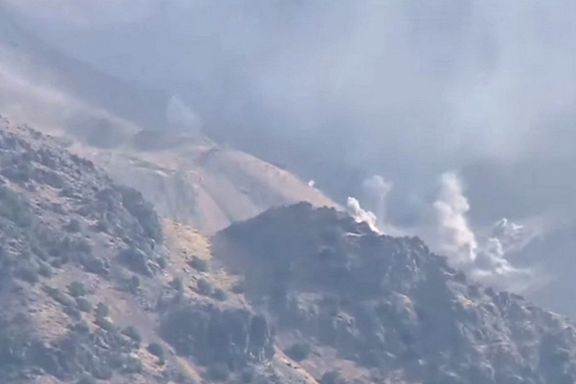
Kurdish parties opposed to the Islamic Republic of Iran have been evacuated from the Iraqi Kurdistan region and northern areas of the country.

Kurdish parties opposed to the Islamic Republic of Iran have been evacuated from the Iraqi Kurdistan region and northern areas of the country.
The announcement was made by Iraq's Interior Minister Abdul Amir al-Shammari in an interview with Al-Arabiya on Saturday.
The Iraqi Prime Minister also emphasized on Saturday that the border with Iran in the Kurdistan region is entirely under the control of Iraqi forces.
Earlier, Iran International had reported that based on the security agreement between Iran and Iraq, many headquarters of Kurdish opposition parties to the Islamic Republic in the Kurdistan region of Iraq have been evacuated.
The headquarters have been detonated by the parties' own forces. According to the informed individuals, the forces that were stationed in border headquarters have now gone to the Iraqi border guard bases and are supposed to be transferred to camps under the supervision of the United Nations.
Local media in the Kurdistan region of Iraq have reported on the permanent deployment of Iraqi border guard forces in these areas and the raising of the Iraqi flag in the locations where the evacuated headquarters of anti-Islamic Republic parties were. The reports also mention the use of thermal cameras by the Iraqi border guard forces to monitor the areas.
The Islamic Republic has long accused the Kurdistan Autonomous Region of Iraq of providing shelter to its opposition groups and claims that the parties use the soil of the Kurdistan Region and Iraq to threaten the security of the Islamic Republic. The Kurdish groups have repeatedly denied the allegations.
In recent years, the Islamic Revolutionary Guard Corps (IRGC) has launched missile and artillery attacks on the bases of Kurdish opposition groups multiple times.

The US Department of Defense in its recently published Strategy for Countering Weapons of Mass Destruction characterized Iran and North Korea as "persistent threats."
The Pentagon's report stated, “North Korea, Iran, and violent extremist organizations remain persistent threats as they continue to further pursue and develop WMD.”
Regarding Iran, the report indicated, “It is assessed that Iran is not pursuing a nuclear weapons program at this time but has the capacity to produce enough fissile material for a nuclear device in less than two weeks.”
Additionally, the report acknowledged Russia as an "acute threat" and identified China as a "pacing challenge."
“The PRC (People's Republic of China) has expanded and modernized nearly every aspect of the People’s Liberation Army (PLA), with a focus on offsetting US military advantages,” added the report.
Additionally, it emphasized that China presents the "most comprehensive and urgent challenge" to the United States.
Regarding Russia, the report noted, "Russia poses the most acute nuclear, biological, and chemical threat in the near-term and will continue to retain WMD capabilities in the medium and long term."
The document expressed concerns about Russia's lack of transparency concerning its former Soviet program and its continued secrecy surrounding potentially dual-use biological research.
In the section on North Korea, the report mentioned, “Capability developments provide the DPRK with options for nuclear weapons use at any stage of conflict.”
The Islamic Republic claims it is not pursuing the development of nuclear weapons, but Western countries and Israel say that Iran's nuclear program, especially the enrichment of 60% uranium and the production of metallic uranium in Iran, has no connection to peaceful nuclear knowledge applications.

After revelations of an Iranian influence operation, over 30 US senators have called for the immediate revocation of a Pentagon official's security clearance.
The official in question is ArianeTabatabaei who serves as chief of staff for the Assistant Secretary of Defense for Special Operations and Low Intensity Conflict, a senior position with top-secret security clearance.
Earlier this week, Iran International and Semafor reported that Tabatabaei had been a major actor in an information operation initiated by the Iranian foreign ministry to mollify the regime’s image and promote its positions internationally.
The revelation shocked many in Washington. Republican lawmakers demanded explanations. The Pentagon first defended the official but then confirmed Thursday that the matter had to be –and indeed was– being investigated.
Friday afternoon, it emerged that a coalition of Republican Senators, including ranking members from Intelligence, Armed Services and Foreign Relations committees, had sent a letter to the Secretary of Defense Lloyd Austin to call for immediate action to ensure that his Department was not “compromised.”
“We urge you to suspend Ms Tabatabaei’s security clearance immediately pending further review, as the State Department did with her former supervisor, Robert Malley.”
Malley was the Biden administration’s special envoy to Iran, playing an instrumental role in the nuclear negotiations and in forming overall US policy towards the regime in Tehran. He is now being investigated by the FBI for mishandling classified material.
It’s not clear if Malley’s suspension is related to the Iranian influence operation, the now-infamous Iran Expert Initiative described in Iran International’s investigative report. By mentioning his name in their letter, however, the senators have hinted that they think the two cases may be linked –and betray a chronic problem in the administration’s Iran policy.
“In March 2021,” the senators note, “shortly after Ms. Tabatabai was appointed senior adviser in the Office of the Undersecretary of State for Arms Control and International Security, Iranian dissidents noted Ms. Tabatabai's long history of echoing the Iranian regime's talking points. In April 2021, several House members requested a review of Ms. Tabatabai's security clearance. In response, the Biden administration dismissed these allegations as smears and slander.”
The senators then write: “the latest allegations… indicate that Ms. Tabatabai may have been engaged in a relationship with the Iranian regime well beyond what even her strongest critics alleged.”
Tabatabaei has been heavily criticized by many users on Persian social media for her comments on the nuclear issue, popular protests in Iran, and the downing of the Ukrainian passenger flight PS752 by the IRGC.
The critics have always maintained that her views –and the views of a few other Iranian ‘experts’ outside Iran, are often indistinguishable from the official line trumpeted by the regime. They have all been accused by regime critics of colluding with the Islamic Republic and whitewashing its crimes. Those accused, however, flatly dismiss the accusations as ‘smear’, ‘slander’ and often ‘misogyny.’
This is the first time that a report substantiates the claims of close, longstanding and lopsided relationship between the Islamic Republic and a loose network of activists, academics and journalists living abroad.
“We find it simply unconscionable that a senior Department official would continue to hold a sensitive position despite her alleged participation in an Iranian government information operation,” reads the Senate letter to the Defense Secretary Austin.
Several American officials, as well as a few Iranian activists outside Iran, have come out in defense of Tabatabaei and her work. Interestingly, the Iranian government has so far remained silent about the affair.

An Iranian lawmaker has joined other politicians and analysts in warning the government that prolonged economic crisis could lead to a fresh wave of protests.
Mohammad Hassan Asafari Conveyed his concerns to the Didban Iran [Iran Monitor] website in Tehran that the government should not assume that the people will remain silent in the face of rising prices and other economic problems. He emphasized that there is no guaranty Iranians would always remain quiet regardless of the government’s performance.
Didban Iran noted that previous protests in 2018 and 2019 were driven by economic motives. Even last year's protests, which primarily revolved around political and cultural issues, at times revealed underlying economic grievances among the population. Iranian sociologists have repeatedly warned that economic problems have the potential to spark further protests in Iran.
Asafari pointed out the government's weak track record in addressing the country's economic problems, which could potentially trigger another round of protests due to increasing prices.
The lawmaker also drew attention to the fact that foreign sanctions disproportionately impact the lower and middle classes, as inflation hovers around 50 percent and the income gap widens.

Regime insiders holding lucrative posts in the government and the state-controlled economy, getting a much bigger share of the wealth, has been a growing problem in Iran for the past decade.
Didban Iran reiterated that the protests in 2018 and 2019 had economic motivations and even last year's protests which were mainly about political and cultural issues at times reflected the people's economic concerns. The website added that Iranian sociologists have repeatedly warned that economic problems can potentially trigger a new round of protests in Iran.
Asafari argued that the people's grievances are genuine, and they have every right to protest. There are economic concerns in the Iranian society to which the government should attend. He added that while the whole country is under the pressure of sanctions, the underprivileged groups feel those pressures more than others. Pensioners and low-paid workers are under redoubled pressures and that is not fair, the lawmaker said.
Because Iran’s currency has fallen by another 50-percent since mid-2022 and 12-fold since 2018, the minimum wage that many workers earn has dropped to less than $150 a month, while a family of three needs at least three times as much to afford the bare minimum of daily needs.
Meanwhile, Iranian Hossein Bayat, an attorney, emphasized the economic implications of the cultural limitations the government imposes on Iranians. He said the new hijab enforcement law is telling the people that the government can force you to pay fines for what you wear only because it can.
The new law forces women who remove their headscarves to pay hefty fines. If they are in a car, the driver could also be forced to pay a penalty while his car can be held at a police pound for several weeks.
Some critics argue that while the law was meant to protect the government's official ideology, it is now a means of getting money from the people to make up for the government's budget deficit.
Bayat explained: "This new law say to women: You are not even safe at your own home or in your car. We can always charge you with some accusation and bring you face to face with the government."
The 70-article legislation has already been approved by the Iranian parliament, with its final ratification pending approval by the Guardian Council, a non-elected body that operates under the supervision of Supreme Leader Ali Khamenei.
In another development, former lawmaker Ali Motahari warned that the intervention of hardline clerics in state affairs has alienated them from the people. He argued that hardline clerics who align themselves with the government have sacrificed their independence.
Motahari asserted that if clerics refrained from participating in the government, they could have acted as independent observers to criticize the government's performance and prevent deviations.

Prisoners at a facility in southwestern Khuzestan province started a fire Friday to protest a death sentence issued against a fellow inmate.
According to Iranian state news agencies, "Following the announcement of the death sentence of a prisoner in Ramhormoz prison, several prisoners started a riot by starting a fire.”
"Gunfire could be heard from outside the prison," Mehr News said.
Gholamreza Roshan, the director-general of Khuzestan’s prisons, told a reporter with IRGC-affiliated Fars news that the unrest occurred after a convict was given a death sentence for murder.
"Some inmates in the same ward as the condemned individual instigated the unrest under the pretext of defending him," he added.
He also claimed that immediate action was taken by prison authorities, and the situation in the prison is under control. However, there was no independent assessment of the situation.
Earlier in the month, another fire was reported in a prison near the capital Tehran on the anniversary of Mahsa Amini, whose death triggered the biggest anti-regime protests in Iran. State media said female convicts on death row set fire to the women's ward at the Qarchak penitentiary by burning their clothes.
Also on that day, detainees in the women's ward of Tehran's Evin Prison gathered in protest to mark the occasion, chanting slogans against the regime, refusing to enter their cells, and setting fire to their headscarves in the prison courtyard.

Switzerland has imposed further sanctions in connection with Iran's drone supply for the Russian invasion of Ukraine, the government said in a statement on Friday.
Switzerland's Federal Council added in its statement that the new punitive measures are in line with those of the European Union and include bans on the sale, supply, export and transit of components used for the manufacture and production of drones.
According to the statement, the new package also targets financial and travel sanctions against persons and entities connected with support for Iran's drone program.
“In view of Iran's continued military support for Russia's military aggression against Ukraine, which is contrary to international law, and the fact that Russia is using Iranian-made Unmanned Aerial Vehicles (UAVs) to support the military aggression,” the Federal Council adopted the sanctions imposed by the EU on 20 July as part of its new framework for restrictive measures. “Switzerland is incorporating these new sanctions measures into the Ordinance on Measures against the Islamic Republic of Iran.”
In July, a group of European Union candidate countries -- namely North Macedonia, Montenegro, Albania, Ukraine, Republic of Moldova, and Bosnia and Herzegovina -- aligned themselves with an EU Council decision to introduce a fresh sanctions framework aimed at Iran's support for Russia's war on Ukraine.
Switzerland has been adopting the EU's sanctions listings regarding the supply of Iranian UAVs to Russia since autumn 2022, the last time being on 16 August.
Earlier in the week, as a fresh Ukrainian report outlined the use of Western parts in Iranian-made drones, Washington issued a set of fresh sanctions on a procurement network.
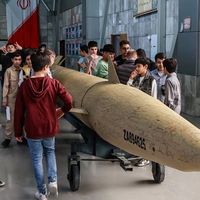
The move is the latest in a series of recent Western sanctions on Iran for supplying hundreds of kamikaze Shahed drones to Russia. Moscow has used the lethal weapon to attack civilian and infrastructure targets, as well as to overwhelm Ukrainian air defenses during large missile attacks.