Europeans Thwart More Terror Plots Emanating From Iran
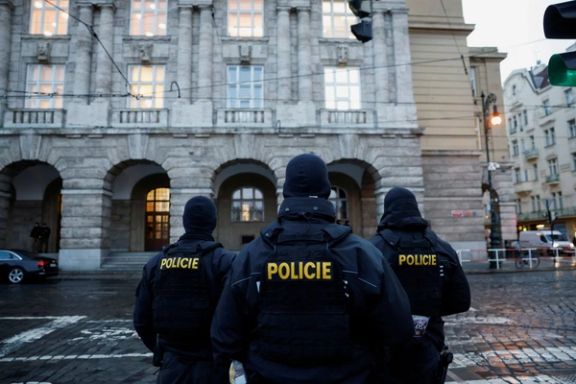
European security agencies have thwarted multiple terror plots by Iran-backed extremists, spurred on by the war in Gaza, the latest of which in Italy.
European security agencies have thwarted multiple terror plots by Iran-backed extremists, spurred on by the war in Gaza, the latest of which in Italy.
Italian authorities have detained three Palestinians believed to be affiliated with the Al Aqsa Martyrs’ Brigade, a designated terror group by the US and EU, for allegedly planning assaults on civilian and military targets in Europe.
In October, Israeli intelligence chief David Barnea revealed that Mossad and intelligence agencies abroad had foiled 27 attacks on Jewish and Israeli figures over the last year.
In an undisclosed investigation last December, authorities in Austria and Bosnia apprehended two groups of Afghan and Syrian refugees in possession of weapons, including Kalashnikov assault rifles and pistols. Investigators found images of Jewish and Israeli targets in Europe on the suspects’ phones, the latest in a series of Iran-backed plots against Jewish and Israeli targets abroad.
In a recent case uncovered by Swedish authorities, Iranian agents posing as refugees planned the assassination of prominent Jewish leaders in Sweden, leading to their arrest and subsequent deportation.
German intelligence has warned of heightened risks, particularly regarding threats against Jewish and Israeli targets, with extremist groups exploiting the conflict in Gaza for propaganda, recruitment, and fundraising.
Recent raids in Germany and the Netherlands reveal a shift towards plotting attacks within Europe, with concerns raised about the potential exploitation of refugee flows by terror organizations.

The video, viewed over 100,000 times on X, has once again heightened public uproar over the regime’s treatment of women.
The footage, captured by the clinic's CCTV, depicts a young woman holding her sick baby – with her hijab sitting on her shoulders as she waits in a secluded area. A cleric is seen covertly using his cell phone to photograph or record the woman, presumably to document her alleged violation of hijab regulations.
When she notices, the woman quickly hands her baby to a nearby individual and confronts the cleric, insisting on inspecting his phone to delete the footage – likely out of concern that it could lead to charges for violating the hijab law. When the cleric refuses it leads to a larger confrontation and a scuffle as bystanders intervene.
Hasan Gharib, the public prosecutor of Qom province, said Tuesday that four people were detained with three of them sent to prison. He did not elaborate on the charges or why only three of the individuals were imprisoned.
In past instances, individuals who exposed corruption or shared information with foreign-based media outlets have frequently been accused of "spreading misinformation" and "disturbing public order." These charges entail a potential penalty of up to five years in prison.
The woman and the four detained men remain unidentified, while authorities have not officially named the cleric involved. Unverified online reports suggest the cleric may be Mohamamd Esmaili, purportedly a Quran reciter.

Gharib stated that upon initial investigation by law enforcement and security agencies, it was found that these individuals wanted to exploit the incident to incite discord and tension in society by sharing the footage with an “opposition channel”.
Claiming that the tension and conflict in the clinic had previously been resolved through mediation and mutual consent, he said that shortly after the incident, the footage was edited and sent to Iran International by these four people.
Earlier in the day, Gharib’s deputy, Rouhollah Moslemkhani, similarly described the altercation as "a scheme planned to sow discord in society” and that "the case has been handed over to the Intelligence Ministry ''.
Iran International receives thousands of texts and multimedia messages from its audience in Iran on a daily basis. Iran International does not have a correspondent in the country since the regime in Tehran considers the channel as an enemy of the state.
In these types of cases, regime authorities often target and penalize the women themselves, as well as individuals who share such incidents with Iranian media outlets abroad, perceived as a threat to the Islamic Republic's reputation.
“It is necessary to point out that the error of the person who sent the video to anti-revolutionary media should not be overlooked. This calls for intelligence work and action that will teach [such people] a lesson,” Fars News Agency, affiliated with the Islamic Revolutionary Guards (IRGC), wrote Sunday.
Iran’s clerical rulers encourage citizens to confront and report women who refuse to wear the hijab. This has led to cases where individuals film women to provide evidence for legal action by the authorities.
In September 2023, 29-year-old Elham Farshad, who had a verbal altercation with a cleric harassing her for not wearing a hijab, was sentenced to three years and eight months in prison after a video of the incident was leaked on social media.
In a similar incident in December 2021, a woman in Qom was arrested after confronting a cleric who reprimanded her for her hijab.
The intensified enforcement of hijab regulations comes in the wake of widespread protests in Iran following the death of Iranian-Kurd Mahsa Jina Amini in 2022, an incident for which the UN now holds the regime responsible. Amini's arrest and death in Tehran for defying the Islamic Republic's mandatory hijab sparked the largest uprising against the regime in recent years.
Since then, women nationwide have been actively defying the mandatory hijab, leading to a heightened presence of hijab enforcers and the so-called morality police in public spaces, including subway stations. Additional surveillance cameras have also been installed in many locations across the country, to identify and apprehend individuals who violate hijab regulations.


"The European Council calls on third parties to immediately cease providing material support to Russia's war of aggression against Ukraine," said the draft conclusions of a summit to be held next week, seen by Reuters.
Iran has provided Russia with a large number of powerful surface-to-surface ballistic missiles, six sources told Reuters, deepening the military cooperation between the two countries, which are both under US sanctions.
Since mid-2022, Iran has provided hundreds of Shahed Kamikaze drones to Russia that have been used against civilian targets and infrastructure in Ukraine. The drones have also helped swarm Ukrainian air defenses during large-scale Russian missile attacks on cities. Iran still denies supplying the drones, although many parts and downed UAVs have been recovered.
"Reports that Iran may transfer ballistic missiles and related technology to Russia for use against Ukraine are very concerning," the draft conclusions of the March 21-22 summit said.

"The European Union is prepared to respond swiftly and in coordination with international partners, including with new and significant measures against Iran."
The conclusions also said the leaders would call on High Representative Josep Borrell and the Commission to prepare further sanctions against Belarus, North Korea and Iran.
France, Germany and Britain last September retained ballistic missile and nuclear proliferation-related sanctions on Iran that were set to expire in October under the 2015 Iran nuclear deal.
Officials at the time said that decision had been made in large part due to Russia's use of Iranian drones against Ukraine and the possibility Iran might transfer ballistic missiles to Russia.
British Defence Minister Grant Shapps said in an interview with House Magazine earlier this month that London had information concerning Iran's provision of ballistic missiles to Russia.
"I do. I can't go into it," Schapps was quoted as saying. "Whether it's ballistic missiles, or the Shahed drones that they supplied Russia with, we've seen that if there's struggle in the world, often Iran are egging it on, or helping to supply the food chain in this case."
The Biden administration tried to reverse former President Donald Trump’s policy of pressuring Iran and re-launched nuclear talks in April 2021. After nearly a year of negotiations in Vienna the effort failed when Russia’s attack on Ukraine began. Soon after, Tehran started supplying drones to Moscow.
With reporting by Reuters