Iran Faces Continued Water Shortages
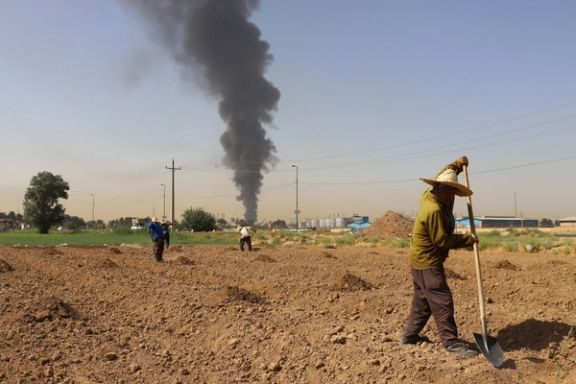
Ali Reza Shahidi, the head of Geological Survey and Mineral Exploration of Iran, has issued a warning regarding the country's water resources.
Ali Reza Shahidi, the head of Geological Survey and Mineral Exploration of Iran, has issued a warning regarding the country's water resources.
He stated that Iran is expected to face water shortages until at least 2040. Shahidi emphasized that “400 out of 608 plains in Iran are situated within the red zone of subsidence, prohibiting any extraction of water from them.”
Moreover, Shahidi highlighted that the hot and dry conditions prevailing in the country are projected to persist until 2030 amid global warming.
The announcement comes amidst Iran's ongoing struggle with one of its most severe droughts in over fifty years, marking the fourth consecutive year of water scarcity.
The dire situation has led to widespread criticism of the Iranian government's environmental management practices. Reports indicate that a quarter of Iran's farmers have lost their livelihoods in the past seven years, primarily due to water scarcity. Beyond economic impacts, the drought has led to soil erosion, desertification, and dust storms affecting nearly half of Iran's population, according to the country's health ministry.
Criticism of the Iranian government's environmental policies has intensified, particularly in light of the arrest and imprisonment of several Iranian environmentalists in 2018 on charges of espionage for the US and UK governments.
The situation is having dire effects on the country's farmers, around a quarter of whom have lost their livelihood as a result of the drought in the last seven years alone.
Environmental impacts have since included soil erosion, desertification, and hazardous dust storms that affect approximately half of Iran's population, according to the country's health ministry.


“Certainly, in the future, these exports will increase even more, considering the innovations being made and the new armaments we are pursuing and unveiling,” Ashtiani was quoted as saying by ILNA news website.
A UN Security Council embargo on Iran’s conventional arms trade expired in October 2020, when the United States failed to garner support to extend the restrictions, amid the Trump administration’s “maximum pressure” campaign against Tehran. European allies were not supportive of the administration’s Iran policies, while Russia and China were firmly siding with their ally.
Having been under various Western and UN sanctions for 45 years, the Islamic Republic has developed a domestic arms industry, which has achieved relatively low-tech successes, particularly in the realm of missiles and drones.

Ashtiani boasted that “In the realm of defense capability worldwide, we hold a special position due to reaching a stage in indigenous production where we have manufactured the necessary equipment for our armed forces internally. This has led to our defense capability and the result of which is the national security of our country, with the format of this equipment being in the stage of exports.”
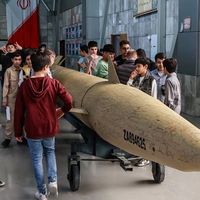
Since mid-2022, Iran has provided hundreds of Shahed Kamikaze drones to Russia that have been used against civilian targets and infrastructure in Ukraine. The drones have also helped swarm Ukrainian air defenses during large-scale Russian missile attacks on cities. Iran still denies supplying the drones, although many parts and downed UAVs have been recovered.
The West is now concerned over emerging signs that Tehran might supply long-range missiles to Russia, which is running low on its own stocks after more than two years of large-scale attacks on targets in Ukraine. European Union leaders are ready to respond with new and significant measures against Iran amid reports that Tehran may transfer ballistic missiles to Russia for use against Ukraine.
"The European Council calls on third parties to immediately cease providing material support to Russia's war of aggression against Ukraine," said the draft conclusions of a summit to be held next week, Reuters reported this week.

It is not clear to what extent the Biden administration is concerned about the latest reports of Iran’s missile supplies to Ukraine, as it stands to renew billions of dollars’ worth of sanctions waivers for Iran, which can partly alleviate Tehran’s lack of financial resources to boost its weapons development.
The danger Iranian weapons pose is not limited to supplying Russia, but most of its production ends up in the hands of rogue forces, such as the Houthi rebels in Yemen. Since November, using an array of Iranian missiles and drones the Houthis have wreaked havoc on international shipping in the Red Sea region, prompting the US and the UK to launch air strikes against targets in Yemen.
Multilateral arms embargos against Iran began in 2006, when the UN Security Council restricted on the export of technology related to nuclear delivery systems to Iran. In 2007, the Council added an embargo on arms exports to Iran, followed by a UN embargo on the sales of major conventional weapons.
These embargos were later wrapped into UNSC Resolution2231 that formalized the 2015 JCPOA nuclear deal with Iran. The agreement set October 2020 for the sunset clause to the conventional weapons embargo, and October 2023 for restrictions to the transfer of goods and technology that could contribute to the development of nuclear weapons delivery systems.


Restaurants and eateries, in the already struggling hospitality sector, will be allowed to maintain their usual operating hours to serve customers, the country’s police said.
However, there's a caveat: they must cover their windows to shield the interior from the view of fasting passersby.
The pre-Islamic Persian New Year or Nowruz has been celebrated in Iran for at least 2,500 years, marking the first day of Spring.
Women in the southern port city of Bushehr welcome Nowruz with song and dance.
The lunar Islamic year is shorter than the official solar calendar year, so this year, Ramadan, a month of fasting and reflection for Muslims, begins on March 11th in Iran, just nine days before Nowruz.
The last time these two occasions coincided was in the early 1990s.
While the exact rationale behind the authorities' decision to ease the rules remains uncertain, it comes at a time of unprecedented and widespread discontent with the country's religious regime.
Punitive Ramadan Rules Remain
Despite this year’s ease in regulations, Iranians, including those exempt from fasting, are required to abstain from eating, drinking, and smoking in public, even if they are inside their cars.
Implemented about 12 years after the 1979 Islamic Revolution, Article 638 of the country’s Islamic Penal Code exacts a punishment of 10 to 60 days or up to 74 lashes on those who violate Ramadan fasting regulations. This applies to everyone irrespective of their religion.

During Ramadan, eateries, including restaurants, cafes, and street food vendors, have typically been prohibited from serving customers from dawn to sunset, aligning with the fasting hours. This restriction has confined business hours to evenings exclusively – though in recent years, some establishments were allowed to provide cold food options or takeaway services during fasting hours.
In addition to the hospitality industry, Ramadan restrictions have a direct or indirect impact on various businesses including cinemas, concert halls, and beauty salons.
Some restaurants along the roads were permitted to remain open due to exemptions outlined in the country's Shia rules. These exemptions apply to individuals traveling approximately 45 kilometers away from home and intending to return within ten days, as well as to frequent travelers such as drivers, who are exempt from fasting.
Widespread Discontent, Economic Turmoil ?
At least 60 percent of eligible Iranian voters displayed their discontent with the regime and loss of hope in the government’s ability to improve their livelihoods when they boycotted the dual March 1st elections for Parliament and the Assembly of Experts.
Adding to that, the escalating depreciation of the national currency, soaring inflation reaching almost 50%, and discontent over social restrictions like hijab enforcement – the police seem to have eased their typically stringent Ramadan measures to prevent further unrest.
The hospitality and tourism sectors, along with various other industries, are grappling with the impact of high inflation, with little hope for improvement in the foreseeable future. Implementing stricter measures during their peak season could significantly disrupt their operations and profitability, at one of the busiest times of the year.

Nowruz Tradition Defies Hardliner Resistance
Religious hardliners in the Islamic Republic consider Nowruz and other ancient festivals pagan and favor the Islamic calendar and its holidays, but have not succeeded in changing Iran's ancient calendar to an Islamic one, so far.
Most Iranians – even those with strong Muslim beliefs – celebrate and cherish Nowruz and other pre-Islamic festivals such as Yalda which marks the Winter Solstice and Charshanbeh Souri bonfire night on the last Tuesday of the year as well as Islamic occasions such as the birthdays of the Prophet Muhammed and Shia imams.
The popularity of Nowruz among Iranians is so profound, that even the country’s ruler, Supreme Leader Ali Khamenei makes an annual live speech immediately after the Spring Equinox – a moment precisely calculated by astronomers.
Though, notably, Khamenei used last year’s remarks to claim that the recent anti-regime protests that swept Iran were part of a global conspiracy aimed at weakening the Islamic Republic.