Iranians Still Among Top Foreign Buyers Of Turkish Real Estate
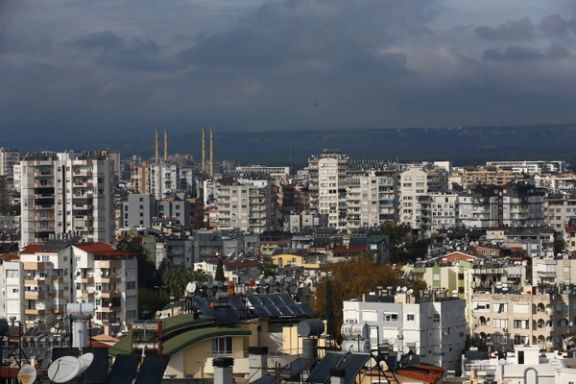
A new report by the Turkish Statistical Institute (TÜİK) shows that the country remains a top destination for Iranians and Russian to buy residential properties.
A new report by the Turkish Statistical Institute (TÜİK) shows that the country remains a top destination for Iranians and Russian to buy residential properties.
Russians, Iranians, Iraqis, and Ukrainians were the top buyers of Turkish real estate in February, according to TÜİK data.
Foreign nationals purchased 2% of all homes sold in Turkey in February, with Iranians accounting for 200 units, second to Russians with 395. Iranians used to be on top of the list before the Russian invasion of Ukraine in 2022 that led to many Russians leaving the country.
Overall, home sales to foreigners decreased by 44.9% in February compared to the same month of the previous year, reaching 1,846 units. Istanbul was the most popular destination for foreign buyers, followed by Antalya.
The decline in home sales to foreigners is likely due to a number of factors, including the ongoing economic crisis in Turkey and rising inflation. The Turkish lira has lost a significant amount of value against the US dollar in recent years with the currency hitting a historic low in March, with real prices rising faster.
Despite the decline, Turkey remains a popular destination for foreign buyers, attracted by its mild climate, and strategic location.
A senior member of Iran’s parliament said in October 2021 that Iranians bought $7 billion of real estate in Turkey in about three years from 2018 to 2020, with estimates of 3,000 residential units every year.
Iran's Real Estate Consultants Association said in June 2023 that a significant number of housing developers have migrated to Turkey and Georgia, warning of the impact on the local economy.
By buying property in Turkey, Iranians try to protect their capital as the country’s currency keeps falling and hope. They also hope to gain Turkish citizenship and be able to do business without being restricted by US sanctions, which make it hard for Iranians to even open bank accounts in other countries.


Confirming the resignation, the official news agency of the Iranian judiciary, Mizan, reported on Wednesday that Chief Justice Gholam-Hossein Mohseni Ejei accepted the resignation of First Deputy Mohammad Mosaddegh.
Mizan claimed that Mosaddegh resigned to eliminate any suspicion of influencing the judicial process and to prevent potential abuse of the issue by opponents and detractors. In his resignation, he affirmed that he had not engaged in any communication with other judiciary officials overseeing the case.
Iran ranks 149 out of 180 countries in the 2023 Corruption Perceptions Index (CPI) by Transparency International, scoring 24 out of 100, indicating a very clean state.
A Telegram channel, allegedly linked to security bodies, disclosed in late August that the judiciary deputy’s sons, Mohammad-Sadegh and Amir-Hossein Mosaddegh, were arrested for leveraging their connections to influence significant corruption cases. However, the channel, Oyun, was deactivated or blocked shortly after.
On September 26, judiciary spokesman Masoud Setayeshi confirmed during a briefing that the children of a high-ranking judiciary official had indeed been apprehended for corruption and abuse of influence.

Prosecutors allege that Mosaddegh’s sons laundered substantial sums of money, received through illicit means, to manipulate justice in other cases. These funds were purportedly invested in construction, gold, foreign currency, and luxury cars.
Apart from Mosaddegh’s sons, the case involves twenty-one other individuals. Despite three hearings held thus far, the judiciary has provided limited information to the public, and the prosecution’s sought sentences remain undisclosed.
Pundits say Iran’s biggest cases of corruption, such as businessman Babak Zanjani’s embezzlement of $6 billion of the proceeds from clandestine oil sales in international markets to avoid sanctions, have taken place since 2005 when the populist Mahmoud Ahmadinejad was first elected to presidency.
Former lawmaker Heshmatollah Falahatpisheh estimates that in the past two decades at least $57 billion has been embezzled by government officials and their associates.
In December, revelations regarding the Debsh Tea corruption case, involving nearly $3.5 billion, sent shockwaves across the nation. This case implicates key figures from both current and previous presidential administrations, including ministers of agriculture and industry, as well as the governors of the Central Bank of Iran and the chiefs of Iranian customs administration.
The case involves key figures from both the current and previous presidential administrations, including ministers of agriculture, industry as well as the governors of the Central Bank of Iran and the chiefs of Iranian customs administration.
The company which handled most of the country’s tea imports, sold $1.4 billion of the more than $3.3 billion cheap foreign currency allocated by the government at much higher rates in the black market between 2019 and 2022. This substantial amount of foreign currency was claimed to have been spent on importing tea and tea factory machinery.
Some reports said that until 2020 the annual budget allocated for importing tea was around $300 million, but the budget was suddenly tripled in 2021 without any justification.
The former head of the Iranian parliament's National Security and Foreign Relations Committee Heshmatollah Falahatpisheh has described the case as "One of the biggest embezzlement cases in Iran.
Since 1992, there have been at least eleven major corruption cases involving government and state officials - including in petrochemical, steel, insurance, and oil industries, and a major bank. Iranian media say the total value only in these cases amounts to over $90 billion.
Supreme Leader Ali Khamenei and other officials are always vehement that corruption in Iran is not systematic.


Sergey Shykevich, threat intelligence expert at cyber security company Check Point said in an interview with digital magazine Computer Weekly, “Nation states understand that to pretend to be involved in hacktivism allows them deniability … They don’t want to be accused, even if everyone knows it’s Russia or Iran”.
According to the expert, Russian cybercrime forums are often frequented by state-sponsored hacking groups, including those linked to Iran, which can spend large sums of money on buying malwares as “their budgets are unlimited.”
Russian underground forums have long been one of the main sources of buying and selling malware on the Internet. Launched in 2000, “Exploit” is one of such forums which includes around one million messages regarding more than 200,000 different subjects.
“They offer everything you could imagine … It starts with software vulnerabilities. You can rent malware, ransomware as a service and spam as a service to distribute fake phishing emails and currently even AI-related services, and deep fake platforms,” Shykevich added.
Running cybercrime forums has turned into a lucrative business in Russia. According to reports, one of the administrators of these forums recently enjoyed a $500,000 wedding ceremony in Moscow.

Computer Weekly said that Russian underground forums are “strictly members only”, fees varying from around $60 to several thousand. The forums also employ a vetting process before admitting new members in an attempt to block the access of security forces or researchers.
In recent years, Tehran and Moscow have strengthened their political, military, communication, and cyber ties, prompting concerns among Western countries and their allies.
In December, the Iranian parliament approved a bill dedicated to information and intelligence cybersecurity cooperation between Tehran and Moscow.
Microsoft disclosed in February that state-backed hackers from Iran, Russia and China have been leveraging tools developed by Microsoft-backed OpenAI to enhance their cyber espionage capabilities.
It followed revelations in November that Microsoft’s Threat Analysis Center (MTAC) had issued a warning that Iran, Russia and China are likely to plan to influence the upcoming elections in the United States and other countries later this year.
Moreover, police in the UK announced in January that they have launched a new unit to deal with threats posed by Tehran, Moscow and Beijing ahead of the UK’s general election. “We will be the most overt part of the UK security community stepping up its response to those hostile state actions,” said Assistant Commissioner Matt Jukes, the UK’s head of counter-terrorism policing.
Iran-backed hackers have particularly stepped up their activities following the Israel-Hamas conflict. According to American cybersecurity company CrowdStrike, in the second half of 2023, “Iran-nexus adversaries and Middle East hacktivist adversaries were also observed pivoting cyber operations in alignment with kinetic operations stemming from the 2023 Israel-Hamas conflict.”
In December 2023, Iran-linked hackers targeted a water facility in the rural area of County Mayo in Ireland, leaving the residents without water for two days. The attack was carried out by pro-Iran Cyber Av3ngers group which claimed that the facility was attacked because it used an Israeli-made piece of equipment.