Official Warns About Rising Suicide Rates Among Iranian Doctors
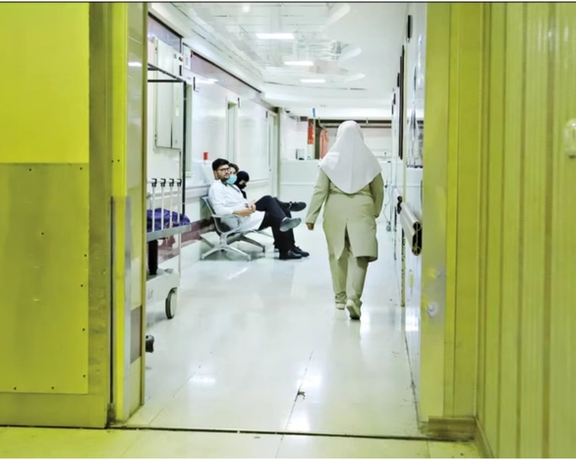
An advisor for the Medical Council of Iran, has highlighted the dire working conditions of doctors as a factor contributing to the rising suicide rates among the profession.

An advisor for the Medical Council of Iran, has highlighted the dire working conditions of doctors as a factor contributing to the rising suicide rates among the profession.
Mohammad Mirkhani noted the shifting dynamics within the medical field, which was once considered a prestigious profession. "The medical profession has seen an increase in financial difficulties, making doctors more vulnerable emotionally and within their family lives due to demanding work conditions," he said.
He described the hospital environment as "military-like," particularly harsh for medical residents who sometimes endure up to 72 hours without sleep, leading to severe depression.
The recent suicide of Samira Al-e-Saeedi, an associate professor of rheumatology at Tehran University of Medical Sciences, has reignited concerns about mental health security among healthcare workers.
Her colleague Mohammad Abdous expressed his concerns on social media, pointing out the immense work-related stress doctors face compared to other professions. Al-e-Saeedi had reportedly disclosed her suicidal intentions to her peers, who failed to take her seriously.
Nima Shahriarpour, an emergency medicine specialist, also revealed that research indicates a 3.1 to fivefold increase in suicide rates among the medical community.
"Among 14,000 medical assistants nationwide, an average of 13 commit suicide annually," Shahriarpour added.
The Iranian Legal Medicine Organization, which operates as part of the judiciary, refuses to reveal the exact cause of the suspicious deaths of young doctors.
Suicide rates among medical students have also escalated to alarming levels. In February, the head of the Iranian Psychiatric Scientific Association reported that 16 medical residents had taken their lives over the past year, emphasizing the mental health challenges faced by those in the medical field.

According to videos obtained by Iran International on Saturday, truck owners across Iran have started a strike to protest the reduction of fares and fuel quota.
The striking truck owners have refused to work in Tehran, Sistan-Baluchistan, Kerman, Ilam and Asaluyeh. In the capital Tehran, they stopped their vehicles on Babaei Highway northeast of the city.
According to Tarabaran, a news website covering Iran’s transport economy, truck owners have installed protest placards on their vehicles. They are protesting the lack or cutting of their fuel quotas, the report added.
We don’t have diesel fuel to run and there is no accountability for it in a year that has been named by Supreme Leader Ali Khamenei as “the year of surge in production with people's participation," the protesters said in mockery.
Khamenei began naming the years approximately three decades ago. Initially, "the name of the year" primarily reflected ideological and religious values, such as "the movement of serving the nation" in 2003. However, over the past 16 years, these names have predominantly focused on executive and economic issues, all of which having fallen short of realization due to the country’s worsening economic and political crises.
Meanwhile, in Sistan-Baluchistan, truck owners have refrained from loading their vehicles in different cities such as Dashtiari, Chabahar, Konarak, Nikshahr and Zarabad. Reports received by Iran International indicate that following the strike, the transportation system has been disrupted in the province, and many businesses and construction projects have stopped. Truck owners have refused to transport sand and gravel cargos to construction sites, reports added.
An informed source told Iran International that consignments from cement factories have completely ceased in some regions of Sistan-Baluchistan, while in other parts of the province, the cargos are transported very slowly.
The truck owners had warned that they would go on a nationwide strike in case their problems were not addressed by the government, said Foad Keikhosravi, a member of the board of directors of the Confederation of Iranian Labor Abroad, in an interview with Iran International.
“The fuel quota of trucks has been reduced by the government and they have run of out of fuel; if they want to buy it from the free market, it is going to be very expensive,” he went on to say, warning that the ongoing strike of the truck owners can have detrimental impacts on the livelihood of truck drivers and worker of different sectors.
Keikhosravi called on other social groups to join striking truck owners and said that the fuel problem can affect the society at large by further increasing Iran’s inflation.
Iranian truck owners went on similar strikes in recent years in protest at fuel shortages, rampant inflation, and the deprecation of Iran’s national currency. In more than a decade, Iran's economic growth has averaged zero. The situation has been further exacerbated since the US withdrawal from the JCPOA nuclear deal in 2018. In the past six years, the rial, Iran’s national currency, has fallen 15-fold, fueling inflation and plunging millions of citizens into poverty.
Earlier in the month, Jafar Salari-Nasab, the CEO of the National Iranian Oil Refining and Distribution Company (NIORDC), stated that the country is facing record gasoline consumption. The announcement sparked fears of rationing as the country battles continued shortages.
Official statistics reveal that gasoline constitutes only 28 percent of Iran's refinery products, highlighting the need for modernization akin to refineries in other neighboring countries like the United Arab Emirates.
Unconfirmed reports indicate that the Iranian government may choose to increase fuel prices or gradually reduce national subsidies in an attempt to handle the shortages. The government has already spent tens of billions of dollars on indirect subsidies of energy. Gasoline and diesel subsidies alone cost the government around $100 million a day.

Politicians across Iran’s Islamic regime persist in expressing alarm and profound disappointment with the government's performance, particularly concerning the nation's enduring economic crisis.
Former government spokesman Ali Rabiei has said in an article in Etemad Online website: "I would like to beg the government to stop making policies and decisions. The best thing they can do is doing nothing. In this way, not only things will not get worse, but at least the society will have some peace of mind."
Amid heightened tensions in the Middle East and a confrontation with Israel, Iran’s beleaguered currency has lost 25 percent of its value since early January, increasing fears of higher inflation, which already hovers around 50 percent.
Rabiei, who has a background as a high-level intelligence officer, highlighted the lack of trust society has in the government, citing divergent values. Meanwhile, the government continues to make decisions and enact resolutions that worsen societal chaos.
He said, "a glance at the society reveals that so many people are worried about the government's ad-hoc decisions and this has led to a deep feeling of insecurity among the people particularly in the urban society."

"Apart from concerns about their livelihood, everyone has many reasons to feel insecure. In such a situation, the government had better stop manipulating people's lives and disrupting their peace of mind," Rabiei said, adding that officials should stop talking too much. “Please don't do anything and we will take our hats off and respect you for leaving us alone."
Disappointment is also palpable within the conservative camp, to which the government belongs. Conservative figure Hasan Beyadi, close to Supreme Leader Ali Khamenei's office, expressed this sentiment in an interview with the conservative news website Nameh News: "Perhaps the government's best course of action is non-intervention in national affairs."
Beyadi lamented the lack of expert control over national matters, urging the government to recognize that political participation could address the current challenges. He highlighted the Raisi administration's failure to fulfill promises, such as currency stabilization, job creation, housing construction targets, and nuclear negotiations progress. "Unfortunately, the affairs of the nation are not being controlled by experts. And the government is not aware that the problematic situation can be improved by paving the way for people's political participation."
He was alluding to increasing repression and manipulation of elections that allow only hardliners to run for office and monopolize government offices.
Beyadi emphasized the impossibility of recovering from losses brought about by sanctions and criticized the government's handling of the industrial sector.
"The government's biggest and most basic mission was to provide essential commodities for the nation, supply water, power, and natural gas, and meet the nation's need for telecommunications. Even these would have been done better if the government did not intervene,” Beyadi said, adding that the government's most important missions were taking care of the country's foreign policy and economic policy particularly in the areas such as reducing inflation and unemployment rates and providing housing for the nation. But the government was not successful in tackling any one of those problems.
Although both Rabiei and Beyadi were referring to the presidential administration of Ebrahim Raisi, but the general public perceives serious economic and political issues symptomatic of the whole regime, headed and controlled by Supreme Leader Ali Khamenei.
Without naming the economic and financial conglomerates operating under the aegis of Khamenei's office, Beyadi said that the government's failure in many of those areas was because of the presence of major parallel economic organizations that are not answerable to anyone.
Beyadi's outlook on Iran's future seemed pessimistic as he doubted Raisi's chances of success in his final year as president without involving the people in decision-making and appointing skilled experts to key positions. He also suggested that Raisi might not secure a second term, amid persistently worsening socio-economic condition.

The legal proceedings in Mahsa Amini's case have hit a standstill, as her family's lawyer lamented in an interview that the case is still in the prosecutor's office, and no trial has been held."
Amini's tragic death occurred on September 16, 2022, in Kasra Hospital, Tehran, following her arrest by Iran's morality police for alleged improper hijab, igniting nationwide protests. She had received fatal head wounds and was in a coma for three days.
Her family filed a complaint in 2022 against those responsible for her arrest and subsequent treatment by the police.
Iranian authorities initially claimed Amini suffered a heart attack at a police station, leading to her collapse and coma before hospitalization. However, the state’s forensic authorities later suggested her death might be linked to thyroid medication, a claim disputed by her family. As previously reported by Nikbakht during his interview with Faraz Daily website, access to critical medical reports from Kasra Hospital had been denied, hindering independent assessments. But photos taken on her hospital bed showed what appeared to be severe head injuries received soon after she was arrested.
Over 800 members of Iran's Medical Council accused the head of the organization of aiding the government in concealing the circumstances of Amini's death. Last month, the UN Independent International Fact-Finding Mission concluded that her death was unlawful, holding the State responsible for physical violence in custody.

Amini's death triggered widespread protests from September 2022 to January 2023, known as the Woman Life Freedom protests. The government responded with a violent crackdown, resulting in hundreds of deaths and thousands of arrests.
Nikbakht and other legal experts advocate for public court trials, highlighting the secretive nature of Revolutionary Courts where sensitive political cases are often heard.
Nikbakht emphasized, "Last year, the trial of a number of lawyers accused of propagandizing against the regime was held in private, and the aforementioned lawyers were convicted and deprived of some social rights."
Iran's US-sanctioned judiciary chief, Gholam-Hossein Mohseni-Eje'i this week stated that he was in favor of public hearings "except for the cases that the constitution does not allow."
Criticism has also been directed at the Revolutionary Courts for their handling of cases related to the 2022 protests, with many protestors receiving harsh sentences, including execution and long-term imprisonment. Nikbakht himself faced charges of propaganda against the regime and was sentenced to one year in prison, while journalists reporting on Amini's death were similarly imprisoned.
Despite the legal stalemate surrounding Amini's case, the authorities swiftly conducted the trial of Amini's uncle, Safa Aeli, who was arbitrarily arrested and tortured in 2023. Aeli was sentenced to five years in prison by the Revolutionary Court in Saqez for charges including participation in protests, spreading propaganda against the regime, and insulting Supreme Leader Ayatollah Ali Khamenei. He was denied access to legal representation, highlighting ongoing human rights concerns in Iran and the lack of due process in legal proceedings in Iran's judiciary.

Iranian security forces have once again barred family members from visiting the graves of political prisoners executed in 1988 as crackdowns on dissent continue to impact human rights.
Mansoureh Behkish, a representative of families seeking justice for those executed in 1988, said families "placed photos of their loved ones behind closed doors and showered them with flowers" at Khavaran Cemetery, east of Tehran.
Khavaran is the resting place for an undisclosed number of executed prisoners, interred in both mass and individual graves. The site was designated for the burial of non-Muslims, including Armenian Christians, Hindus, and members of the persecuted Baha'i faith.
The exact number of prisoners executed from August 1988 to February 1989 remains undisclosed by the authorities, with estimates suggesting the deaths of between 4,500 and 10,000 prisoners incarcerated at the time the clerical regime decided to eliminate those deemed oppositional. The majority of the victims were affiliated with the Mujahedin-e Khalq Organization (MEK), along with Marxists and activists from various leftist groups.
The repeated denial of entry, also enforced earlier on March 15, coincides with recent actions against the Baha'i community, where the security apparatus has forced the burial of deceased Baha'is in newly dug graves at Khavaran, continuing the harassment of Iranian Baha'i citizens.
For more than three decades since the mass execution of thousands of political prisoners in 1988 and their secretive burial in Khavaran and other locations across Iran, the government of the Islamic Republic has been actively attempting to destroy or repurpose the sites of the mass graves.
Iran has renewed its wave of executions, last year over 800 mostly political prisoners were killed as the regime struggles to fight for legitimacy on the back of the 2022 uprising which has posed the biggest challenge to the government since the founding of the Islamic Republic in 1979.

Iran announced on Saturday that the government will provide the armed forces with three billion euros to “quickly start sealing the borders” against a backdrop of recent clashes with Taliban forces.
“This comprehensive effort includes the installation of fences, walls, and intelligent border control systems, ensuring a robust defense of our borders,” Iran's Deputy Interior Minister Majid Mirahmadi said.
On Thursday, Taliban forces captured five Iranian border guards in Afghan territory and handed them over to intelligence officials. Later that day, Iranian state media reported that they had been released.
The Iranian government and the Taliban have been involved in several border disputes over recent months.
According to the representative of Sistan-Baluchestan province, a heavily drought-stricken region in southeastern Iran, the Afghan government diverts the Helmand River's water through canals and dams. Water from the river plays a crucial role in agricultural irrigation and potable water supply.
While Iran has accused Afghanistan of violating a 1973 treaty by restricting the flow of water, the Taliban has denied the claims, saying there was not enough water to flow toward the Iranian border.
Iranian authorities have claimed for the past two years that the Taliban have agreed to allot 820 million cubic meters of Iran's water share from Helmand every year. However, the Taliban has not confirmed this agreement, nor has any water been released to Iran.
Clashes at the border over water rights in May last year claimed the lives of at least two Iranians and one Taliban soldier.
Additionally, the situation has been tense along Iran's eastern borders as the insurgent Sunni Baluch group known as Jaish al-Adl (Army of Justice) has intensified its operations against Iranian security forces. A key objective of the group is to promote enhanced rights and improved living conditions for the Baluch ethnic minority.
For years, Jaish al-Adl has been a source of tension between Iran and its nuclear neighbor, Pakistan. In January, the Islamic Revolutionary Guard Corps (IRGC) attacked positions in Pakistan in what it described as an attempt to target terrorists. The Pakistani military retaliated by attacking locations in the southeastern region of Iran.
The Jaish al-Adl militants ambushed police vehicles along the Sib and Suran county routes in Sistan-Baluchistan province earlier this month, killing six law enforcement officers. During the same week, the group attacked military posts in Chabahar and Rask, killing 16 police officers; 18 Jaish al-Adl militants were also killed.
Last year, the UN Special Rapporteur on Iran stated that Baluchis are disproportionately targeted and executed by the Iranian criminal justice system. According to him, the level of killings, torture, and brutality against the Baluch minority in Iran is “shocking.”