US Criticizes Iraq’s New Anti-Homosexuality Law
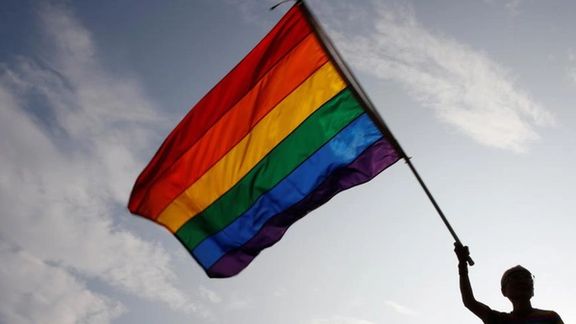
The US State Department slammed a law passed by Iraq’s parliament on Saturday criminalizing same-sex relationships as a threat to human rights and freedoms.
The US State Department slammed a law passed by Iraq’s parliament on Saturday criminalizing same-sex relationships as a threat to human rights and freedoms.
The statement also warned that the law would weaken Iraq’s ability to diversify its economy and attract foreign investment.
"This amendment threatens those most at risk in Iraqi society. It can be used to hamper free-speech and expression and inhibit the operations of NGOs across Iraq," a State Department statement said.
Iraq's parliament passed a law on Saturday criminalizing same-sex relationships with a maximum 15-year prison sentence, saying the move aimed to uphold religious values. Rights advocates condemned the law as the latest attack on the LGBT community in Iraq.
Iran and other Islamic countries have also anti-homosexuality laws of various severity.
Same-sex activity between male adults is a crime in the Islamic Republic and is punishable by death if it occurs between consenting adults according to the country’s Sharia-based criminal code.
The sentence for female homosexuality between consenting adult women, however, is 100 lashes in the first three instances and a death sentence will be carried out if the offense is repeated for a fourth time.
Proof of homosexuality requires a confession by the offenders or the testimony of four “righteous men”.
Death sentence for homosexuality was rarely carried out, but four men were hanged in Maragheh in northwestern Iran in two separate cases in July and January 2022.

Amini's tragic death occurred on September 16, 2022, in Kasra Hospital, Tehran, following her arrest by Iran's morality police for alleged improper hijab, igniting nationwide protests. She had received fatal head wounds and was in a coma for three days.
Her family filed a complaint in 2022 against those responsible for her arrest and subsequent treatment by the police.
Iranian authorities initially claimed Amini suffered a heart attack at a police station, leading to her collapse and coma before hospitalization. However, the state’s forensic authorities later suggested her death might be linked to thyroid medication, a claim disputed by her family. As previously reported by Nikbakht during his interview with Faraz Daily website, access to critical medical reports from Kasra Hospital had been denied, hindering independent assessments. But photos taken on her hospital bed showed what appeared to be severe head injuries received soon after she was arrested.
Over 800 members of Iran's Medical Council accused the head of the organization of aiding the government in concealing the circumstances of Amini's death. Last month, the UN Independent International Fact-Finding Mission concluded that her death was unlawful, holding the State responsible for physical violence in custody.

Amini's death triggered widespread protests from September 2022 to January 2023, known as the Woman Life Freedom protests. The government responded with a violent crackdown, resulting in hundreds of deaths and thousands of arrests.
Nikbakht and other legal experts advocate for public court trials, highlighting the secretive nature of Revolutionary Courts where sensitive political cases are often heard.
Nikbakht emphasized, "Last year, the trial of a number of lawyers accused of propagandizing against the regime was held in private, and the aforementioned lawyers were convicted and deprived of some social rights."
Iran's US-sanctioned judiciary chief, Gholam-Hossein Mohseni-Eje'i this week stated that he was in favor of public hearings "except for the cases that the constitution does not allow."
Criticism has also been directed at the Revolutionary Courts for their handling of cases related to the 2022 protests, with many protestors receiving harsh sentences, including execution and long-term imprisonment. Nikbakht himself faced charges of propaganda against the regime and was sentenced to one year in prison, while journalists reporting on Amini's death were similarly imprisoned.
Despite the legal stalemate surrounding Amini's case, the authorities swiftly conducted the trial of Amini's uncle, Safa Aeli, who was arbitrarily arrested and tortured in 2023. Aeli was sentenced to five years in prison by the Revolutionary Court in Saqez for charges including participation in protests, spreading propaganda against the regime, and insulting Supreme Leader Ayatollah Ali Khamenei. He was denied access to legal representation, highlighting ongoing human rights concerns in Iran and the lack of due process in legal proceedings in Iran's judiciary.


After speaking at a conference in India due to my work concerning Islamic extremist groups and the newly contentious Kashmir dispute between India and Pakistan, I flew to Srinigar in Indian Kashmir. I suspected I’d learn more about Sunni extremist groups such as Lashkar-e-Taiba, and how local Kashmiris were responding to the newly implemented reforms of Kashmiri governance due to changes to the Indian Constitution. But I also learned that the Iranian theocracy is very much a player in this drama too, and those who oppose its poisonous influence ought to be more aware of the threat Iran poses.
Understanding the politics of the region is key to understanding the importance of what Iran is doing. In brief, what was the princely state of Jammu and Kashmir prior to Indian independence and partition that was majority Muslim, but Hari Singh, the Maharaja, was Hindu. During partition, Pakistan invaded Kashmir, and the Indians, at Singh’s request, rushed in to defend the rest of the state. The conflict ended in a ceasefire that has functionally been in force since the late 40’s, but with numerous skirmishes and insurgent groups from Pakistan trying to reunite Kashmir over the decades.
In 2019, India removed Kashmir’s semi-independent status, a status originally intended to induce a negotiated settlement, and incorporated Kashmir fully into India. Along with a subsequent lockdown aimed at ending the ability of insurgent groups such as Hizbul Mujahideen to function, this was controversial. The Indian government has repeatedly stated that it will eventually grant full self-government to the state, including in proceedings before the Indian Supreme Court, but for the time it remains a Union territory without the same autonomy of another Indian state.
While the true views of Kashmir’s Sunni population is disputed, some support the Indian Government and at least some parts of the population are more in line with Pakistan, there is little doubt that Kashmir’s Shia community is largely favorable toward the Indian state, which they see as the better option compared to Sunni-run Pakistan. Shias are more favorable to the BJP party than your average Kashmiri, despite BJP’s reputation of having a strong Hindu identity. A local representative of a Shia community, Javid Beigh, has explained that that, in his view, “The separatist movement in Kashmir is primarily for establishment of radical Sunni Muslim Caliphate on lines of what ISIS has done in the Middle East or what Taliban did in Afghanistan.” This fear drives much of the Shia population to support the Indian Government’s actions in Kashmir.
But while Shia and Sunni Islamism can present different threats, they can also manifest as one, particularly when backed by an expansionist theocracy like Iran.
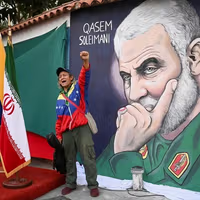
Iran’s influence in the region immediately became obvious when I visited the Hazratbal Shrine, a Kashmiri holy site that reportedly contains a lock of the Prophet Mohammad’s hair. Upon leaving, just a short drive from the Mosque, I saw a huge banner, hanging by the side of the road, that openly celebrated multiple Iranian Ayatollahs, and IRGC Quds Force Commander General Qasem Soleimani, responsible for the death of over 600 American soldiers not counting proxy groups that functionally reported to him, and countless people of other nationalities.

Iran, as a Shia theocracy and a regional power determined to become a regional (and, eventually, global) hegemon, this was perhaps not shocking. Iran’s pattern of seeking influence, and indeed control, of Shias in Lebanon, Iraq, and so on, are well known. I did not expect, however, for it to be so out in the open and celebrated.
Nor was this a one-off. I repeatedly saw similar such propaganda in every neighborhood with significant Shia populations, including various parts of Srinigar, and rural areas surrounding it. They seem particularly concentrated near Shia schools.

Nor was this influence limited to propaganda posters that were prolific in Shia heavy areas. More than once, when meeting with Shia leaders, I was greeted warmly with food that they readily, and even proudly, explained was from Iran. While India ceased buying oil from Iran under pressure from the US, there has been chatter of it resuming doing so, due to fears of disrupted transportation through the Red Sea, vis a vis the Iran backed Houthi movement. Even discounting oil, Iran and has a robust trade relationship with Iran in agricultural products. Indeed, India is Iran’s 3rd largest export destination. Thus, Iran’s influence in India is not merely about propaganda, but financial and cultural ties as well.
Iran seeks to influence Indian Shias through religious figures as well. One activist I met with, whose father was prominent Shia Cleric Aga Syed Hassan Mousavi Al-Safavi, proudly showed pictures of his father meeting with senior Iranian and Shia leaders, including the Secretary General of Hezbollah, Sheik Hassan Nasrallah, perhaps Iran’s most important terrorist proxy. Al-Safavi also retweets Iranian Supreme Leader Khamenei without further comment. So whether or not he agrees with his son, that Iranian meddling in Kashmir is “not helpful,” it remains true that Iran’s views find an open ear with at least a decent portion of India’s Shia population.
This is not true of all Shia, of course. First, there are sects of Shia, such as the Ismaili Shia Muslims, who hold a very different religious and political worldviews. Ismaili follow other clerics, currently led by Imam Shāh Karim al-Husayni, known as Aga Khan IV, the leader of the Ismaili community. Other, Twelver Shia follow Iraqi cleric Ayatollah Sistani and other clerics.
But it remains true that Iran seeks to influence Indian Shia clerics in Iran’s direction and meets with some success. Indeed, some Indian Shia clerics seek approval from Iranian clerics to join in celebrations with local Sunnis. And while it is true that there is some conflict between a number of Iranian clerics and the regime, scholars Reuel Marc Gerecht and Ray Takeyeh make it clear that is “no question who rules.”
The Iranian regime also reaches straight into India, using the Imam Khomeini Memorial Trust (IKMT) to train Shia clergy, particularly, but not exclusively, in the Kashmir region. IKMT makes no secret of its allegiances, posting pictures of the Iranian Supreme Leader on their Facebook page. Mohammad Prevez Bilgrami, a scholar who has extensively discussed Iran’s foreign policy, says that “India is well aware of,” Iran’s influence among Shia clerics, “(And) even silently endorses it,” stressing that “India views the Sunni Muslim fundamentalism and militancy emanating from Pakistan as its prime national-security threat.”
India is not wrong to view Pakistani radical groups, particularly backed by Pakistan’s military and intelligence, as a primary threat, and it is perhaps understandable that they seek better relations with Iran as a result. But that should not cause them to overlook the threat posed by Iran, including on the Kashmir issue. The Iranian Supreme Leader has openly raised the issue of Kashmir, comparing it to the Palestinian cause and Gaza in particular, a common tactic of Pakistani Sunni radicals as well. Particularly after October 7th, it should not take much of an imagination to realize that, if it should become convenient, Iran is capable of working with proxies to reign down death on India, just as it does Israel.
To quote former Pakistani Ambassador Hussain Haqqani, now living in exile in the United States, “Iran’s goals in Asia appear to be expansion of economic and political leverage, spread of Islamist ideology, and the recruitment of cannon fodder for its proxy wars. It also hopes to keep in check the influence of Israel, Saudi Arabia, and the United States.”
Indeed, Iran will seek to damage India’s budding and increasingly important relationship with Israel (a relationship so important and budding that Islamists and their allies on the far left openly seek to demonize the India/Israel relationship specifically) whenever it can, and will do the same with India’s close relationship with the Gulf Monarchies, as well as its increasingly close relationship with the US. Iran is already is seeking to use Indian Muslims as “cannon fodder” for its proxy wars, something Khamenei has praised openly.
Washington should seek to make it easier for Delhi to choose the US and its allies over Iran. But India should also be aware that Iran is trying to put its thumb on the scale against the US. India should what it can to resist the siren’s call of Iran’s influence operations because Iran has demonstrated time and time again, in Iraq, in Syria, in Lebanon, and beyond, it is no respecter of nations, and will not hesitate to tear countries apart to achieve its theocratic aims. Given enough time and resources, Iran will eventually turn its attention to India, and especially Kashmir. It’s already laying the groundwork.