Lawmakers Press Biden Admin On Use Of Crypto To Evade Sanctions
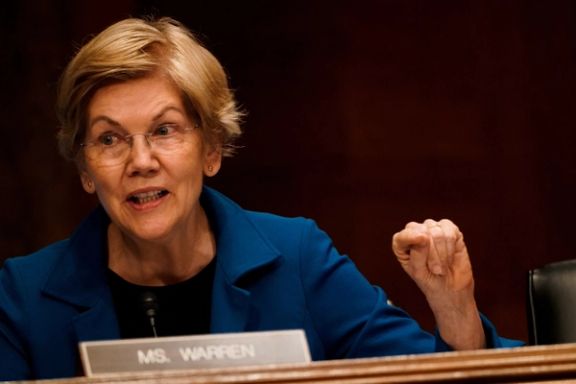
Two US lawmakers are pressing the Biden administration on the use of cryptocurrency to evade sanctions in Russia, Iran and North Korea.
Two US lawmakers are pressing the Biden administration on the use of cryptocurrency to evade sanctions in Russia, Iran and North Korea.
The lawmakers are asking officials what additional authorities might be needed to prevent digital assets, such as stablecoin Tether from being used by sanctioned entities in Russia and elsewhere.
The letter sent on Sunday by US Senators, Democrat Elizabeth Warren and Republican Roger Marshall, to officials including Treasury Secretary Janet Yellen and Defense Secretary Lloyd Austin show increasing scrutiny on how cryptocurrencies could be used to circumvent sanctions.
Warren and Marshall raised particular concern about the use of Tether, whose value is pegged to the US dollar and designed to maintain a stable value.
The Wall Street Journal reported earlier this month that Russian middlemen used Tether to evade Western sanctions in order to source weapons parts for drones and other military equipment.
Reuters also reported this month that Venezuela's state-run oil company PDVSA plans to use Tether in its crude and fuel exports as the US is set to reimpose oil sanctions on the country.
"The national security threat posed by cryptocurrency requires a commensurate response by our country's defense community," Warren and Marshall said. They noted that even though Tether's preferred crypto trading platform Garantex has been sanctioned, "it is not clear if these actions have stopped the flow of funds through the platform."
Tether did not immediately respond to a request for comment but has previously said it respects US Treasury's list of sanctioned entities and is committed to ensuring sanctioned crypto wallet addresses are frozen.
Reporting by Reuters

Mo'oud Shamkhani, former deputy head of Iran's Arvand Free Zone and nephew of a prominent Iranian official, has been arrested on charges of financial corruption totaling $2.1 billion.
Shamkhani is the nephew of Ali Shamkhani – the former Secretary of Iran's Supreme National Security Council who has held various high-ranking positions within the Iranian government and military.
In recent years, the economic activities of the Shamkhani’s family, including Ali Shamkhani’s two sons, his half-brother, wife and son-in-law, have been widely criticized and have made headlines in Iran.
Mo’oud Shamkhani previously served as an admiral in Iran’s navy and a former Islamic Revolutionary Guards (IRGC) commander.
The Tasnim News Agency, affiliated with the IRGC, reported that Shamkhani is accused of "receiving bribes and financial corruption" in the city of Abadan.
The Arvand Free Zone, which spans approximately 34,700 hectares, is a designated economic zone in southwestern Iran.
It includes industrial towns such as Abadan, Khorramshahr, Shalamcheh, and Minushahr and has been the focus of numerous corruption investigations in recent years.
High-profile arrests linked to the investigations include Esmail Zamani, former CEO of the Arvand Free Zone, who was arrested in December 2020, and Ahmad Rostami, former deputy for management development, who was arrested a few months later.
Mo’oud Shamkhani's arrest was made public on Sunday.
He was appointed as the Deputy for Technical and Infrastructure Affairs of the Arvand Free Zone in 2015, following his uncle Ali Shamkhani's appointment to the zone's board in January 2014.
Ali Shamkhani, now a member of the Expediency Discernment Council and a political advisor to the Supreme Leader of the Islamic Republic, has been a frequent target of criticism by “conservatives” in Iran.
In addition to the arrest, the Shamkhani family has been embroiled in various scandals, often related to accusations of nepotism including reports about Ali Shamkhani’s sons -- Hassan and Hossein -- owning dozens of businesses, such as large shipping companies, and misuse of power for financial gain.
Multiple reports have highlighted the lavish lifestyles of his family members both in Iran and abroad, raising questions about the sources of their wealth.
Controversies reached their peak following allegations of extravagant properties and bank accounts held by Shamkhani’s family, including those of his toddler grandson.

Families in Iran are struggling as the country's minimum wage fails to meet the poverty line, according to a study by the Parliament Research Center.
The report, which analyzed poverty trends from March 2022 to March 2023, has underscored a disparity between the minimum wage and the poverty threshold in Iran's provinces.
Incomes in Tehran, Alborz and Qom are inadequate to cover living expenses for a family of three, the study said.
The study also focused on patterns concerning nutrition and economic stability across Iran.
It highlights that half of Iran’s population falls short of the recommended calorie intake of 2,100 calories, with a significant decrease observed across all income brackets, particularly among middle-income earners.
This decline is primarily attributed to escalating inflation rates, which have soared to nearly 50%, leading to increased food prices and housing expenses, exacerbating the difficulties faced by Iranians, reducing their purchasing power, and widening the gap.
As a result of these challenges, many households are confronted with decisions such as cutting back on food consumption and prioritizing spending on durable goods amid a gloomy economic outlook.
According to the report, the poverty threshold for a three-person household in Tehran from March 2023 to March 2024 sits at 153 million rials (approximately $240), whereas the national average stands at 82 million rials ($130).
Meanwhile, Jalal Mahmoudzadeh, a member of the parliament, stated Monday that "currently, many Iranian families have fallen below the poverty line," warning that "the middle class has almost disappeared."
He added that the number of families living below the poverty line has more than doubled compared to the past.
The phenomenon of the "working poor" – individuals employed yet living in poverty due to low wages – is particularly evident in Tehran, Alborz, and Qom. Even among those holding formal employment, escaping poverty remains elusive.

The price of lamb in Iran has increased by around 60% in the past 12 months as basic food items continue to become beyond the reach of the average family.
According to Dideban-e Iran news website, the price per kilo has doubled in the last year to 6,200,000 rials ($11). Afshin Sadr-Dadras, the CEO of Iran’s Central Union of Livestock, announced in June that the country’s demand for red meat has halved as per capita consumption of the item has alarmingly decreased in just two or three years from 12 kg to 6 or 7 kg.
Amid the economic crisis, many Iranians had recently begun to replace red meat with poultry, as families struggle with even the most basic food items, but even poultry has now become inaccessible to many.
On Thursday, Ali Ebrahimi, the CEO of the National Union of Poultry Producers, said that poultry production has overtaken consumption over the past two months, resulting in a surplus of supply over demand and lowering the price of the commodity.
The decline in price has hurt poultry farmers who are set to export 5,000 tons of poultry to Iraq in the next eight days, he stated.
Reports received earlier in March by Iran International indicate a significant drop in people’s purchasing power and the elimination of many food items in their diets, including red meat, chicken, and fish, one third of the country now living below the poverty line.
According to the conservative Khorasan newspaper, the prices of various legumes, an important item in the Iranian diet, have increased by 30 percent and rice, also a staple, by 10 percent.
The sharp rise in inflation in Iran has not just affected the food market. According to Iran's leading economic daily Donyaye Eqtesad (World of Economy), rent prices in the country in April 2024 rose by around 42 percent compared to the same period last year.
Meanwhile, a real estate expert told Etemad daily that another increase of 40 percent or even more in rent prices is likely to occur in the next two months. Referring to the steady rise in Iran’s inflation rate, Abbas Akbarpour, Secretary of the Iranian Association of Road and Construction Engineers, remarked that landlords try to “preserve their capital” by determining the rent higher than the inflation rate and this means that rent prices are expected to increase even more.
The uncertainty in the economy and the continued depreciation of the national currency have led property owners to try to partially cover the effects of inflation in the next months, Akbarpour went on to say.
In more than a decade, Iran's economic growth has averaged zero. The situation has been further exacerbated since the US withdrawal from the JCPOA nuclear deal in 2018. Over the past six years, the rial, Iran’s national currency, has fallen 15-fold, fueling inflation and plunging millions of citizens into poverty.
An analysis of posts on Persian social media in March indicated that fast-growing residential rents have turned into one of the most serious economic concerns among Iranians.
After enduring a more than 40 percent annual inflation rate for the past five years and seeing their purchasing power slashed to a fraction of what it was in 2018, Iranians now have to struggle with rising rents that are surpassing the monthly salary of an ordinary employee.
In recent days, an increasing number of Iranian politicians, media outlets, and senior clerics have voiced criticism of the government's handling of the country's worsening economic crisis.

Pro-Palestinian student protests in the US are making headlines in Iran, as the regime and its media continue to bet on political trouble overseas to make up for lost legitimacy at home.
The ongoing encampments on campuses across the US have featured on the cover pages of many Iranian dailies in the past few days, triggering a considerable backlash from ordinary Iranians who view the stunt as ‘glaringly hypocritical’ from a regime that suspends, beats and imprisons students for much less than what students have been doing in the US in the past ten days.
“US universities are in the hands of students and professors that while condemning Israeli crimes in Gaza, are calling for the release of protesting students and the reinstatement of sacked students and members of faculty,” wrote the ultra-hardline Keyhan, which has been heralding the ‘demise’ and ‘end’ of the US and Israel for many years.
And, this time it is not just celebrating present events — but, the future, in which the author speculates that the US election hinges on the candidates’ support for Palestine.
The regime in Iran has always presented itself as the only true champion of Palestinians and their cause. This sentiment has become much stronger and prevalent since October 7th when Hamas, backed by Iran, rampaged border areas inside Israel, killing hundreds of civilians and drawing an Israeli onslaught – which has killed more than 30,0000 in Gaza.
Enraged by the Israeli military campaign in Gaza, students across the US have began organizing pro-Palestinian rallies and sit-ins to pressure their institutions to disclose and divest from funds and corporations that do business with Israel.
“See what is happening in the world,” Iran supreme leader Ali Khamenei posted on X Sunday.” In Western countries, in England and France, and in states across the US itself, people are coming out in huge numbers to chant slogans against Israel and America. US and Israel's reputation has been ruined. They truly have no solution.”
There’s little doubt that pro-Palestinian action has become more pronounced than ever. And there are many in the US who have expressed their displeasure with what they see as ‘heavy-handed’ response by university administration and law enforcement. But Khamenei may be the worst placed leader to address the issue.
The irony, as ordinary Iranians have been pointing out on social media, is hard to miss. It is a case of 'astounding hypocrisy', many say, of a regime who cheers on American students exercising their freedom of expression, while its prisons are humorously called ‘universities’ for hosting sheer numbers of students, graduates, and educators who have dared to speak their mind.
The ruling regime in Iran has a horrendous record in respecting the rights of its citizens. But its treatment of students and of modern, secular education has been particularly poor.
From shutting down universities in the name of Cultural Revolution in the early 1980s, to the bloody attack on dormitories at University of Tehran in the late 1990s, and the siege of Sharif University of Technology in 2022, the clerical regime has proven itself to be an archenemy of free and critical thinking that’s both the cornerstone and ultimate fruit of higher education.
It’s not at all surprising, then, that many Iranians, those with exposure to higher education, in particular, cannot help pointing out the regime’s hypocrisy on social media. “Those responsible for the calamity at the [University of Tehran] dorm, are now worried about American students,” posted an Iranian user on X last Friday –just one of dozens, perhaps hundreds, publicly voicing the same sentiment.

In recent days, politicians and academics in Iran have continued to highlight inefficiency, mismanagement, and negligence in President Ebrahim Raisi's government.
Some politicians, such as pro-Ahmadinejad lawmaker Ahmad Alirezabeigi who cannot believe the scale of chaos in the Raisi administration, are adamant that there are infiltrators in the administration who sabotage government's initiatives.
Others see the root of the problem in the government itself. Iranian academic Taghi Azad Armaki, a professor of sociology at the University of Tehran has been quoted by Iran International television as saying: "A government that came to power based on an ideological discourse, has no understanding of problems in the society."
Armaki also highlighted recurring news of corruption schemes. "When we ask government officials about embezzlements, they say this is done by the enemies. When we ask why the Iranian rial is falling, they promise to boost it but they do not know how."
Elsewhere in social media, Armaki said, "We are facing a weak government that is standing against a powerful nation. A large part of the government's weakness is the outcome of the inefficiency of its bureaucracy. The nation no longer trusts the government. No one in the government pays any attention to what Raisi says, although the people generally do not care what Raisi or his men in the government say."
Iran’s short-term economic outlook is bleak, according to some insiders and critics in Iran who, by and large, are allowed to comment publicly. Inflation, which stands at around 50 percent is expected to rise as the national currency has depreciated further since January.
Among regime figures, former Vice President Es'haq Jahangiri said last week that "We can hear the sound of the people's bones breaking," he remarked, emphasizing the severity of shortages. "The government must heed the people's voices and address their grievances," he added.
Sodayf Badri, a lawmaker from Ardabil told Etemad website that "There is chaos in the forex market. The Central Bank tells businesses that that it does not have any foreign currency to allocate to the importing of raw material.”
Meanwhile, ‘reformist’ politician Mahmoud Mirlohi told Khabar Online website: "Raisi has failed to stand by his promise to fight financial corruption in the government." He further charged that Raisi cannot name even two economic experts in his government.
Mirlohi highlighted the heavily politicized nature of Iran's economy, stressing that its problems are intrinsically linked to the unresolved foreign policy issues surrounding its nuclear program and the nuclear deal with world powers. He emphasized the interconnectedness of global events and Iran's economic situation, stating that "developments worldwide inevitably impact Iran's economy."
Over the past three years, many observers have criticized the weaknesses in Raisi's economic team and called for a cabinet reshuffle to address the issue. However, Raisi largely disregarded these concerns and repeatedly asserted that the country's economy was on a path to growth.
Mirlohi pointed out that “Raisi lacks both an economic plan and a coherent economic theory. Despite claiming to have a 7000-page economic plan during his 2021 presidential campaign, no one has seen even seven pages.”
Regarding Raisi's pledge to build four million houses in four years, Mirlohi expressed skepticism, stating that it is highly improbable for the administration to achieve even one million houses within the specified timeframe. He emphasized that based on Raisi's track record over the past three years, Iran's economy will continue to rely on government control, oil revenues, and concessions. Mirlohi highlighted the inherent issues with such an economy, asserting that it breeds corruption and impedes genuine progress.