Iranian Families Struggle With Country’s Subpar Minimum Wage
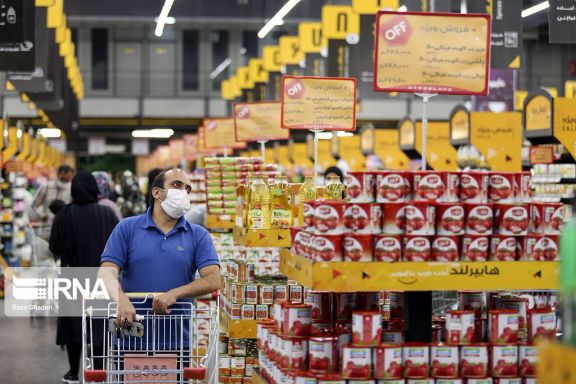
Families in Iran are struggling as the country's minimum wage fails to meet the poverty line, according to a study by the Parliament Research Center.

Families in Iran are struggling as the country's minimum wage fails to meet the poverty line, according to a study by the Parliament Research Center.
The report, which analyzed poverty trends from March 2022 to March 2023, has underscored a disparity between the minimum wage and the poverty threshold in Iran's provinces.
Incomes in Tehran, Alborz and Qom are inadequate to cover living expenses for a family of three, the study said.
The study also focused on patterns concerning nutrition and economic stability across Iran.
It highlights that half of Iran’s population falls short of the recommended calorie intake of 2,100 calories, with a significant decrease observed across all income brackets, particularly among middle-income earners.
This decline is primarily attributed to escalating inflation rates, which have soared to nearly 50%, leading to increased food prices and housing expenses, exacerbating the difficulties faced by Iranians, reducing their purchasing power, and widening the gap.
As a result of these challenges, many households are confronted with decisions such as cutting back on food consumption and prioritizing spending on durable goods amid a gloomy economic outlook.
According to the report, the poverty threshold for a three-person household in Tehran from March 2023 to March 2024 sits at 153 million rials (approximately $240), whereas the national average stands at 82 million rials ($130).
Meanwhile, Jalal Mahmoudzadeh, a member of the parliament, stated Monday that "currently, many Iranian families have fallen below the poverty line," warning that "the middle class has almost disappeared."
He added that the number of families living below the poverty line has more than doubled compared to the past.
The phenomenon of the "working poor" – individuals employed yet living in poverty due to low wages – is particularly evident in Tehran, Alborz, and Qom. Even among those holding formal employment, escaping poverty remains elusive.

The price of lamb in Iran has increased by around 60% in the past 12 months as basic food items continue to become beyond the reach of the average family.
According to Dideban-e Iran news website, the price per kilo has doubled in the last year to 6,200,000 rials ($11). Afshin Sadr-Dadras, the CEO of Iran’s Central Union of Livestock, announced in June that the country’s demand for red meat has halved as per capita consumption of the item has alarmingly decreased in just two or three years from 12 kg to 6 or 7 kg.
Amid the economic crisis, many Iranians had recently begun to replace red meat with poultry, as families struggle with even the most basic food items, but even poultry has now become inaccessible to many.
On Thursday, Ali Ebrahimi, the CEO of the National Union of Poultry Producers, said that poultry production has overtaken consumption over the past two months, resulting in a surplus of supply over demand and lowering the price of the commodity.
The decline in price has hurt poultry farmers who are set to export 5,000 tons of poultry to Iraq in the next eight days, he stated.
Reports received earlier in March by Iran International indicate a significant drop in people’s purchasing power and the elimination of many food items in their diets, including red meat, chicken, and fish, one third of the country now living below the poverty line.
According to the conservative Khorasan newspaper, the prices of various legumes, an important item in the Iranian diet, have increased by 30 percent and rice, also a staple, by 10 percent.
The sharp rise in inflation in Iran has not just affected the food market. According to Iran's leading economic daily Donyaye Eqtesad (World of Economy), rent prices in the country in April 2024 rose by around 42 percent compared to the same period last year.
Meanwhile, a real estate expert told Etemad daily that another increase of 40 percent or even more in rent prices is likely to occur in the next two months. Referring to the steady rise in Iran’s inflation rate, Abbas Akbarpour, Secretary of the Iranian Association of Road and Construction Engineers, remarked that landlords try to “preserve their capital” by determining the rent higher than the inflation rate and this means that rent prices are expected to increase even more.
The uncertainty in the economy and the continued depreciation of the national currency have led property owners to try to partially cover the effects of inflation in the next months, Akbarpour went on to say.
In more than a decade, Iran's economic growth has averaged zero. The situation has been further exacerbated since the US withdrawal from the JCPOA nuclear deal in 2018. Over the past six years, the rial, Iran’s national currency, has fallen 15-fold, fueling inflation and plunging millions of citizens into poverty.
An analysis of posts on Persian social media in March indicated that fast-growing residential rents have turned into one of the most serious economic concerns among Iranians.
After enduring a more than 40 percent annual inflation rate for the past five years and seeing their purchasing power slashed to a fraction of what it was in 2018, Iranians now have to struggle with rising rents that are surpassing the monthly salary of an ordinary employee.
In recent days, an increasing number of Iranian politicians, media outlets, and senior clerics have voiced criticism of the government's handling of the country's worsening economic crisis.

A group of 29 physicians were reportedly poisoned by “counterfeit alcoholic beverages” in the city of Shiraz, according to the Fars News Agency managed by the Islamic Revolutionary Guards.
The alcohol at the private event reportedly resulted in the death of one female doctor, left another in a coma, and caused several others to suffer from kidney failure.
Alcohol has been prohibited in Iran since the 1979 Islamic Revolution – with penalties including imprisonment, floggings, and fines for consumption, production, or sale.
First-time offenders can face up to 80 lashes, and repeated offenses may lead to the death penalty.
For years, however, Iranians have continued to consume both imported and homemade alcoholic drinks available through the black market.
A 2018 World Health Organization (WHO) report ranked Iran ninth out of 189 countries in alcohol consumption per capita, indicating a significant level of underground activity related to the production and distribution of alcoholic beverages.
The latest incident is part of a broader pattern observed in late June and early July 2023, where numerous poisoning cases were reported across several provinces including Tehran, Alborz, Mazandaran, Hormozgan, and Qazvin.
Those incidents were linked to the consumption of what has been termed by authorities as "counterfeit beverages" or industrial alcohol, which have also led to multiple deaths.
Most victims identified in the cases are reportedly between the ages of 20 to 40 years old.
Many Iranians see these events as a reflection of the continuous overreach of religious regulations into their personal lives and choices.

In a widely circulated video from the weekend, an Iranian mother is seen confronting Tehran’s security forces who attempted to arrest her daughter for not adhering to the mandatory hijab law.
Iran International has not yet been able to independently verify the authenticity of the footage, but the incident reportedly took place on April 28 at Hadish Mall in the Shamsabad area east of Tehran.
In the video, the mother asserts her rights by shouting at the police, "You won’t take my daughter anywhere," and insists that they wait for the girl's father to arrive before taking any action.
This latest video is part of a growing number of similar confrontations captured and spread on social media, showcasing the escalating tension between the Iranian populace and the authorities enforcing the hijab laws.
Recently, Iranian authorities have intensified those efforts under the regime’s new enforcement plan, dubbed “Plan Noor”.
This surge has resulted in violent crackdowns, targeting Iranian women on the streets.
Despite the regime’s efforts, there's a noticeable wave of civil disobedience sweeping across the country, with many women appearing in public spaces without hijabs, protesting against the impositions.
The ongoing crackdown on women follows several other troubling cases, including that of 16-year-old Armita Geravand, who fell into a coma after an altercation with hijab enforcers on Tehran’s subway in October 2023.
Reports suggest that she was pushed by a female security agent, resulting in a severe head injury – though the regime has attempted to obscure the incident's details.
The recent crackdowns, following a directive from Supreme Leader Ali Khamenei on April 13, have resulted in the arrest of hundreds of women across various cities in Iran.

The Iranian Islamic scholar Sedigheh Vasmaghi, who is currently imprisoned, is urging the international community to put an end to the ongoing oppression of women by the Iranian regime.
In a letter from prison, Vasmaghi issued the plea to the United Nations Fact-Finding Mission and other international human rights bodies, detailing her own personal abuses and the systemic oppression under the Islamic Republic's policies.
A copy of Vasmaghi’s letter was shared with Iran International.
Vasmaghi, who writes that she has devoted a significant portion of her life to studying and teaching Islamic jurisprudence, also asserts that there is no religious mandate under Islamic Sharia for women to cover their hair.
“The result of my research on women's clothing is that religious women are not required to cover their hair under Islamic Sharia and some independent researchers in the field of religion have come to the same conclusion,” the letter reads.
Security forces arbitrarily detained Vasmaghi on March 16 and transferred her to Tehran’s infamous Evin Prison.
Her arrest followed her public criticism of Supreme Leader Ali Khamenei as a dictator and her condemnation of the compulsory hijab laws, which have been central to the 2022 Women, Life, Freedom movement sparked by Mahsa Jina Amini's death at the hands of the country’s so-called morality police.
“Many Iranian women have been against the mandatory hijab law for decades, and I have removed my headscarf in opposition to this law and to protest against the oppression of women and their dignity,” Vasmaghi wrote.
Vasmaghi was subjected to interrogation without the presence of legal representation and transferred to prison without due legal process.
During her imprisonment, Vasmaghi says she has endured numerous hardships.
She has been denied access to legal counsel, appropriate medical treatment, and even basic accommodations for her disability. Her requests for assistance have been ignored, and she has been isolated from her family for refusing to wear a hijab. Additionally, she has suffered from health issues, exacerbated by stress and initially neglected by prison authorities.
Vasmaghi's opposition and protest extend beyond the mandatory hijab law itself to encompass the broader suppression of women's rights and dignity in Iran.
She maintains that the enforcement of such laws is not based on religious grounds but rather is a misuse of political power, inflicting psychological, physical, and financial damage on women.

Residents in Iran’s capital are being urged to take matters into their own hands and document crimes and law violations, following a call from one of Tehran's police chiefs.
The plea by Ali Valipour Goodarzi, the head of the Tehran Police Criminal Investigation Department, follows a violent assault on a public bus last month.
The unidentified assailant assaulted a passenger with a chain, before fleeing the scene.
The video of the attack quickly spread online – reportedly assisting the police in arresting the suspect, whose motives are still unknown.
In what can be described as a self-praising statement, Goodarzi on Monday, cited the case as an example of what he labeled as the "outstanding" performance of Tehran’s police.
Goodarzi’s appeal to the public coincides with intense scrutiny of the police department's effectiveness in maintaining safety in Tehran. Despite his optimistic depiction, many residents continue to voice their dissatisfaction, particularly criticizing the force's inability to curb crime in the capital.
Recent data underscores those concerns, suggesting that incidents such as theft have risen sharply, presenting significant challenges to public safety and security.
Asghar Jahangir, the deputy of social affairs for the judiciary, noted in December 2022 that theft has been the predominant crime in Iran for the last five years.
In addition, the police force’s enforcement of “Plan Nour” – which targets women refusing to wear the mandatory hijab – has further fueled the public’s discontent.
Criticism of the policy has extended beyond regime critics to include some supporters of the Islamic Republic – who don’t argue against the mandatory hijab law – but say that the police have been misallocating resources to suppress dissent rather than focusing on more prevalent criminal activities.