Iran reverse-engineered US stealth drone tech - Israeli daily
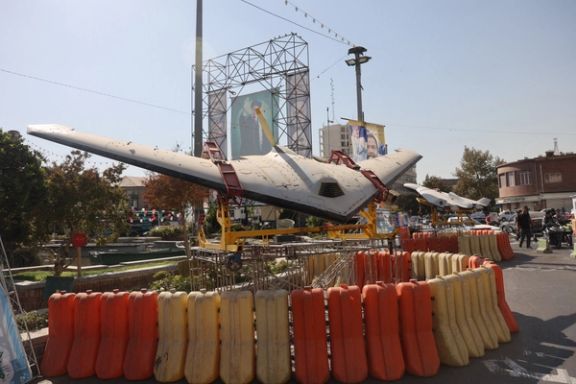
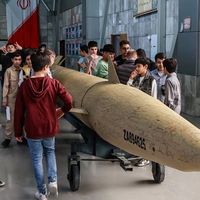
An Iranian drone is displayed during the Iranian Defence Week, in a street in Tehran, Iran, September 25, 2025.
Israeli financial daily Calcalist reported that Iran has possessed American stealth drone technology since 2011 and has since produced at least five radar-evading unmanned aerial vehicles.
The newspaper said Iran reverse-engineered the US RQ-170 Sentinel drone that crash-landed inside its territory in 2011, developing several variants under the Shahed series, including reconnaissance and attack models.
Calcalist warned that while Iran has used stealth drones in past operations, it did not deploy them extensively during the recent 12-day conflict, suggesting Tehran may be preserving the advanced systems for future engagements or export purposes.
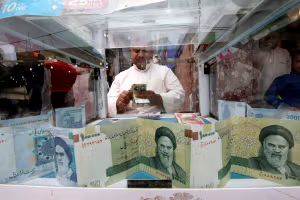
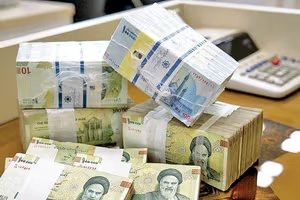
Iran’s parliament on Sunday approved a long-debated plan to remove four zeros from the national currency, the rial, in a bid to simplify financial transactions and improve the efficiency of banknotes.
Lawmakers passed the measure with 144 votes in favor, 108 against, and three abstentions out of 262 present. The reform amends the Monetary and Banking Law to redefine the rial as equal to 10,000 current rials and introduces a new subunit, the qiran or gheran, worth one hundredth of a rial.
Under the legislation, both old and new rials will circulate for up to three years during a transition period. The Central Bank of Iran (CBI) must establish operational procedures within two years of enactment and publicly announce the start of the change through official media.
According to the new law, after the transition period, all financial obligations denominated in the current rial will be settled using the new unit.
The CBI will also be responsible for managing the withdrawal of old banknotes and coins and for setting foreign exchange rates under the country’s current exchange regime.
The plan -- first proposed by the government in 2019 and discussed across three administrations and parliamentary terms -- has undergone multiple revisions. The latest version retains the rial as Iran’s official currency, dropping earlier proposals to rename it the toman.
Shamseddin Hosseini, head of parliament’s Economic Committee, said the measure’s main purpose was to “make banknotes more functional and facilitate financial transactions.”
He added that the abundance of zeros in the national currency had caused accounting and operational difficulties, adding that similar redenominations had been undertaken by countries such as Turkey in 2003 and 2005.
Hosseini acknowledged that cutting zeros would not directly reduce inflation or address Iran’s underlying economic challenges, but called it “an unavoidable adjustment” given years of high inflation and declining purchasing power.
Iran’s central bank governor Mohammad Reza Farzin said in May that the redenomination would take place this year as part of wider banking reforms.
The change, he added, would align official usage with common practice among Iranians, who already express prices in tomans -- equivalent to 10,000 rials.
The reform comes amid persistent inflation of about40%, a more than 90% loss in the rial’s value since US sanctions were reimposed in 2018, and widespread economic hardship.
Economists say that while the move could have short-term psychological benefits, it is unlikely to solve Iran’s deeper structural issues, including fiscal imbalances, monetary instability, and limited central bank independence.
“This policy is largely cosmetic,” economist Ahmad Alavi told Iran International in August. “Without tackling the roots of inflation -- from liquidity growth to systemic inefficiencies -- removing zeros will not restore the rial’s value.”
Iran has debated currency reform for decades, with earlier efforts raised under the administrations of Hashemi Rafsanjani, Mahmoud Ahmadinejad, and Hassan Rouhani. The current legislation, delayed several times by the Guardian Council, now returns to the body for final review before becoming law.
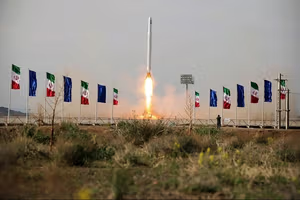
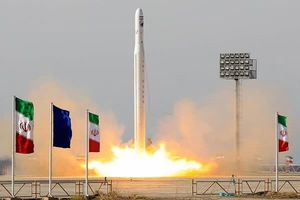
Iran’s upgraded Do-Namay 1 satellite, described as the country’s first hybrid remote-sensing and communications satellite, is ready for launch and expected to be placed in orbit in December, a senior aerospace official said.
Hossein Shahrabi, head of the Tehran-based knowledge-based company Omid Faza, told Tasnim news agency that preparations for the satellite were complete and that it would be launched aboard the same rocket that carried Iran’s Kosar and Hodhod satellites last year.
He said the new spacecraft combines Earth observation and telecommunications functions, integrating improved solar arrays and communication links to address problems that limited image transmission in earlier models.
“The issue linking attitude control to solar energy absorption has been resolved,” Shahrabi said. The satellite adds an S-band link, enabling full attitude control from the ground, he added.
The Do-Namay 1 is a modified version of the Kosar platform and marks Iran’s growing use of private-sector firms in its space program.
According to Shahrabi, image resolution has improved to about 3.5 meters, and its optical payloads now achieve near-ground-test performance levels.
The official said the satellite would be delivered to the launch operator within a month, with a target launch date in Azar, the ninth month of the Iranian calendar (November–December).
Iran loses two satellites
Shahrabi, referring to technical issues with the Kosarsatellite, said its attitude control and power absorption systems had become unintentionally interdependent.
“This prevented us from first stabilizing the satellite’s orientation and then delivering the necessary power according to the original design,” he explained.
“Although the satellite remains in orbit and we receive signals in some areas with sufficient sunlight, we ultimately failed to obtain any imagery from it.”
He added that communication with the Hodhod satellite was lost about two weeks before the 12-day war.
“I don’t want to directly link the satellite’s condition to that event,” he said, “but a series of incidents occurred, and unfortunately the satellite received an unauthorized command from outside the control system. After that, we completely lost contact with Hodhod.”
He added that Hodhod had been turning on and off repeatedly since the incident. “Unfortunately, we now have even less communication with Hodhod than with Kosar. I emphasize that I am not attributing this to the war -- since I am not certain -- but I mention it simply to inform those who want to know the latest status of the satellite.”
“We consider a technical malfunction more likely,” he added, “but there are two ambiguities -- first, the coincidence of this incident with the 12-day war, as it occurred roughly two weeks before; and second, the fact that we received a command from outside the guidance system prior to it.”
The announced launch comes as Iran accelerates plans to expand its space activities. The head of the Iranian Space Agency, Hassan Salarieh, said last month that Iran aims to launch four satellites by March 2026 and inaugurate a new spaceport in Chabahar, in the country’s southeast.
These include an updated Kosar Earth-observation satellite and prototype satellites from the planned Soleimani narrowband constellation, intended to support Internet of Things services.
Western governments have repeatedly expressed concern that Iran’s satellite launches could aid its ballistic missile program, citing overlapping technologies. Tehran says its space program is purely civilian and aimed at scientific and communication applications.
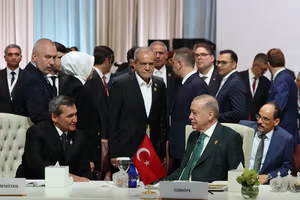
Turkish President Recep Tayyip Erdogan’s sudden decree to freeze the assets of dozens of Iranian individuals and entities linked to Tehran’s nuclear program has jolted Tehran, provoking sharp criticism across Iranian media.
On October 1, the Turkish president froze the assets of the Atomic Energy Organization of Iran, Bank Sepah and several firms involved in nuclear fuel production and uranium conversion, moving in lockstep with the latest UN sanctions against Tehran.
Erdogan's order revived provisions of earlier UN Security Council resolutions that had been put on hold after the 2015 nuclear agreement with Tehran.
However, the Atomic Energy Organization of Iran (AEOI) rejected reports that its assets had been frozen in Turkey.
Iranian media also said that several blacklisted bodies—including Bank Sepah and the AEOI itself—have no operations in Turkey, limiting the practical effect of the order.
Still, the move was significant: so far, the E3 (France, Britain and Germany), the European Union, the United States, Japan, Australia, New Zealand, and now Turkey have announced compliance with the reinstated UN sanctions.
The United States welcomed Ankara’s step, while Russia and China dismissed the measures as “null and void.”
Iran's friend or foe?
Iranian media and political commentators reacted with sharp criticism.
“Turkey’s early alignment with anti-Iran sanctions resolutions and its symbolic recognition of them is objectionable,” the conservative daily Farhikhtegan wrote in an editorial titled “The Realities of Turkey’s Sanctions Against Iran".
Conservative commentator and former Javan editor-in-chief Abdollah Ganji expressed disbelief on X: “Apparently, Turkey has taken the lead in the snapback… it has outpaced the Westerners. It's unbelievable. 18 companies? By Erdogan's decree? Is this true? What is the opinion of the Ministry of Foreign Affairs?”
Ehsan Movahedian, another conservative analyst, told state TV: “While Russia and China have not joined anti-Iran sanctions and Pakistan seeks barter trade, Turkey has taken the lead. We must correctly identify our friends, enemies, and rivals, and act accordingly.”
Counterpoint: ‘only compliance with UN resolutions’
Not all commentary was condemnatory. Some argued Turkey’s action was more a matter of obligation than betrayal.
“Even if (Turkey) was an ally, it would still do so. So would Iran if it were in Turkey’s place,” journalist Reza Ghobeishawi wrote on X. “The problem is not with Turkey but in the mind and mistaken perceptions inside (Iran) that brought things to this point.”
Reza Nasri, an international affairs commentator, however, accused Erdogan of lacking courage to break with Western frameworks in post on X.
He argued that most states recognize that Iran's nuclear program poses no threat to international peace to be subjected to UN Charter's Chapter VII measures, so Turkey and other states have every legal justification not to comply.
“Only courage to stand by the law is required.”
Signal to the West?
Several Iranian outlets suggested Turkey’s decision was more about geopolitics than legality.
“These sanctions are mostly symbolic since many of the listed entities are not active in Turkey. Erdogan seems to be sending a message to Trump that he stands with the West,” Ali Heydari, a Turkey analyst at the IRGC-linked Tasnim News Agency, posted on X.
Shaya News argued: “At first glance, Ankara justifies the measure as compliance with international obligations and legal commitments toward the UN. But at a deeper level, the decision raises serious questions about neighborly relations, bilateral principles, and the extent of Turkey’s foreign policy independence under international pressure.”
Impact on Iran–Turkey relations
Iran’s Foreign Ministry has so far remained silent. But commentaries warn the move could hurt trust and trade between the two neighbors, particularly in energy and finance.
“This choice comes at the expense of sacrificing bilateral relations with Iran,” Shaya News wrote.
“The asset freeze not only casts a shadow over Iranian investors and businessmen’s trust in Turkey but could also deprive Turkey of the benefits of its thriving economic relations with its eastern neighbor.”
Farhikhtegan similarly warned that Tehran’s response should be “proportionate to Ankara’s alignment with the White House’s anti-Iran policies.” It added that Turkey’s status as a NATO member and US security ally cannot be ignored.
“Should Ankara move toward serious anti-Iran measures—whether sanctions or security-related—then Iran’s approach to Turkey must necessarily be recalibrated within a security framework,” the newspaper wrote.
Cosmetic surgery clinics in Iran are reporting record demand as social media trends push women toward extreme procedures often financed through credit and loans.
Iran, along with the likes of Brazil and South Korea, has long prized surgically enhanced beauty standards especially in the form of rhinoplasty. But demand has now expanded to liposuction, tummy tucks and breast and buttock augmentations.
Women make up nearly 80 percent of patients, with operations estimated to number several hundred thousand each year.
One aspiring patient, Neda, 29, from Tehran, confessed to seeking to reshape her body under the influence of her partner. “My boyfriend keeps liking bloggers with huge butts and breasts, and I want to be what he likes,” she wrote.
“I’m terrified he will lose interest if I don’t change.”
Another, Sara, 31, also from Tehran, discussed the financial burden. “I’m paying in monthly installments. That’s the only way I can do this. I just want my body to look right in clothes.”
Interviewees spoke to Iran International on condition that their names not be revealed.
A theocracy for 46 years which has enforced Islamic veiling and loose clothing on women, the country has inched toward more laxity as a stringent new hijab and chastity law was paused this year out of concern it would stoke unrest.
An Iranian blogger
'Can't look away'
Ladan, 27, described proudly how cosmetic operations reshaped her social life as much as her body. “With a Brazilian butt and big breasts, all eyes are on me at weekend gatherings,” she said. “Even married men can’t look away.”
This view is challenged by many women who point to the subtle but constant pressures of patriarchy behind these choices.
"A question I often hear here is women asking men, 'are you a boobs or butt guy?'” UK-based Iranian feminist Samaneh Savadi wrote on X. “Each time I’m surprised and wonder to myself whether these women are secretly hoping the answer will be, ‘Neither, personality matters more to me’.
"As American author Naomi Wolf has argued, a culture fixated on female thinness is not an obsession about female beauty, but an obsession about female obedience.”
Image obsession
Instagram plays a central role in all of this.
Beauty bloggers and influencers, their photos sculpted by filters as much as surgery, set new expectations for how a body should look. For many, the pressure is relentless.
“It’s not just about beauty—it’s about staying relevant,” Sara explained. “You see the perfect pictures and wonder if anyone will notice you if you don’t look like that.”
Not all accounts are triumphant. Farnaz, 36, a mother of two, described the sacrifices behind her decision.
“After childbirth my breasts sagged and my stomach was loose. I feared my husband would lose interest. I sold my jewelry to pay for implants, lipo, and a butt lift. Now he is pleased, and my sex life mattered more than gold.”
Such experiences show how beauty operations are framed not only as self-improvement but as survival—of marriages, relationships or social standing.
While women make up the majority of patients, there is a surge in male clients seeking procedures once considered taboo.
Popular operations include hair transplants, liposuction, jawline contouring and even pectoral and ab sculpting.
Clinics advertise these services in the same breath as breast lifts or nose jobs, underscoring how beauty standards are increasingly marketed to men as well.
Beauty prices
Price lists explain the demand. Breast augmentations range from $850 to $1,700. Liposuction for one area costs $300–600, with full-body packages starting at $1,800. Brazilian butt lifts run between $500 and $1,500.
The contrast with global prices is stark. In the United States or the United Kingdom, such procedures often exceed $10,000. Iran’s bargain rates draw foreign clients, while locals depend on financing.
Clinics advertise repayment plans that spread costs across years, normalizing surgery as a consumer purchase.
'No magic'
But beneath the glossy ads lie dangers.
Qualified surgeons warn of unlicensed operators who flourish on social media, promising impossible results with manipulated images in “before and after” galleries.
With no central registry, complications are hidden, and patients often rely only on word of mouth.
“People believe surgery is magic,” a Tehran-based surgeon who spoke on condition of anonymity told Iran International. “But bodies are different, and there are limits. Some patients don’t want to hear that part.”
An image used by an Iranian clinic to promote gluteoplasty
From boyfriends comparing them to bloggers to mothers pawning jewelry to preserve marriages, stories in clinics and forums highlight the personal sacrifices behind Iran’s cosmetic surgery boom.
In today’s Iran, beauty is pursued through loans and credit which buy beauty and lasting financial strain in equal measure.
Israel’s military and defense establishment said on Saturday there was no indication of an imminent Iranian strike or an Israeli plan to hit Iran, Israeli media reported, after opposition politician Avigdor Liberman warned that Tehran was preparing a surprise attack.
Senior Israeli officials were quoted by Hebrew media as calling Liberman’s post on X “bizarre and detached from reality.”
Defense officials cited by Channel 13 said that such comments could lead to a “miscalculation” in which Iran might assume Israel was preparing an assault and respond preemptively.
Sources cited by Ynet said Israel had chosen not to officially reply “so as not to bolster” Liberman’s remarks, adding there was “no substance to them.”
Liberman, head of the Yisrael Beytenu party and a former defense minister, wrote on X on Friday that “whoever thinks the conflict with Iran is over is misled and misleading,” saying that Tehran was restoring activity at its nuclear sites and “trying to surprise us.”
He urged Israelis to celebrate the Sukkot holiday “close to protected spaces,” adding, “This government cannot be trusted. Until we’ve fixed their damage, we have only ourselves and the IDF to rely on.”
In a new post on Saturday, he listed what he called “open-source intelligence,” showing Iran’s missile and nuclear activity since late July, including satellite images at Natanz, reports of missile tests, and new sanctions by the United States and Europe. “All these facts together must lead us to the conclusion that the Iranians are not seeking a Nobel Peace Prize, but revenge,” he wrote, adding that the next confrontation with Iran was “not a question of if, but when.”
The IDF Home Front Command said there were “no changes to its guidelines,” while defense officials accused Liberman of fearmongering.
Officials warn against political missteps
Defense sources told Hebrew outlets that intelligence agencies have not detected preparations for a new Iranian offensive or for Israel to launch one. They warned that inflammatory rhetoric from politicians could prompt Tehran to misread Israel’s posture.
Israeli assessments cited by Ynet indicate that Iran is attempting to rebuild its air defense systems destroyed in the June war and to restart limited ballistic missile production, reportedly seeking technical help from China, Russia, and possibly North Korea. However, the reports said there are no signs Iran has resumed uranium enrichment or nuclear weapons development, and Supreme Leader Ali Khamenei has yet to decide on reactivating those programs.
Officials expressed concern that Iran’s suspension of cooperation with International Atomic Energy Agency inspectors has left critical blind spots, including uncertainty over its stockpile of roughly 400 kilograms of uranium enriched to 60 percent. Intelligence officials view the chance of Iran producing a crude device or “dirty bomb” as remote.
An anti-Israel billboard is displayed on a building in Tehran, Iran, October 2, 2024.
Kayhan says confrontation 'very probable'
In Tehran, Kayhan—a newspaper supervised by Khamenei’s office—published a Saturday editorial asserting that the world stands “on the brink of a historic turning point.” The paper said a renewed confrontation between Iran and what it called “the American-Zionist front was very probable,” citing Liberman’s own words as proof that Israel was bracing for another war it might not win.
“It is not necessarily the case that this time the opponent will strike first,” Kayhan wrote, arguing that Iran’s unity and deterrence capabilities had prevented its defeat in the 12-day war in June. The editorial linked economic volatility in Iran to foreign hybrid warfare and urged authorities to reinforce “military strength, domestic cohesion, and resistance economics” as protection against renewed aggression.
While Israel’s defense establishment insists calm prevails, Kayhan portrayed the same moment as an approaching inflection point—one in which, it warned, “the future will be shaped by vigilance and strength, or lost to weakness.”