France says Iran freed cyclist charged with espionage
A woman walks past posters with the portraits of Cecile Kohler and Jacques Paris, two French citizens held in Iran, on the day of support rallies to mark their three-year detention and to demand their release, in front of the National Assembly in Paris, France, May 7, 2025
An 18-year-old French national acquitted by an Iranian court of charges he had spied for Israel has been freed, its foreign minister said on Wednesday, adding that efforts continue to secure the release other detainees.
Jean-Noël Barrot gave no further details about the circumstances of Lennart Monterlos's release but called for of two other citizens held by Tehran on espionage charges to be freed as well.
He had been arrested in Iran in June around the time of a surprise Israeli air campaign that exposed intelligence failures and killed hundreds of military personnel and civilians.
A statement from the French Foreign Ministry said Monterlos has been reunited with his family.
"I do not forget Cécile Kohler and Jacques Paris, whose immediate release we demand," he added in a post on X.
Iran detained the pair 2022 and subsequently aired what appeared to be a forced confession in which they admitted to spying for Israel on state television.
Iranian Foreign Minister Abbas Araghchi suggested last month that the two could be exchanged for Mahdieh Esfandiari, an Iranian woman arrested in Lyon in February on charges of promoting terrorism through social media.
Last month, a British couple, Craig and Lindsay Foreman, appeared in court in Tehran on similar espionage charges after being held since January.
Western governments and human rights organizations accuse Tehran of detaining foreign nationals to gain political leverage in disputes with Europe and the United States.
Iran rejects the allegation, saying such cases are based on legitimate security concerns.
France withdrew its case against Iran at the International Court of Justice (ICJ) over the detention of Paris and Kohler, the court announced last month without elaborating. It was unclear if the move indicated their release was approaching.
Iran’s minimum wage has increased each year in local-currency terms, but its dollar value has dropped sharply as the rial weakened, leaving workers effectively poorer despite nominal pay rises, labor reports and activists say.
The state-run Supreme Labor Council has approved successive annual increases, including a 45% rise for 2025 that set the base salary at roughly 104.4 million rials.
Yet at current market rates at about 1,160,000 rials per dollar, that monthly wage is worth about $90–$110 depending on benefits, compared with about $238–$300 in 2016 when the minimum was over 81 million rials (today less than $7) and the dollar traded near 34,000 rials, according to calculations cited by ILNA.
Labor activist Bahram Hassaninejad said the living standards of wage earners have “severely declined in both quality and quantity,” adding that many now work merely to survive.
He said the erosion of workers’ material and social standing has deepened over time, with little sign of recovery to conditions seen a decade ago. “Every administration that has come to power has only completed the anti-labor policies of the previous one,” he added.
According to labor groups, modest state subsidies and food vouchers have failed to close the widening gap between wages and living costs. Many workers now take on extra or informal jobs -- from driving and street vending to collecting recyclables --in an effort to keep their families afloat.
Regular labor protests have continued over worsening economic conditions. Demonstrators often hold signs reading, “Our wages are in rials, but the costs are in dollars,” highlighting how dollar-linked prices and imported goods have eroded real incomes despite repeated pay increases.
Independent estimates reported by Iranian outlets suggest today’s base wage covers only a fraction of a typical household’s monthly expenses.
One labor advocate said a standard basket of basic goods for a three-person family far exceeds the minimum salary, adding, “With this income, a family can only cover a few days of essential costs.”
Officials say annual wage-setting follows the law, which requires consideration of inflation and basic needs. Economists caution that large nominal raises, without broader reforms, can feed prices while failing to restore purchasing power.
Iran’s judiciary has indicted 17 foreign nationals accused of smuggling fuel after their tanker was seized in the Gulf of Oman in July, the head of Hormozgan province’s justice department said on Wednesday.
Mojtaba Ghahremani said the suspects, from four different countries, were detained when Iranian forces intercepted the vessel east of Hormozgan province. The ship was carrying more than 2.3 million liters of diesel, he said, adding that the case has now been sent to court for trial.
The indictment follows the July 14 seizure, when Iranian border guards and naval units boarded the tanker near the port of Jask. State media later identified the vessel as the Phoenix, sailing under the Cook Islands flag. Authorities at the time said the ship was transporting smuggled fuel, with the cargo valued at roughly $840,000.
Iran has stepped up maritime enforcement in the region, citing large-scale fuel smuggling driven by price differences with neighboring countries. In recent months, the Revolutionary Guard and other security forces have reported multiple operations in the Gulf of Oman and the Strait of Hormuz — a strategic waterway for global oil shipments.
In April, the IRGC Navy said it intercepted a vessel carrying about 100,000 liters of fuel and arrested six crew members. Around the same time, two other tankers alleged to be transporting more than 3 million liters of diesel were seized and taken to the port of Bushehr.
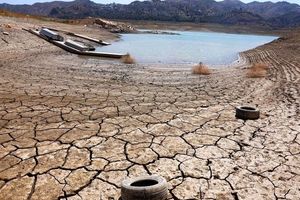
Expanding salt storms from the dried basin of Lake Urmia in northwestern Iran have forced residents to abandon nearby villages, damaged farmland and raised fears of long-term health risks, Iran’s Labor News Agency reported on Wednesday.
The outlet said years of drought and groundwater depletion have left once-fertile fields barren, destroying local agriculture and livelihoods.
Farmers told ILNA that widespread crop failure has driven them to close their orchards and shops, with some families migrating to nearby towns.
“The salt-laden winds have made breathing painful. People are leaving,” one resident said.
Local officials warned that the storms -- clouds of fine salt lifted from the desiccated lakebed -- are contaminating soil and water and triggering respiratory and even cancer-related illnesses among remaining residents.
In the village of GovarchinGhale, population has dropped from more than 470 families to around 130, mostly elderly people, according to the village council.
ILNA cited environmental experts linking the worsening crisis to decades of overpumping and illegal wells.
Urmia County Governor Rasoul Moghabeli said the number of wells in the lake basin had surged from 7,000 to over 90,000 in recent years, putting dangerous pressure on the groundwater.
Officials from the Urmia Lake Restoration Headquarters denied reports of mass migration, saying the reports were politically motivated, but acknowledged that more than 90% of water consumption in the region goes to agriculture -- much of it for water-intensive crops such as apples and sugar beet.
They warned that unless irrigation practices are reformed and unauthorized farmland reclaimed, the salt storms could expand across northwestern Iran within a decade, threatening millions of residents.
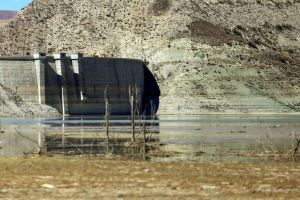
The report comes as Iran faces a deepening nationwide water emergency with 19 major dams close to depletion.
Australia has introduced legislation that would, for the first time, allow its government to designate foreign state entities -- including Iran’s Islamic Revolutionary Guard Corps (IRGC) -- as terrorist organizations.
Attorney-General Michelle Rowland presented the bill to Parliament, saying it aims to close a major legal gap in Australia’s counterterrorism framework by permitting the listing of state-backed organizations accused of supporting or conducting terrorist acts.
The move follows findings by the Australian Security Intelligence Organization (ASIO) that the IRGC was involved in two anti-Semitic attacks in Sydney and Melbourne in 2024.
Rowland said the new Criminal Code Amendment (State Sponsors of Terrorism) Bill 2025 would strengthen Australia’s ability to respond to “malicious foreign actors” and serve as a warning to any state seeking to threaten the country through violence or coercion.
“This bill strengthens Australia’s counterterrorism framework, creating an environment in which it is more difficult, more risky, and more costly for foreign actors to cause harm,” she told Parliament.
Under the proposed law, the government would gain the power to list foreign state agencies or entities as state sponsors of terrorism if they are found to have directly or indirectly planned, supported, or financed acts of terrorism against Australia.
Once listed, it would become a criminal offence to collaborate with, fund, or provide material assistance to those entities. Limited exemptions would apply for diplomatic or legal obligations.
The legislation introduces new criminal offences, including preparing or participating in state-sponsored terrorist acts and offering material support to listed state actors. Intelligence and law enforcement agencies would also receive expanded powers to investigate and disrupt suspected state-linked terrorism.
A flag flutters above the Embassy of the Islamic Republic of Iran in Canberra, Australia, August 26, 2025.
ASIO findings link IRGC to attacks in Australia
The bill comes after a series of actions by Canberra against Tehran. In August, Prime Minister Anthony Albanese expelled Iranian Ambassador Ahmad Sadeghi following ASIO’s conclusion that the IRGC directed two arson attacks on Jewish sites -- one at a kosher restaurant in Sydney and another at a synagogue in Melbourne.
“ASIO has now gathered enough credible intelligence to reach a deeply disturbing conclusion that the Iranian government directed at least two of these attacks. Iran has sought to disguise its involvement,” Albanese said.
He described the incidents as “extraordinary acts of aggression orchestrated by a foreign nation on Australian soil.”
The proposed law would align Australia more closely with allies such as the United States, which designated the IRGC as a terrorist organization in 2019.
The group, established in 1979 after Iran’s Islamic Revolution, reports directly to Supreme Leader Ali Khamenei and wields significant military, political, and economic influence at home and abroad. Its Quds Force oversees operations that have supported armed groups in Lebanon, Gaza, Yemen, and Syria.
Australia’s move follows its decision last week, along with New Zealand, to implement revived United Nations sanctions on Iran after European powers triggered the snapback mechanism over Tehran’s nuclear program. The sanctions reimposed restrictions on arms, finance, and missile activities.
Canberra has also joined G7 nations in condemning Iran’s repression of dissidents abroad and intimidation of diaspora communities. In September, Australia warned of “transnational repression” targeting journalists and Jewish groups.
Rowland said the latest legislative step reflects Australia’s evolving security environment. “The threats we face are changing,” she said. “This bill ensures that our national security laws remain fit for purpose -- robust, balanced, and capable of protecting all Australians.”
Turkey’s accelerating move to replace Russian and Iranian pipeline gas with domestic production and US liquefied natural gas (LNG) could shrink Tehran’s last major European export market, Reuters reported on Wednesday.
According to the analysis, written by Can Sezer, Ankara could meet more than half of its gas demand by 2028 through expanded production and LNG imports, sharply reducing the need for pipeline supplies from Iran and Russia.
US President Donald Trump has urged NATO ally Turkey to scale back energy ties with both countries, and the shift aligns with Washington’s push to isolate Moscow and Tehran from global energy markets.
Iran currently supplies Turkey with around 10 billion cubic meters (bcm) of gas annually under a contract due to expire in mid-2026.
The analysis said Ankara is unlikely to renew it under the same terms as it seeks greater flexibility and diversification.
The move comes as Turkey’s energy ministry boosts domestic gas output and signs multibillion-dollar deals to import LNG from the United States and Algeria.
Reuters calculations suggest Turkey’s domestic production and contracted LNG imports will exceed 26 bcm a year by 2028 -- compared with 15 bcm in 2025 -- enough to cover more than half of its estimated 53 bcm annual gas demand.
The remaining import gap of 26 bcm would be far below the 41 bcm currently contracted from Russia, Iran, and Azerbaijan combined.
Iran, already facing renewed UN and Western sanctions over its nuclear program and military activities, could see one of its most reliable export markets eroded as Turkey repositions itself as a regional gas hub, according to Sezer.
Ankara has also expanded its re-export capacity, recently signing supply deals with Hungary and Romania through its state-owned energy company BOTAS.
While Turkey has maintained that it will continue sourcing gas from all available suppliers, including Iran and Russia, its long-term strategy increasingly favors flexible LNG purchases over fixed pipeline contracts.