Hardliners fault Iran government for lax hijab enforcement
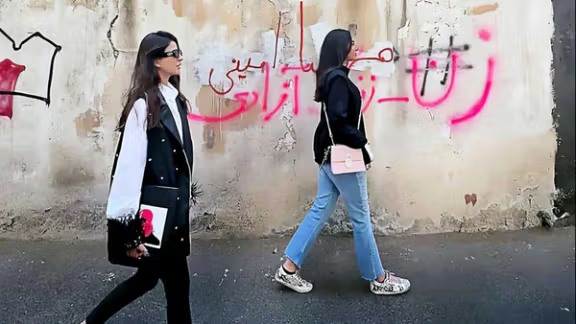
Hardline clerics and lawmakers have accused Iran’s government of neglecting mandatory hijab enforcement, after outrage over a mixed-gender event reignited debate on public appearance and the state’s waning control over personal freedoms.
The event, held in a café where participants appeared in what officials described as “unorthodox attire,” has renewed debate over the government’s role in regulating how citizens dress in public, Mehr News reported on Saturday.
“Authorities had effectively distanced themselves from responsibility, preferring inaction to a defined policy, even as disagreements over personal freedoms and appearance grow more visible across society,” wrote Mehr.
According to Iranian law, the national Working Group for the Regulation of Fashion and Clothing — established under a 2006 act of parliament — is charged with promoting clothing designs “reflecting Iranian-Islamic culture” and guiding the domestic market toward local styles while discouraging “foreign or unfamiliar models.”
The body has failed to meet those goals, Mehr reported. “The current state of fashion shows the neglect of this working group,” the outlet wrote, adding that “there is no sign of guidance in production or marketing.”
According to a 2022 survey by independent Netherlands-based research group GAMAAN, over 70 percent of men and women in Iran opposed mandatory hijab laws.
In Iran, the mandatory hijab serves not only as a religious practice but also as a political emblem woven into the state’s identity. Since 1979, its mandatory observance has been portrayed as a sign of revolutionary integrity and defiance toward Western cultural influence.
For hardliners, enforcing the hijab affirms the Islamic Republic’s legitimacy, while resistance to it is seen as defiance of state authority. As a result, women’s clothing has become a persistent political fault line.
Since the death in morality police custody of Mahsa "Jina" Amini in September 2022, many Iranian women have continued to reject compulsory hijab laws, turning individual gestures of dissent into a broader collective challenge. In Tehran and other major cities, appearing unveiled in public has increasingly become an everyday act of resistance.
•
•
Broader debate over hijab enforcement
The controversy unfolded as senior clerics and lawmakers renewed calls for strict hijab enforcement, despite the visible defiance of women and girls across Iran.
At a joint session of the Assembly of Experts, member Hashem Hosseini-Bushehri said “both cultural and economic neglect had caused distress among religious authorities and the public.”
“If the issue of hijab is not managed properly, it will worsen like a cracked dam,” Mojtaba Zolnour, a parliament member from Qom, warned Friday. He accused parliament’s leadership of inaction.
Friday prayer leaders nationwide echoed similar messages in coordinated sermons. Tehran’s temporary prayer leader Mohammad Javad Haj Ali Akbari urged “observance of modesty in public,” while Shahrekord’s cleric Mostafa Hashemi said hijab was “a divine obligation, not a personal right,” and that neglecting it “disturbs the community’s psychological peace.”
Despite such rhetoric, the government has quietly suspended enforcement of a strict hijab bill amid fears of renewed protests.
Conservative figure Mohammad-Reza Bahonar said in a recent interview that “the era of ruling the country by forcing hijab through law is over,” adding that the Supreme National Security Council had cut the bill.
Yet in recent weeks, authorities have sealed cafés and restaurants across cities for noncompliance after outcry by hardliners. Police warned that all businesses “must observe current laws,” signaling that Iran’s long-running struggle over dress and personal freedom remains unresolved.
Almost no living wetlands remain in Iran’s Fars province, a situation that environmental experts say is worsening public health and driving up cancer rates, the Iranian Labor News Agency (ILNA) reported on Saturday.
Bakhtegan, once the province’s largest wetland, has been dry for over 14 years, ILNA said in its report. “Except for a very small area, no water is visible.”
An environmental activist described the situation of Iran’s wetlands as deeply alarming. “The condition of wetlands is now very dire, and it seems that no specific body has taken responsibility for them,” Sirus Zare said in remarks cited by ILNA.
Dried wetlands have become new sources of dust storms, he warned. “Wetlands are naturally low-lying areas that have accumulated pollutants over thousands of years. Once dry, they turn into active dust centers that spread toxic particles,” he said.
Nationwide ecological collapse
The report linked the crisis to Iran’s overuse of groundwater and mismanaged water projects that have reduced the natural flow to lakes and wetlands nationwide. As a result, nine major wetlands dried up by the end of the last water year.
The Karun River, Iran’s longest waterway at more than 950 kilometers, is also nearing an environmental disaster, according to the report.
Further north, Lake Urmia has nearly disappeared after years of warnings from environmentalists. The lake now holds only about 100 million cubic meters of saline water spread over 200 square kilometers, with an average depth of less than half a meter. Experts say the lake is “practically dead” and may evaporate completely within days.
Expanding water crisis
Even Gilan province, one of Iran’s rainiest regions, faces shrinking wetlands. Gilan’s governor, Hadi Heghshenas, said in September that “If no solution is found, Anzali Wetland — an international ecosystem — will fall silent completely.”
On October 10, coinciding with the annual Zayandeh-Roud River Day, concerns mounted over the critical state of the river in the central Isfahan province. Lawmaker Abbas Moghtadaei blamed the Energy Ministry for failures in managing the crisis, saying land subsidence, dust storms, and shortages of drinking and irrigation water stem from mismanagement.
Environmentalists warned that ignoring water rights reflects systemic neglect of national water laws and deepening inequities in resource management.
Most schools and kindergartens in Tehran remain at serious risk of fire, with only three out of more than 6,400 meeting minimum safety standards, a senior fire department official said on Saturday.
Kamran Abdoli, deputy head of the Tehran Fire Department for prevention, said schools have lagged far behind hospitals, offices, and newer residential buildings in meeting safety requirements. He blamed chronic underfunding and weak oversight for the failure.
“Compared to other buildings, schools have made little progress in improving safety,” Abdoli told ISNA. “Funding shortages and neglect of safety regulations are the main reasons for this situation.”
He said the city’s fire department had repeatedly inspected schools and issued safety instructions, but only 43 safety files had been formally opened and just three had been approved. “We’ve provided the guidelines and even offered to phase the upgrades to make them affordable, but implementation has been minimal,” he said.
Abdoli warned that the lack of fire alarms, faulty wiring, and unsafe heating equipment were behind most past school fires, adding that small, low-cost measures like staff fire safety training could prevent future tragedies.
The official called for greater cooperation between the Education Ministry, school administrators, and private donors to fund safety upgrades. “With the current structure of schools, safety improvements actually cost less than in other buildings,” he said. “What we need most is determination and follow-through from officials.”
Broader safety crisis in the capital
His warning comes amid wider safety concerns in the capital. Last year, Tehran’s Fire Department identified 18,000 “high-risk” buildings, citing major incidents such as the Plasco Tower collapse in 2017, which killed 20 firefighters, and the 2024 Gandhi Hospital fire.
Officials say thousands of older buildings — including schools, dormitories, and training centers — have been converted from other uses without upgrades to handle larger crowds. Abdoli said this makes evacuation difficult and heightens the risk of mass casualties in the event of a fire.
“The city cannot afford another tragedy,” he said. “Ensuring fire safety in schools must become a national priority.”
Israel’s Mossad has developed one of its largest intelligence operations focused on Iran and may even intercept landline communications, a former commander of the Revolutionary Guards navy said on Friday.
Hossein Alaei, the first commander of the Guards’ naval forces, said Israel had prepared its current espionage and military campaign decades ago. “The Zionist regime planned its attack on Iran twenty years ago and has concentrated one of its strongest intelligence networks on our country,” Alaei said in a televised interview, according to local media.
The conflict between Iran and Israel erupted after a surprise Israeli strike on Iranian military and nuclear sites on June 13. Tehran said 1,062 people were killed, including 786 military personnel and 276 civilians. Israel said it killed more than 30 senior Iranian security officials and 11 nuclear scientists. Iran responded with missile strikes that killed 31 civilians and one off-duty Israeli soldier.
“I believe Mossad has set up its most powerful structure anywhere in the world inside Iran,” Alaei said. “They have done all the necessary organization and spent a lot of money on it.”
Since the June war, more than 700 Iranians have been detained on charges of spying for Israel. Executions of those accused of spying for Israel have risen in recent months, with at least 10 people put to death on such charges, according to Iranian authorities.
Alaei said Israel had combined human infiltration with advanced surveillance technology. “They have focused satellites over Iran and set up systems to gather information through all communication networks,” he said. “I think they have established facilities capable of monitoring all Iranian networks, even landlines.”
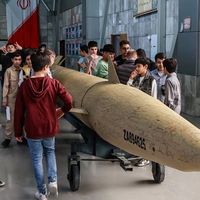
A recent documentary by Israel’s Channel 13 said one hundred Mossad operatives were deployed inside Iran to install and operate smuggled heavy missile systems. These systems were used to disable Iranian missile launchers and air-defense batteries during the opening phase of June’s 12-day war, the network reported.
The report said the agents’ operations were integral to Israel’s broader campaign against Iran’s military infrastructure.
An Iranian lawmaker has proposed giving people additional credit in hiring and promotion for marriage and having children, saying family formation should be treated as a form of social contribution.
“Marriage and having children must be considered part of a person’s résumé,” Amirhossein Bankipour, a member of parliament from Isfahan, said on Saturday, according to state media. “A woman who marries should receive more points, and a woman who gives birth should gain even more, because she is helping prevent a population crisis.”
Bankipour’s remarks come amid a government push to raise fertility under the 2021 Youthful Population and Family Support Act, which restricts access to abortions and contraceptives while providing loans, subsidies, and tax breaks for couples. The law aims to lift the fertility rate to 2.5 children per woman, but official data show it remains at about 1.6, far below the target.
Despite the incentives, as Iran’s economy has sharply deteriorated, marriage and raising children have become harder for many families. Inflation has eroded purchasing power, and basic expenses such as food, rent, and education have soared.
While the government has linked population growth to national strength, its policies have also created new social pressures. The Shargh daily reported in September that restrictions on prenatal screening and abortion have doubled the rate of Down syndrome births, from 1.2% to 2.9% since the law took effect. Legal procedures for pregnancy termination now require both medical and judicial approval, even in cases of confirmed fetal abnormalities.
Public health experts have warned that the tightening of reproductive laws, coupled with deepening economic hardship, has fueled a growing underground abortion market and worsened inequality. At the same time, official figures show Iran spends only 2.9 percent of GDP on education, compared to the global average of 4.4 percent, contributing to what commentators describe as a widening social gap between poor and wealthy families.
Bankipour said parliament has sought to address the economic dimension by increasing marriage loans and expanding housing programs for young couples. However, years of inflation and declining real wages have limited their impact.
He said the new proposal would help redirect social incentives toward family building. “Until now, degrees and job skills have determined status,” he said. “We need to tell the younger generation that forming a family and raising children are themselves national achievements that deserve recognition.”
Iran has amputated the fingers of a prisoner on alleged theft charges despite the plaintiff’s pardon, Norway-based human rights group Hengaw reported on Friday.
The report said the punishment was carried out on September 30 at Isfahan Central Prison (Dastgerd Prison) against 37-year-old Mohsen Ashiri, also known as Mohsen Lorazbakhsh Falavarjani, a member of the Lor Bakhtiari ethnic minority from Zazran in Isfahan province, central Iran.
Hengaw said Ashiri had been sentenced by an Isfahan court to six months in prison and the amputation of four fingers on his right hand.
He was released after serving his term and posting bail of 10 billion rials (about $8,890), following the plaintiff’s consent.
The court later demanded he post a new bail of 200 trillion rials (about $1.78 million), the report said.
When he failed to pay, the sentence was carried out less than a month after his re-arrest.
Hengaw condemned the punishment as “a clear violation of human dignity” and “tantamount to torture,” urging Iran to halt such practices.
In July, Iran amputated the fingers of three men convicted of theft at Urmia Central Prison on Wednesday night, the human rights group Hengaw said.
International human rights organizations have consistently condemned such punishments.
In April, Mai Sato, the UN Special Rapporteur on Human Rights in Iran, told Iran International in an interview that "corporal punishment, including amputation, is absolutely prohibited under international law. And if executed, will amount to torture or ill-treatment."
The International Covenant on Civil and Political Rights (ICCPR), to which Iran is a signatory, explicitly prohibits inhumane or degrading punishments. Human rights advocates argue that amputation sentences violate the fundamental principle of human dignity enshrined in international law.
At least 237 individuals in Iran were sentenced to amputation between 1 January 2000 and 24 September 2020, with at least 129 of those sentences carried out, according to Ravina Shamdasani, spokesperson for the UN Human Rights Office.