Tehran pursuing diplomacy to prevent war, says spokesperson
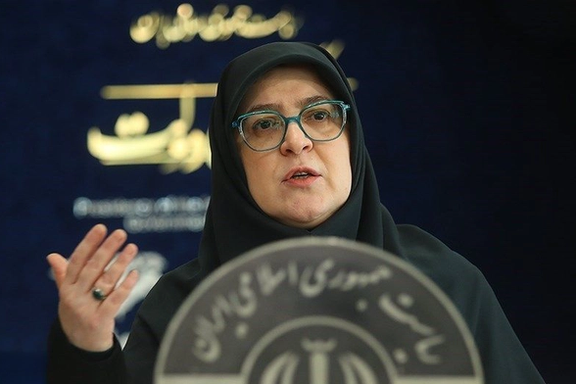
Iran is working to keep the threat of war away from its borders through diplomatic engagement, government spokesperson Fatemeh Mohajerani said on Saturday, according to state media.

Iran is working to keep the threat of war away from its borders through diplomatic engagement, government spokesperson Fatemeh Mohajerani said on Saturday, according to state media.
“Keeping war away from the country is one of the government’s key goals, and we are pursuing it through diplomacy,” she said in her weekly briefing. Mohajerani added that while improving living standards remains a major concern, Iran cannot suspend broader progress under international pressure and years of sanctions.
Her comments come amid shifting regional dynamics following a US-brokered ceasefire between Israel and Hamas that ended two years of conflict in Gaza. The agreement, backed by Egypt, Qatar, and Turkey, includes the release of hostages and prisoners and the withdrawal of Israeli troops from parts of Gaza.
Israeli Prime Minister Benjamin Netanyahu said this week he had resisted pressure to halt the war earlier, arguing Israel’s security depended on “eliminating the nuclear and ballistic threat from Iran” and “breaking the Iranian axis, of which Hamas is a central part.”
US President Donald Trump said Iranian authorities had recently expressed support for the Gaza deal and a willingness to “work on peace,” though Washington has maintained sanctions and tensions remain high following US and Israeli strikes on Iranian nuclear sites in June.
Democratic Senator Cory Booker, a member of the Senate Foreign Relations Committee, told Iran International that Iran and its regional allies remained “the main obstacle to peace,” accusing Tehran of backing groups that threaten the new truce.
Iran, however, has said it supports any agreement that ends what it calls Israel’s “genocidal war” and ensures Palestinian rights, while continuing to urge what it describes as a regional solution based on “mutual respect and diplomacy.”

Most schools and kindergartens in Tehran remain at serious risk of fire, with only three out of more than 6,400 meeting minimum safety standards, a senior fire department official said on Saturday.
Kamran Abdoli, deputy head of the Tehran Fire Department for prevention, said schools have lagged far behind hospitals, offices, and newer residential buildings in meeting safety requirements. He blamed chronic underfunding and weak oversight for the failure.
“Compared to other buildings, schools have made little progress in improving safety,” Abdoli told ISNA. “Funding shortages and neglect of safety regulations are the main reasons for this situation.”
He said the city’s fire department had repeatedly inspected schools and issued safety instructions, but only 43 safety files had been formally opened and just three had been approved. “We’ve provided the guidelines and even offered to phase the upgrades to make them affordable, but implementation has been minimal,” he said.
Abdoli warned that the lack of fire alarms, faulty wiring, and unsafe heating equipment were behind most past school fires, adding that small, low-cost measures like staff fire safety training could prevent future tragedies.
The official called for greater cooperation between the Education Ministry, school administrators, and private donors to fund safety upgrades. “With the current structure of schools, safety improvements actually cost less than in other buildings,” he said. “What we need most is determination and follow-through from officials.”
Broader safety crisis in the capital
His warning comes amid wider safety concerns in the capital. Last year, Tehran’s Fire Department identified 18,000 “high-risk” buildings, citing major incidents such as the Plasco Tower collapse in 2017, which killed 20 firefighters, and the 2024 Gandhi Hospital fire.
Officials say thousands of older buildings — including schools, dormitories, and training centers — have been converted from other uses without upgrades to handle larger crowds. Abdoli said this makes evacuation difficult and heightens the risk of mass casualties in the event of a fire.
“The city cannot afford another tragedy,” he said. “Ensuring fire safety in schools must become a national priority.”

An Iranian lawmaker has proposed giving people additional credit in hiring and promotion for marriage and having children, saying family formation should be treated as a form of social contribution.
“Marriage and having children must be considered part of a person’s résumé,” Amirhossein Bankipour, a member of parliament from Isfahan, said on Saturday, according to state media. “A woman who marries should receive more points, and a woman who gives birth should gain even more, because she is helping prevent a population crisis.”
Bankipour’s remarks come amid a government push to raise fertility under the 2021 Youthful Population and Family Support Act, which restricts access to abortions and contraceptives while providing loans, subsidies, and tax breaks for couples. The law aims to lift the fertility rate to 2.5 children per woman, but official data show it remains at about 1.6, far below the target.
Despite the incentives, as Iran’s economy has sharply deteriorated, marriage and raising children have become harder for many families. Inflation has eroded purchasing power, and basic expenses such as food, rent, and education have soared.
Health impact of restrictive population laws
While the government has linked population growth to national strength, its policies have also created new social pressures. The Shargh daily reported in September that restrictions on prenatal screening and abortion have doubled the rate of Down syndrome births, from 1.2% to 2.9% since the law took effect. Legal procedures for pregnancy termination now require both medical and judicial approval, even in cases of confirmed fetal abnormalities.
Public health experts have warned that the tightening of reproductive laws, coupled with deepening economic hardship, has fueled a growing underground abortion market and worsened inequality. At the same time, official figures show Iran spends only 2.9 percent of GDP on education, compared to the global average of 4.4 percent, contributing to what commentators describe as a widening social gap between poor and wealthy families.
Lawmaker defends incentives despite limited results
Bankipour said parliament has sought to address the economic dimension by increasing marriage loans and expanding housing programs for young couples. However, years of inflation and declining real wages have limited their impact.
He said the new proposal would help redirect social incentives toward family building. “Until now, degrees and job skills have determined status,” he said. “We need to tell the younger generation that forming a family and raising children are themselves national achievements that deserve recognition.”

A troika of European powers which triggered the reimposition of international sanctions on Iran last month called on Friday for Tehran to resume nuclear talks with Washington.
“We are determined to reinitiate negotiations with Iran and the United States towards a comprehensive, durable and verifiable agreement that ensures Iran never acquires a nuclear weapon,” the three European countries — France, Germany and Britain said in a joint statement.
They at the same time defended their decision to reimpose the UN sanctions on Tehran via the so-called snapback mechanism over Tehran's non-compliance with its nuclear obligations, urging all UN member states to enforce sanctions on Iran.
The reimposition of restrictions was the right step to address the threat posed by Tehran’s nuclear program, they said.
“We call on all UN member states to abide by the restrictions reapplied by the snapback mechanism,” they said.
The three countries invoked the measure in August, just two months after Israeli and US attacks on Iranian nuclear sites, accusing Iran of failing to comply with its nuclear obligations, beginning a 30-day process that culminated in the sanctions' return.
US President Donald Trump earlier this year gave Iran a 60-day ultimatum to reach a nuclear deal, demanding it end all domestic uranium enrichment. Tehran denies seeking a weapon and sees enrichment as a right.
On June 13, the 61st day since talks began, Israel launched a surprise military campaign which killed nuclear scientists along with hundreds of military personnel and civilians.
On the ninth day of fighting, the United States bombed three Iranian nuclear sites which US President Donald Trump has repeatedly said "obliterated" the country's nuclear program.
The 12-day war ended with a US-brokered ceasefire on June 24 but talks between Washington and Tehran have yet to resume.
Iranian President Masoud Pezeshkian told the UN General Assembly last month that Iran remains open to dialogue but that “the wall of distrust with Washington is quite thick and quite tall.”

Democratic Senator Cory Booker told Iran International in an interview that Tehran and its armed allies in the region posed an enduring threat to the newly clinched Gaza ceasefire and that Washington must remain vigilant.
The senior senator from New Jersey and ranking member on the Senate Foreign Relations Committee, who has been a vocal supporter of Israel, said its Mideast arch-foe was the primary obstacle to progress.
“Iran plays a destructive role across the Middle East,” Booker said, following the announcement by Hamas and Israel that they had agreed to the first phase of a deal proposed by President Donald Trump to wind down the two-year-old war in Gaza.
“It is the main state sponsor of terrorism and stands behind every terrorist group—from Hamas to Hezbollah. When I speak with major Muslim leaders throughout the region, from Saudi Arabia and the UAE to Egypt, they all say the same thing: the biggest obstacle to peace in this region is Iran.”
Trump on Thursday said Iranian authorities had been in contact to express their desire to pursue peace and to strongly back the new deal to end the war.
Iran has been more measured in its public response, voicing general support in a statement on Thursday for any agreement that ends the Gaza "genocide".
Booker argued that the Mideast armed movements backed by Tehran could yet scupper the progress toward peace.
“We need to end terrorism, we need to end this nightmare,” he said. “There must be a ceasefire in Gaza, the hostages must be released, and humanitarian aid must reach people in desperate need. The main obstacle to these goals are the terrorist organizations that act as Iran’s proxies.”
'Opportunity must not be lost'
If implemented, the Gaza deal could usher in the first sustained truce since the war began on October 7 2023, when an attack by Hamas-led fighters into Israel killed more than 1,200 people and triggered a devastating Israeli campaign that has since left over 67,000 Palestinians dead.
Booker said the actions of the Tehran-backed Palestinian militants had scotched hopes for a two-state solution - the formula the vast majority United Nations member states hope will resolve the conflict.
“All the hopes for a two-state solution and a lasting peace were destroyed by one of Iran’s proxies—Hamas,” he said. “They massacred civilians, kidnapped children, and brutalized women. It’s a horrific and heartbreaking reality that shows how much innocent blood has been shed because of Iran’s destructive policies.”
In an April 2025 speech, Booker called for a “unified American voice” supporting a non-nuclear, democratic Iran, while calling for a robust defense against Iran-backed armed groups in the region.
“The United States must stand with the Iranian people,” he said at the time, “but we must also defend ourselves and our allies from the regime’s terror network.”
Prospects were ripe for regional peace before the regional conflagration ignited by the Oct. 7 attack, Booker said, adding that the opening provided by the preliminary Gaza deal must be exploited.
“We need to get back to the conditions that existed before October 7—when it seemed, finally, that there was an opening for peace. That opportunity must not be lost again.”

An Iranian presidential aide on Friday ridiculed US President Donald Trump’s failed bid for the Nobel Peace Prize, saying his record of militarism and complicity in Israeli "genocide" in Gaza belied any claim to peace.
“He turned the US Department of Defense into the Department of War, believed in 'peace through strength,' launched a direct military attack on Iran’s monitored nuclear facilities, is now preparing for war with Venezuela, and gave the Israeli regime a free hand in the historic genocide in Gaza — yet he still expected to receive the Nobel Peace Prize,” Abbas Mousavi, deputy chief of staff to Iran’s president, wrote on X.
"From today on, may God have mercy on the world—this modern-day Don Quixote will probably not even bother pretending to be a peacemaker!" he added.
In August, Mousavi, faced criticism from hardliners in Tehran for addressing the US president as "Dear Mr. Trump" during a televised interview.
Iran's hardliners excoriated him for overlooking that Trump ordered the assassination of powerful Iranian general Qassem Soleimani in 2020.
The Norwegian Nobel Committee awarded the 2025 Peace Prize to María Corina Machado on Friday “for her tireless work promoting democratic rights for the people of Venezuela and for her struggle to achieve a just and peaceful transition from dictatorship to democracy.”
The 58-year-old opposition leader, who remains in hiding, has been barred by Venezuelan authorities from running for office against President Nicolás Maduro.
In a message on X, Machado said her movement was “on the threshold of victory” and counted on “President Trump, the people of the United States, the peoples of Latin America, and the democratic nations of the world” as allies in the fight for “freedom and democracy.”
"I dedicate this prize to the suffering people of Venezuela and to President Trump for his decisive support of our cause!"
Trump, who has long spoken publicly about his desire to win the Nobel Peace Prize, has received several nominations over the years, including one this year from Israeli Prime Minister Benjamin Netanyahu.
“In a period of just seven months, I have ended seven ‘un-endable’ wars,” Trump said during his address to the United Nations General Assembly last month. “No president or prime minister — and for that matter, no other country — has ever done anything close to that.”
He raised the count to eight during a press conference on Thursday, adding the Gaza ceasefire announced Wednesday to his list.
The White House's communications director lamented the Nobel committee's decision, saying the "Nobel Committee proved they place politics over peace".
Trump, Steven Cheung wrote on X, "will continue making peace deals, ending wars, and saving lives".