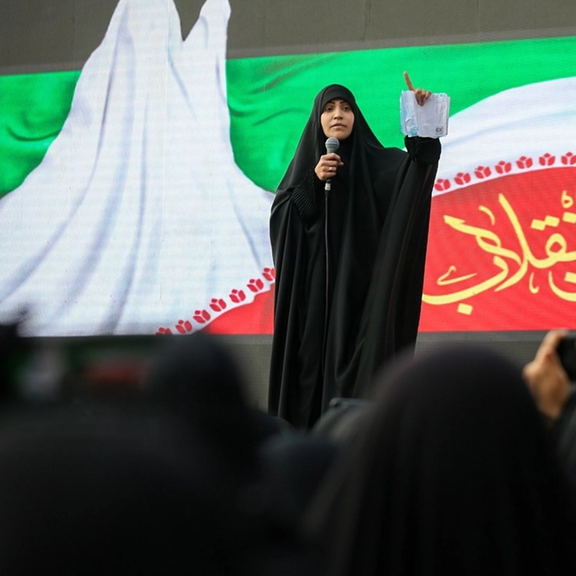
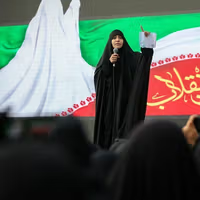
A female speaker addresses the crowd at a state-sponsored pro-hijab rally in Tehran, Iran, November 28, 2025
Tehran may be poised to carry out a politically explosive crackdown on Islamic veiling after Supreme Leader Ali Khamenei issued a directive to step up enforcement according to a leaked directive.
An audio file surfaced online in which senior cleric Hossein Rafiei asserted that Khamenei had instructed the government to step up enforcement of the Islamic dress code on Iranian women.
Official scrutiny of women's dress had eased in the year's since the death of a young woman, Mahsa Amini, sparked nationwide protests in 2022 which were violently suppressed.
The laxness had appeared to reach new levels following a 12-day war with Israel and the United States in June, as authorities appeared keen not to stoke public anger.
Rafiei said Khamenei issued the written order after reviewing an intelligence ministry report completed three months after the conflict. The precise timing was not clear.
Several cabinet members, he alleged, had initially objected but President Masoud Pezeshkian “insisted on abiding by the order.”
One of the ministers, the head of the Government Information Counci Elias Hazrati later confirmed the directive but denied any cabinet dispute.
The president and ministers, he said, oppose “coercive methods such as the morality patrols” that have often “worsened the situation.”
Hardline mobilization
Hardline factions seized on the revelation as a mandate to intensify pressure on women.
They quickly organized a social campaign for a November 28 march, coinciding with the traditional death anniversary of Fatima, the Prophet Mohammed’s daughter.
“The Leader’s remarks on the report … have shaken officials,” lawmaker Ghasem Ravanbakhsh said at an event in Tehran on Friday.
“(Khamenei) emphasized in his message that supervisory bodies are obliged to identify and take action against organizers and agents responsible for the problems that have arisen regarding hijab and chastity.”
Poster for Friday's hijab march
‘Government’s obligation’
The conservative daily Khorasan, aligned with Speaker Mohammad-Bagher Ghalibaf, bashed Hazrati for implying that Iran’s leadership was divided on the issue.
Khamenei’s directive, the editorial asserted, was an “explicit directive” for decisive action against those who disrupt public and social order, invoking a criminal offense under Iranian law.
The paper warned that “the slightest misunderstanding … or conflation of ‘enforcement’ with ‘tension’ could once again pave the way for a repeat of bitter past experiences.”
Khamenei’s reserved position
Khamenei had refrained from explicitly addressing the hijab issue in public for a year, but on November 3 urged women to “remind” those around them of its religious significance.
His last major intervention before that was in April 2023, when he accused foreign intelligence services of encouraging hijab defiance and called such acts “religiously and politically haram (forbidden).”
It remains unclear when Khamenei reviewed the intelligence report or issued his directive, but the leak reframes several recent official comments.
On November 18, during a Cultural Revolution Council meeting, Pezeshkian said adherence to hijab norms “should begin from within government bodies,” not through coercion or confrontation.
On August 30, he had warned that strict enforcement could “create conflict in society” and spark tensions the government may be unable to contain.
‘Enemy tools’
A string of recent cultural events in Tehran has drawn backlash after videos showed participants ignoring hijab rules.
Tehran Design Week, held at the University of Tehran’s Fine Arts campus, was shut down earlier this month after a Basij student protest accused the venue of becoming a site for “inappropriate entertainment.” The Basij is a domestic enforcement militia.
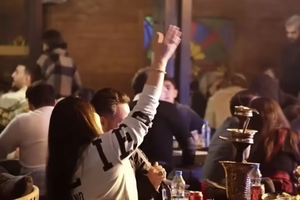
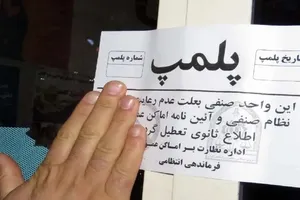
Since August, at least 20 cafes, restaurants and wedding halls have been closed nationwide for alleged violations ranging from “serving alcohol” to “nudity” and “mixed-gender dancing,” according to the reformist daily Ham Mihan.
Recent reports also indicate expanding non-coercive enforcement tools, including digital and administrative controls such as disabling SIM cards of violators and heightened scrutiny of celebrities and influencers who openly reject the hijab.
Chief Justice Gholamhossein Mohseni-Ejei has described the undermining of the veil as among the “enemy’s tools” and warned that event organizers—as well as authorities issuing permits—could be prosecuted as accomplices if violations occur under their watch.
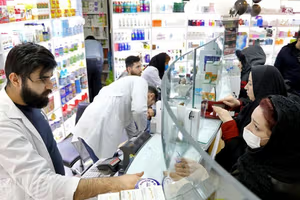
Iran is facing a fresh shortage of the brand-name anti-rejection drug Myfortic with pharmacies halting distribution in several cities and clinicians warning that forced switches to substitutes could endanger a minority of kidney-transplant patients.
Patients in Mashhad said rations shrank from two months to one week before stocks of the drug (mycophenolic acid 360 mg) “fell to zero,” with pharmacists advising a move to domestically made equivalents, the ILNA news agency reported.
Fatemeh Pour-Rezagholi, secretary of Iran’s Kidney Transplant Scientific Association, said originator-brand supplies have not been distributed recently, citing foreign-exchange constraints, sanctions-related frictions and customs delays.
She added that Iranian versions are available and effective for most patients, but unplanned brand changes can be stressful or risky for those early post-transplant or with prior rejection. Importers have indicated the original brand may return later in winter, according to ILNA.
Doctors and pharmacists told ILNA that 70-80% of recipients tolerate domestic formulations, but roughly 10-20% may require a specific brand or closer therapeutic-drug monitoring.
Patient groups and clinicians are urging clearer import timetables, steadier FX allocation for critical transplant drugs and contingency guidance to minimize unplanned switches.
Clinicians say the fiscal and human costs are far higher if grafts fail and patients return to dialysis, and have asked regulators to protect a baseline of imports for high-risk cases while stabilizing domestic supply for the majority.
US sanctions policy formally exempts most medicines and many medical devices, with humanitarian channels – such as Switzerland’s state-backed payment mechanism – designed to process vetted transactions.
In practice, suppliers and aid groups say persistent “over-compliance” by global banks, shippers and insurers fearful of sanctions risk, which can delay or block payments, shipments and insurance even for lawful medical goods.
Economists also point to the rial’s volatility and domestic pricing and procurement rules as recurring hurdles that raise import costs and complicate supply planning.
According to Mehr News on Monday, Iran has raised medicine prices several times in recent months under a “realistic pricing” policy meant to support the domestic pharmaceutical industry, but insurance coverage has not kept pace – leaving patients to shoulder a growing share of drug costs as reimbursements lag behind the hikes.
Iran’s diesel contains sulfur levels up to 15,000 parts per million (PPM), far above the global standard of 10 PPM, a senior industry representative said, warning that poor-quality fuel is contributing to severe air pollution in major cities.
Hamid Hosseini, spokesperson for the Union of Petroleum Products Exporters, told Didban Iran on Sunday that even Afghanistan does not permit diesel above 2,000 PPM. He said Iran must invest in desulfurization technology to meet international standards.
“Our diesel has about 10,000 to 15,000 PPM of sulfur, while the global standard is 10,” he said.
Hosseini said Iran has the technical ability to produce Euro-4 and Euro-5 standard gasoline, but high domestic consumption leaves the oil ministry little choice but to distribute lower-octane fuel.
High-quality gasoline produced at some refineries is mixed with lower-quality batches before reaching the distribution network, he added.
He said pollution is also driven by aging vehicles and heavy diesel use in urban areas.
Nearly half of Iran’s 20 million registered cars are classified as old or high-emitting, while about four million motorcycles operate in Tehran alone.
Hosseini said Iran consumes roughly 120 million liters of gasoline per day and that scrapping older vehicles could significantly reduce both fuel use and emissions.
He added that sanctions have also limited investment in refinery upgrades, affecting the country’s ability to consistently produce cleaner fuel.
Former Iranian president Hassan Rouhani said Iran remains in a fragile security limbo months after the 12-day war in June, warning that the country cannot restore stability or economic confidence without rebuilding deterrence and addressing persistent public insecurity.
Rouhani told former ministers and senior officials that Iran had entered a prolonged period of strategic uncertainty following the 12-day confrontation, arguing that the absence of clear deterrence has left the country exposed to regional pressures and foreign threats.
Rouhani said that “after five months have passed since the 12-day war, we are still in a situation of neither war nor peace, and there is no sense of security in the country. Whether actual security exists or not is another matter.”
He added that “when people do not feel secure, talking about economic growth, lowering inflation or attracting investment has little meaning. This feeling of insecurity – psychological insecurity, social insecurity, intellectual insecurity, mental insecurity – exists.”
He said national security in any country rests on deterrence and on stopping adversaries from initiating conflict.
Rouhani tied Iran’s own shortfalls in deterrence to regional instability, saying neighboring states still rely heavily on the United States and Israel for security. He said Iraq, Syria, Lebanon and Jordan do not control their airspace or security environments in ways that would limit hostile activity, and that this has reduced Iran’s strategic buffer zone.
“Unfortunately, we do not currently have broad regional deterrence. Our neighboring countries – Iraq, Syria, Lebanon and Jordan – are, unfortunately, operating in environments largely shaped by the United States and Israel.”
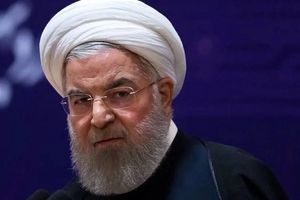
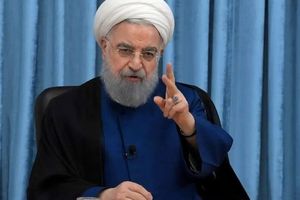
Former Iranian president Hassan Rouhani during a meeting with former ministers and senior officials in Tehran on November 26, 2025
He warned that this landscape has created what he described as unusually free access for Israel, saying “Israel moves up to our borders in undefended and open airspace” and “the sky up to Iran has become completely safe for the enemy.”
Rouhani said national cohesion and accurate assessments of Iran’s own capabilities remain essential for maintaining deterrence. He cautioned against overestimating Iran’s military or technological strengths and said misjudging adversaries could lead to strategic miscalculations.
Rouhani said renewed diplomacy remains essential even if political negotiations are difficult. “In politics, a complete dead end is very rare. We must make extra efforts to resolve issues.”
He said avoiding a renewed conflict ultimately rests with Iran, adding “whether war happens again is in our hands.”
Iranian police detained more than 20 people during a raid on a birthday party at a film star’s home in Tehran and seized 38 liters of homemade alcohol, Iranian media reported.
Iran International learned that actors Parsa Pirouzfar and Ali Shadman, and actresses Setareh Pesyani and Sahar Dowlatshahi were among more than 20 guests detained.
Shadman and Pesyani remain in custody, with cases opened in Tehran’s Ershad (morality) prosecutor’s office against Shadman and six others on charges including “violating public decency, promoting vice, drinking alcohol, and possession of alcoholic beverages,” according to people familiar with the matter.
Sources said Pirouzfar was taken to hospital after the raid.
Several detainees were released later on undertakings or bail, while separate files were opened for other guests, many from the theater community.
There was no immediate comment from Tehran police or the judiciary on the reported detentions.
Alcohol is banned in Iran and violations carry fines, lashings or prison, with stiffer penalties for production and distribution. The prohibition dates to 1979, but homemade brewing and smuggling have created a steady underground supply. Rights groups and health officials report periodic mass poisonings from counterfeit liquor.
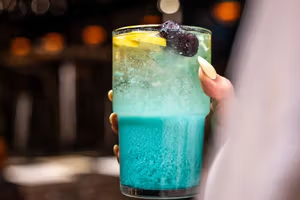
Despite the ban, discreet drinking has edged into some public venues. Iranian and state‐affiliated outlets have acknowledged “secret menus” at a handful of restaurants and cafés, where beer or spirits are served under code names or in disguised containers.
Prosecutors and police regularly announce raids and closures for serving alcohol, mixed-gender dancing or hijab violations, part of wider morality crackdowns.
Authorities have stepped up enforcement over the past two years, sealing cafés in Tehran and other cities and publicizing arrests.
Officials say tougher action is needed to deter bootlegging and to uphold Islamic codes. Critics counter that decades of prohibition have pushed consumption into riskier, unregulated channels.
The decision by Iran’s state broadcaster to produce a film about a female presenter whose image went viral when Israeli missiles hit its headquarters has sparked a wave of criticism and accusations of political propaganda.
The planned feature, Re-Birth, casts actress Atefeh Habibi as Sahar Emami—presented by state media as a symbol of defiance during Iran’s 12-day war with Israel in June.
Emami was on air when IRIB’s Glass Building in Tehran was bombed on June 16. She rushed out of the studio but returned to present from another set within minutes.
“(She) bravely continued her program after the attack,” the film’s promoter asserted Thursday, branding her a hero.
But many remain unconvinced, accusing the broadcaster of glossing over “real heroes” and victims of the war.
'Propaganda’
“Making a film about Sahar Emami is not a cultural choice. It is a propaganda project,” a commentary in the moderate outlet Rouydad24 argued.
“What is it that makes her stand out from all others?” it asked, offering a characteristically factional answer: “It is easy propaganda that conveys their ideological perspective,” referring to IRIB’s leadership and its ties to the ultrahardline Paydari Front.
The commentary also criticised the lack of scrutiny of the broadcaster itself.
In the days after the attack, state TV filled its programming with tributes to Emami, sponsored billboards across Tehran, and received praise from senior officials—including Supreme Leader Ali Khamenei—for her “bravery.”
Critics said the network was exploiting the incident to deflect attention from its declining viewership.
Dwindling popularity
IRIB holds a legal monopoly over broadcasting in Iran; private television networks are not permitted.
In recent years, however, a proliferation of digital platforms—often backed by different branches of the state or powerful institutions—has begun to challenge that dominance in entertainment.
In news, IRIB’s audience has been shrinking for years, with Persian-language broadcasters in exile becoming the main source of information for most people inside Iran.
An official survey in late 2024 put IRIB’s popularity at just 12.5%, while the head of its internal polling unit claimed it was closer to 72%, adding the figure “could have been higher if, like elsewhere in the world, Generation Z had not turned away from national television.”
A survey by the Netherlands-based polling institute GAMAAN also found that only a small minority of Iranians tuned in to IRIB during and after the June war with Israel.
The broadcaster’s chief has since requested additional funding to rebuild the damaged headquarters, saying rubble will be cleared by January with reconstruction to follow.
Critics note that IRIB’s current budget of 350 trillion rials (more than $300 million) exceeds that of ten ministries combined.
The broadcaster also receives ad-hoc allocations in US dollars from the national reserve alongside lucrative advertising revenue.