Iranians Vow Election Boycott

A free tribune board in Tehran has revealed the vast array of discontent with Iranian government policies, with people declaring their refusal to participate in the upcoming elections.

A free tribune board in Tehran has revealed the vast array of discontent with Iranian government policies, with people declaring their refusal to participate in the upcoming elections.
At Amirkabir University, an image captured from the Free Tribune board showed a statement that read: "I do not vote because the parliament serves Gaza, Syria, and the officials' offspring." Another declared, "I abstain from voting due to soaring prices; officials have plundered all wealth, rendering the parliament non-representative."
A third opinion criticized the electoral process as a "pure dictatorship" fostering corruption.
Recent years have seen a notable decline in voter turnout attributed to economic hardships, suppression of dissent, and oversight by the Guardian Council. The trend has led to a crisis of legitimacy for the Islamic Republic.
Iranians are increasingly frustrated with the government's failure to address demands for increased freedoms and economic progress. Official figures show an inflation rate nearing 50%, with essential goods, particularly food, facing steep price rises.
The harsh crackdown on the 2022 protests has further stoked internal dissent, resulting in deaths, injuries, and arrests, amid ongoing social and economic oppression. The enforcement of hijab laws and internet censorship by hardline authorities have heightened surveillance, exacerbating public discontent.
With parliamentary and Assembly of Experts elections slated for March 1, anticipation mounts for historically low voter participation.

The reformist Etehad-e Mellat (Nation’s Unity) party has declared its decision not to endorse any candidates in Iran’s March 1 elections for the parliament and the Assembly of Experts.
This announcement, made through a statement on the party's website, signifies a notable departure from active participation without outrightly boycotting the electoral process.
The issue of participation has caused a rift among reformists. The general assembly of the Reformist Front decided earlier this week that Reformists could not participate in elections that are “devoid of meaning, uncompetitive, unfair, and ineffective in the management of the country but earlier this week 110 reformist figures in a statement urged their comrades not to shun the vote while admitting that the elections are going to be far from fair and free.
Prominent figures like Iran's imprisoned Nobel Peace laureate Narges Mohammadi have chosen to boycott the elections unequivocally. Mohammadi's declaration, made via authorized social media accounts, underscores a growing sentiment against what she perceives as the government's orchestrated electoral process.
Etehad-e Mellat, in its statement, criticized the discretionary oversight of the election watchdog, the Guardian Council, which it argues undermines the democratic process by limiting genuine choices for the electorate. The Council's stringent vetting process has effectively marginalized not only reformists but also moderate conservatives from the electoral arena.
In addition to the parliament, the election of a new Assembly of Experts, is important given the constitutionally designated body’s authority to select the future Supreme Leader. The widespread disqualification of candidates paves the way for strengthening the ruling hardliners’ full sway on all centers of power.
The party highlighted the prevailing disillusionment among the populace regarding the electoral system, a sentiment echoed in recent surveys. A survey by the Netherlands-based Gamaan institute revealed widespread disengagement, with a significant majority expressing disinterest or outright refusal to participate in the elections.
The survey found that nearly three quarter of all eligible voters who responded to its poll had decided not to vote including 39 percent of those who had voted in the parliamentary elections in February 2020.
The same survey found that if a referendum was held, nearly 75 percent of its respondents would say no to the Islamic Republic.
The Guardian Council, originally empowered to interpret the Constitution, review legislation, and supervise elections, bestowed upon itself discretionary supervisory powers over elections in 1991, giving it the final say on candidate eligibility.
Established in 2015, Hezb-e Etehad-e Mellat-e Iran Eslami comprises veteran Reformist politicians, many of whom were formerly associated with the influential Jebhe-ye Mosharekat (Participation Front). Mosharekat, which dominated the parliament between 2000-2004 during Mohammad Khatami's presidency (1997-2005), faced significant setbacks when its members were later barred from electoral participation by the Guardian Council.
Etehad-e Mellat, the only major Iranian political party with a female secretary general, Azar Mansouri, last year demanded the abolition of compulsory hijab in Iran and discrimination against women in higher education and in the law.
Deprived of their own candidates, in 2013 and 2017 Reformists including Etehad-e Mellat helped the moderate conservative Hassan Rouhani to win the presidency.
The Party, considered as the most influential member of the Reformist Front at the time, was banned in 2009 in the aftermath of the disputed elections that brought the hardliner Mahmoud Ahmadinejad to power for a second term, and many of its leading figures were imprisoned. The party did not declare itself secular but did promote the separation of religion and state.
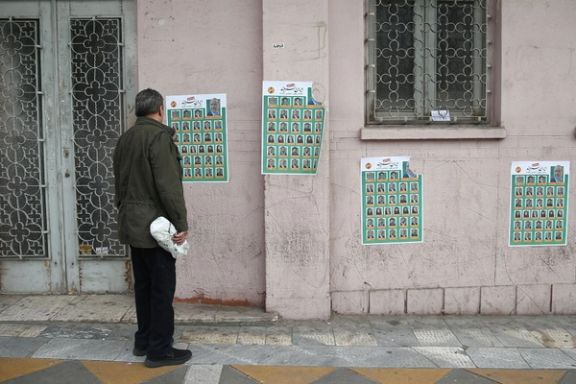
Former Israeli Prime Minister Ehud Olmert claims that Israel's air force lacks the necessary resources to halt Iran's nuclear program through military action amid the two nations' shadow war.
In an interview with The National Olmert said, "We can destroy their headquarters, important projects, railways, roads, and airports .. Israel can do a lot to damage Iran's infrastructure, but Israel has no means to be able to destroy the nuclear program of Iran."
Despite Israel's longstanding threats to dismantle Iran's nuclear facilities if they approached weapons-grade enrichment, Olmert dismissed the option due to the logistical challenges involved, Israel's air force lacking the capability to penetrate the fortified mountain bunkers housing Iran's nuclear sites.
Olmert pointed out that Israel's advanced F-35A stealth aircraft, with a maximum range of 2,200km, cannot reach Tehran and return without sufficient in-flight refueling tankers. Additionally, Iran's major military sites, such as the Bandar Abbas airbase, are located over 2,000km away from Israel's immediate border.
IAEA Chief Rafael Grossi stated last week that Iran continues enriching uranium beyond commercial needs, reaching 60% purity at a rate of 7 kg per month.
Enriching uranium to 60% approaches weapons-grade purity, unnecessary for civilian nuclear energy. While Iran denies nuclear weapon ambitions, no nation has enriched to this level without weaponization intent.
Tehran has long threatened to destroy Israel with clocks around Iran counting down until the day the supreme leader predicts that will be. The nuclear issue lies at the heart of the shadow war between the archenemies with Israeli PM Benjamin Netanyahu demanding stronger action from the US and international community in the face of further enrichment.
Last year, he said: “Eight years ago, the Western powers promised that if Iran violated the nuclear deal, the sanctions would be snapped back. Well, Iran is violating the deal, but the sanctions have not been snapped back. To stop Iran’s nuclear ambitions, this policy must change. Sanctions must be snapped back."

Shakila Monfared, a political prisoner held in Iran's Evin Prison, has been handed an additional 15-month term along with supplementary penalties.
The sentence, issued last December in absentia on charges of "propaganda against the system," was recently upheld after her appeal was rejected. Monfared was informed of the finalized verdict while in Evin Prison.
Monfared's brother Ashkan, a political activist living in exile, revealed that the new charge was levied against her after he made a call to inquire about her health while she was hospitalized. Subsequently, she was accused of "connection with anti-regime elements."
Monfared was first arrested in August 2020 and was then taken to a detention facility under the control of the Islamic Revolutionary Guard Corps (IRGC) in Tehran. In January 2022, Monfared was handed a six-year prison sentence and four months of probation work for "propaganda activities against the regime" and "insulting the sanctities of Islam."
In another legal case, she was sentenced in January 2022 to two years and eight months in prison, along with a fine of 100 million rials (approximately 180 USD), on charges of "membership in anti-regime groups" and "spreading lies."
Yet another case was initiated in June, accusing her of "conspiracy and collusion to commit crimes against national security."

Iran's famed Persian carpet exports have fallen from $426 million annually to less than $50 million over the past six years as the country's most prized treasure goes into freefall.
Mortaza Haji Aqamiri, Chairman of the Carpet Commission at Iran’s Chamber of Commerce, blamed the government’s policies for the sharp decline in the export of one of Iran’s most famous products, the Persian carpet. “Instead of suppressing exports, policymakers are expected to facilitate trade processes,” he said.
Last March, official reports indicated that the Persian carpet exports were at its lowest levels in 24 years, dropping by 24 percent in just one year.
Several factors, including the challenges to global logistics chains, rising cost of products and the Covid pandemic, account for the major drop in one of Iran’s most prized national treasures, famed around the world for centuries. International sanctions over Tehran’s nuclear program have also dealt local industries a fatal blow.
In Iran's rural economy, carpets have been one of the country's most crucial employment opportunities for many years, providing a livelihood for millions of families. Statistics from the Ministry of Industry, Mine and Trade, have shown that the country's roughly two million weavers have had to migrate to cities or neighboring countries as business waned.
Fathollah Tousi, a member of the Economic Commission of the Parliament, said competition now comes from countries such as Turkey, China and Afghanistan taking over a trade once dominated by Iran, with Germany, the United States, Japan, and the United Arab Emirates among the main consumers.

A recent poll of US voters suggests about half the electorate think the Biden administration has been too lenient on Iran with two thirds thinking that will lead to war between the two sides.
The survey, conducted in early February by polster Rasmussen Reports and released this week, found that only 1 in 9 of likely voters think the Biden administration has been too aggressive with Iran. The survey of 749 Americans also showed that amid increasing tensions in the Middle East between Iran and the US, 24 percent see such a war as 'very lIkely'.
President Biden has been widely criticized for his Iran policy, which the critics deem too soft and even ‘appeasing.’ In pursuit of a nuclear agreement, Biden and his team reversed Trump’s "maximum pressure" policy, not enforcing oil export sanctions imposed in 2018, and releasing $16 billion in frozen funds last year, which all in all poured tens of billions of dollars to the regime’s coffers.
Biden critics also argue that these funds not only contributed to the October 7th attack, but more generally enabled Iran –through IRGC– to prop up its various proxies in the region and regain its otherwise receding foothold.
The Biden administration’s standard response to such criticisms is that it has been trying to avoid any escalation of the existing crisis, which could lead to direct confrontation with Iran. But this approach seems to have failed, at least as far as the likely American voters are concerned.
Two-thirds of those surveyed by Rasmussen Reports think that the current course of events in the Middle East will likely lead to war between the United States and Iran. Almost a quarter (24 percent) said that a war is "very likely". Only 2 percent felt a war between the countries is "not at all likely."
Each respondent were asked four questions, including:
In his dealings with Iran, has President Biden been too aggressive, not aggressive enough, or has his response been about right?
How likely is it that increasing tensions in the Middle East between Iran and the United States will lead to war?
Does the United States military have the ability to win an all-out war against Iran?
The last question yielded results that are more or less in line with the answers to the preceding questions. Most voters (65 percent) said they think the US military would likely win in an all-out war against Iran. Perhaps more significantly, 15 percent saw that potential war as one the US military cannot win. About 20 percent were unsure.
The survey comes with many usual polling caveats. As such, it does not offer a definite picture; nor could it be used to draw definite conclusions about American voters and their views of the US government’s foreign and defense policy.
Nonetheless, it can be said to highlight Joe Biden’s challenges in dealing with Iran less than nine months to the 2024 Presidential elections. Iran is almost certain to be a theme during the long campaign, especially since it’s increasingly linked with two major American concerns in Washington and beyond: China and Russia.
The two global powers and Iran often (and increasingly) take similar positions in global events. China buys close to the entirety of Iran’s oil exports. The revenue helps Iran fund its drone and missile programs, which is now advanced enough to help Russia in its war on Ukraine. It may not be accurate to call the trio an alliance, but it seems safe to say that they are heading in that direction.
The survey’s other question was on the same subject. “Which is a more dangerous enemy of the United States,” the respondents were asked, “Iran, China or Russia?”
Iranian officials, top IRGC commanders in particular revel in presenting the Islamic Republic as a world power. They will see the subject of Iran in the US presidential race a vindication of their propaganda that the regime is a major global player, irrespective of multiple economic and other crises it faces.
*Rasmussen surveyed 749 likely voters across the United States from Feb. 5-7, with a margin of error of 3 percentage points.