Taliban Trade Delegation Announces $35m Investment In Iran
An Afghan trade delegation has announced construction and investment deals worth $35m in Iran's southern port of Chabahar.

An Afghan trade delegation has announced construction and investment deals worth $35m in Iran's southern port of Chabahar.
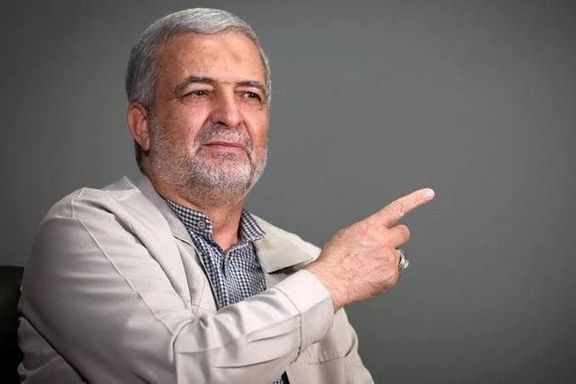
Hassan Kazemi Qomi, Iran's ambassador in Afghanistan, said that the delegation has commenced work on “various projects including commercial, residential, and administrative ventures, backed by a $35 million investment.”
The move comes against the backdrop of Iran's recent measures towards Afghan refugees, including reported widespread expulsions with speculation that the latest move will see many of the illegal workers put through a formal system.
Amid ongoing border tensions, Afghans were in December, banned from living in 16 Iranian provinces.
The influx of Afghan workers, particularly in the construction sector, has faced criticism within Iran, facing allegations of taking jobs away from Iranians amid a deep economic crisis.
Iranian officials have estimated the number of authorized foreign nationals in Iran to be approximately four million, with a significant portion presumed to be refugees.
Since the resurgence of the Taliban in Afghanistan in 2021, Iran has refrained from formally recognizing the Taliban government. Nevertheless, Iran has engaged closely with the Taliban and facilitated interactions such as trade and commerce deals.
Afghanistan's embassy in Tehran has been handed over to representatives of the Taliban.

The United Nations’ fact-finding mission, set up in December 2022 following Iran's bloody crackdown on protesters, will release its comprehensive report on March 18.
The mission is also scheduled to release its preliminary report on the International Day of Women (March 8).
In his address to the 55th session of the United Nations Human Rights Council (HRC) in Geneva on Monday, Iran's Foreign Minister Hossein Amir-Abdollahian accused the UN of double standards and criticized it for setting up the fact-finding mission for Iran but not taking any serious action on Israel’s killing of civilians in Gaza.
“We will not forget the outcries in this place months ago under the pretext of an Iranian girl’s death and the formation of a so-called fact-finding mission,” he said.
In her address to the same meeting Monday, the German Foreign Minister Anna Baerbock called for extending the mission’s mandate. “I want to be crystal-clear to those who claim that calling out violations is an interference in internal affairs: Human rights are universal. A life is a life,” she said.
Mahmoud Amiri-Moghadam, director of Oslo-based Iran Human Rights Organization, told Iran International on Monday that it is the outcome of the mission’s investigations that is of great significance and expressed hope that its mandate would be extended for another year.
“The Islamic Republic has always accused human rights organizations and the UN rights bodies of being politically motivated and has never been accountable to them, he said. “But the mission’s report will be a very important message to [Iranian] people who will know the world has heard them …, especially if the mission concludes that [the regime’s actions] were crimes against humanity,” he added.
The UN Human Rights Council voted November 24, 2022, to launch an independent investigation into Iran's deadly repression of peaceful anti-government protests during the Woman, Life, Freedom movement. The motion to form the mission passed with 25 votes in favor, six opposed and 16 countries abstaining from the vote. The following month, members of the mission were announced.
The death of 22-year-old Mahsa Amini in September 2022 in the custody of the morality police unleashed a wave of protests across Iran that lasted until February 2023.
During the protests, security forces killed more than 550 civilians including tens of children. Security forces also blinded scores of protesters with shotgun pellet aimed directly at their faces, and tortured many of the tens of thousands of protesters that were arrested. Many of the victims also claim to have been sexually assaulted during interrogations and in prison.
In the past year Iran has also hanged nine protesters despite widespread pleas at home and abroad not to carry out the death sentences after sham trials held behind closed doors and without due process.
Despite these documented atrocities, Tehran almost immediately announced that it did not recognize the fact-finding mission and would not cooperate with it and summoned the German envoy Hans-Udo Muzel to the foreign ministry to protest Berlin’s key role in urging a special Human Rights Council meeting and the formation of the mission.
The UN Special Rapporteur on Iran Javaid Rehman said in November 2023 that the mandate of the mission goes beyond Iran’s human rights violations during 2022 protest crackdown and even extends into the mass execution of political prisoners in 1980s as well as violations of minority rights.
Members of the mission have not been allowed to visit Iran to collect evidence and speak to victims of the violence or their families. The Islamic Republic has also refused to allow UN special rapporteurs on human rights to visit the country since 1992.

Iran has diluted some of its near weapons-grade uranium for the first time, but its total stock of nuclear material stands at 27 times the limit agreed in the 2015 JCPOA nuclear deal.
Two confidential reports by the UN nuclear watchdog, sent to member states on Monday, paint an overall bleak picture of Iran’s nuclear program with persisting obstacles to proper inspection casting a shadow over its nature and raising concerns about the intentions of the regime in Tehran.
“Only through constructive and meaningful engagement can these concerns be addressed,” International Atomic Energy Agency (IAEA) chief Rafael Grossi wrote in one of his two quarterly reports. “Public statements made in Iran regarding its technical capabilities to produce nuclear weapons only increase the Director General’s concerns about the correctness and completeness of Iran’s safeguards declarations.”
According to the reports, seen by several news outlets, Iran now has more than 5.5 tons of enriched uranium, up by a ton from October. This includes 712.2 kilograms of uranium enriched at up to 20 percent and 121.5 kilograms at up to 60 percent. It’s this latter stock that has decreased by about 7 kilograms in the past hundred days.

Iran needs a minimum of 42 kilograms of uranium enriched to 60 percent to make a nuclear bomb, based on definitions set by the IAEA. It had enough of this material at the end of 2023 to produce three nuclear bombs. The dilution last quarter means that stock is still more than enough for two.
It’s unclear why Iran decided to get rid of some of its highly-enriched uranium in the last three months. And IAEA has offered no explanation in its reports. It is hard to ignore the fact, however, that the timeframe of this ‘downblending’ matches the timeframe of the recent crisis in the Middle East, which began with Hamas’ rampage of border areas of southern Israel and the ensuing –and ongoing– Israeli onslaught on Gaza last October.
"Maybe they don't want to increase tensions (with the West). Maybe they have an agreement with somebody. We don't know," Reuters quoted a senior diplomat. "At the beginning of the year they decided to do a downblending... A couple of weeks later they did another downblending, this time with a smaller amount."
Whatever the reason behind the decision, the reduction in Iran’s near weapons-grade uranium would likely offer some relief to American and European leaders who have been struggling to find a convincing response to Iran’s nuclear ambitions.
President Joe Biden spent the first half of his term trying to revive the 2015 nuclear deal with Iran –and failed. He then turned to chasing an informal agreement, looking the other way as China purchased tens of billions of Iran’s sanctioned oil, and releasing at least $16 billion of frozen funds, all to encourage the Iranian regime to limit its enrichment program, even temporarily.
As a result of those secret talks, Iran slowed its enrichment of uranium to up to 60 percent last summer. In November, however, it resumed its pre-slowdown activities, according to an IAEA report last December.
Iranian officials have always maintained that Iran’s nuclear program is purely for peaceful purposes. But nuclear experts are almost unanimous in their assessment that enrichment to the levels and in the amounts that Iran has been doing since 2021 cannot be justified in the absence of a weapons program.
Successive US administrations, including the current one, have publicly vowed to prevent Iran from ever obtaining a nuclear weapon. In private, however, politicians and experts say that it’s near impossible to stop the Iranian regime if it ever decides to make a bomb.

In response to the escalating threat posed by Iran, the Israeli Air Force (IAF) has established a unit dedicated to countering Tehran's growing hostility towards Israel.
Led by Major General Tomer Bar, the newly formed Iran unit is a show of force not only to Iran but also to the United States, highlighting concerns over perceived gaps in addressing Iran's nuclear aspirations and its support for terrorism.
The unit's mandate encompasses overseeing military preparations for potential Iranian threats, with a particular emphasis on countering Iran's nuclear ambitions. Moreover, it signals Israel's preparedness to confront Iranian-sponsored terrorism across multiple theaters, including Yemen, Iraq, Lebanon, Syria, the West Bank, and the Gaza Strip.
Iran is currently at the helm of a regional proxy war which has seen its militias come out in support of the Hamas attack on Israel on October 7, in a war which has escalated to draw in international players including the US and UK.
In recent years, Israel has ramped up its airstrikes on Syria in a bid to thwart Tehran's growing reliance on aerial supply routes for delivering arms to its allies in Syria and Lebanon, notably Hezbollah.
The news of the new unit counters claims from former Israeli Prime Minister Ehud Olmert who said last week that Israel's air force lacks the necessary resources to halt Iran's nuclear program through military action amid the two nations' shadow war.
In an interview with The National, Olmert, a long time rival of Prime Minister Benjamin Netanyahu, said, "We can destroy their headquarters, important projects, railways, roads, and airports .. Israel can do a lot to damage Iran's infrastructure, but Israel has no means to be able to destroy the nuclear program of Iran."

Political prisoner Shahin Galledari allegedly committed suicide on Sunday evening in Urmia Prison, the latest in a series of suspicious deaths in Iranian prisons.
According to Hengaw Human Rights Organization, a Kurdish rights group, at least 35 prisoners lost their lives in Iranian prisons in 2023 alone.
Galledari, 46, had been sentenced to two years in prison by the Urmia Revolutionary Court in 2020 on charges of "acting against national security." He was detained in March 2023 and subsequently transferred to Urmia Prison to serve his sentence. In 2015, he was also detained by security forces and later released on bail.
Recent days have seen numerous reports highlighting the inadequate health conditions in Iranian prisons, including the notorious Evin jail in Tehran. Overcrowding and the presence of harmful infestations like lice have been cited as factors endangering the physical and mental well-being of prisoners, with protests on the issues ignored by prison authorities.
In recent years, many political prisoners have lost their lives in detention centers and prisons across Iran. However, Iran has consistently refused to accept responsibility for the deaths, which have been attributed to pressure, torture, and inadequate medical services.
Between 2010 and 2022, Amnesty International documented at least 72 deaths in Iranian prisons, 46 of which were due to ill treatment or torture.

Iran's ambassador to Russia, Kazem Jalali, claims Iran's exports to Russia surpassed $2 billion in 2023, based on statistics provided by Russian authorities.
Jalali made the announcement on Monday, adding that “the actual value of Iran's exports to Russia could potentially be even higher due to the transit of Iranian products through Eurasian Economic Union member countries like Kazakhstan.”
The claims emerge amidst contrasting figures reported by Iran's Customs, which indicate $760 million worth of commodity exports to Russia in the first 10 months of the current year, ending in March. Data from the Chamber of Commerce also suggests that Iran's exports to Russia totaled approximately $743 million last year, while imports from Russia were double that amount.
The disparity between the statistics regarding Iran's exports to Russia raises questions though Iran's extensive sale of drones to Russia for use in the Ukraine war could likely contribute to the difference, such transactions not reflected in Iran's customs data.
In response to the two nations' military cooperation, Western countries have imposed multiple sanction packages against Iran for facilitating the transfer of military equipment to Russia.
Jalali also disclosed the impending visit of "a large delegation of 160 to 170 people" from Russia to Iran to finalize agreements during the meetings.
Over the past two years, Iranian authorities have promoted the alliance with Russia and China, aiming to underscore the financial and trade relations between Iran and its allies.