PEN America Denounces Sentencing Of Iranian Grammy Winner
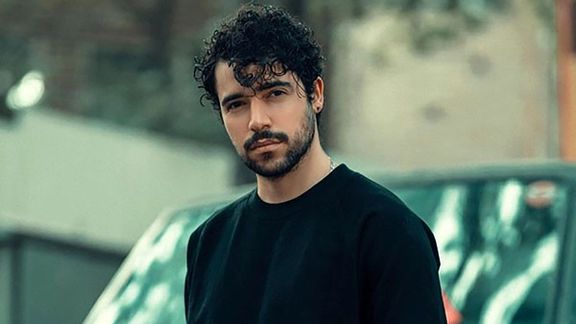
PEN America has strongly condemned the imprisonment of Grammy-winning Iranian vocalist Shervin Hajipour, who has been sentenced to three years and eight months behind bars.
PEN America has strongly condemned the imprisonment of Grammy-winning Iranian vocalist Shervin Hajipour, who has been sentenced to three years and eight months behind bars.
The group has called for Hajipour's immediate release, urging the authorities to dismiss his sentence and the expunge all charges from his record.
Julie Trébault, director of Artists at Risk Connection, expressed deep concern over Hajipour's sentencing, denouncing it as another “attempt to suppress the independent voices who channel the demands of the Iranian people for basic freedoms.
“The Iranian government is attempting to silence a powerful movement spearheaded by musicians who believe in freedom and women’s rights,” added Trébault.
During Iran's parliamentary elections on Friday, Hajipour took to Instagram to share the news about his sentence, revealing his conviction on charges of "propaganda against the system" and "inciting protests." Additionally, he has been subjected to a two-year travel ban and instructed to compose a song focusing on "US crimes" while disseminating related content online.
Hajipour, known for his support of the Woman, Life, Freedom movement, gained international recognition for his protest song "Baraye" ("Because of"), which won the prestigious "Song for Social Change" at the Grammy Award. His arrest in September 2022, following the song's viral success, led to charges of inciting dissent.
The sentencing of Hajipour is part of a broader crackdown on artists and activists in Iran. According to PEN America's Freedom To Write Index, Iran ranks as the world's second-highest incarcerator of writers, with at least 57 Iranian writers arrested in 2022 alone. The international community continues to call for the protection of freedom of expression and the release of unjustly detained individuals in Iran.


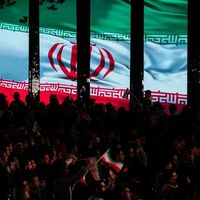
According to official statistics, 10 million people were eligible to vote in Tehran province. Mehr news agency, close to Iran’s hardliners, claimed a voter turnout of 24 percent in the capital, which means around 2.4 million participated in the elections.
However, according to the Interior Ministry’s preliminary list of the leading candidates in Tehran, the frontrunner, Mahmoud Nabavian, has only received 120,000 votes; that is, slightly more than 2% of the total votes. This figures can be taken to imply that either much less than 24% voted, or a large number of the electorate chose to cast invalid votes.
Tehran sends 30 members to parliament, while other constituencies each have their own share of seats. Candidates receiving the highest number of votes in each district fill the available slots.
In recent years, many Iranians have cast invalid votes as a means to express their dissatisfaction with the status quo. While the Iranian regime asserts that citizens are free to decide whether to participate in elections and that abstaining will not incur penalties, numerous reports suggest that the Islamic Republic closely monitors individuals' voting records, thus exerting significant control over their freedom of choice.
This process is particularly implemented for citizens holding a governmental position, such as teachers, university professors, and civil servants. According to reports, one of the key criteria to renew the contracts of the government employees or to grant them promotions is their voting records, which is construed by security and intelligence agencies as a sign of allegiance to the regime. Those who have to vote to keep their jobs express their discontent through invalid votes.

Back in 2021, the presidential elections witnessed the same voting strategy by dissenting citizens who cast more than 3.7 million invalid votes to protest regime policies. The significance of this number becomes apparent only when we notice that the second leading candidate then, Mohsen Rezaei, won only 3.4 million votes from 60 million eligible voters.
Italy-based political analyst Ehsan Soltani referred to the discrepancy between the official turnout and the number of valid votes in Tehran, and predicted, “The number of invalid votes might surprise everyone.”
He also noted that the 30th ranking candidate in the 2016 parliamentary elections in Tehran received more than a million votes while the frontrunner on Friday managed to get just 120,000, concluding that the regime has lost its legitimacy in the eyes of the citizens.
Even if we accept the government's claim of a 24% turnout in Tehran, this marks the lowest voter participation in the capital during the Islamic Republic's rule.
The invalid votes also played a major role in recent elections in Yazd, a conservative city in central Iran. The winning candidate in the city, Mohammad Saleh Jokar, was elected to the parliament with more than 81,000 votes while the second on the list was “invalid votes” with close to 30,000, around 10,000 votes more than the next top candidate, Ali Morteza Rad.
Another point of note about the preliminary results of the parliamentary elections in Tehran is that many hardliners are leading the list. The fact that these hardliners got elected with the their meager votes by not testify to their popularity in the capital. On the contrary, this is a clear sign that even many supporters of the regime abstained from voting in the elections due to their disillusionment. Most non-hardliners were barred from running by the ministry of interior and election watchdog, the Guardian Council.
Even former president Hassan Rouhani, former parliament speaker Ali Larijani and many other loyal regime insiders were barred from running in elections in 2021 and 2024.
Iranian regime media, including IRNA and the IRGC-affiliated Fars news website, claim a voter turnout of more than 40%, the lowest in the history of the Islamic Republic. However, social media accounts offer a contrasting narrative through videos and images, indicating much lower participation.
Former reformist lawmaker Mahmoud Sadeghi taunted the celebratory rhetoric by many governmental media regarding the claimed 40% turnout. “In the previous parliamentary elections (2020), they said that only 42.5% voted because of the Covid pandemic; now that the turnout is even less, they pretend it is a victory for them!” he wrote on X.


Iran and Russia have recently signed 19 contracts to strengthen their bilateral cooperation across various industries, as reported by the Shana News Agency, affiliated with the Iranian Oil Ministry. These agreements, reached during the 17th meeting of the joint economic cooperation committee in Tehran, encompass energy, health, trade, and education sectors. Talks are also underway to develop new gas and oil reserves, indicating the potential for further agreements soon.
Furthermore, the electrical companies of both nations have entered into a cooperative agreement aimed at advancing research and technology in power generation. This initiative seeks to enhance collaboration through digitalizing electrical networks, improving energy efficiency, and localizing equipment manufacturing. Additionally, a protocol has been adopted to modify the roadmap for scientific and technological collaboration in the oil and gas industry, emphasizing practical cooperation enhancement in 21 key areas.
Challenges and Opportunities
For the Iranian energy industry as well as the larger geopolitical environment, the memorandum of understanding (MOU) on technological collaboration between Russia's Transneft and Iran's Ministry of Oil brings both chances and problems.
By possibly introducing Russian technology into Iran's oil industry, the MOU establishes a precedent for technical collaboration. This might improve the production and efficiency of Iran's oil and gas projects. The strengthening alliance between Russia and Iran has the potential to change local energy supply environments, which might affect global energy pricing and distribution networks.

The deal is a component of larger conversations on energy cooperation, which also include the development of gas reserves and the establishment of a gas hub in Iran. Iran's standing in the international energy market may be enhanced by this.
However, Iran and Russia have a history of broken agreements,which highlights how difficult it is to meet the promises of these MOUs. The contradiction between Russia's reluctance to convert memoranda into contracts and Iran's statements suggests that execution may be difficult. Both nations have lofty goals, but they also have economic difficulties. For example, Gazprom of Russia has experienced a sharp decline in earnings and a rise in debt, casting doubt on the viability of spending $40 billion in Iran's energy industry.
Russia and Iran are also potential competitors in the energy markets, while Western sanctions on both nations might make cooperation more difficult by impeding the execution of ambitious objectives. Although the MOU gives Iran a chance to alleviate its natural gas shortage, Iran's energy independence may be compromised if it becomes dependent on Russian gas through swaps or direct transfers.
Iran and Russia have recently solidified their bilateral cooperation by signing 19 contracts, marking an advancement across various sectors. This development follows the successful negotiations of agreements covering commerce, energy, health, and education at the 17th meeting of the Joint Economic Cooperation Committee in Tehran, Iran.
The MOU between Transneft and Iran's Ministry of Oil, which holds promise for enhancing collaboration within the oil industry, but intricacies of geopolitics and conflicting economic interests, uncertainties persist regarding its specific objectives and potential consequences.
Even with all the possible drawbacks—like dependency worries, financial restraints, and legal obstacles—one can't help but wonder what real intentions are driving these partnerships. It begs the question of whether Iran and Russia have other hidden goals at work, or if they are just looking to take advantage of these openings to increase their energy capabilities and influence globally. While building strong relationships, promoting innovation, and deftly managing global dynamics may seem appealing, it also raises the issue of what hidden agendas may be at play.