Iran plans maiden launch of its first satellite constellation by March
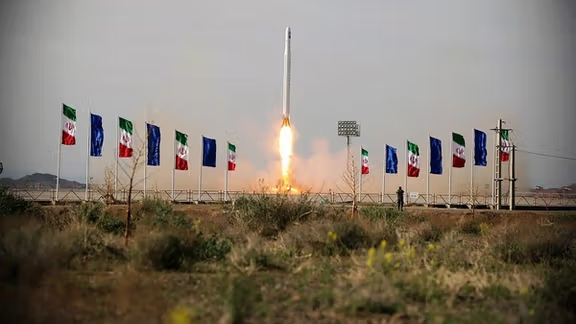
A military satellite taking off on Qassed two-stage launcher from Markazi desert in central Iran.
Iran plans to launch the first satellites in its new Soleimani constellation of narrowband satellites by the end of the Iranian year in March 2026, the head of the country’s space agency said.
Hassan Salarieh, head of the Iranian Space Agency, told the Tasnim news agency that the Soleimani constellation will be Iran’s first narrowband satellite network.
“In the initial phase, nearly 20 satellites will be built and placed in orbits with different inclinations to provide narrowband communications aimed at developing Internet of Things services,” he said.
The constellation is named after Qassem Soleimani, the commander of Iran’s Quds Force - the foreign arm of the Revolutionary Guards -- who was killed in a US drone strike in Baghdad in 2020.
According to Salarieh, test launches of prototype satellites will begin this year, with some placed in orbit to carry out preliminary checks.
The main production phase of the satellites will begin in 2025, with operational launches of the constellation expected to start in early 2026 and continue into 2027. “Technical challenges and delays are natural in the space industry,” he said, but added that progress so far was “satisfactory.”
The constellation is being developed by a consortium of government and private entities. Salarieh said design work began in late 2023, and that many subsystems and components are now under construction.
Salarieh has since said a second version of Nahid-2 will be launched aboard Iran’s domestically developed Simorgh rocket, underlining Tehran’s efforts to expand its independent launch capacity.
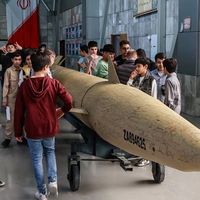
Iran is also developing heavier launchers, including the Sarir and Soroush classes, and is expanding its Chabahar spaceport to reduce reliance on foreign facilities.
The Islamic Revolutionary Guard Corps (IRGC) has separately conducted suborbital tests of its , most recently in July, weeks after the 12-day war with Israel.
Western governments have repeatedly voiced concern over Iran’s satellite launches, warning that the same rocket technology can be used for ballistic missiles. Tehran says its space program is peaceful.
Iran’s capital and several provinces will see a full-day closure of government offices due to a worsening electricity crisis, officials said Monday.
The Tehran governor’s office confirmed all provincial offices will close on Saturday, August 23, as part of energy conservation measures.
The Tehran Electricity Distribution Company also said power would be cut to 100 high-consumption government offices. Provinces including Kerman and North Khorasan declared they would shut down on the same day.
Iranian media reported that the shortages are crippling industrial production and disrupting communications and internet services.
Industry at a standstill
“Units operating three shifts have lost nearly half their shifts entirely," Iran's trade chamber chief Arman Khaleghi told ISNA. "Overall, industries have lost 30 to 60 percent of their production capacity solely due to power shortages."
Khaleghi urged officials to adopt policies of engagement to ease sanctions pressure.
“The country must either engage with the world and leverage regional and international opportunities, or continue oscillating between selling resources to neighbors and importing from them.
This path is neither sustainable nor befitting Iran's economy,” he said.
'Expect internet outages'
The crisis has also taken a toll on daily life.
Dozens of citizens have reported internet disruptions, outages, and slowdowns in recent weeks, compounding the strain from inflation, unemployment, and shortages of power and water.
“We should expect that in the near future, just as we have daily power outages, we’ll also face three-hour daily internet outages,” warned Alireza Rafiei, head of mobile operator Irancell.
He said electricity shortages have rendered backup batteries ineffective, leading to frequent service breakdowns.
“Batteries aren't a viable solution for recurring power cuts, and with such frequent outages, we often can't recharge them. Two hours of daily outages equate to 2 percent of sites being offline 24/7, causing significant dissatisfaction,” Rafiei added.
Sanctions, corruption, and economic mismanagement have deepened the crisis, with Iran’s rial losing more than 90 percent of its value since U.S. sanctions were reimposed in 2018.
A court in Tehran has sentenced women’s rights defender Hasti Amiri to three years in prison on charges that include propaganda against the state and appearing unveiled in public, she said in a post on Instagram.
Amiri said a Revolutionary Court in Tehran sentenced her to two years in prison and a 500-million rial ($562) fine for “spreading falsehoods.”
She received an additional one year for “propaganda against the state” and a 30.3-million rial ($37) fine for appearing without a hijab in public.
“When simply opposing the death penalty is considered propaganda against the state, then execution itself is a political tool of intimidation,” Amiri wrote.
Amiri, a graduate law student at Tehran’s Allameh Tabataba'i University and a campaigner for students’ rights, previously served seven months of a one-year prison sentence in 2022 for her advocacy against the death penalty and for women’s rights in Iran.
“Speaking about the situation of prisoners and Evin prison has also been considered spreading falsehoods," she added in her post.
The court also imposed additional punishments, including a two-year ban on leaving the country and joining political or social groups.
Reflecting on the ruling, Amiri said her struggle is about standing up for ideals, supporting fellow prisoners, and resisting executions.
"At the end of the day, a person should know how many steps they have taken… With the hope that one day we burn all the gallows and execution scaffolds,” she wrote.
Amiri's sentence comes amid a broader clampdown, with student activist Khashayar Sefidi last year receiving a one-year prison term for propaganda against the state after opposing the death sentence of dissident rapper Toomaj Salehi.
Iran could soon face internet blackouts of up to three hours a day unless tariffs are raised by 70 percent to cover soaring costs to the struggling network, the CEO of Irancell, the country’s second-largest mobile network operator warned.
“If tariffs are not adjusted, operators will not be able to invest, and improving internet quality will be impossible,” Alireza Rafiei said on Monday.
In the near future, he said, Iranians should expect scheduled internet outages just like the country's routine power cuts.
Iran’s internet crisis, marked by declining quality, frequent disruptions, and GPS interference, has persisted for two months since the 12-day war with Israel when blackouts rocked the country, affecting everything from tracing the whereabouts of loved ones to online banking and GPS services for businesses dependent on them.
Consumption has steadily increased while tariffs have remained frozen for years, even as electricity, equipment, and operational costs have multiplied, Rafiei added. Without higher rates, he argued, operators cannot invest in upgrades.
Iran ranks among the worst for connectivity
A report by the Internet and Infrastructure Commission of Tehran’s E-Commerce Association last week ranked Iran 97th out of 100 countries in terms of quality, describing the network as “unreliable, restricted and slow.”
Citizens across Iran have told Iran International of widespread issues, saying outages and slow speeds add to the pressure of power cuts, water shortages, inflation, and unemployment.
Government officials have blamed the June war with Israel for worsening connectivity. On July 15, government spokeswoman Fatemeh Mohajerani linked new restrictions to security decisions taken during the conflict, while Communications Minister Sattar Hashemi acknowledged poor quality service earlier in August.
Interference was partly introduced after reports that GPS signals were being used to guide drones, he said.
However, the E-Commerce Association report said that disruptions had been recorded long before the conflict and remain unresolved even two months since its end.
Power cuts and GPS disruptions
Constant electricity blackouts make matters worse as operators cannot recharge backup systems in time, Rafiei said.
“The batteries we use, even in the best case, only work 45 minutes to one hour,” he explained. “With repeated outages, sometimes we don’t even get the chance to recharge them.”
If two hours of daily power cuts accumulate, it means “two percent of sites are permanently off, creating extraordinary dissatisfaction,” added Rafiei.
Since the war, users continue to report erratic location shifts of hundreds of kilometers, disrupting services such as ride-hailing apps and logistics businesses.
The Iranian government continues to promote its long-term national internet project, designed to tighten control over information flows.
Iran’s Revolutionary Guard got a leaked British Ministry of Defense database from the Taliban, hoping to use it to detain suspects as bargaining chips in nuclear talks while the Taliban seeks recognition as Afghanistan’s rulers, the Telegraph reported.
A group of Iran’s Revolutionary Guard officials travelled to Kabul last week, where the Taliban handed them a leaked list containing personal details of Afghans who had applied for asylum in Britain — including soldiers, intelligence assets and special forces members — in exchange for Iran’s potential recognition of their rule, senior Iranian and Afghan officials told the paper.
The Telegraph said the officials travelled without the knowledge of Iran’s civilian government.
A senior Iranian official told the paper that four Guards members promised the Taliban they would push Tehran to speed up recognition of the Islamist group.
“The Taliban gave them the list. They want to find British spies before the ‘snapback’ to have something to pressure London behind closed doors,” the official was quoted as saying.
Iranian border forces have already detained several people whose names appeared on the leaked list, the report said.
“Many were released because they were only former Afghan soldiers, while others are being held for further checks. The focus is just on British spies,” the source added.
The database, dubbed a “kill list” by British media, was accidentally leaked in 2022 when a Royal Marine emailed the full file to Afghan contacts. It included names, phone numbers and email addresses of around 25,000 Afghans and more than 100 British special forces personnel and MI6 operatives who endorsed Afghan relocation applications.
The Taliban’s decision to share the file followed internal debate, the paper said, with some officials objecting due to Iran’s treatment of Afghan refugees.
“Some argued that we should not do any favors for the Iranians … but if they were willing to recognize the Islamic Emirate in return, that would not be a bad deal,” a Taliban official was quoted as saying.
Earlier on Monday, Iran’s Foreign Ministry spokesperson Esmail Baghaei said that recognizing the Taliban was a “sovereign decision,” adding that Tehran maintains extensive interactions with Afghanistan due to shared ties, a long border and common challenges, and would make a decision on recognition “whenever its national interests require.”
The reported development comes as Britain, France and Germany warned they would trigger the 'snapback' mechanism to restore UN sanctions unless Iran resumes nuclear talks before the end of August.
Iran will continue talks with the International Atomic Energy Agency (IAEA) and another round of negotiations is likely in the coming days, Foreign Ministry spokesperson Esmaeil Baghaei said on Monday.
Baghaei told reporters that Tehran remained ready to take steps to reassure the world about the peaceful nature of its nuclear program, but only if sanctions were lifted.
“We are prepared to adopt a series of measures to provide assurances about the peaceful nature of our nuclear program, conditional upon the removal of oppressive sanctions,” he said at his weekly press briefing.
Baghaei dismissed speculation about third-party mediation in its relations with the UN nuclear watchdog, saying, “Our relationship with the Agency is direct. Last week, one of its deputies visited Tehran. We also had discussions on drafting a cooperation framework,” he said. “Our representative in Vienna is in constant contact with the Agency.”
‘European have no right for snapback’
The spokesperson also criticized Britain, France, and Germany over threats to use the so-called snapback mechanism that could restore UN sanctions.
“The very act of Europe using this tool as a means of pressure against Iran is an illegal move,” Baghaei said.
“The three European countries failed to fulfill their obligations under the 2015 nuclear deal, and after the US and Israel attacked Iran’s nuclear facilities, they neither condemned it nor even tried to provide a logical explanation of their positions. We believe the three European countries have no right to use this mechanism.”
He added: “We never cut off negotiations with these three countries. They must decide whether they want to play a constructive role or a negative role aligned with the interests of the Zionist regime.”
Responding to a question on whether Iran might consider extending the deadline set by Britain, France and Germany in their recent letter to the United Nations, Baghaei said Tehran had no such plans. “The Islamic Republic has no program to extend the snapback mechanism,” he said.
His comments followed a letter sent last week by the foreign ministers of the three European powers — known as the E3 — to UN Secretary-General António Guterres and the Security Council, warning that they were prepared to reimpose international sanctions unless Tehran resumed nuclear negotiations with Washington and restored cooperation with the IAEA before the end of August, or accepted an extension.
Caucasus concerns
On regional issues, Baghaei said Iran closely monitored developments in the South Caucasus.
“We have been very clear that we are sensitive to the presence of extra-regional actors,” he said.
“We conveyed this explicitly to our friends in Armenia and listened to their explanations. For us, the unblocking of routes must not harm internationally recognized borders or contradict Armenia’s national sovereignty. We are monitoring the situation carefully and will raise concerns whenever necessary.”
Last week, US President Donald Trump brokered a peace deal between Armenia and Azerbaijan, which gives Washington leasing rights to develop the Zangezur transit route connecting Azerbaijan with its exclave, Nakhchivan. It will be renamed the Trump Route for International Peace and Prosperity (TRIPP).
Epstein case not linked to talks
Asked about reports linking the Jeffrey Epstein case to negotiations with Washington, Baghaei said Iran would not speculate.
“The so-called Epstein case is an issue that is not limited to the United States; many officials from different countries were implicated. We do not engage in speculation about the motives of US officials. What matters to us are their actions and Iran’s interests,” he said.