Dozens Of Iranian Journalists Prosecuted In February
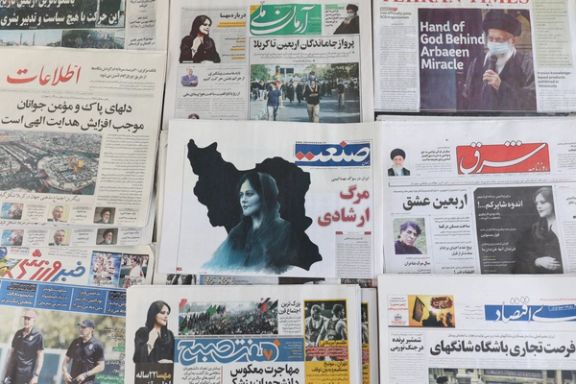
During the past month, Iran arrested at least 35 journalists and media directors according to Defending the Free Flow of Information (DFI), a 40% surge compared to the previous month.
During the past month, Iran arrested at least 35 journalists and media directors according to Defending the Free Flow of Information (DFI), a 40% surge compared to the previous month.
Of the 35, seven were detained, with two transferred to prison. Eight more were summoned to judicial and security institutions.
Governmental entities lodged complaints against six journalists, one convicted by the press court and 12 receiving sentences ranging from imprisonment to fines and deprivation of their journalistic profession.
The most common charges included “disseminating falsehoods" and "propaganda against the system” among others.
The report also exposes numerous violations of legal rights, such as closed-door trials, property confiscations without warrants, and denial of access to legal counsel. Additionally, six media outlets faced legal scrutiny, with one outlet being seized and three outlets convicted in political and media courts.
As of the end of February, at least 10 journalists remain imprisoned in Iran's facilities, contributing to the nation's status as the world's third-largest jailer of journalists, according to Reporters Without Borders.
Iran has long held one of the world’s worst press freedom rankings, at 178th out of 180 countries.
The International Federation of Journalists has condemned the actions, particularly in the wake of Mahsa Amini's death, reporting over 100 journalists detained and more than 21 sentenced to a total of 77 years in prison.

Major exchange dealers have even shut down their price announcement boards, according to reports received by Iran International.
Following the parliamentary elections in Iran, the currency and gold markets witnessed historic highs, with the US dollar reaching the 600,000 rial mark at one point during Saturday. Sources in the Tehran market and currency information websites reported that the dollar reached 602,000 rials in the early hours of Saturday trading, marking a three percent increase from Thursday's closing rates.
The dollar's doubling against the rial since March 2022, coupled with failed nuclear negotiations with the US and its European allies, has contributed to this economic turmoil. On Saturday, the euro was traded at 656,000 rials and the British pound at 764,000 rials in the free market, indicating increases of over three and 2.5 percent, respectively, compared to Thursday's rates.
Moreover, the price of 18-carat gold surged to around thirty million rials per gram, reflecting a 3.5 percent increase from the previous week.

Observers and experts had anticipated further economic complications following the parliamentary elections, which amid voter apathy and lack of competition, propelled hardliners to gain absolute majority in the legislature.
The continuous devaluation of the rial, particularly since the US withdrawal from the JCPOA nuclear deal in 2018, has fueled inflation and plunged millions into poverty. The economic crisis has eroded the government's legitimacy, with a historic low voter turnout in the March 1 elections.
Meanwhile, according to Iran’s Statistical Center, the prices of canned tuna and red meat in February increased by 133% and 100%, respectively, compared to the same period last year.
In a report published on Saturday, Etemad daily analyzed the data provided by Iran’s Statistical Centre on the state of the food market. Entitled “The Three-Digit Inflation of the Proteins,” the report reviewed the average prices of 53 selected food items in urban areas.
Of these, 48 items have increased in price over the past 12 months. Some of these items recorded a three-digit annual inflation rate, with canned tuna at the top of the list with a 133% price increase.
Next in line is red meat which has an annual inflation rate of about 100%. The price of one kilogram of lamb meat in February last year was 2,850,000 rials ($5.7), which increased to 5,360,000 rials ($10.72) in February 2024.
According to the report, the prices of chicken meat and salmon have also risen by 55% and 65%, respectively, in the same period.
Meanwhile, Eqtesad 24 daily reported that nearly one-third of Iranians struggle below poverty line. The report projected a concerning escalation in poverty rates, foreseeing that by the end of the current Iranian year [March 20], “the proportion of individuals below the poverty line could soar to 37 to 40 percent.”
The forecast attributes the surge to the combination of soaring inflation rates and stagnant wages, exacerbating the financial strain faced by many Iranians.
In January, Iran announced that the new base monthly salary would rise to approximately $200 with a 20-percent increase. However, the constant decline in the value of the rial now pegs it to around $160.


According to official statistics, 10 million people were eligible to vote in Tehran province. Mehr news agency, close to Iran’s hardliners, claimed a voter turnout of 24 percent in the capital, which means around 2.4 million participated in the elections.
However, according to the Interior Ministry’s preliminary list of the leading candidates in Tehran, the frontrunner, Mahmoud Nabavian, has only received 120,000 votes; that is, slightly more than 2% of the total votes. This figures can be taken to imply that either much less than 24% voted, or a large number of the electorate chose to cast invalid votes.
Tehran sends 30 members to parliament, while other constituencies each have their own share of seats. Candidates receiving the highest number of votes in each district fill the available slots.
In recent years, many Iranians have cast invalid votes as a means to express their dissatisfaction with the status quo. While the Iranian regime asserts that citizens are free to decide whether to participate in elections and that abstaining will not incur penalties, numerous reports suggest that the Islamic Republic closely monitors individuals' voting records, thus exerting significant control over their freedom of choice.
This process is particularly implemented for citizens holding a governmental position, such as teachers, university professors, and civil servants. According to reports, one of the key criteria to renew the contracts of the government employees or to grant them promotions is their voting records, which is construed by security and intelligence agencies as a sign of allegiance to the regime. Those who have to vote to keep their jobs express their discontent through invalid votes.
Back in 2021, the presidential elections witnessed the same voting strategy by dissenting citizens who cast more than 3.7 million invalid votes to protest regime policies. The significance of this number becomes apparent only when we notice that the second leading candidate then, Mohsen Rezaei, won only 3.4 million votes from 60 million eligible voters.
Italy-based political analyst Ehsan Soltani referred to the discrepancy between the official turnout and the number of valid votes in Tehran, and predicted, “The number of invalid votes might surprise everyone.”
He also noted that the 30th ranking candidate in the 2016 parliamentary elections in Tehran received more than a million votes while the frontrunner on Friday managed to get just 120,000, concluding that the regime has lost its legitimacy in the eyes of the citizens.
Even if we accept the government's claim of a 24% turnout in Tehran, this marks the lowest voter participation in the capital during the Islamic Republic's rule.
The invalid votes also played a major role in recent elections in Yazd, a conservative city in central Iran. The winning candidate in the city, Mohammad Saleh Jokar, was elected to the parliament with more than 81,000 votes while the second on the list was “invalid votes” with close to 30,000, around 10,000 votes more than the next top candidate, Ali Morteza Rad.
Another point of note about the preliminary results of the parliamentary elections in Tehran is that many hardliners are leading the list. The fact that these hardliners got elected with the their meager votes by not testify to their popularity in the capital. On the contrary, this is a clear sign that even many supporters of the regime abstained from voting in the elections due to their disillusionment. Most non-hardliners were barred from running by the ministry of interior and election watchdog, the Guardian Council.
Even former president Hassan Rouhani, former parliament speaker Ali Larijani and many other loyal regime insiders were barred from running in elections in 2021 and 2024.
Iranian regime media, including IRNA and the IRGC-affiliated Fars news website, claim a voter turnout of more than 40%, the lowest in the history of the Islamic Republic. However, social media accounts offer a contrasting narrative through videos and images, indicating much lower participation.
Former reformist lawmaker Mahmoud Sadeghi taunted the celebratory rhetoric by many governmental media regarding the claimed 40% turnout. “In the previous parliamentary elections (2020), they said that only 42.5% voted because of the Covid pandemic; now that the turnout is even less, they pretend it is a victory for them!” he wrote on X.