Iran Plans To Create DNA Bank Of Journalists
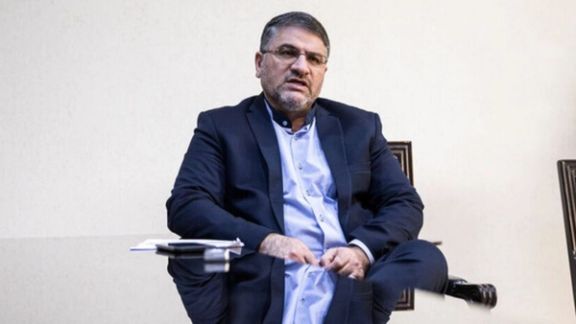
The Iranian government's plan to create a DNA bank of people in "high-risk" professions, including journalists, has raised concerns that it could be used to crack down on dissent.
The Iranian government's plan to create a DNA bank of people in "high-risk" professions, including journalists, has raised concerns that it could be used to crack down on dissent.
The plan, announced by the head of the Legal Medicine Organization of Iran, Abbas Masjedi, would involve collecting genetic samples from firefighters, flight crews, armed forces, forest rangers, mine workers, and journalists.
Masjedi said that the plan is intended to help identify victims of accidents and disasters, but critics say it could also be used to track and identify individuals who are critical of the government.
The plan can be seen as an attempt to intimidate and silence journalists because the regime can easily use of possible DNA evidence to target its critics.
The plan has also drawn comparisons to China's DNA database, which has been used to track and monitor Uyghur Muslims in Xinjiang province.
The Chinese government has shown how DNA databases can be used to suppress dissent, said Maya Wang, a senior China researcher at Human Rights Watch, suggesting that the Iranian government is taking a page out of China's playbook.
“Human Rights Watch has documented that mass collection and cataloging of people’s DNA form a part of the Chinese police’s countrywide mass surveillance systems, which involves the use of facial and voice recognition technology, big data platforms, among other technologies," she said, adding, “These technologies have empowered the Chinese government to maintain a vice-like grip on a complex society, from cities to its most remote borderlands, hunting down dissidents and neutralizing protests.”

Within Iran's state-controlled economy, the government sets wages for public sector workers, including thousands of companies and factories, which also determines salaries of ordinary workers in the private sector. According to the law, representatives of the government, official labor unions and employers every year negotiate to set the minimum wage. However, the government increasingly ignores the unions and pushed through unrealistically low wages amid 40-percent annual inflation.
Davood Manzour, the head of Planning and Budget Organization (PBO), said on Saturday that discussions are still underway, with the new levels contingent on anticipated inflation.
He also expressed optimism about negotiations between labor unions and the government, though in recent months, unions have come under increasing pressure from the government amid labor protests, with tightening control over unions to suppress unrest.
This comes as Saeed Fatahi, a union leader, advocated for incorporating a 42 percent inflation rate and a 250 million rial ($400) monthly livelihood basket as benchmarks for wage deliberations. Currently, workers receive less than half of that amount, which is inadequate for food and housing.
Fatahi emphasized the need for labor representatives to hold firm during negotiations, saying any new deal should be within the terms of Article 41 of the Labor Law which states workers' wages, salaries, benefits, and bonuses must be calculated based on the country's inflation rate.

Criticism was leveled at the Labor Ministry for its handling of past wage negotiations and the dismissal of labor representatives, perceived as an attempt to suppress wage growth and disregard labor laws. As the economic crisis deepens, the government fears the stirring anger fueling ever increasing protests.
Meanwhile, Etemad newspaper on Saturday reported a staggering increase in food prices, with canned fish soaring by 113 percent and red meat by 100 percent in February compared to the previous year.
Economic constraints, such as sanctions and fluctuating oil prices, limit the government's ability to finance wage hikes without risking further economic instability. Additionally, a history of labor unrest and political dissent adds to the government's apprehension, as raising wages could be seen as a concession to pressure groups demanding broader reforms.
Moreover, entrenched interests within the government and business community may resist wage increases to protect profit margins and maintain the status quo. Despite growing calls for reform and social justice, the government's unwillingness to address the wage issue underscores the challenges of balancing economic stability, political considerations, and social justice in Iran's complex socio-economic landscape.
Overall, the financially strained government is procrastinating and advocating for just a 20-percent wage hike, as it appears incapable of raising the minimum wage sufficiently to cover living expenses.
The wage negotiations continue against a backdrop of the Iranian government funding billions of dollars' worth of support to its militant proxies in the region.
From Lebanon to Yemen, Palestine to Syria and Iraq, from training to weapons, Iran continues to be the region's largest state sponsor of terror, according to the latest US annual terrorism report.
Also, recently leaked documents revealed parliamentarians' monthly salaries range from 1.7 to 2.7 billion rials, equivalent to $3,200 to $5,000.
Meanwhile, while Iranian workers await a salary increase of 20 percent amid an annual inflation rate of around 50 percent, the new minimum monthly wage has been set at 115 million Iranian rials or less than $200.
Rights groups such as Human Rights Watch have long noted the erosion of workers rights in Iran. Since 2018, Iranian workers have been facing ever more challenging economic circumstances amid US sanctions. Additionally, Human Rights Activists of Iran (HRANA) have noted the attempts to silence workers' unions amid declining wages, unpaid salaries and dangerous working conditions.


Despite the objections of Khamenei's confidant, Gholam-Ali Haddad-Adel, the ultraconservatives fielded six lists for Tehran, whose representatives will wield considerable influence in parliament's management. Internal conflicts between pro-Khamenei factions are exacerbated in the absence of more moderate politicians who were barred from competing in the elections.
The unprecedented number of blank votes and the infighting among hardliners underscore Khamenei's waning influence over his supporters and the election manipulation apparatus.
Conducting rigged elections in the Islamic Republic has become increasingly challenging. Citizens capture videos from polling stations, revealing lower turnout than the government asserts. Furthermore, individuals can express discontent with the voting system by submitting invalid handwritten ballots. This tactic may also serve to avoid potential repercussions for non-participation, such as employment disqualification or promotion denial.

Voting for a popular footballer
An election boycott movement was underway for weeks. It was clear for months that most Iranians, deeply dissatisfied with the regime, would boycott the elections, and the decision by hardliners to keep other regime supporters out did not help the situation. Amid a low turnout, many of those who voted cast blank votes. Mohammad Mohajeri, a conservative commentator tweeted that the number of invalid votes were higher than the number of votes top contenders were able to get in Tehran.
Confirming the significant increase in the number of invalid votes, Didban Iran website wrote, "After counting 80% of the ballot boxes in Tehran, there were more than 380k invalid votes," even though the first person has about 340k votes.” The invalid written votes consisted of soccer symbols and names of footballers. In Yazd, the number of invalid votes is about 29,000, in second place.
It seems that invalid votes in Iran's engineered elections are gradually becoming a permanent phenomenon. In the presidential election of 2021, invalid votes came second after Ebrahim Raisi, at 13 percent. There are reports of 30% invalid votes in this parliamentary election.
People’s power
The Guardian Council and higher authorities aimed to manipulate both the candidate pool and public opinion through discretionary oversight. However, people are now countering these tactics by casting invalid votes, undermining the system's efforts to engineer public sentiment. Submitting invalid votes in the Islamic Republic serves as a means to avoid potential prosecution for abstaining from voting while simultaneously mocking the political establishment.

Engineered elections typically offer both advantages and drawbacks for the regime. With each repetition, however, the costs of these sham elections are outweighing their benefits. They increasingly embarrass the regime by exposing its lies, fraud, manipulation of numbers, and propaganda tactics to the public eye.
Insider infighting
Another consequence of engineered elections is the escalation of tensions among insiders vying for limited sources of power. In Tehran, after counting approximately two-thirds of the votes, Mohammad Baqer Ghalibaf, the former Speaker of Parliament, found himself in fourth place. Ghalibaf is now in competition with a member of the Mohammad Taqi Mesbah Yazdi cult, a cleric known for issuing fatwas sanctioning violence against those who defy Sharia law in their private lives.
The formation of a unified candidate list for Tehran was crucial for the hardline faction ahead of the election, but this did not materialize. Instead, six separate lists were published, each with its own distinct differences. Essentially, this divergence led to a war of competing lists, with Mesbah's followers, organized in the Paydari front, gaining ground over traditionalist Islamists. Even close associates of Khamenei, such as Haddad-Adel, who spearheaded the main list of fundamentalists, emerged as losers in this internal power struggle.
Ghalibaf’s speakership in jeopardy
To undermine Ghalibaf's influence and remove him from the speakership of the 12th Majles, supporters of Mesbah Yazdi employed various tactics to weaken Ghalibaf's allies. They insisted that Morteza Aqa-Tehrani, a prominent figure of the Paydari Front, be positioned as a top figure alongside Ghalibaf on the electoral list. Ultimately, Ghalibaf acquiesced to this demand, but the outcome reveals that some Paydari supporters refrained from voting for Ghalibaf.
Simultaneously, some of Ghalibaf's allies abandoned him midway and aligned with his adversaries. After parting ways with the Ghalibaf-Haddad united list, they joined other coalitions such as the "Amna" list. This coalition, led by Hamid Rasa’i allied with other fundamentalist groups to dismantle the Ghalibaf coalition. Rasa’i is recognized as one of the most extremist figures among the fundamentalist lists.
The role of Alireza Zakani, the mayor of Tehran, is also noteworthy in dealing a blow to Khamenei’s influence. Zakani spearheaded another list known as the United Front of the Revolution, which shared many similarities with the Paydari list. The recent elections appear to mark the beginning of the decline of Ghalibaf and Haddad Adel's influence in the legislature.