Iran's Bid For Naval Base In Sudan Rejected
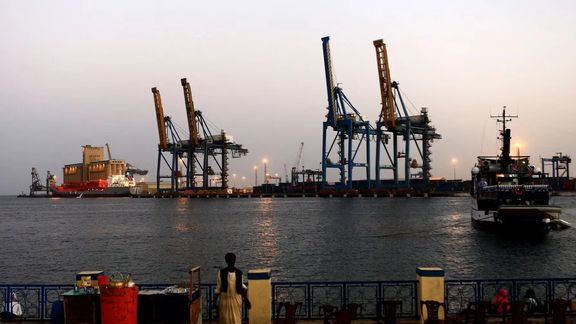
Iran's attempt to establish a permanent naval base on Sudan's Red Sea coast has been rejected according to a senior Sudanese intelligence official.
Iran's attempt to establish a permanent naval base on Sudan's Red Sea coast has been rejected according to a senior Sudanese intelligence official.
Ahmad Hasan Mohamed, intelligence adviser to Sudan’s military leader, disclosed that Iran sought to construct the base to monitor maritime traffic to and from the Suez Canal and Israel.
“The Iranians said they wanted to use the base for intelligence gathering,” Mohamed said in an interview with the Wall Street Journal. “They also wanted to station warships there.”
Mohamed stated that Iran had offered explosive drones to Sudan's military to combat rebel forces amid the civil war and proposed a helicopter-carrying warship in exchange for permission to build the base. However, Sudan rejected the deal to avoid straining relations with the United States and Israel.
Iran's pursuit of a naval foothold in the Red Sea aims to bolster its influence in one of the world's busiest shipping lanes, aiding Houthi rebels in Yemen to disrupt maritime traffic. Since November, the Iran-backed Yemeni militia has been blockading the route amid the Gaza war, in a bid to force Israel into a ceasefire. Instigated by Iran's supreme leader, the group has targeted Israeli linked ships and more recently, US and UK vessels in response to their support for Israel.
The backdrop of Sudan's 10-month-old civil war has become a battleground for regional powers vying for strategic influence. Sudan's military, engaged in conflict with paramilitary forces, has sought external support, including drones from Iran, to gain the upper hand in the ongoing conflict.
Iran has long been a primary provider of drones to Sudan, steadily enhancing the country's capabilities from surveillance to offensive operations.
The Iranian Revolutionary Guard (IRGC) has faced accusations of contributing to regional destabilization by supporting proxy groups in the Middle East and beyond. Critics argue that the IRGC's involvement in various conflicts raises concerns among international stakeholders about Iran's influence and its potential impact on regional stability.

Alongside these warnings, they have offered roadmaps and guidelines aimed at navigating the potential challenges arising from the political impasse.
Despite the government’s claim of a 40-percent turnout, scattered voting results announced since Friday indicate a lower turnout and an unprecedented number of blank ballots.
One day before the elections, former Majles Speaker Ali Larijani emphasized the urgent need for a "national unity government" to address the looming challenges both regionally and internationally. He stressed the importance of forming coalitions at various political levels and fostering cohesion and empathy among the people as crucial steps towards steering the country out of its current predicament.

Larijani's nuanced message struck at the core of Iran's foreign policy, which has resulted in international isolation and the imposition of sanctions, culminating in a five-year-long economic crisis.
Larijani also advocated for the strategic use of "protest votes," suggesting that casting blank ballots or supporting candidates outside the leading ultraconservative camp could serve as a wake-up call to the government. However, he cautioned that such actions might come at a significant cost to both the government and the nation, potentially paving the way for a dictatorship if left unaddressed.
Furthermore, Larijani warned against the disillusionment of the people, asserting that it could signal the onset of authoritarian rule. He urged the government to ensure that despite the biased vetting process that sidelined reformist and moderate candidates, there are still avenues for representing the rights and aspirations of dissatisfied voters.
At the same time, Larijani, who led the parliament for 12 years, underscored the importance of voter participation in effecting change within the country's political landscape. He urged the populace to engage in the electoral process as a means of holding the government accountable and advocating for reforms, cautioning that abstaining from voting could empower a minority to seize power.
In addition to Larijani’s warnings and recommendation, former government spokesman Ali Rabiei proposed a post-election roadmap for reform-minded Iranians. He emphasized the need for coalition-building and collective action to rectify the shortcomings of the electoral system and safeguard Iran's freedoms and improve governance.
Rabiei stressed that the consolidation of conservative political power alone would not address Iran's underlying issues or alleviate the current political impasse. Instead, he advocated for the unity of reformist and moderate forces to navigate the challenges posed by the prevailing political climate.
Nevertheless, Iranian voters also harbor disillusionment toward Reformists who have advocated for gradual change for over a quarter of a century, yet failed to achieve tangible results, ultimately witnessing the regime's complete takeover by hardliners.
Meanwhile, a video surfaced on social media featuring Iranian sociologist Hatam Ghaderi quoting Ruhollah Khomeini, the Islamic Republic's founding leader, regarding the imposition of the 1905 constitution that put an end to absolute rule and established a constitutional monarchy. Khomeini argued that people preferred an Islamic government, not a constitution established seven decades earlier. Dissidents and many Iranian now make the same argument, saying that they are not bound what their grandfathers and fathers preferred 45 years ago, and want a regime change.
Pointing out that protests in Iran cost lives, Ghaderi said: "Now the people do not want the Constitution of the Islamic Republic. They do not want the guardianship of the Supreme Leader. How can they say we do not want this Constitution without fearing repression or getting killed or shot in the eye, and without thousands of people being jailed?"


This is the first time a vessel sinks as a result of Houthi attacks. As of February 25, Houthis had attacked at least 57 commercial and military vessels.
The UK-owned, Belize-flagged Rubymar is carrying “21,000 metric tons of ammonium phosphate sulphate fertilizer,” according to US military, which confirmed earlier reports about the fate of the vessel.

“The ship had been slowly taking on water since the unprovoked attack [on 18 February],” US Central Command posted on X. “The … fertilizer that the vessel was carrying presents an environmental risk in the Red Sea. As the ship sinks, it also presents a subsurface impact risk to other ships transiting the busy shipping lanes of the waterway.”
Rubymar was struck by two Houthi missiles. The crew left the ship that very same day. Attempts to keep it afloat and tow it to a safe port failed eventually, raising concerns about its cargo.
"The release of large quantities of fertilizers into the Red Sea could cause eutrophication, depleting water of oxygen and creating 'dead zones',” said Mohammed Albasha, a senior Analyst at the Navanti Group. “Marine life… will likely suffer due to the toxic effects and reduced oxygen levels. Fishing communities along Yemen's Red Sea coast in Hudaydah and Taiz will be impacted by the contamination".
Iran-backed Houthis have effectively closed off the Red Sea with their missile and drone strikes. They maintain that their attacks are solely in support of Palestinians and would cease if and when there's a ceasefire between Israel and Hamas.
On Saturday, the US Department of State announced that the Houthi attacks on commercial ships in the Red Sea are “doubling shipping costs to the United States”, as major operators re-route and go around the southern tip of Africa.
Commodities experts say grain transit through the Suez Canal has halved while grain ships bound for Iran navigate the Red Sea untroubled.
“The Iran-backed Houthis pose a heightened threat to global maritime activities,” CENTCOM posted on X earlier Sunday. “The United States and coalition partners remain committed to safeguarding freedom of navigation, striving to enhance the safety and security of international waters for merchant shipping.”
The United States and Britain dispatched warships to protect commercial vessels in the Red Sea, shortly after the start of the Houthi attack last November. Both countries then launched a series of airstrikes on Houthi sites in Yemen, hoping to “degrade” the group’s capabilities.
On Saturday, a few hours before Yemen sources declared Rubymar sunk, the head of Houthi supreme revolutionary committee said he held the British prime minister, Rishi Sunak, responsible for the sinking of the UK-owned Rubymar.
In a post on his X account, Mohammed Ali al-Houthi wrote that Sunak still had a chance to recover the Rubymar by allowing aid trucks into Gaza –
an offer that was never meant to be taken and wasn’t.
The consequences of Rubymar’s sinking are unclear. There’s been no official statement, but it’s likely that it would trigger another round of airstrikes and even harsher response in the hope that some form of deterrence is restored.
Biden critics say his administration is to blame for emboldening the Houthis’ and –perhaps more importantly– Iran. US president Joe Biden has admitted that he didn’t think the airstrikes he authorized could end the Houthi attack, who, undeterred, have threatened to further “surprise” the “enemy.”

Major exchange dealers have even shut down their price announcement boards, according to reports received by Iran International.
Following the parliamentary elections in Iran, the currency and gold markets witnessed historic highs, with the US dollar reaching the 600,000 rial mark at one point during Saturday. Sources in the Tehran market and currency information websites reported that the dollar reached 602,000 rials in the early hours of Saturday trading, marking a three percent increase from Thursday's closing rates.
The dollar's doubling against the rial since March 2022, coupled with failed nuclear negotiations with the US and its European allies, has contributed to this economic turmoil. On Saturday, the euro was traded at 656,000 rials and the British pound at 764,000 rials in the free market, indicating increases of over three and 2.5 percent, respectively, compared to Thursday's rates.
Moreover, the price of 18-carat gold surged to around thirty million rials per gram, reflecting a 3.5 percent increase from the previous week.

Observers and experts had anticipated further economic complications following the parliamentary elections, which amid voter apathy and lack of competition, propelled hardliners to gain absolute majority in the legislature.
The continuous devaluation of the rial, particularly since the US withdrawal from the JCPOA nuclear deal in 2018, has fueled inflation and plunged millions into poverty. The economic crisis has eroded the government's legitimacy, with a historic low voter turnout in the March 1 elections.
Meanwhile, according to Iran’s Statistical Center, the prices of canned tuna and red meat in February increased by 133% and 100%, respectively, compared to the same period last year.
In a report published on Saturday, Etemad daily analyzed the data provided by Iran’s Statistical Centre on the state of the food market. Entitled “The Three-Digit Inflation of the Proteins,” the report reviewed the average prices of 53 selected food items in urban areas.
Of these, 48 items have increased in price over the past 12 months. Some of these items recorded a three-digit annual inflation rate, with canned tuna at the top of the list with a 133% price increase.
Next in line is red meat which has an annual inflation rate of about 100%. The price of one kilogram of lamb meat in February last year was 2,850,000 rials ($5.7), which increased to 5,360,000 rials ($10.72) in February 2024.
According to the report, the prices of chicken meat and salmon have also risen by 55% and 65%, respectively, in the same period.
Meanwhile, Eqtesad 24 daily reported that nearly one-third of Iranians struggle below poverty line. The report projected a concerning escalation in poverty rates, foreseeing that by the end of the current Iranian year [March 20], “the proportion of individuals below the poverty line could soar to 37 to 40 percent.”
The forecast attributes the surge to the combination of soaring inflation rates and stagnant wages, exacerbating the financial strain faced by many Iranians.
In January, Iran announced that the new base monthly salary would rise to approximately $200 with a 20-percent increase. However, the constant decline in the value of the rial now pegs it to around $160.