Iran's Currency Plunges To Historic Low
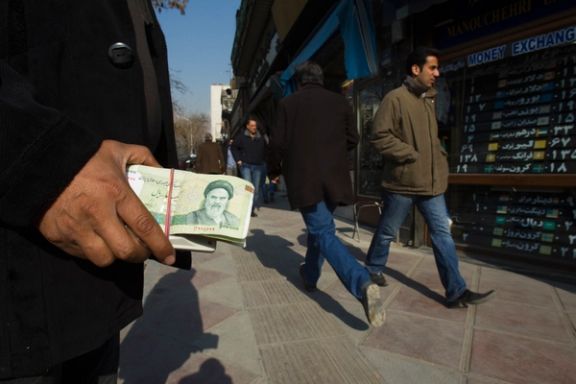
Iran's national currency plummeted to a historic all-time low on Monday, just days after the controversial elections characterized by a low turnout.
Iran's national currency plummeted to a historic all-time low on Monday, just days after the controversial elections characterized by a low turnout.
On Monday morning, the US dollar was being traded for 606,000 rials, marking the highest recorded price for the American currency in Iran. This represents a nearly 20 percent drop since early January, coinciding with heightened tensions in the Middle East.
The depreciation comes as a culmination of factors including the failure of nuclear negotiations with the United States and its European allies, and the consolidation of power by Iranian hardliners since March 2022.
In addition to the US dollar, the Euro was traded at 647,000 rials and the British pound hovered near 760,000 rials on Tehran's black market on Monday.
The decline of the rial has been a prolonged trend since the 1979 revolution, but it accelerated notably in 2018 following the US withdrawal from the JCPOA nuclear deal and the imposition of sanctions on Iran's oil exports and banking sector. Remarkably, the currency was valued at 70 rials per dollar in 1978.
The sharp devaluation of the rial has exacerbated inflationary pressures over the past five years, pushing millions of Iranians below the poverty line. Official government statistics indicate an annual inflation rate of over 40 percent, though many believe the actual figure to be higher.
The ongoing economic crisis has undermined the legitimacy of the Islamic government, particularly in the eyes of voters. The majority of Iranians abstained from participating in the Friday elections due to economic and social disillusionment and discontent.

During the forum held in Algeria on March 2nd, Iranian President Ebrahim Raisi emphasized Iran's ambition to become a "regional major gas exporter" and an "energy hub." This ambition comes as Iran grapples with a daily gas deficit of 150 million cubic meters (mcm/d), which has spiked to 300 mcm this winter, equivalent to Turkey's total gas consumption. In contrast, Iran’s oil minister Javad Owji announced plans to boost gas production from 1.07 bcm/d to 1.3 bcm in five years, with a $70 billion investment. However, these claims contradict reality, as Iran's current gas production averages 650 mcm/d, with only $3 billion invested annually in the oil and gas sectors.
Projections indicate a significant increase in Iran's gas demand by 2033, reaching 1.4 bcm/d, while production levels are expected to drop below 500 mcm/d due to declining pressure in the South Pars gas field in the Persian Gulf, which contributes 70% to Iran's gas production. As a result, Iran could face a daily gas deficit of 900 mcm/d by 2033, necessitating either increased oil consumption or a shift to renewable energy sources.
Renewable energy currently contributes less than one percent to Iran's electricity generation, with only 2% of Iran's 2023 solar and wind power production targets achieved. This contrasts sharply with global trends, where 570 gigawatts of new renewable power plants were commissioned in 2023.

Iran's oil as a substitute
Even if Iran manages to restore its pre-sanction oil production capacity, its surplus oil alone will not be sufficient to cover half of the gas deficit in next decade. Moreover, according to the Energy Information Administration's assessment, 80% of Iran's active oil fields are past their prime, experiencing an annual production decline of 8 to 12 percent.
However, the National Iranian Oil Company's annual investment in oil and gas fields has remained around $3 billion in recent years, significantly lower than Saudi Aramco's investments. Iran's gas exports reached 18 bcm in 2022, but the exact volume for 2023 remains unclear. The government's budget bill for the upcoming fiscal year predicts only 11 bcm of gas exports for 2024, reflecting Iran's struggle to meet export obligations. Meanwhile, Russia, the world's largest gas exporter before Western sanctions, saw a substantial decline in gas exports in 2023.
Iran's gas exports reached 18 bcm in 2022, but the exact volume for 2023 remains unclear. The government's budget bill for the upcoming fiscal year predicts only 11 bcm of gas exports for 2024, reflecting Iran's struggle to meet export obligations.
Iran's failure to meet its gas export contract obligations has led Turkey to cut its purchases from Iran in half in 2023, reducing it to 5.2 bcm. Additionally, Iraq, Iran's second-largest gas customer, has announced a significant reduction in gas imports from Iran since the last quarter of 2023, declaring last week a complete halt in power and gas deliveries from Iran.
Less exports by Russia
Prior to the invasion of Ukraine by Russia and the imposition of Western sanctions in February 2022, Russia held the position of the world's largest gas exporter, with total exports of natural gas and liquefied gas amounting to 242 bcm in 2021. However, in 2022, this figure decreased to 165 bcm, and last year it further declined to 130 bcm.
It's worth mentioning that prior to the Western sanctions, Europe (including Turkey had an 82% share in Russia’s 200 bcm pipeline gas export. However, Russia’s pipeline gas flows to these countries declined to 65 bcm in 2023.
China has doubled Russian gas intake during last two years, but yet the volume remains below 23 bcm in 2023. It is not expected that China or any other Asian country will be able to increase gas purchases from Russia in the medium term, as this requires massive investments in new pipeline projects.
Conversely, according to Chinese customs data, last year, China spent just $6.5 billion on importing 23 bcm of pipeline gas and 11 bcm of liquefied natural gas (LNG) from Russia. This suggests that China purchases Russian gas at half the prevailing global prices.
According to Reuters, Russia's overall revenue from gas exports declined from $80 billion in 2022 to $22 billion in 2023.
Qatar and Other Members
Behind Russia and Iran, Qatar stands as the third-largest holder of gas reserves globally. Most of its reserves lie in the North Dome (South Pars) field, which it shares with Iran. About two-thirds of this reservoir, boasting 56 trillion cubic meters of reserves, are situated in Qatari waters. After a hiatus of approximately 15 years, Qatar resumed the development of the North Dome in 2021. Over the past two years, the country has inked contracts worth $29 billion with Western industry giants to enhance its liquefied gas export capacity. The aim is to elevate the current LNG export capacity by 40% until 2026. Last week, Qatar also announced plans to elevate this capacity to nearly 200 bcm by 2030.
In contrast to Iran, Qatar has addressed the reservoir pressure problem by utilizing 20,000-ton platforms, which are fifteen times larger than Iranian platforms and equipped with substantial compressors. Qatar is currently pursuing efforts to boost production.
Algeria, the host of this year's forum meeting, recorded gas exports of 52 bcm last year, marking a 6% increase compared to 2022. However, it is not anticipated that the growth in gas exports from this country will continue in mid-term.
Azerbaijan participates as an observer member in this forum. Last year, it recorded gas exports totaling 24 bcm, and plans to increase this volume to 26 bcm in 2024 and 32 bcm in 2026. Georgia, Turkey, and seven European nations are among the customers of Azerbaijani gas.
Other main or observer members of this organization are not major gas exporters or are practically importers like the UAE.
Algeria, Iran, Russia, Qatar, Bolivia, Equatorial Guinea, Libya, the UAE, and Venezuela, along with Trinidad and Tobago, are the main members of the forum, while Azerbaijan, Angola, Iraq, Malaysia, Peru, Mozambique, and Mauritania are its observer members.


Like most decisions made by Iranian officials, these decisions were also contradictory and controversial. On the one hand the government is trying to trumpet good mood among Iranians ahead of the 1 March election to lure reluctant voters to the polls, and on the other hand, by shutting down a festival that has been going on for its third year, it proved that it is against culture, and cultural activities if they are not necessarily consistent with the regime's ideology.
Nasrallah Moein, a renowned Esfahani singer residing in the US since the 1979 Islamic revolution, remains banned officially in Iran, yet his music resonates with millions. No wedding ceremony or birthday in Iran is complete without a few songs by Moein and other diaspora singers like him. Some of his songs have even religious motifs, yet the government is against rhythmic dance music.
Last month, Iran's Culture Minister Mohammad Mehdi Esmaili said that Moein can come back to Iran although he should seek permission from the authorities to perform. At the same time, an Iranian lawyer warned that the singer will have to go to jail for at least 28 years before he could even think of singing in public.

However, Hassan Shamaizadeh, another popular Iranian singer in Los Angeles wrote in a social media post that Moein laughed at the news of his return to Iran, knowing what the government would do once they have him in their hands.
The saga hinges on officials' interpretation of a 1980s song by Moein expressing a desire to return to Esfahan.
The Music festival in Bushehr initiated by locals three years ago, attracted thousands annually. It centered on reciting and singing the poems of renowned Iranian poet such as the mystic Omar Khayyam.
For nine nights, the guests and musicians from all over Iran sang Khayyam's song which are invariably about man's life being precious, but otherwise short. Khayyam's teaching about enjoying life while it lasts is in absolute contrast to the regime's fatalistic ideology which is all about death and martyrdom.
On the tenth night, festivities abruptly halted when security forces intervened, disappointing attendees eager for Lorestan's musical performance. Organizers managed a private closing ceremony, lamenting the missed opportunity for public celebration.

According to Khabar Online website in Tehran, the organizers of the festival, however, managed to celebrate the final ceremony with Lorestan's musicians behind closed doors without the public being there to enjoy the music and dance.
Shyly criticizing the security officers, Khabar Online asked: "What do the people in southern Iran have other than their pains and their dances?" Local people and musicians say the reason for the authorities' sensitivity was that visitors from other cities continued singing and dancing in the streets of Bushehr every night until the next morning.”
Even Islamic Republic officials have said at times that Iranians desperately need to enjoy life as they are overwhelmed by all sorts of economic and social pressures. Despite the acknowledgement, in the conflict between their outdated ideology and people's intellectual and emotional needs they always take side with the ideology and that is one of the main issues that separate the Iranian people from their government.