Head of Tehran's City Council Credits Iran For Regional Turmoil
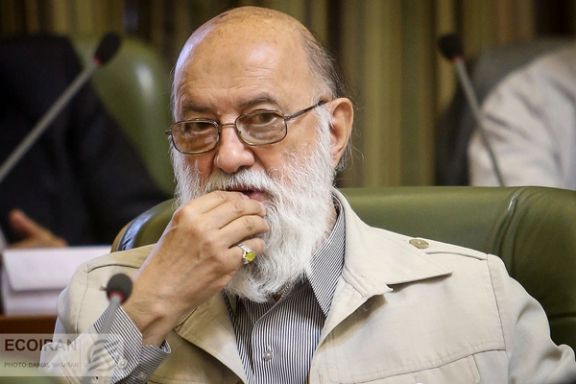
Mehdi Chamran, the head of Tehran City Council, has praised Iran's role in shaping conflicts across the Middle East amid the worst tensions to face the region in recent history.
Mehdi Chamran, the head of Tehran City Council, has praised Iran's role in shaping conflicts across the Middle East amid the worst tensions to face the region in recent history.
Chamran stated, "Without the Islamic Republic of Iran, there would be no Palestinians today, no Gaza to stand and fight, no Yemeni to show such steadfastness against America, and no Iraq, Syria, and Hezbollah in Lebanon."
Critics interpret Chamran's comments as an admission of Iran's involvement in exacerbating tensions and supporting militant factions, highlighting Iran's strategy of projecting influence beyond its borders, potentially destabilizing the region.
Given the ongoing tensions in the Middle East amid the Gaza war and international scrutiny of Iran's role in regional conflicts, Chamran's statement is likely to reignite debates over Iran's foreign policy objectives and its impact on regional stability.
The US recently called Iran the number one state sponsor of terror. In November, Yemen's Houthis launched a blockade of the Red Sea in allegiance with Iran-backed Hamas in Gaza, instigated by Iran's Supreme Leader, sparking a global trade and logistics crisis.
Since the most recent Gaza war broke out in October triggered by Hamas's invasion of Israel, Iran's proxies in Syria, Iraq, Lebanon and Hezbollah have launched attacks on Israel and US targets in the region, expanding to global shipping in the Red Sea.

As Iran's supreme leader, 84-year-old Ali Khamenei ages, the newly elected Assembly of Experts will likely confront the task of selecting his successor.
Khamenei’s cautionary words on Thursday against potential conflicts among newly elected and re-elected members highlight the importance of preserving the assembly's primary responsibilities. He emphasized the need for the elected members to avoid internal strife, ensuring the assembly can effectively carry out its duties.
The orchestrated electoral process by the Guardian Council and the Interior Ministry aimed to select candidates aligned with the security apparatus and the IRGC, in accordance with Khamenei's preferences. This strategic maneuvering ensured the desired outcome without explicit directives from Khamenei himself.
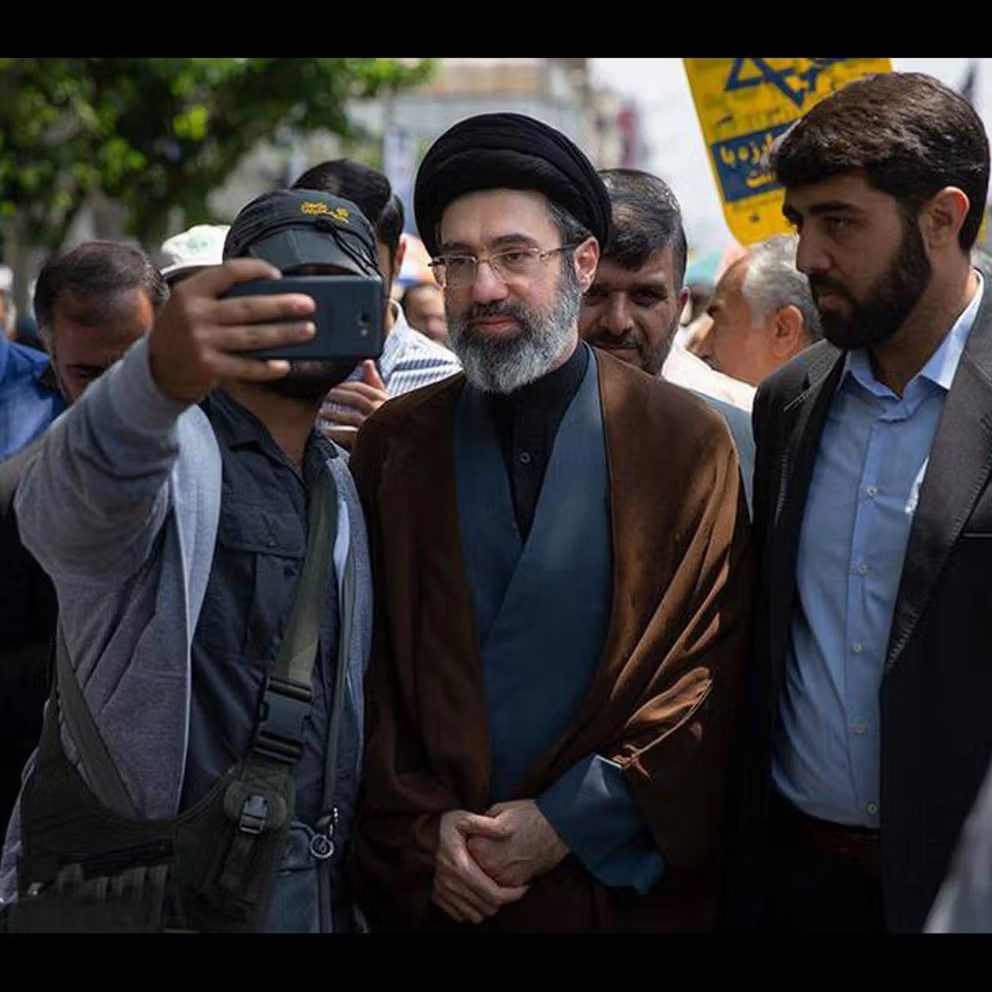
The words of Khamenei, who told the Assembly’s three-member candidate review board to exclude his son Mojtaba, were interpreted in the media as Khamenei's decision not to put Mojtaba in his seat, but Khamenei's remarks were also interpreted as a directive to pave the way for his unimpeded ascension, bypassing vetting procedures. When after the 2005 elections, top politician Mehdi Karroubi criticized Mojtaba for his alleged interference as “a master’s son,” Khamenei responded that Mojtaba “is a master himself, not a master’s son."
Key individuals with a lot of insider information and intelligence data were disqualified from running in the assembly election. Former President Hassan Rouhani, and three former intelligence ministers, Ali Fallahian, Haider Moslehi, and Mahmoud Alavi, were disqualified. These individuals with a throve of potentially sensitive and damaging information on members of the assembly could influence a vote on succession. The Guardian Council also disqualified 366 out of 510 clerical candidates from a diverse spectrum and left only 144 candidates for 88 seats, which was not even twice the number of seats. In the previous round, 635 people were disqualified out of 801 candidates.
The manipulation of voting dynamics in various provinces favored certain candidates, indicating a strategic effort to influence the outcome in favor of preferred individuals. This calculated approach ensured that candidates aligned with Khamenei's vision secured significant support.
The election results across different provinces signify a noticeable shift towards younger clerics loyal to Khamenei, marking a departure from the previous assembly's composition. This generational change reflects Khamenei's strategic efforts to shape the assembly according to his long-term objectives. For example, long-standing clerics such as Hashem Hashemzadeh Harisi (East Azarbaijan province) and Kazem Nour Mofidi (Golestan province), members of the Fifth Expert Assembly who were close to Rafsanjani, did not run for office to avoid the humiliation of being disqualified.
Some approved candidates whose loyalty was not to the House of Khamenei, such as Javad Mojtahed Shabestri from West Azarbaijan Province, were eliminated in the voting stage. This was achieved because of very low turnout; the votes of the sixth Experts Assembly members are about a third of those in the previous term.
The absence of influential figures aligned with reformist factions, or more independent, suggests minimal opposition within the assembly to Mojtaba's candidacy. This lack of dissenting voices further strengthens Mojtaba's position as the favored candidate to succeed Khamenei.
Candidates associated with existing Shia authorities in Qom or Grand Ayatollah Sistani's disciples were sidelined, diminishing the possibility of alternative factions challenging Mojtaba's candidacy. This strategic maneuvering ensures that Mojtaba's candidacy remains unchallenged within the assembly.
Hassan Khomeini's disqualification in the previous term also reflected efforts to preempt any attempts by reformists to challenge Mojtaba's candidacy. This calculated move underscores the regime's determination to consolidate power and maintain control over the succession process.


However, as a seasoned veteran of the IRGC and a relative of Supreme Leader Ali Khamenei, Ghalibaf still enjoys significant political support. The editor of the IRGC-affiliated Javan newspaper in Tehran staunchly defended him against his hardline political rivals, who clearly covet his position as leader of parliament (Majles).
Gholamreza Sadeghian in an article featured in the most prominent place on the daily's Wednesday's edition particularly addressed Hamid Rasaei, a firebrand headliner, and said he and his likeminded newly elected lawmakers are neither devoted Muslims, nor have any particular expertise that would make them fit for membership in the Majles (parliament).

Since his election, Rasaei has labeled veteran politicians such as Ghalibaf and his predecessor Gholam-Ali Haddad-Adel as "hypocrites" and has called for an end to Ghalibaf's leadership in the Majles.
Javan newspaper accused Rasaei of insulting the Majles, which Khamenei has referred to as "a revolutionary parliament." Additionally, Javan charged Rasaei with insulting former IRGC Qods Force Commander Qasem Soleimani, adding that Rasaei, who was previously barred from running for the Majles in 2021, lacks an understanding of Khamenei's expectations for the Majles and its lawmakers.
The daily suggested that the people have the power to remove such lawmakers from the parliament. The severity of the accusations, particularly those regarding insulting Qasem Soleimani, may indicate that the next Majles is likely to reject Rasaei's credentials.
Iran International TV called Javan's article a strong defense of Ghalibaf's leadership role in the next Majles. Iran analyst Morteza Kazemian told Iran International that this is not a conflict between political parties and their members. This is a fight between gangs that benefit from financial resources thanks to their positions in the government and Majles.
Another Iran analyst, Mehdi Mahdavi Azad also called the new MPs, the members of a cult that represent around 5 percent of Iranian voters. He said the ongoing conflict between various groups of hardliners at the parliament started as older hardliners let the genie out of the bottle and now, they find it hard to control it.
Javan also remarked that Rasaei and certain other newly elected hardliners seem to harbor the illusion that they could ascend to leadership positions within the parliament. The publication specifically accused Rasaei of coveting Ghalibaf's role and of perceiving himself as more than just a newly elected lawmaker awaiting credential approval. Furthermore, Javan criticized Rasaei's remarks about other politicians as "impolite" and potentially damaging.
Additionally, Javan recalled Rasaei's accusation against Ghalibaf, alleging that he had attained political power due to his familial ties. This reference to Ghalibaf and Haddad Adel's relationship with Khamenei was untimely and inappropriate.
During the past days verbal attacks prompted Ghalibaf to consider resigning his post as a member of the parliament. Earlier, another hardliner cleric, Alireza Panahian, had called on Ghalibaf to resign after an scandal about Ghalibaf’s son attempting to emigrate to Canada was disclosed by Iran International and on social media.
In an interview with Didban Iran website, prominent lawmaker Sharyar Heidari said on Wednesday that a few days after the latest Majles election, Ghalibaf and his political rivals started lobbying as serious contenders for the post of Majles Speaker.
Heidari said that although there seems to be a consensus about Ghalibaf's continued role as Speaker, the moves by newly elected lawmakers are likely to cause turmoil during the first weeks of the next parliament.
Over the past few days, there has been much speculation regarding Ghalibaf's political future. Centrist daily "Ham Mihan" summarized these speculations into three groups. According to "Ham Mihan," Ghalibaf may choose to continue relying on his old friends to advance his longstanding policies. However, in this scenario, he may struggle to resist the pressures from the new generation of hardline politicians.
Alternatively, his second option could involve joining forces with members of the ultraconservative Paydari Party, along with his friends and allies, to shield himself against attacks from emerging hardliners. His third option might be to form an alliance with any moderates present in the Majles, if they exist, to counter the pressures from the hardliners. Nevertheless, without support from the IRGC and Khamenei, the intensity of the hardliners' pressure could easily sideline Ghalibaf.