Iran's Exiled Queen Calls For Freedom Of Iranian Women
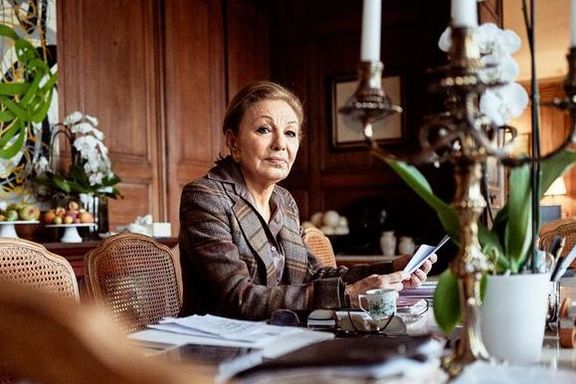
In a statement on International Women's Day, exiled queen, Farah Pahlavi, praised the resilience of Iranian women in the face of adversity and called for liberty for all Iranian women.
In a statement on International Women's Day, exiled queen, Farah Pahlavi, praised the resilience of Iranian women in the face of adversity and called for liberty for all Iranian women.
Celebrating the role of women throughout history in advancing the world and human goals, she highlighted the contributions of Iranian women. She praised the resilience of Iranian women, noting that they have "with hard work and perseverance endured the hardships of life and time."
She noted that Iran has a long history of strong and independent women, from queens in ancient and medieval periods to courageous mythological women in the country's cultural heritage, and renowned poets like Forough Farrokhzad (1934-1967) and Simin Behbahani (1927-2014).
Pahlavi's statement comes at a time when Iran is facing serious human rights issues with women disproportionately affected.
Pahlavi then turned to the present day, noting that Iranian women both inside and outside the country continue to fight for freedom and progress. She expressed her hope for freedom and liberation for all Iranian women, saying that "light will ultimately triumph over darkness."
In 2022, Iranians revolted against the Islamic Republic regime after the country’s hijab police killed 22-year-old Mahsa Amini. Her death in police custody ignited the boldest uprising against the clerical regime since its establishment in 1979. The nationwide protests came to be known as the Women, Life, Freedom movement.
The regime cracked down on the popular protests, killing around 550 people and arresting over 20,000. To intimidate people against further protests, the regime has taken a wide range of measures including executing several protesters while there are many more who face death sentences on trumped-up charges.


The campaign Alliance Against Islamic Regime of Iran Apologists (AAIRIA) wrote in its Wednesday statement that “In the seven years Mousavian served as IRI’s ambassador in Germany, more than 23 Iranians were killed in terrorist attacks on European soil orchestrated by IRI...These heinous acts underscore the direct involvement of the IRI embassy in Bonn and Mousavian’s role in Iran's state-sponsored terrorism and orchestrating violence against innocent civilians.”
AAIRIA presented statements from a witness of the Mykonos restaurant assassination in Berlin in 1992 and victims of the Iranian regime’s persecution of dissidents.
Parviz Dastamalchi, who witnessed the assassination, said Mr. Abolghasem Mesbahi, known as 'Witness C,' was one of the founders of the Ministry of Intelligence and Security of the Islamic Republic of Iran. In February 1997, Misbahi, under oath, testified, before the German court regarding the role of Seyed Hossein Mousavian in the assassination of Kurdish leaders at the Mykonos restaurant.
Mesbahi stated, "Mr. Mousavian has participated in most of the assassinations committed in Europe." His statements were widely reported in the German media during the trial."
Dastamalchi continued that “He could have pursued legal recourse, even claiming damages, but he chose not to. The question arises: why? Is it because Mesbahi likely possessed enough evidence and documents of support his claims? It appears that Mesbahi's testimony was accurate, and the German government's decision not to pursue a legal case against Mousavian was driven by political considerations rather than the absence of criminal culpability.”

Iran International obtained a 1997 archived Berlin newspaper Tagesspiegel article that states Mesbahi told the court during the Mykonos trial that “Mousavian participated in most of the crimes that took place in Europe.” The German security services said Meshbai was a “credible” witness, according to the article. The crimes referenced that Mousavian allegedly participated in were the assassinations of Iranian dissidents.
According to AAIRIA, “Mousavian’s involvement in the assassination of Iranian dissidents became apparent during testimonies of witnesses in the German court. His role in orchestrating violence against innocent civilians is a testament to his complicity in Iran's nefarious activities, further highlighting the dangers of his continued presence at Princeton University.”
Golaleh Sharafkandi, the niece of Dr. Sadegh Sharafkandi, one of the victims of the Mykonos assassination, said “One of the most brazen and public assassinations carried out by Hezbollah at the behest of its master, Islamic Regime of Iran, occurred in 1992, when IRI operatives killed my uncle, Dr. Sadegh Sharafkandi," a Kurdish opposition leader.
Sharafkandi, a former political prisoner, who lives in Sweden, said, “The Mykonos restaurant assassination was carried out by the Iranian regime when Seyed Hossein Mousavian was Iran’s ambassador to Germany. We, especially in the academic world, need to be clear that using diplomatic immunity to cover up or facilitate the Islamic regime of Iran's terrorist actions on international soil is unacceptable and not condoned by academia.”
Dr. Narges Eskandari, the mayor of Frankfurt in Germany, and a former Iranian political prisoner, said “Seyed Hossein Mousavian, Iran's ambassador at the time, is considered one of the key masterminds behind the attack. He had prior knowledge of the assassination attempt, and evidence implicates the Iranian embassy in the attack. To date, there have been no consequences for Seyed Hossein Mousavian. Since 2009, he has been teaching in the United States and currently is a Middle East Security and Nuclear Policy Specialist in the Program on Science and Global Security, a program in Princeton’s School of Public and International Affairs.”
Dr. Majid Mohammadi, who conducted his Post-Doctorate 2007-2008 work at Princeton University, said “During his tenure as a member of Resalat Daily in Iran (in the second half of the 1980s), Mousavian played a key role in legitimizing, promoting, and normalizing terrorism. Resalat published numerous pieces praising Iranians and Arabs involved in assassinating officials such as prime ministers and presidents.
As an alumnus of Princeton University, I believe the recruitment of Mousavian tarnished Princeton's reputation and he should be dismissed immediately.”
Mohammadi continued “I urge Princeton to release all correspondence and contracts associated with Mousavian leading up to his employment, as well as all financial information regarding donors to his program and any travel expenses to Iran since joining Princeton that were covered by the university or its donors.”
Lawdan Bazargan, the lead organizer of the AAIRIA campaign and a former political prisoner in Iran, said, "It's astounding that Princeton's Program on Science and Global Security, with the noble mission of advancing national and international policies for a safer and more peaceful world, has chosen to associate itself with Seyed Hossein Mousavian, who stands accused of involvement in terrorist attacks in Europe. By retaining Mousavian, Princeton jeopardizes its own reputation and undermines its commitment to human rights and global security.”
Bazargan, who lives in California, is the sister of Bijan Bazargan ,who was murdered by the regime in 1988 for his left-wing politics, went on to say that “Mousavian's defense of Iran's nuclear ambitions further highlights the ethical and moral dilemma posed by his presence at Princeton. By firing Mousavian, Princeton can reaffirm its commitment to upholding human rights, fostering global security, and preserving its reputation as a bastion of academic excellence and integrity.”
Bazargan and the members of AAIRIA launched a petition campaign to oust Mousavaian. The petition has secured over 1,000 signatures since last week.
Dr. Farhad Keyvan, a physicist and founder of Netservia LLC, said “Despite his academic credentials and prestigious position, Mousavian's work seems aimed at diverting public attention from the dangerously aggressive nuclear activities conducted by the Iranian regime. His writings and speeches downplay or justify the regime's nuclear ambitions, influencing public opinion in the US and the West. Mousavian must be fired for spreading Iranian regime propaganda and falsehoods, rather than fostering genuine academic discourse and integrity.”
Mina Ahadi, a popular political and women’s rights activist in Germany, said “Expelling Seyed Hossein Mousavian from Princeton University is crucial in this regard. I support this significant action and hope for Mousavian's prompt expulsion from Princeton University.”
Behrouz Asadi also a well-known political and human rights activist in Germany, said, “Representatives of the Islamic Republic, including embassies, consulates, mosques, and other regime infrastructures, as well as its lobbyists, directly engage in espionage, terrorism, and pressure tactics against opposition figures abroad. It is concerning that Princeton University collaborates with Seyed Hossein Mousavian, the former ambassador of the Iranian regime in Germany, amidst such acts of terrorism and disregards human rights issues.”
Numerous Iran International press queries to Mousavian and to Princeton University spokesman Michael Hotchkiss were not immediately returned.
AAIRIA’s campaign against pro-Islamic Republic of Iran academics gained significant momentum in November when Oberlin College ousted Iran’s former UN ambassador Mohammad Jafar Mahallati from his teaching post at the liberal arts college in Ohio.
The AAIRIA campaign triggered Mahallati’s dismissal after it revealed that he covered up the mass murder of 5,000 Iranian political prisoners in 1988, stoked lethal antisemitism; supported the assassination of British-American author Salman Rushdie, spread Hamas’ ideology, and reportedly sexually harassed a student at Columbia University.