Australia joins G7 in condemning Iranian repression abroad
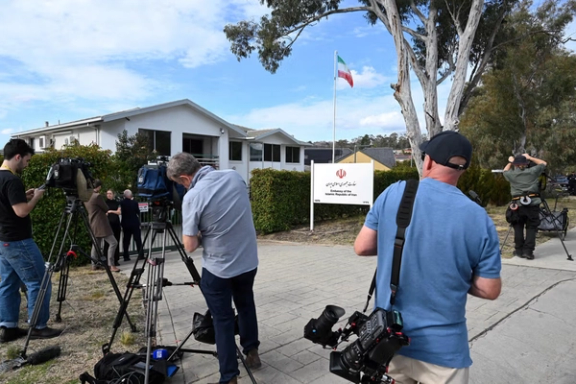
Australia joined G7 Rapid Response Mechanism members on Friday in denouncing what they described as Iran’s systematic targeting of opponents overseas.

Australia joined G7 Rapid Response Mechanism members on Friday in denouncing what they described as Iran’s systematic targeting of opponents overseas.
“Iranian intelligence services have increasingly attempted to kill, kidnap, and harass political opponents abroad, following a disturbing and unacceptable pattern of transnational repression, and clearly undermining state sovereignty,” the joint statement said.
The signatories included the G7 states—Canada, France, Germany, Italy, Japan, the United Kingdom, the United States, and the European Union—alongside associate members Australia, the Netherlands, New Zealand, and Sweden. They cited Iranian efforts to intimidate journalists and Jewish communities, as well as operations to obtain and expose personal information in order to divide societies.
“The G7 RRM stands in solidarity with our international partners whose citizens and residents have also been targeted by Iran,” the statement added, pledging to continue countering foreign interference and safeguarding national sovereignty.
Canberra expelled ambassador Ahmad Sadeghi late last month following an ASIO-led investigation linking Iran’s Revolutionary Guards (IRGC) to two anti-Semitic attacks in Melbourne and Sydney.
Separately, Canberra announced the renewal of counter-terrorism sanctions against Hamas, Hezbollah, and Palestinian Islamic Jihad.
“The Albanese Government has zero tolerance for foreign interference and violence in Australia,” Foreign Minister Penny Wong said in an X post, reiterating calls for the release of hostages taken on October 7, 2023.
Hamas is now considered one of the Iran's armed militant proxy forces in the region, alongside the Lebanese Hezbollah, Yemeni Houthis and a collection of Shiite militias in Iraq and Syria.

Federal prosecutors in Massachusetts said on Friday they had seized $584,741 in cryptocurrency from an Iranian national tied to the Revolutionary Guards’ drone manufacturing program.
The assets belonged to Mohammad Abedini Najafabadi, also known as Mohammad Abedini, 39, of Tehran.
“The government seized USDT (Tether) from an un-hosted cryptocurrency wallet alleged to be controlled by Abedini,” the Justice Department announced in a statement on Thursday.
USDT (Tether) is a stablecoin, meaning its value is tied to the US dollar. The cryptocurrency has been issued by Tether Limited since 2014.
Abedini is the founder and managing director of San’at Danesh Rahpooyan Aflak Co. (SDRA), a company that manufactures navigation system modules, including the Sepehr Navigation System (SNS), used in the Islamic Revolutionary Guard Corps (IRGC) military drone program, the Justice Department alleged.
The IRGC has been designated a Foreign Terrorist Organization (FTO) by the United States since 2019.
The SNS is used in guided rockets and missile-integrated navigation systems. In January 2024, three US service members were killed in an attack Washington blamed on the IRGC. A drone recovered from the attack was identified as a Shahed drone equipped with the SNS guidance system.
The strike targeted Tower 22, a US military base in northern Jordan, injuring more than 40 others.
“US law authorizes the forfeiture of all assets of individuals or entities engaged in planning or perpetrating a federal crime of terrorism against the United States, its citizens or residents, or their property, and all assets, foreign or domestic, affording any person a source of influence over any such entity,” the Justice Department said.
The United States charged Abedini in 2024 with conspiring to export sophisticated electronic components from the US to Iran and providing material support to a designated FTO.
He was arrested in Italy in December 2024 at the request of the United States, which sought his extradition. Abedini was released in January 2025 after Italy appeared to swap him for an Italian journalist detained in Tehran.
Italian authorities determined that violations of the International Emergency Economic Powers Act are not punishable under Italian law, in line with the Italy–US extradition treaty.

The United States, Canada, Australia and their European allies on Friday condemned Iran for escalating a campaign of transnational repression, accusing its intelligence services of seeking to kill, kidnap and harass political opponents overseas.
Members of the G7 Rapid Response Mechanism (Canada, France, Germany, Italy, Japan, the United Kingdom, the United States, and the European Union), joined by associate members Australia and New Zealand, issued a joint statement Friday condemning what they described as Iran’s growing campaign of transnational repression.
The statement cited recent declarations by Australia, Canada, France, Germany, the Netherlands, New Zealand, the UK, and the US, which detailed what they called increased attempts by Iranian intelligence services to kill, kidnap, and harass political opponents overseas.
The attempts, the G7 said, follow "a disturbing and unacceptable pattern of transnational repression, and clearly undermine state sovereignty."
Last month, UN human rights experts condemned what they called Iran’s intensifying campaign of repression against journalists working for Iran International and the intimidation of their families, particularly after the 12-day war with Israel.
"Reports suggest that journalists have been followed, had tracking tags attached to their cars, and their cars repeatedly broken into. Women journalists have faced threats of death and sexual violence on social media and instant messaging services, some receiving hundreds of messages a day."
The statement came after Iran International filed an urgent appeal with the experts urging them to take action against Iran over serious risks to the lives and safety of their journalists worldwide and relatives inside Iran.
In July, British lawmakers warned that Iran is among several foreign governments engaged in transnational repression on UK soil.
A report from parliament’s Joint Committee on Human Rights said Tehran’s tactics include “assassination plots, physical attacks, intimidation of family members, asset freezing, judicial proceedings, smear campaigns, online abuse, surveillance and digital attacks such as hacking, doxing and impersonation."
Beyond targeting dissidents, the G7 on Friday warned of other malign operations linked to Iran, including what it described as efforts to obtain and publish journalists’ personal information and actions designed to “divide societies and intimidate Jewish communities.”
“The G7 RRM stands in solidarity with our international partners whose citizens and residents have also been targeted by Iran,” the group said, vowing to continue countering foreign interference.
The RRM was launched in 2018 to address foreign threats to democracy.

Two US senators sounded the alarm over the violation of NATO-member Poland's airspace on Tuesday by pilotless aircraft from Russia and Belarus, as Moscow steps up fusillades against Ukraine with Iranian-designed drones.
Speaking to Iran International, the lawmakers hit out at the escalation to the war in Ukraine after Poland said 19 Russian drones reportedly violated its airspace on Tuesday but were thwarted by Polish and NATO jets and air defenses.
Russia has stepped up blitzes on Ukraine in recent weeks involving hundreds of drones each and including Iranian-designed Shahed kamikaze drones. It was not immediately clear if they were among the drones intercepted over Poland.
“Iran has, over the last several years, been a critical and active partner in Russia’s aggression against Ukraine,” Democrat Senator Chris Coons said.
“By providing drone technology and even producing drones inside Russia for use against Ukraine, Tehran has enabled Putin’s war machine.”

Moscow denied any intent to violate Polish airspace, saying it did not seek to strike any targets in Poland and questioning whether the drones came from Russia at all.
The Chairman of the US Senate Foreign Relations Committee said facts are still emerging but said Russia had erred in piercing NATO air space.
“Russia is playing with fire here. Putin has made a lot of mistakes, and this could be the worst one he’s made yet," Republican Senator James Risch told Iran International. "We’ll see how this unfolds.”

'Open conflict' near
Poland, a former member of the Eastern Bloc under Moscow's tutelage for much of the twentieth century has become a staunch Western ally and base for NATO troops as the alliance's relationship with Iran, Russia and China has soured.
The drone incursion rattled its leadership, which warned of a dire escalation.
"This is the closest we have been to open conflict since World War II, but there is no reason to believe we're on the brink of war," Polish Prime Minister Donald Tusk told parliament.
Iran provides drone technology to Russia for its war against Ukraine, prompting a series of punitive sanctions from the United States and European Union.
Belarus, a close ally of Russia, confirmed the drones had entered Polish airspace, calling it an accident after the drones' navigation systems were jammed.
Western leaders have frequently warned against what they see as deepening security cooperation among their Eurasian adversaries Russia, Iran, China and North Korea.
After the incidents, Warsaw invoked Article 4 of NATO's charter which enables closer coordination with all NATO member states. A UN Security Council meeting to discuss the developments is scheduled for Friday.
Poland closed all border crossings with Belarus ahead of the joint Russia-Belarus Zapad 2025 military exercises, citing alleged security risks and Russian aggression.

Talks on a prisoner swap between Iran and France were in their final stage, state media reported late Thursday, and potentially involve French detainees in Iran and an Iranian woman jailed in Paris.
Foreign Minister Abbas Araghchi told state television the process was moving forward. “Negotiations are in their final stages,” he said. “We hope the process will be completed in the coming days.”
The detainee in France is Mahdieh Esfandiari, 39, who has been held in Fresnes prison near Paris since March on charges of glorifying terrorism. Prosecutors said she posted messages on Telegram in support of Hamas’ Oct. 7 attack in Israel, which they considered incitement to terrorism and insults against the Jewish community.
On Friday, outgoing French Foreign Minister Jean-Noël Barrot said Paris was demanding the “immediate and unconditional” release of its nationals. “France has always called for the immediate and unconditional release of our compatriots in Iran,” he told France Inter radio, declining to comment on Araghchi’s remarks.
Among those imprisoned are Cecile Kohler and her husband, Jacques Paris, detained in May 2022. Iranian authorities accused them of spying for Israel and trying to stir labor protests, charges their families call baseless.
They have been held for more than three years under conditions family members describe as harsh, with limited access to lawyers and relatives.
Kohler's sister Noemie told Iran International that the family had not been informed about any progress and was wary of the reports.
"Unfortunately, we have no information beside what is said in the media," she said. "We are very cautious regarding this statement."
A third detainee is 19-year-old dual national Lennart Monterlos, who disappeared in Iran in June while cycling. Araghchi confirmed his arrest in July without specifying the charges.
Araghchi said Iran’s judiciary and security agencies were involved in the process and that practical steps would follow once legal procedures were complete. Tehran rejects Western accusations that it detains foreign nationals as leverage in disputes.
Rights groups say Iran has a record of detaining foreigners for political ends. Human Rights Watch and others have described such cases as “state hostage-taking.”

The Israeli military on Friday said commando raids into Syria earlier this year had detained operatives directed by Iran's Revolutionary Guards to smuggle weapons into the occupied West Bank and northern Israel.
The announcement follows months of security incidents in Syria which were blamed on Israel by Syrian officials but remained shrouded in mystery as Israel neither confirmed nor denied involvement.
Israel opposes Syria's new rulers, which hail in part from Sunni Muslim jihadist groups, despite their victory in a long civil war over the Iran-backed Assad dynasty.
"The IDF detained and transferred for interrogation operatives from several terrorist cells operated by Unit 840 - the Quds Force’s special operations unit," the Israeli Defense Force said in a statement.
"The terrorist cells were directed by the unit with the aim of carrying out terrorist attacks against the State of Israel," it added.
The United States and Arab states back the new authorities in Damascus as a bulwark against Iran and its Lebanese ally Hezbollah.
Sectarian clashes have blighted Syria's new era, and Israeli airstrikes on government buildings earlier this year signaled the Jewish state's growing opposition.
In the statement on Friday, Israel's military added that raids in March and April this year had detained two alleged Iran-backed operatives in Syria with Arabic names, and that Israeli attacks had assassinated two others in Lebanon last month.
"During the interrogations of the detained terrorists, it was revealed that some of them did not even know on whose behalf they were operating, and that many were recruited to Unit 840 without disclosure of the unit’s true motives and through financial bribes," it said.