Hidden trauma: rare reports expose sexual abuse of boys in Iran
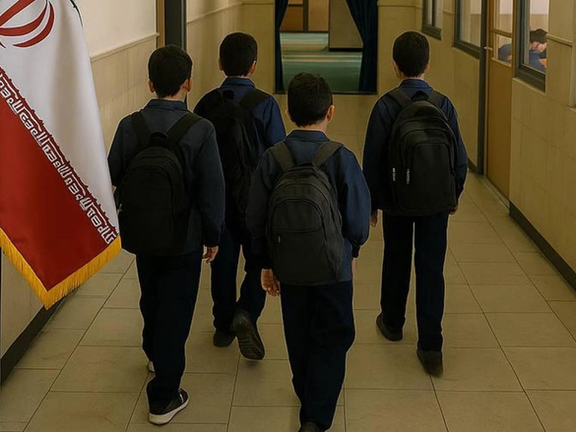
Young boys at a school in Iran
An investigative report by a Tehran daily documented dozens of cases of Iranian boys abused in schools, sports and transport, shedding light on a mostly underreported pattern compared to widespread accounts of girls’ abuse.
“My teacher wanted me to take off my clothes,” said Farid, a survivor who spoke to the reformist Shargh newspaper under a pseudonym.
The paper’s reporter collected detailed, often graphic recollections from men who described being touched, groped or coerced into sexual acts in settings where they expected safety.
Amir-Ali, now 32, recalled a taxi ride in which a passenger repeatedly pressed his body close and then placed a hand on his thigh. He said he felt powerless, ashamed and unable to tell friends or family.
“I didn’t speak to anyone — I thought I’d be mocked,” he told the reporter.
Majid described being molested on a crowded metro: the man next to him repeatedly adjusted his hand until the touching became unmistakable. He said he moved away without protest because embarrassment and fear made him freeze. “It was so strange and scary,” Majid added. “I just wanted to get off at the next stop.”
Far more sustained abuse appears in other accounts. Javid recounted grooming and repeated sexual exploitation by a 25-year-old assistant coach at a youth football class. He says the coach showed explicit videos, demanded sexual acts and pressured boys to comply, leaving Javid depressed and withdrawn for years.
Some victims described telling only a single friend or, in a few cases, later raising the matter in therapy — and even then withholding details.
Another survivor, Sepehr, said a close relative forced him into sexual acts from the age of ten and that he has only ever disclosed the abuse in psychotherapy. He feared family fallout and shame: “I was scared that people in the family would find out,” he told Shargh.
Shame, silence and long-term harm
The dominant theme is shame, according to psychologist Parisa Pouyan, who works on social-harm issues.
•
•
“They often feel their masculinity and sexual identity are questioned; for many, the violation is deeply humiliating,” she added. Pouyan warned that the silence compounds harm: survivors commonly suffer depression, social withdrawal and difficulties forming intimate relationships long after the assaults.
Legal advocates say institutional barriers deepen invisibility. Although Iran’s statutes do not formally distinguish male and female victims, “in practice, the numbers and the follow-through are very different,” Monica Nadi, a lawyer experienced in social-harm cases, told the paper.
She pointed to stigma, a lack of male-oriented support services and the legal difficulties of proving sexual crimes — lost physical evidence, absent witnesses and delayed reporting — as reasons why men rarely pursue judicial remedies.
Settings and system failures
Shargh’s investigation found incidents in boys’ schools, sports clubs, family homes, barracks, prisons, taxis and metro cars.
Several interviewees said suspected perpetrators were later moved between institutions rather than removed from positions of authority after being exposed for their harassment, risking further abuse.
The paper’s reporting calls for targeted steps: breaking cultural taboos, expanding counselling and support services for male survivors, training educators and staff, and improving mechanisms for reporting and evidence collection.
Survivors and experts warned that without systemic reform, many victims will continue to carry trauma in silence and cycles of abuse may persist.
Iran's Shi'ite establishment promotes temporary marriage as a way to prevent illicit relationships. Yet even devout families often disapprove, associating the practice with prostitution and social shame.
Under Shi'ite law, a man can have four permanent wives simultaneously and any number of temporary wives. He needs his first wife’s consent for additional permanent marriages, but not for temporary ones.
Women, by contrast, can only enter one temporary marriage at a time and, after termination, must wait at least 45 days before remarrying to establish paternity if pregnant.
“I don’t know a single woman around me who would agree to a temporary marriage, unless she is involved with a married man and wants to protect herself from being charged with adultery if discovered,” said Taraneh, an art teacher in Tehran.
“In these cases, it’s more a formality than religiosity. Just like an affair, they hide it from everyone, even their family and friends.”
Taraneh explained that stigma is deeply rooted. The longstanding association between temporary marriage and prostitution, she said, reinforces secrecy and social judgment, especially against women.
“But in some poorer rural areas I’ve visited, it is somehow more common for widowed or divorced women who are unable to financially support themselves to marry temporarily with men whose wives will not allow them to officially take second wives,” she added.
“However, even these are normally longer-term and not publicized. Everyone considers very short-term temporary marriages shameful because of the money involved."
Temporary marriage in Shi'ite Islam
Under Shi'ite Islamic law, temporary marriage, known in Persian as sigheh or mut‘ah, is a marriage contract with a set duration. The term may last from a few hours to several years, depending on the agreement.
The contract is usually verbal and consists of the man and woman (or their representatives) reciting a formula (sigheh) that specifies the agreed duration and a predetermined dowry (mahr). Witnesses are not required for it to be valid.
Since 2013, temporary marriage has been legally recognized in Iran, though registration is only required if a child is conceived.
If registered or witnessed, temporary marriage allows recognition of children and provide some legal security to women. Once the term ends, the marriage automatically dissolves without requiring divorce proceedings.
Children are legally recognized, with inheritance and custody rights, though complications often arise if the marriage is not officially registered.
Unlike permanent marriage, a woman in temporary marriage is not entitled to alimony after expiration and has no right of inheritance from her temporary husband.
Widows and divorced women may enter temporary marriage without paternal consent. Unmarried girls, however, need their father’s approval, as in permanent marriage. The minimum legal age for girls is 13, fueling concern about child marriage in poor areas.
Sunni Islam does not recognize temporary marriage.
Sex trade in disguise
Islamic jurists describe temporary marriage as a legitimate solution to sexual needs and a safeguard against prostitution.
Although prostitution is explicitly criminalized and punishable in Iran, sigheh still enjoys legal backing, and its broad interpretations have created a religious-legal loophole that paves the way for exploitation.
The sex trade often operates under the guise of temporary marriage. This is especially visible in religious cities such as Mashhad and Qom, pilgrimage hubs where millions travel each year.
Since its legal recognition, numerous social media channels have openly advertised temporary marriage, offering arrangements from “one-hour to longer terms,” for fixed fees.
Even clerics who accept the principle of sigheh criticize this trend. They argue that it normalizes polygamy or masks prostitution.
“Can you believe that some ignorant, clueless people have set up [Telegram] channels to promote polygamy and temporary marriage? They claim they are reviving the Prophet’s tradition!" wrote cleric Ehsan Ebadi on X.
"Curse on you—you have understood neither the Prophet, nor Islam, nor the philosophy behind these rulings. All you are doing is tarnishing the image of religious people."
Javan newspaper, affiliated with the Revolutionary Guard, reported on September 20 that the growth of online channels and pages under the titles of matchmaking and sigheh-finding has turned into a platform for fraud and exploitation of users.
“The rapid increase of these channels is a serious alarm bell for society.”
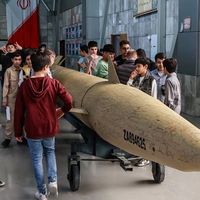
Iran’s Ministry of Education introduced the recent 12-day war with Israel into school lessons with special content on the conflict to be included across all school levels in the new academic year, Education Minister Alireza Kazemi announced Sunday.
“We have prepared three special issues for primary, middle, and high school students in the form of a book, which will provide students with an extraordinary and beautiful narrative of the 12-day war,” he said.
Figures including the Supreme Leader and commanders in the Revolutionary Guards have declared the war a victory for Iran.
Kazemi added that 20 educational packages were being rolled out in addition to the 12-day war, including themes such as the Iran’s missile program, and a unit called “Hard Slap.”
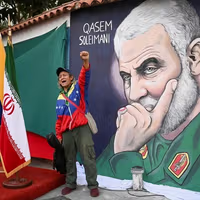
The phrase was first used to describe Iran’s limited missile strike on the US Ain al-Asad base in Iraq following the killing of Quds Force commander Qassem Soleimani.
School books were later updated to include tributes to the slain commander. Other material added to textbooks includes references to militants killed in Syria, officially commemorated by the Islamic Republic as “defenders of the shrine.”
Iran’s Armed Forces General Staff accused Ecuador of supporting the United States and Israel after Quito designated the Revolutionary Guards as a terrorist group.
“We warn the government of Ecuador not to serve the global domination system, America and Israel, and not to assist the false and satanic front,” the military body said in a statement carried by state media on Sunday.
The three groups, the decree added, pose a direct threat to public security and sovereignty of Ecuador.
Israeli foreign minister Gideon Sa’ar welcomed the decision on Tuesday.
“Ecuador’s courageous step sends a clear message against Iran’s terror network and strengthens global security,” Sa’ar wrote in a post on X expressing his thanks to Ecuadorian President Daniel Noboa and Foreign Minister Gabriela Sommerfeld.
Canada, Israel, Saudi Arabia and Bahrain have similarly blacklisted the IRGC.
Paraguay designated the IRGC as a terrorist organization in April and expanded its classification of Iran's Gaza and Lebanon-based military allies, Hamas and Hezbollah, to include all components of both groups.
The statement concluded that Iran’s military would continue to stand with Palestinians, Lebanon and Gaza, and that “no threat will weaken our resolve.”
Zahra Ershadi, director-general for the Americas at Iran’s foreign ministry, also criticized Ecuador’s move, describing it as “inappropriate”, warning that it would inflict serious damage on bilateral ties.
Hossein Shariatmadari, the representative of Supreme Leader Ali Khamenei in the hardline daily Kayhan, has called for Iran to withdraw from the Nuclear Non-Proliferation Treaty (NPT) following the UN Security Council’s decision not to permanently lift sanctions.
Writing in Kayhan, Shariatmadari argued that two decades of negotiations had failed to protect Iran’s nuclear facilities from attacks, saying that “remaining in the NPT no longer makes sense” and that Iran’s only option was to strengthen deterrence.
“Those who say that if we leave the NPT it will pave the way for an attack must answer two questions. First, did they not attack our nuclear facilities while we were in the NPT? Second, does not America insist that attacks on Iran’s nuclear facilities should not be prohibited? … So what are you waiting for?” he wrote.
The 15-member UN Security Council on Friday opted not to permanently lift sanctions on Tehran, after Britain, France and Germany launched a 30-day process last month to reimpose them, accusing Iran of failing to comply with the 2015 nuclear deal.
Shariatmadari dismissed the return of UN sanctions under the so-called snapback mechanism as “an empty shell” compared with US secondary sanctions.
“For years Iran’s economy has been under the pressure of Washington’s multilayered sanctions, which are far broader and harsher than the UN’s restrictions," he wrote.
"The snapback (mechanism) neither brings extra sanctioning power nor grants a fresh license for war,” he wrote.
Lawmakers warn of NPT pullback
Shariatmadari’s call was echoed by lawmakers who also warned Iran could scale back its cooperation with international nuclear agreements.
"We warn the countries that exploit Iran's goodwill for 'dialogue' and close the doors of diplomacy to themselves that 'maximum pressure' never works, and this time they will regret it harder than ever," said Ebrahim Azizi, head of the Iranian parliament’s National Security and Foreign Policy Committee.
Another lawmaker, Fada-Hossein Maleki, said the country was prepared to scale back cooperation with international bodies. "The Islamic Republic is prepared for any scenario, including withdrawal from the agreement with the International Atomic Energy Agency (IAEA) and even seriously considering withdrawal from the Nuclear Non-Proliferation Treaty (NPT)," he said.
Iran proposed retrieving its stockpile of near-bomb-grade uranium and diluting it to a lower purity in exchange for sanctions relief, according to media reports, in an offer European powers rejected earlier this week.
Iran's foreign ministry in a statement on Friday criticized the three European powers for dismissing "Iran’s reasonable proposal—which they themselves admitted was logical."
The proposal cited by the foreign ministry was presented to European officials during Foreign Minister Abbas Araghchi’s phone call with his counterparts on Wednesday.
According to details of the proposal revealed by Wall Street Journal correspondent Laurence Norman, Iran proposed diluting its 60% uranium stockpile to 20% in exchange for US sanctions relief along with the extension and then voiding of a Security Council Resolution which enables UN sanctions on Iran to resume.
Iran would also pledge to meet with the US president's special envoy Steve Witkoff, according to Norman's sources, in an apparent bid to fulfil the Europeans' demand Iran reengages in talks with the US.
Iran, he wrote, would do that in return for a US guarantee against any new military attack.
Highly enriched uranium stocks
The Wall Street Journal's report said that Iran has proposed to "retrieve all the 60% (enriched uranium) it could. Once retrieved, the UNSC would kill Resolution 2231 supporting the JCPOA."
In return, the report added, Iran said it would commence physically retrieving its stockpile of 60%-enriched uranium and then diluting it to 20% purity.
The fate of Iran’s highly enriched uranium (HEU) stockpile of 400 kg (882 pounds) remains under investigation, while Tehran claims it is trapped under rubble after US attacks on three nuclear sites in June.
“A wise colleague also points out that once Iran retrieves the HEU stockpile, if the deal then stalls, Tehran has solved one big problem it currently faces," Norman said. "Right now, if it retrieves the stockpile, it could face military action. This Iranian suggestion instructs Iran to retrieve it."
The London-based Amwaj Media also reported on Friday that Araghchi had been in touch with Witkoff on the proposal.
'Actionable plan'
French President Emmanuel Macron said on Thursday that Iran’s Foreign Minister “tried to make a reasonable offer” to reach a deal with European powers but did not receive backing from other members of the Iranian ruling system.
Abbas Araghchi reacted to reports on the proposed deal, saying Tehran provided an “actionable plan.”
“Instead of being met with engagement on the substance of this plan, Iran is now faced with a litany of excuses and outright deflection, including the farcical claim that the Ministry of Foreign Affairs does not represent the entire political establishment,” Araghchi said.
“I have the full support of the entirety of the Islamic Republic of Iran, including my country's Supreme National Security Council,” he added.