UN experts condemn Iran’s ‘industrial-scale’ executions
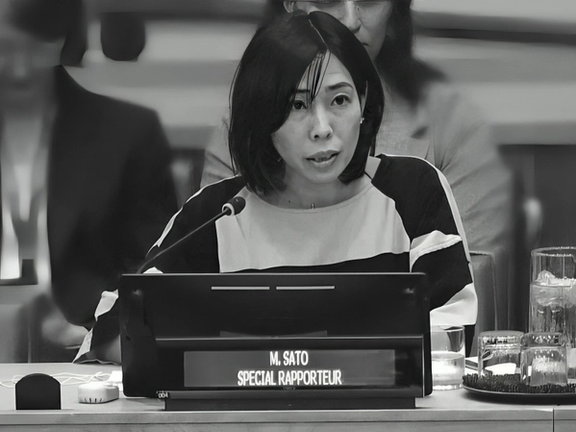
Mai Sato, UN Special Rapporteur on the situation of human rights in Iran
UN experts expressed alarm on Monday at what they called an “unprecedented” surge in executions after over 1,000 people were put to death so far this year, warning they likely violated international law.
“The sheer scale of executions in Iran is staggering and represents a grave violation of the right to life,” human rights experts appointed by the United Nations Human Rights Council, including Special Rapporteur on the situation of human rights in Iran, Mai Sato, said in a statement.
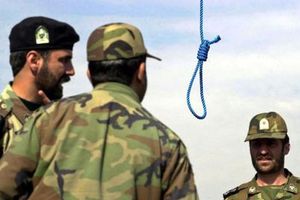
“With an average of more than nine hangings per day in recent weeks, Iran appears to be conducting executions at an industrial scale that defies all accepted standards of human rights protection.”
At least 1,000 executions have been documented since January. Most were for drug-related offences and murder, followed by security-related charges and rape. Among those executed were at least 58 Afghans, including 57 men and one woman.
“The extensive use of the death penalty for drug-related offences is particularly alarming,” the experts said, adding that 499 people were executed for such crimes this year—far higher than the 24 to 30 executions annually recorded between 2018 and 2020.
They said the 2017 amendment to Iran’s anti-drug law, initially seen as progress for limiting the death penalty, has been effectively reversed, with executions surging again after 2021.
International law restricts capital punishment to the “most serious crimes,” interpreted as intentional murder, they added, stressing that drug offences do not meet that threshold.
Executions disproportionately impact marginalised communities from ethnic minority backgrounds, many of whom face confiscation of homes and farmland.
Most executions are not publicly announced, and trials are often held behind closed doors.
11 executed in 2025 on alleged espionage charges
In a post on X, Mai Sato, the UN Special Rapporteur on the situation of human rights in Iran, said 11 individuals have been executed on espionage charges, with nine carried out after Israel's military strikes on Iran on June 13.
The statement came as Iran executed the 11th man for allegedly spying for Israel’s Mossad intelligence service.
•
•
"A new espionage bill introduced after the military escalation significantly expands the scope of conduct considered espionage to include activities linked to dissemination of information and media work, such as contact with foreign and diaspora media outlets," the experts said.
“The international community cannot remain silent in the face of such systematic violations of the right to life,” the experts said. “States must take concrete diplomatic action to pressure Iran to halt this execution spree.”
Iran’s anti-narcotics authority warned on Monday that poppy cultivation would face severe punishment, including fines, prison and land confiscation for repeat offenders.
Tarahomi, head of legal affairs at the Anti-Narcotics Headquarters, told state media that speculation about legalizing poppy cultivation was misplaced. “What is under consideration is licensing controlled cultivation of certain poppy species such as Papaver bracteatum -- also known as the Iranian poppy -- for medical use, not opium poppy,” he said.
He explained that Iran had voluntarily halted poppy farming after the 1979 revolution, meeting pharmaceutical needs through seizures and imports. But declining production in Afghanistan has forced Tehran to consider limited licensed cultivation for morphine and related medicines under international conventions.
Tarahomi said licensed crops would be grown only on enclosed land with state purchase and factory processing, leaving no possibility of diversion. By contrast, he warned, illegal growers would face escalating penalties: “The first time a fine, the second time a fine and prison, and from the third time onward, fine, prison and confiscation of agricultural land.”
Officials have previously reported a sharp fall in opium seizures and rising concerns over illegal cultivation in some provinces, with authorities destroying thousands of hectares of illicit fields.
Canada’s food safety watchdog has temporarily banned imports of pistachios and pistachio products from Iran after more than 100 confirmed salmonella cases and several recalls linked to contaminated shipments.
The Canadian Food Inspection Agency (CFIA) said the move was "a precautionary measure to protect Canadians from the risk of Salmonella infection.”
Importers must now prove shipments do not originate from Iran, or they will be blocked or sent for testing.
“An outbreak investigation is ongoing, led by the Public Health Agency of Canada, with more than 100 laboratory-confirmed Salmonella infections in Canada and numerous food recall notifications linked to pistachio kernels and products originating from Iran,” read a statement by CFIA.
At least 16 people have been hospitalized, though no deaths have been reported. The Public Health Agency of Canada said 75% of cases were among women, warning that children, the elderly and pregnant women are particularly vulnerable.
The CFIA said the restrictions will remain in place until food safety reviews are complete, with penalties ranging from fines to license suspensions or legal action for violations.
Iranian pistachios have faced bans in the past.
Last year, the European Union temporarily halted imports after detecting high levels of aflatoxin, a toxic mold byproduct.
Other Iranian produce, including peppers, kiwis and potatoes, has also been rejected by Russia, India and Pakistan in recent years over contamination concerns.
Iran executed a man identified as Bahman Choubi-asl on Monday after convicting him of spying for Israel’s Mossad intelligence service, the judiciary’s news outlet Mizan reported, describing him as "one of the most important spies for Israel in Iran".
Choubi-asl, described as a database specialist with access to sensitive national projects, was accused of providing information to Israeli intelligence during meetings in several countries, including India, Armenia and Ireland.
Mizan said Mossad officers trained him, provided secure communications tools and paid him for his cooperation.
“The main goal of Mossad in attracting the defendant’s cooperation was to obtain the database of governmental institutions and create a breach in Iranian data centers,” Mizan reported.
Photos of Bahman Choubi-asl published by state media
It added that Israeli officers also sought information on electronic equipment imports and engaged him in intelligence-gathering missions.
The judiciary said Choubi-asl met Mossad agents in nine foreign trips, held dozens of meetings, and received financial rewards and training.
“The defendant’s deliberate and conscious cooperation with the enemy’s intelligence service was proven,” Mizan quoted court documents as saying.
The court convicted him of “corruption on earth” through collaboration with a foreign intelligence service.
The Supreme Court rejected his appeal and upheld the death sentence, which was carried out on Monday morning, Mizan said.
Iran and Israel have been locked in a long-running shadow war that has escalated this year into direct confrontations, including Israeli airstrikes on Iranian targets in June.
Executions of those accused of spying for Israel have risen in recent months, with at least 10 people put to death on such charges, according to Iranian authorities.
Iran will enter a war with the United States if Israel launches a new attack on the Islamic Republic, a senior Iranian official and former chief commander of the Revolutionary Guard said on Sunday.
"The Zionists (Israel) are seeking to try their luck against Iran once again," Major General Mohsen Rezaei told the state TV.
“However, events will soon happen inside Israel that will make this impossible,” he said. “It is not expedient to talk about them now.”
His remarks came hours after Ynet reported Israel is on heightened alert after the United Nations sanctions were reinstated on Iran under the so-called snapback mechanism, amid fears in the Jewish State that Tehran could accelerate its nuclear activities.
The sanctions were imposed despite several rounds of talks between Tehran and world powers aimed at clinching an agreement on Tehran’s disputed nuclear program.
Rezaei said Tehran will not accept further negotiations with Western powers that give Israel time to prepare or strengthen its position.
“Negotiations aimed at giving Israel time or strengthen it are unacceptable,” the veteran general-turned-politician told the state TV as he was once again seen wearing his military uniform.
“If that happens, the moment Israel starts a war, we will also enter a war with the United States,” said Rezaei who is a member of Iran’s Expediency Council.
“Negotiations must not be accepted in any form, at any price, or without conditions,” he said. “If we enter negotiations, military force must in no way be used against Iran. Otherwise, we will retaliate; not only against Israel, but also against American targets in the region.”
The warning followed fresh statements from Iran’s military leadership emphasizing the country’s readiness to respond to any attack.
Earlier on Sunday, Iran’s armed forces chief of staff Abdolrahim Mousavi said the military is fully prepared to respond to any threat or assault.
“Unity between the army and the Revolutionary Guards is the guarantor of preserving Iran’s territorial integrity,” Mousavi said during a meeting with the Guards’ commander.
“The armed forces are fully ready to confront any threat or possible aggression with strength,” he added.
President Masoud Pezeshkian’s reference at the UN to Iranian children killed by Israeli strikes triggered a backlash at home, where many asked why he did not also acknowledge the dozens of children slain by Iranian security forces during the 2022 uprising.
The contrast revived one of the movement’s most searing slogans: “Death to the child-killing government.”
The stories of these children underscore the scale and cruelty of the crackdown, where even toddlers were killed and grieving families were threatened into silence.
Kian Pirfalak's mother holding his portrait
The boy who became a symbol
Nine-year-old Kian Pourfalak from Izeh in southwest Iran became a national symbol. He was killed when security forces opened fire on his family’s car on 16 November 2022. His parents—wounded but survived—insist they were deliberately targeted.
A bright, imaginative child, Kian loved rainbows and robotics, constantly inventing projects and experiments. One of his proudest creations was a boat built from lollipop sticks that floated successfully on water.
After his death, images of his rainbow drawings and handmade boat spread widely, becoming symbols of innocence and promise destroyed by the crackdown.
Kian’s parents have faced repeated intimidation and summons by intelligence officials for speaking publicly about his killing
The Youngest Victim
The youngest victim recorded was just two years old. Known only by her family name, Mirshekar, she was reportedly shot dead while playing outside her home in Zahedan, in southeastern Sistan and Baluchestan Province, on 30 September 2022.
That day—remembered as “Zahedan’s Bloody Friday”—was among the deadliest of the uprising.
Security forces and snipers opened fire on protesting crowds after Friday prayers in the city’s Sunni-majority area, killing over 100 people and injuring many more with live ammunition, pellets, and tear gas.
More than a dozen children were among the dead.
Mohammad-Eghbal Nayebzehi at work
The Child Laborer
Also killed on Bloody Friday was Mohammad-Eghbal Nayeb-Zehi, a 16-year-old Baluchi boy.
From a poor family without official identity papers, he had worked in construction since the age of nine to help support his parents and siblings.
That Friday, he walked many kilometers from his village to Zahedan to attend prayers. Carrying just enough money for a sandwich afterward, he was gunned down.
His modest dream was to one day buy a smartphone and open an Instagram account—a simple ambition that captured both his hopes and the fragility of his life.
Seven-year-old Hasti Narouei in traditional Baluchi dress
Lost Before First Class
Hasti Narouei, a seven-year-old about to begin her first year of school, never made it.
On 30 September, her grandmother took her along to Friday prayers. There, she was reportedly struck on the head by a tear gas canister.
Hasti suffocated and died before she ever had the chance to sit in a classroom.
Eight-year-old Mona Naghib in traditional Baluchi dress
Gunned down on the way to school
In a village near Saravan, also in Sistan and Baluchestan, Mona Naghib was walking to class with her older sister Maryam when security forces opened fire while chasing two teenage protesters.
A bullet struck Mona. Maryam tried to carry her home, but she died before any medical help could arrive. The family has faced threats from intelligence officials who ordered them to remain silent, according to rights groups.
Seven-year-old Helen Ahmadi shot dead in Boukan
Killed for chanting
Helen Ahmadi, a seven-year-old girl from Bukan in West Azerbaijan Province, was shot on 12 October 2022 while walking home from school with other children, allegedly for chanting slogans.
Activists say security forces later pressured her family to claim her death was caused by a car accident, highlighting the ongoing intimidation faced by families of children killed in the crackdown.