Iranian Foreign Minister Set To Visit Russia On Tuesday
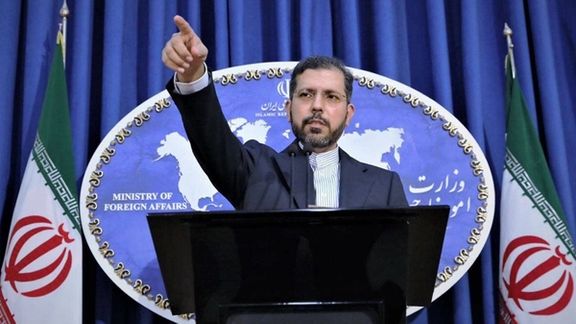
Iranian Foreign Minister Hossein Amir-Abdollahian is scheduled to travel to the Russian capital Moscow on Tuesday, the ministry spokesman announced on Monday.
Iranian Foreign Minister Hossein Amir-Abdollahian is scheduled to travel to the Russian capital Moscow on Tuesday, the ministry spokesman announced on Monday.
In his weekly media briefing on Monday, Saeed Khatibzadeh announced the visit, repeating that the nuclear talks hinge on decisions by Washington.
“We are now waiting for the American response”, he said, adding that “consultations continue at various levels, and the foreign ministers of the countries are in constant contact with each other, and the senior negotiators are also in touch with each other”.
After 11 months of negotiations in Vienna, talks to revive the 2015 nuclear agreement with Iran paused last week after Russia demanded exemptions from Ukraine sanction in its dealings with Iran.
Russian foreign minister Sergei Lavrov said on March 5 that Moscow was looking for guarantees that any sanctions against Russia over Ukraine would not affect “the regime of trade-economic and investment ties embedded in the Joint Comprehensive Plan of Action [the 2015 deal] on the Iranian nuclear program.”
Tehran, however, which has tacitly supported the Ukraine invasion, has not criticized Russia's demand.
Some media and politicians in Iran continue criticizing Russia for “obstructing” the nuclear talks in Vienna while hardline media defend Russia's aggression and tend to minimize the impact of Moscow's demand for exemption from Ukraine sanctions on Iran's nuclear deal with the West.

Senior US officials Sunday appeared to suggest that Iran’s missile attack on Erbil would not impact the chances of concluding a nuclear agreement with Tehran.
US National Security Adviser Jake Sullivan said Sunday no US citizens were harmed, and no US facilities were hit in the Iranian ballistic missile attack on Erbil.
Sullivan condemned the attack by Iran’s Revolutionary Guard on Sunday, saying Washington would do whatever it takes to defend its people, interests and allies.
A statement by the State Department appeared to dispel the notion that Iran's attack had anything to do with the US.
"The United States strongly condemns the missile strikes on Erbil, Iraq last night that emanated from Iran. The strikes were an outrageous violation of Iraq’s sovereignty. No U.S. facilities were damaged or personnel injured, and we have no indications the attack was directed at the United States," the State Department said.
Iran’s missile attack came as diplomats have stopped nuclear talks in Vienna after 11 months of negotiations even though they say an agreement was very close to be finalized. The pause came after Russia on March 5 demanded an exemption from Ukraine sanctions in its economic and other relations with Iran. Tehran has not objected to Russia’s sudden move, which is bound to delay an agreement and lifting of Iran’s economic sanctions, vital for the government.
Deputy Secretary of State Wendy Sherman told Fox News on Sunday that “this was a very concerning attack” but "we do not believe the US consulate was actually the target of this missile attack."
She tacitly signaled that the attacks won’t have any effect on US readiness to conclude a nuclear deal with Iran, saying, Washington is concerned about the attacks but “imagine these Iranians with a nuclear weapon. We need to get that off the table so we can address their malign behavior in the Middle East… But first we’ve got to get this deal”.
“President Biden believes very strongly, as does secretary Blinken, as do I, that we need to get sure that Iran never obtains a nuclear weapon, and then we also need to deal with their malign behaver in the region, but first we’ve got to make sure that they cannot a nuclear weapon”.
The Biden administration has dismissed Moscow’s demand for exemptions from Ukraine sanctions, but some media outlets and politicians in Iran have been arguing that Russia has taken Iran’s nuclear deal hostage. They have accused their government of being subservient to Moscow to the extent of relinquishing the vital national interest in achieving an agreement with the West.
Critics of the Biden policy argue that once a nuclear deal is reached and Iran receives tens of billions of dollars in sanctions relief, it would have little incentive to negotiate over other issues, including its ballistic missile program and its aggressive regional policies.
The US ambassador to Iraq, Matthew Tueller, said the US condemns the “criminal attack on civilian targets in Irbil”, noting that "Iranian regime elements have claimed responsibility for this attack and must be held accountable for this flagrant violation of Iraqi sovereignty”.
The remark about “Iran regime elements” also minimizes the gravity of Iran’s act.
The IRGC that has accepted responsibility of the missile attack is not an element in a loose structure. It is Iran’s main military force, and its officers also occupy the top positions in the regular army. The commander in chief of both the IRGC and the army is Supreme Leader Ali Khamenei and any decision to launch a missile strike cannot be taken without his approval.
Some US lawmakers and former officials reacted differently to Iran’s action. Several people urged Biden to stop the nuclear talks, and not sign an agreement partly engineered by Russia.

Lawmakers and former American officials have reacted to an Iranian ballistic missile attack on the US consulate in Iraq’s Erbil urging an end to Iran nuclear talks.
In a major escalation of tensions in the Middle East, a dozen ballistic missiles struck Erbil at 1 am on Sunday, targeting the US consulate's new building and the neighboring residential area but caused only material damage and one civilian was injured, the Kurdish interior ministry said on Sunday.
Iran's Revolutionary Guards released on Sunday a statement taking responsibility for missile attacks against Israeli "strategic centers" in Iraq's northern Kurdish regional capital of Erbil
Democratic representative Elaine Luria said in a tweet hours after the attack that she is continuing to monitor the situation, stating that “if reports are accurate, the Biden Administration must withdraw its negotiations with Iran”.
“We cannot re-enter a failed JCPOA to further empower Iran and threaten global security”, the Navy veteran added.
Republican Congresswoman Lisa McClain said, “This aggression shows we should absolutely end all Iran Nuclear Deal negotiations now. We must also never buy Iranian oil”.
Congressman Ritchie Torres twitted, “Iran attacks a US consulate while seeking US sanctions relief? No Bueno”.
Senior Adviser at the Foundation for Defense of Democracies Richard Goldberg urged Biden to convene an emergency meeting of the National Security Council “to assess available intelligence & consider a full range of military, cyber, economic & political responses, noting, “The Russian-brokered Iran Deal on the table in Vienna includes lifting terrorism sanctions on Iran’s central bank, oil company, tanker company, petrochemical company & many more alongside removing the IRGC from the FTO list. Tonight should be a death knell for this horrible deal”.
“No country can be allowed to launch missile attacks against US interests without facing an immediate and meaningful response. There are a range of options. Deterrence must be restored. This isn’t partisan. If the President acts, he should get bipartisan support”, he added.
Gabriel Noronha, a former official at Iran desk in the State Department said, “Democrats and Republicans in Congress agree: Biden must not continue talks with Iran while they attack our bases in Iraq”.
Another official of the former US administration Robert Greenway, who was part of the negotiating team for the Abraham Accords, said, “Is it too much to ask Iran cease threatening US citizens to continue negotiations or enjoy any benefits of a deal? Or that we consider a regime so committed to killing more Americans unworthy of our trust negating the viability of any deal?”
Andrew Lewis Peek, who was a strategic advisor to the NATO commander in Afghanistan, said in a tweet, “Tonight’s missile attack in Iraq is 100% representative of a breakdown of deterrence against Iran not just under Biden, but under years of US policy in Iraq”.
Former research fellow at the Washington Institute Nadav Pollak has reacted to a video shared by advisor to Iran's nuclear negotiating team Mohammad Marandi, who gloated, “This is just the beginning”.
Pollak said, “The fact that Iran is doing this while talks are still being held in Vienna says something about how they perceive the EU and US resolve to contain them”.
A State Department spokesperson told Axios that the incident "is being investigated by the government of Iraq and the Kurdish Regional Government."

Some media and politicians in Iran continue criticizing Russia for “obstructing” the nuclear talks in Vienna that could have lifted most sanctions against Iran.
Hardline newspapers continue to defend Russia's aggression against Ukraine and tend to minimize the impact of Moscow's demand for exemption from Ukraine sanctions on Iran's nuclear deal with the West.
Russia on March 5 tied the fate of a nuclear agreement with Iran to sanctions the West has imposed for its invasion of Ukraine, demanding exemptions in its economic and other relations with Iran. The 11-month negotiations in Vienna “paused” in what was seen as a deadlock after the Russian demands.
Taking Iran 'hostage'
Ali Motahari, a prominent former lawmaker wrote in a 12 March tweet that "in the last stage of efforts to revive the 2015 nuclear deal Iran should get rid of its fear of Russia and solve the remaining problems through holding direct talks with the United States."
Motahari reminded that "Russia is seriously concerned about the revival of the JCPOA and an improvement in Iran’s relations with the West. Russia wants Iran to be Moscow's hostage and act as a shield to support Moscow in the conflict with the West."
Meanwhile, according to Etemad Online website in Tehran, Hassan Khomeini, the grandson of the founder of the Islamic Republic Rouhollah Khomeini said that "Relying on foreign nations is a mistake as other countries, whether friends or foes, serve only their own interests."
He suggested that the Iranian government should not "fall in love with the East or West," and that Iran should rely on its own national identity. Also, the young Khomeini in reference to Russian invasion stressed that the nation "hates aggression and no one should defend it." He also reminded that his grandfather had defended the people of Afghanistan against Russia's invasion in the 1980s. Iranian officials have blamed the United States and NATO for Russia’s action.
In another article on Saturday, the website quoted political analyst Fayyaz Zahed as saying that Tehran's dependency on Russia will create endless problems for Iran. Zahed said if Iran fails to control Russia's excessive demands, Tehran will fall into the trap of perpetual tensions, and this can shift the pressure exerted by the West on Russia to others in the Middle East. Zahed shied away from naming Iran and vaguely referred to the Middle East.
He said Russia obstructed the final stage of the talks in Vienna while everyone expected an agreement in late March. Russia's behavior, said Zahed, was tantamount to taking Iran and its interests hostage.
Divide among hardliners
In the meantime, a divide is taking shape among conservative newspapers in Iran. Last week all followed the party line of supporting Russia and blaming the United States for the Ukraine crisis. They are still doing so, but a change is taking shape about their reaction to Russia's obstruction of the nuclear deal.
On Saturday, Khorasan newspaper criticized Foreign Ministry Spokesman Saeed KHatibzadeh for blaming "Foreign elements" for obstructing the talks and asked: "Why you do not want to name that foreign element?"
This comes while hardliner daily Kayhan and IRGC mouthpiece Akhbar-e Sepah newspapers continue to support of Russia’s policies in all respects. The Kayhan claimed that Russia's attack on Ukraine has had "marvellous benefits" and revealed double standards in world politics.
Akhbar-e Sepah, which according to Didban Iran website, is the IRGC's internal publication, stressed that the United States and not Russia should be blamed for the failure of the talks in Vienna. The publication claimed that the parties to the JCPOA deliberately kept silent about the fact that the United States has refused to accept four of Iran's conditions. It further claimed that the talks were still a long way from reaching any results.

France, Britain and Germany warned Russia Saturday that its demands to have its trade guaranteed with Iran risked the collapse of an almost-completed nuclear deal.
Negotiators have reached the final stages to restore the so-called JCPOA deal, which lifted sanctions on Iran in return for curbs on its nuclear program, long seen by the West as a cover for developing atomic bombs.
However, on March 5 Russian Foreign Minister Sergei Lavrov unexpectedly demanded sweeping guarantees that Russian trade with Iran would not be affected by sanctions imposed on Moscow over its invasion of Ukraine.
"Nobody should seek to exploit JCPOA negotiations to obtain assurances that are separate to the JCPOA," France, Britain and Germany - the so-called E3 European parties to the 2015 accord - said in a joint statement. "This risks the collapse of the deal," they said.
The deal on the table should be concluded with the utmost urgency, they added.
Washington has already insisted it will not agree to Russia's demands.
The 11-month-old international talks seek to bring Iran back into compliance with the deal's restrictions on its rapidly advancing nuclear activities and bring the United States back into the accord it left in 2018 under former President Donald Trump.
Oil markets are closely watching the progress of talks to see whether restrictions on Iranian crude exports might be lifted, which could help to offset disruption to supplies from Russia's war in Ukraine.
Report by Reuters

Hardliners in Tehran are coyly beginning to acknowledge that Moscow has a role in the abrupt halt to the Vienna nuclear talks by presenting its own demands.
So far Iranian officials have refrained from openly acknowledging that the pause in the talks announced by EU on Friday has anything to do with Moscow's demand to receive exemption from Western sanctions on Ukraine in relation to its ties with Iran. They have continued to blame the US for not reaching an agreement which last week appeared to be very close at hand.
In an interview with pro-Iran Al-Mayadeen television Friday, the media advisor of the Iranian negotiation team, Mohammad Marandi, said no definite date has been set for a return to the talks. Marandi avoided saying whether Iran backs Moscow's demands and accused the US and European powers of not being prepared to lift the sanctions on Iran.
"Moscow wants guarantees from the US and other Western countries, not Iran," he said.
But some hardliner media and a website affiliated to the Secretary of Iran's Supreme National Security Council Ali Shamkhani on Saturday offered hints of Tehran's frustration with Moscow seeking a loophole through which it can escape sanctions pressure.
An unattributed commentary in Javan newspaper which is linked to the Revolutionary Guards on Saturday said, "nobody is officially saying what differences caused the halt in the talks" but added that "one can presume that the biggest challenges now are caused by Russia and the US unlike the previous times when they were posed by Iran."
Javan commentary reiterated that the inflexibility of the United States poses the biggest challenge to a deal but said the "Russia's demand for guarantees for future trade and military relations with Iran after a possible deal, a position which Iran does not strongly oppose, forms part of the differences."
Nour News website which is believed to be Ali Shamkhani's mouthpiece in another unattributed commentary Saturday entitled "America's Sleight With Tools Exceeding Negotiations" also pointed the finger at the US for stalling the talks by refusing to accept Iran's demands and acknowledged Moscow's demand as "a new issue and unpredicted factor" in the talks, but said Iran "backs Moscow's approach".
Unlike Javan, the Nour News commentary claimed in clear terms that Tehran "backs Moscow's approach" and argued that saying negotiations have ended and a final text has been prepared, as European negotiators say, was "a wrong surmise".
Nour News accused the Western parties in the talks of emphasizing and attributing the difficulties in the talks to Russia's new demand for guarantees, to avoid accepting Iran's own demands.
"Although the Russian request can introduce a new agenda to the negotiation table as a new issue and an unpredicted factor, the main hitch in the talks which results from a lack of political decision by the US to respond to Iran's demands has remained unresolved. Therefore, one can't speak about Russia's request as an obstacle that prevents an agreement," Nour News said.
In Tehran some reformist media which accuse Moscow of taking the Iran deal hostage to their own interests have even accused Moscow of throwing an obstacle in the path of an agreement in coordination with Tehran's archenemy, Israel.
"The war [in Ukraine] showed that there is a marked synchronization between Israel and the Kremlin in all dimensions and this cooperation even includes Israel's concerns over a nuclear agreement with Iran in Vienna," a commentary in reformist Etemad newspaper said Saturday and asked if there could be a connection between the Israeli Prime Minster Naphtali Bennet's recent visit to Moscow and the abrupt pause in the talks.