Iran Reports Release Of Oil Tanker Seized By Greece
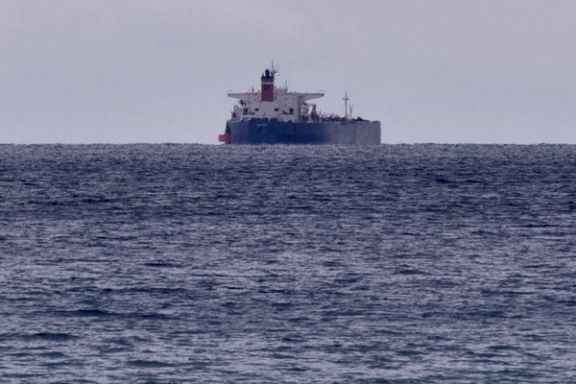
Iran's Ports and Maritime Organisation (PMO) said on Tuesday the Iranian-flagged Lana tanker seized in April by Greece is no longer impounded.

Iran's Ports and Maritime Organisation (PMO) said on Tuesday the Iranian-flagged Lana tanker seized in April by Greece is no longer impounded.
The semi-official Mehr news website quoting Iranian officials sadi that the oil cargo will be returned to its owner.
"With the swift and authoritative action of Iran, the Greek government finally issued an order and we are now witnessing the lifting of the ship's seizure and the return of its cargo to its owner," the PMO told Mehr.
The ship, previously called Pegas and renamed Lana in March, had reported an engine problem in April. It was headed to the southern Peloponnese peninsula to offload its cargo on to another tanker but rough seas forced it to moor just off Karystos where it was seized, according to the Athens News Agency.
A Greek court overturned an earlier ruling last week that allowed the confiscation by the United States of part of the Iranian-flagged tanker's Iranian oil cargo off the Greek coast, three sources familiar with the matter said.
The US has sanctioned Iranian oil exports since 2018.
The incident led to an angry response from Iran, with Iranian forces last month seizing two Greek tankers in the Gulf after Tehran warned it would take "punitive action" against Athens.
There is still no word about the fate of the Greek tankers, but in similar cases in the past Iran has released seized vessels if there was a reciprocal agreement.
With reporting by Reuters

Iran’s foreign ministry spokesman on Monday dismissed a critical resolution passed last week by the UN nuclear watchdog, the IAEA, criticizing Iran for its lack of cooperation.
Saeed Khatibzadeh launched his defense of Tehran’s policies at a press conference on Monday by attacking a recent trip by the International Atomic Energy Agency (IAEA) Director General Rafael Grossi to Israel.
Defending the government’s decision to reduce cooperation with the UN nuclear watchdog as a reaction to the resolution critical of Iran, he said, “We could not leave the IAEA’s political and non-technical action unanswered. Our response was decisive and appropriate.”
The resolution called on Iran to engage with the IAEA without delay and expressed “profound concern” at Iran’s failure to satisfy the agency over traces of uranium found at three undeclared sites and highlighted earlier in June in a report from by Grossi.
"The abrupt change in the IAEA chief’s tone, his manner of negotiations, and his discourse when he addressed the European Parliament [earlier in May] clearly shows that he was acting on the orders of an outside player," Khatibzadeh said.
Relations between Iran and the Agency continue within the technical framework, he added, saying that if Grossi wants to come to Iran within the framework of agency, he should have an agenda by the agency, but he can come as a tourist.
Saying that Grossi made a trip to the wrong place and at the wrong time and “met with wrong people, he added, “It is unfortunate that the director general of the International Atomic Energy Agency has granted the unlawful regime of Israel permission to make a mockery of the international organization through its agents, and erode its credibility.”
Reiterating that the move seriously harmed the credibility of the UN nuclear watchdog, Khatibzadeh said that “These actions have discredited the achievements of international organizations. Under the Statute of the IAEA, its chief is obligated to ensure the independence and impartiality of the organization.”
Iran told the IAEA it plans to remove more monitoring equipment after the 35-member IAEA board Wednesday passed the resolution. Tehran says it intends to maintain a basic level of monitoring and inspectors’ access as required under the Nuclear Non-Proliferation Treaty (NPT).
On Sunday, Foreign Minister Hossein Amir-Abdollahian said Tehran is resisting excessive demands presented “by the other side” in talks to restore the 2015 nuclear deal that have stalled since March. The Iranian parliament and all Friday Prayer Imams in Iran, who are representatives of the Supreme Leader, backed the decision to reduce relations with the IAEA.
Khatibzadeh also touched on the Vienna talks, saying an agreement is within reach if the United States abandons delusions and fulfills its commitments.
“If the agreement is finalized in Vienna tomorrow, all the measures carried out by Iran are technically reversible,” he said.

Iran has denied that a Boeing 747 impounded in Argentina over links with the Revolutionary Guard belongs to any Iranian aviation company.
Iranian Foreign Ministry spokesman Saeed Khatibzadeh said at a weekly press conference on Monday that the grounded plane operating for the cargo division of Venezuelan national carrier Conviasa does not belong to Iran’s Mahan Airlines. The United States sanctioned the airline in 2008 for its links to Tehran’s extraterritorial intelligence and secret ops outfit, the Quds (Qods) Force.
Khatibzadeh, however, confirmed that some of the crew on the plane – which was seized upon arrival in Buenos Aires on June 6 -- were Iranians, noting that "The plane has been sold to Venezuelan airlines for more than a year and its crew is not entirely Iranian."
Iran’s aviation chief Mohammad Mohammadi Bakhsh said on Sunday that the Iranian crew on the plane were instructors working as part of an aviation deal between Iran and Venezuela, and that the seized aircraft has not been on Mahan Air’s register.
Argentine lower-house lawmaker and member of the country's Congressional Intelligence Commission Gerardo Milman, who has raised attention to the case in recent days, presented a complaint to a judge asking to fingerprint the crew and share the information with the Federal Intelligence Agency, saying that "Our information is that this is a plane that has come to conduct intelligence in Argentina."
Among the Iranians on board, is Gholamreza Ghasemi, who is a member of the IRGC and a former board member of Fars Air Qeshm, the Iranian airline that is accused of transporting weapons for Hezbollah covering up as civilian jets. He is reportedly a relative of current Interior Minister Ahmad Vahidi, whose assignment by President Ebrahim Raisi triggered condemnation from Argentina given his suspected role in the 1994 AMIA bombing that killed 85 people and injured over 300.

Iran’s oil shipments in May dropped by 50 percent, in a sign that Moscow is selling more oil to China and taking Tehran’s market share, a report on Monday said.
The data and analytics firm Kpler was quoted by Prague-based, US-financed Persian language Radio Farda as saying that Iran’s illicit shipments of crude mainly to Asian markets dropped to around 400,000 barrels per day (bpd) in May.
The shipments were estimated to have been 908,000 bpd in March and 820,000 in April, as Iran claimed it is selling more than a million bpd in recent months.
When the United States imposed full oil export sanctions on Iran in May 2019, exports dropped from more than 2 million barrels a day in 2016-2017 to around 250,000. China was the main buyer of Iranian crude in this period.
Toward the end of 2020, as it became clear that then-President-elect Joe Biden was determined to revive the 2015 nuclear agreement (JCPOA) with Iran abandoned by his predecessor in 2018, Iranian crude exports began to increase. China might have calculated that the risk of US retaliation decreased with the prospects of talks to restore the nuclear deal.
Exports gradually increased in 2021 as the United States engaged in indirect nuclear talks in Vienna. It reached new highs in early 2022 before the Russian invasion of Ukraine and sanctions on Moscow by many countries. Since then, Russia has apparently turned to China to sell its crude which happens to be Iran’s main oil customer.
In May, Reuters reported that about 20 tankers carrying around 40 million barrels of Iranian oil were waiting near Singapore to sell their cargos. As oil market monitoring firms have reported in the past Iranians oil is sold most probably to middlemen who then transfer the crude to Chinese ‘teapot’ small refineries.
Kpler told Radio Farda that the quantity of Iran’s unsold oil has not changed much, probably because shipments have declined.
Iran has denied that Russia is taking its market share, but $30 barrel reported discounts by Russia are apparently much more than Iran offers to customers willing to take a risk and buy its sanctioned crude.
The hardliner government of President Ebrahim Raisi prides itself for having “defeated US sanctions” and increased oil exports, as it tries to calm a volatile economic environment at home. The danger of three-digit inflation in Iran and the fall of its currency to a historic low over the weekend have led to angry protests on the streets.
The reported fall in exports in May can deal a new blow to Iran’s hard-pressed economy and further destabilize the political scene.
The year-long nuclear negotiations remain in deadlock, as Tehran demands its revolutionary Guard be removed from the US list of Foreign Terrorist Organizations (FTO).
The US has signaled that if talks make no progress and Iran continues to expand its nuclear program, it may decide to tighten the screws on Tehran, which may mean a more rigorous enforcement of existing sanctions.

Iran’s foreign minister says Tehran is resisting excessive demands presented “by the other side” in talks to restore the 2015 nuclear deal that have stalled since March.
Hossein Amir-Abdollahian made the remarks on Sunday after attending a session of the Parliament’s Committee on National Security and Foreign Policy to brief lawmakers about a resolution passed by the board of governors of the International Atomic Energy Agency (IAEA) to condemn lack of cooperation by the Islamic Republic.
“Every time that the opposite side put forth excessive demands during the [Vienna talks], we used the country’s own tools and power, so that they would understand that the interests and welfare of the Iranian nation were important to us,” he said without elaborating on the tools, but he was probably referring to the government’s decision to reduce monitoring access to the UN nuclear watchdog.
Iran told the IAEA it plans to remove more monitoring equipment after the 35-member IAEA board Wednesday passed the resolution. Tehran says it intends to maintain a basic level of monitoring and inspectors’ access as required under the Nuclear Non-Proliferation Treaty (NPT).
In a statement issued by the Iranian parliament on Sunday, 260 lawmakers slammed the IAEA's “excessive, politically-motivated measure,” saying the resolution proves that the agency and its director general have lost all their technical credibility, in reference to Rafael Grossi’s recent visit to Israel.
On Friday, all Friday Prayer Imams in Iran, who are representatives of the Supreme Leader, backed the decision to reduce relations with the IAEA.

The United States Special Representative for Iran Robert Malley held an “excellent” phone conversation with South Korean First Vice Foreign Minister Choi Jong-kun about Iran.
Malley said in a tweet on Friday that Washington and Seoul “are committed to coordinating our efforts across a wide range of shared interests on Iran.”
He did not elaborate on what exactly was discussed but the two diplomats probably talked about the Islamic Republic’s frozen assets in Korean banks due to US sanctions.
Since the beginning of the year, Iran and South Korea announced on several occasions that they would start negotiations to devise a mechanism to release the funds frozen, but nothing materialized.
Two South Korea banks hold $7-9 billion of Iranian money, owed for oil imports, but the funds are locked under US sanctions, which were reimposed after former President Donald Trump in 2018 withdrew from the Iran nuclear deal, Joint Comprehensive Plan of Action (JCPOA).
In April, Iranian media said $7 billion of Iran's frozen funds in South Korea will be freed in exchange for the release of three American dual citizens held as hostages in Tehran.
Iranian hardliner newspaper funded by Iran’s Supreme Leader suggested later in April that Iran must close the Strait of Hormuz to South Korean vessels until Seoul releases $7 billion frozen funds.
US National Security advisor Jake Sullivan said in May that Iran’s money in South Korea and elsewhere will remain frozen as long as a nuclear deal has not been reached.