Iran Government Foundation Confirms $200 Million Embezzlement
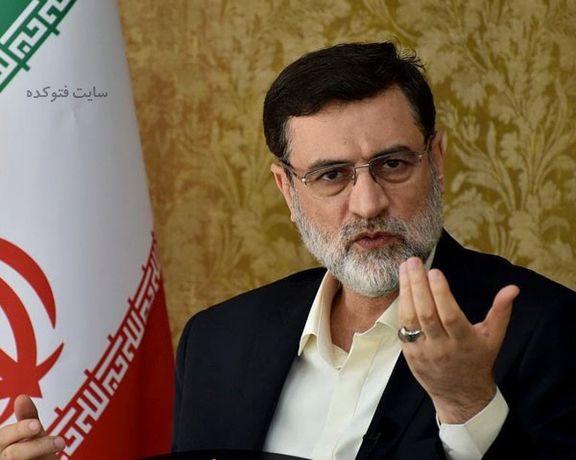
Iran’s Martyrs Foundation has confirmed several cases of embezzlement in the institution, saying only in one of insatnce the amount was about $200 million.

Iran’s Martyrs Foundation has confirmed several cases of embezzlement in the institution, saying only in one of insatnce the amount was about $200 million.
In a Tuesday interview with Tasnim news agency, affiliated with the Revolutionary Guard, Foundation of Martyrs and Veterans Affairs chief Amir-Hossein Ghazizadeh Hashemi said, "We still do not know the exact amount of damages and embezzlements that have occurred,” adding that “only one company has embezzled about five trillion tomans," or 50 trillion rials.
He did not mention the name of the company but said, "It was so big that we asked the security and intelligence services to intervene and investigate.”
The foundation has an economic wing that oversees dozens of companies with colossal amounts of assets that include the Kosar Economic Complex with dozens of companies, the Martyrs Foundation Property Organization, the Shahed Investment Company, Day Bank and Iran Zamin Bank.
About 10 years ago, the Iranian parliament formed a taskforce to probe the embezzlements at the Martyrs Foundation, but its final report was buried due to "political pressure.” The head of the taskforce later said that more than 30 people were involved in embezzlement only in the case of Day Bank.
Ghazizadeh said, "A large group of Day Bank executives have been arrested. This was just one example, now the same issues exist in the Kowsar Economic Complex and Shahed Investment Company as well as in other companies.”
In his first move after his appointment by President Ebrahim Raisi, Ghazizadeh asked the government to transfer the authority of the country's free zones to the Martyrs Foundation.

Leaders of Israel and Saudi Arabia see July’s regional trip by United States President Joe Biden as an important part of building a coalition against Tehran.
Yair Lapid, Israeli foreign minister and due to be prime minister when Biden arrives July 13, told US Secretary of State Antony Blinken by phone Tuesday that the president’s trip to Saudi Arabia and Israel “would have significant implications for the region and the fight against Iran, as well as immense potential to significantly improve regional stability and security," an Israeli foreign ministry statement said. Israeli Défense Minister Benny Gantz said Monday that Israel was building a US-sponsored air-defense system aimed at curbing drone or missile strikes by Iran and its allies.
Saudi Crown Prince Mohammad bin Salman was Tuesday in Egypt and Jordan, and is due to visit Turkey, repairing his image after the 2018 killing in Istanbul of Washington Post columnist Jamal Khashoggithat US intelligence concluded was done on the prince’s orders. In a move condemned by human rights groups, Turkey in April transferred the Khashoggi murder case to Saudi Arabia.
The Saudi crown prince, whose government has given significant financial support to the Egypt’s President Abdel Fattah al-Sisi who seized power in 2014 from the elected Muslim Brotherhood government, reportedly agreed $7.7 billion in agreements over food, transport, energy and pharmaceuticals. Egypt, the world’s largest importer of wheat, faces food shortages due to the Ukraine crisis.
While Saudi Arabia quietly favored Israel’s 2020 ‘normalization’ agreements with the United Arab Emirates and Bahrain, brokered by US President Donald Trump and advisor Jared Kushner, it has refrained from establishing diplomatic and formal ties with Israel.

Prince Mohammad’s first visit to Jordan came as Jordan's economy, like Egypt’s, struggles with the knock-on effects of the Ukraine war. Business leaders and officials expressed hope the Saudis will now deliver on past promises of $3 billion investment.
Summit Next Month
The Saudi crown prince and Jordan’s King Abdullah also discussed a summit next month where Biden will meet leaders of the six Sunni-led states of the Gulf Corporation Council, as well as Iraq, Jordan, and Egypt. King Abdullah is credited with the phrase ‘Shia crescent,’ which he used in 2004 to describe Iran’s growing regional influence.
Israel and the UAE inked May 31 a free-trade agreementfollowing up their 2020 ‘normalization’ agreement, and March’s meeting in Negev, Israel, of the foreign ministers of Israel, Bahrain, Egypt, Morocco, the UAE and the US, is planned as an annual event.
Israel and Saudi Arabia share concerns over Iran’s foreign policy os supporting militant proxies in the region, including Hezbollah and Ansar Allah in Yemen and have supported those who were willing to oppose Iranian influence. The Israeli and Saudi leadership have also opposed the 2015 Iran nuclear deal, from which Trump withdrew the US in 2018 and which the Biden administration says it wants to restore.
But while Biden came to office committed to recalibrating Washington’s links with Saudi Arabia, especially in asserting human rights, and initially dealt with Riyadh frostily, relations have thawed, partly as the US feels the need for increased Saudi oil exports to bear down on the rising cost of gasoline.
Domestic politics are also at work in Israel. The government Monday called a national election – the fifth in three years. Prime Minister Naftali Bennett has trumpeted a more assertive approach to Iran than opposition leader and former premier Benjamin Netanyahu, who hopes to return to power.
While there are Israeli security experts who see Bennett’s approach as counter-productive and who disregard talk of an Israeli-Sunni alliance, Bennett has used the phrase ‘Octopus Doctrine’ to describe drone or sabotage attacks on Iran’s nuclear and military sites, a campaign widely believed to also include killing scientists, engineers, and military officers.
With reporting by Reuters

Russian Foreign Minister Sergei Lavrov is due in Iran on Wednesday for an official visit, Tass news agency quoted Russia's ambassador in Vienna as saying.
According to Iran’s government news agency IRNA, the visit is aimed at boosting trade and energy cooperation as the two countries grapple with Western economic sanctions.
Lavrov is scheduled to meet Iranian Foreign Minister Hossein Amir-Abdollahian on Thursday and discuss expanding cooperation with the Eurasian region and the Caucasus, Iran’s Foreign Ministry said.
An exchange of opinion on a number of pressing international issues, including the Vienna talks to revive the Joint Comprehensive Plan of Action (JCPOA), as well as the developments in Ukraine, Syria, Afghanistan, Transcaucasus, Yemen and the Caspian Sea area will be discussed, the Russian ministry’s spokeswoman said.
Enjoying huge oil and gas reserves, the two countries are hit by sanctions that limit their ability to export their output. Last month, Moscow said Russia and Iran had discussed swapping supplies for oil and gas as well as setting up a logistics hub.
Earlier in June, Iran and Russia reached an initial agreement for launching a joint shipbuilding venture in the Caspian Sea region.
In January, Iran's President Ebrahim Raisi visited Moscow, where he presented his counterpart Vladimir Putin with draft documents on a 20-year strategic cooperation that would cement collaboration.
The visit took place in an atmosphere of heightened public debate over the Raisi administration's emphasis to reach a 20-year deal with Russia similar to the 25-year cooperation pact with Beijing signed in March which became operational earlier in the year.

Iraq has banned the import of poultry and eggs from Iran as the country is eying to become one of the exporters of meat and avicultural products in the region.
According to an article published in Shargh Daily on Monday, the head of Iran’s Broiler Breeders Association, Mohammad Yousefi, says as the price of animal feed has increased by sixfold, poultry farmers are forced to sell their chickens at a loss in domestic market while Iran's export markets are becoming more and more limited.
Iraq, which is Iran's second largest export market overall after China with at least three to four billion dollars of trade per year, plans to reduce its imports to support its own producers.
Hamid Hosseini, a board member of the Iran-Iraq Chamber of Commerce and Industry, told Sharq that the Iraqi Ministry of Agriculture had repeatedly protested low tariffs on agricultural imports from Iran and called on the government to increase import tariffs.
Shargh also quoted Mehdi Karamipour Moghaddam, a former secretary general of the Iran-Iraq Joint Chamber of Commerce, as saying that Iraq has set up more than 7,000 poultry farms with equipment purchased from Iran, resulting in an increase of egg production in the country from 1.5 billion in 2019 to 7 billion in the previous year. “Iraq almost no longer needs Iranian chickens and eggs, and sometimes issues short-term import permits” to meet temporary demands in the market.
Earlier in the week, Shargh reported that the sharp rise in animal feed prices has brought about a wave of bankruptcy among cattle breeders, forcing them to sell their starving or half-dead cows at lower prices to slaughterhouses.

China has received a new shipment of nearly 2 million barrels of Iranian oil in the past week, according to shipping trackers, with the cargo possibly destined for state reserves.
The 260,000 ton cargo, carried by vessel Dorena which is owned by the National Iranian Tanker Corp (NITC), was discharged at Zhanjiang port, according to shipping tracking specialist Vortexa Analytics as well as US advocacy group United Against Nuclear Iran, which specialises in tracking Iranian oil flows.
A Vortexa analyst told Reuters the cargo was for state reserves. Previous imports of Iranian oil for China's state reserves have also been facilitated by NITC vessels and discharged at Zhanjiang.
The cargo would be the fourth such shipment designated for state reserves since last December and is likely to be reported by Chinese customs which is due to release detailed commodities import data for June next month.
While China has been making sporadic official imports of Iranian oil, its private refineries over the past two years have also been buying large amounts of Iranian oil despite the United States' sanctions on the country's oil exports.
Some reports, however, said that unofficial Chinese imports of Iranian oil declined by as much as 50 percent in May as competition from cheap Russian oil increased.
Volumes of China's Iranian oil purchases, passed off as oil from suppliers such as Malaysia, Oman, Iraq or the United Arab Emirates, make up roughly 7% of China's total crude oil imports.
Most of these supplies were bought by Chinese independent refiners.
Reporting by Reuters

A massive rise in rental fees in Iran has pushed the government to announce a 25-percent cap on annual increases but experts say the decree cannot be enforced.
In a meeting Sunday, the heads of the three branches of the government – President Ebrahim Raisi, Speaker Mohammad-Bagher Ghalibaf, and Chief Justice Gholam-Hossein Mohseni-Ejei – approved an annual cap of 25 percent increase in rents in Tehran and 20 percent in other cities. The meeting also decided to put a double-urgency bill to control rental prices on the agenda of the parliament this week.
On Wednesday, the parliament hastily approved the general outlines of the legislation to control the rental market, as many tenants complain that asking prices are up to 100 percent higher than last year.
High rents are pushing many people to outlaying suburbs of Tehran and many families are becoming homeless amid an explosive social and political environment.
Abdollah Otadi, a board member of Tehran Real Estate Consultants Union, says rents have risen 300 percent in the last three years in the capital, with the bulk of this occurring in the last few months.
Landlords in Iran often require large sums of rental security deposits or outright additional cash payments to agree to sign a lease. Some landlords seek higher deposits to use for investment in more properties or in their businesses. Higher deposits can considerably decrease the amount of monthly rent so many tenants also prefer to use their savings as deposit to pay less rent.
In 2020, as the housing crisis reached new heights, particularly in larger cities such as Tehran, former President Hassan Rouhani’s administration came up with a plan to pay rental deposit loans to eligible tenants. According to the government scheme, banks pay the sum directly to landlords and tenants are responsible for payment of monthly interest instalments at a rate of 13 percent.
Rental deposit loans were unprecedented before the recent crisis, but now banks pay up to $3,000 in local currency as rental loans, which is a huge amount of money in Iran.
Purchasing even low-cost housing has increasingly become unaffordable to the Iranian middle class as prices continue to rise due to high inflation and devaluation of the national currency which has lost its value almost by tenfold since 2017 when former US president Donald Trump signalled his intention to withdraw from the 2015 nuclear deal with Iran.
Demand, however, is high as many with money, including banks, rush to buy property, gold or foreign currency to preserve the value of their assets in such circumstances. According to a report by the Central Bank of Iran, the number of apartments sold in Tehran from April 21-May 20 increased by 166 percent compared to the same period in 2021.
Experts say devaluation of the national currency is the foremost factor for the quick rise in real estate prices and rents in recent months as rising inflation usually manifests itself with a delay of a few months. They also say the government will not be able to enforce the 25 percent rent increase cap.
As the currency drops against the US dollar, real estate prices rise accordingly, because land and buildings are one of the safest ways to protect capital from depreciation of the currency. When housing prices rise in local currency, so do rents and government decrees cannot be effective.