Iran Fails To Sell Its Oil Rebranded As Asian Crude To EU

Iran has failed to sell a cargo of 700,000 barrels of its rebranded oil as Asian crude to Croatia, bringing back the full tanker to Malaysia again this week.
Oil, gas and Iran economic analyst

Iran has failed to sell a cargo of 700,000 barrels of its rebranded oil as Asian crude to Croatia, bringing back the full tanker to Malaysia again this week.
The Panama-flagged tanker, Arc 1, with Iranian oil now is in Malaysian Pengerang port, according to the latest satellite photos.
United Against Nuclear Iran (UANI) for first time reported in May that Arc 1, registered in the name of a Marshall Islands shell company, Silver Coast, has been carrying Iranian oil to Croatia.
UANI had attached satellite photos to show that Arc 1 had loaded Iranian crude on April 2 through a ship-to-ship transfer from another tanker, the Vigor, off Malaysia.
The Vigor had itself been tracked through Lloyd’s List Intelligence data and photographed by satellites while loading oil from the Iranian island of Kharg on March 14.
Shio-to-ship transfers are Iran’s favorite method of trying to hide its oil shipments, with cargos rebranded as oil from other countries and sold to refineries in China and apparently even Europe.
Editor of shipping industry Richard Meade at Lloyd’s List twitted on July 28 that "Remember the Arc 1 tanker? The one that loaded Iranian crude then sat off Croatia for weeks while the government considered whether they could get away with calling it 'Malaysian blend'. Well, rejected from Europe she’s sat off for Malaysia again".
UANI's chief of staff Claire Jungman also told Iran International on July 29 that Arc 1 has about 702,000 barrels of Iranian crude oil. The tanker left Croatia in late June.
UANI is tracking illicit Iranian oil shipments in violation of United States’ sanctions and informing the international community of any information it finds on illegal cargos and deliveries.
The United States imposed partial sanctions on Iran’s oil exports in November 2018 after it withdrew from the 2015 nuclear agreement, the JCPOA. In May 2019, the US announced full sanctions on any third party buying, or assisting or any involvement with Iran’s crude exports.
The sanctions brought Iran’s exports down from more than 2 million barrels per day in 2017, to less than 300,000 in 2019. However, Tehran began shipping more oil by the end of 2020, after President Joe Biden won the US elections and signaled his intention to reverse Trump’s policy and revive the nuclear deal.
China has been the main buyer of Iran’s illicit oil cargos, possibly expecting little pressure by the United States, which is trying to convince Iran to accept a draft agreement reached over the nuclear issue.

Iran said Tuesday its income from oil exports is up 580% in the first four months of the Iranian year (March 21-July 21) compared with the same period a year ago.
It is not clear how much the volume of crude oil and condensates exports increased, as Tehran keeps oil exports a state secret due to US third-party sanctions that can penalize companies involved in transactions. Global oil prices rose almost by around 50 percent from March 2021 to March 2022, the first full month after Russia’s invasion of Ukraine.
But Iran's claim of a 580-percent rise in revenues is hard to explain. In early July the Supreme Accounting Office reported that from March 21 to May 20, the government was able to realize just 15 percent of projected oil revenues. Although some revenues might not have officially enetred government coffers, but the Tueday claim of a 580-percent increase in revenues just does not add up.
Reports have indicated that the highest month for Iran’s exports was January 2022, when it shipped close to 1.1 million barrels per day (bpd), but have retreated to around 700-800 thousand of bpd, after Russia began shifting cheaper crude exports to China, Iran’s main customer.
Another unknown is how much Iran receives in cash in lieu of the oil shipped to China, Venezuela or Syria. Iran can say that oil revenues increased, but it is not clear if it receives cash payments for all shipments. Some observers have said that a lot of barter takes place, given the difficulty to make banking transactions given that the United States has also sanctioned Iran’s international banking ties.
The Iranian government has said in recent past that it has found ways to repatriate funds to its treasury from energy exports, but when billions of dollars are concerned that is not an easy task when a country is under sanctions and all large international banks would shun any business.
Aside from barter, Iran might be keeping its funds in the accounts of front companies and individuals in Asia and in the Persian Gulf countries and using it to finance essential imports. This involves a lot of extra payments to middlemen, illicit bankers and other expenses that some Iranian officials have put at 25 percent of total foreign trade.
Iran’s oil exports had dropped to less than 300,000 bpd in 2019, after the United States pilled out of the 2015 nuclear agreement the year before and imposed sanctions. Exports began to pick up in the end of 2020 after it became clear that the new administration wanted to revive the nuclear deal, which would mean lifting sanctions. In 2021, Iranian oil shipments more than doubled, reaching to around 750,000 bpd.
Despite these higher exports and claims of rising revenues, Iran economic situation has gotten worse since August 2021, when hardliner President Ebrahim Raisi came to office. Iran’s currency has dropped further to near all-time lows and annual inflation has jumped form 40 to 55 percent, according to official figures. Prices of essential food staples have doubled and tripled since May, when the government ended food import subsidies.
Critics in Iran ask where the higher revenues are as it seems the country still is not exporting more oil. The answer to this question is difficult given all the secrecy, but years of poor economic performance have undercut domestic investments and confidence in the future.
Just recently, central bank figures indicated that while oil exports had brough in an extra $17 in March 2021- March 2022, around $9 billion left the country.

Further evidence has emerged that Russia is competing with Iran and Venezuela for oil markets in China and India, according to shipping analytics firm Vortexa.
A report the company issued on July 21 says China appears to be hesitant so far to take huge volumes of Russian crude in contrast to India, with limited players involved, reducing the available market.
Iranian crude oil and condensate exports declined over the first half of 2022 after an initial surge in January 2022, as exports fell 160kbd (thousand barrels per day) from the first quarter to 820kbd in the second quarter, when Russia started to capture Iranian and Venezuelan oil markets in China.
But the overall reduction in Iran’s exports to China have not been as dramatic as in May, when another shipping analytics company Kpler reported that Iranian sales had halved in that month.
Before the Russian invasion of Ukraine, Iran's exports had risen sharply in January, the highest month on record since United States’ sanctions were imposed in 2018, surpassing 1.1mbd: "This contributed to a strong Q1 2022 where exports averaged 980kbd, a 130 kbd increase from Q4 2021.”
Initially, US sanctions reduced Iranian oil exports to less than 300,000 bpd, but since President Joe Biden assumed office in January 2021 and signaled his readiness to negotiate with Iran, shipments increased. China seeing a different US strategy began circumventing Trump’s sanctions and more than tripling imports from Iran.
Exports have since moved flat-to-lower, averaging 850kbd over February to June 2022, as "Chinese buyers have benefitted from increased competition between Iranian and discounted Russian crude".
The report added that meanwhile, Iran’s onshore crude inventories have broadly increased, after a 10mb drawdown from Q4 2021 to Jan 2022: "Q2 2022 crude/condensate exports declined 300kbd (in June) from January, coinciding with a 5mb stock build-up over the same period.
Tankers previously carrying Iranian crude switch to Russian trade
As of July 18, Vortexa tracked 11 unique tankers, mostly medium size Aframax vessels with around 750,000-barrel capacity, which have loaded Russian crude/products since April 2022, having previously carried Iranian crude. The 11 tankers account for 16 Russian oil liftings since April.
VLCCs (very large crude carrier with 2 million barrels capacity) previously carrying Iranian crude have also recently started carrying Russian oil, spurring its exports by 250kbd for first half of July.
The report added that as more companies scale back from carrying Russian crude/products, those familiar with the sanctioned crude trade will continue using their tankers to assist Russia in exporting oil East of Suez.
Dark ship-to-ship transfers of Russian Urals in the Atlantic are growing and involve tankers which have previously carried Iranian crude. As of 18th July, Vortexa tracked seven VLCCs and seven Aframax’s which have been in the Atlantic in recent weeks with their AIS (identification transponder) off. Of these, three VLCCs and two Aframax’s have previously carried Iranian crude.

Traders in Iran left Binance, the world’s biggest crypto exchange, only late 2021, despite US ‘maximum pressure’ sanctions imposed in 2018, Reuters said Monday.
Seven traders contacted by the agency said they had continued using Binance after the company in November 2018 told traders in Iran to close their accounts, while 11 others who failed to respond to Reuters confirmed on their LinkedIn profiles they had also continued trading crypto-currencies through Binance.
Iran has a complex relationship with crypto-currencies, which have both helped hide various kinds of trade from United States’ eyes and opened up opportunities for illegality. In May the Intelligence Ministry announced it had blocked over 9,200 accounts, belonging to 454 people, used for illegal or undeclared transactions of currency and digital currency, with the relevant trades amounting to 600,000 billion rials, around $2 billion.
However, many reports in Iranian media have indicated that large scale crypto mining has been taking place by influencial or well-connected networks and some Chinese companies have also been present in Iran using cheap, subsidized electricity.
A 2021 study found that 4.5 percent of global Bitcoin mining – worth then around $1 billion – was in Iran, leading to pressure on electricity supply in peak times and to repeated government assurances that the sector would be better regulated.
‘Proactive approach’
Binance, which leads the world’s $950 billion crypto industry, is owned by a holding company based in the Cayman Islands and therefore not liable to primary US sanctions. But ‘maximum pressure’ gave the US government powers to sanction third parties dealing with Iran’s banking sector, including the option of shutting them out of US markets.
Monday’s Reuters report suggested that the withdrawal of Iran-based traders from Binance came after September 2021, a month after the exchange tightened checks, including bringing in a requirement that customers verify identities rather than just register with an email address.

In January, Reuters reported interviews with former Binance senior employees, internal mail and mail with national regulators, revealing earlier concerns over lax compliance. This was despite earlier claims, including by the chief financial officer that the exchange had a “proactive approach to detecting and squashing money laundering,” and long after Binance announced in August 2019 Binance that it included Iran – along with Crimea, Cuba, Syria, and North Korea – among “hard five sanctioned” jurisdictions.
Evading US monitoring was attractive in Tehran. “Cryptocurrency is a good way to circumvent sanctions and make good money,” Reuters was told by a trader named as ‘Ali,’ who said he had used Binance for around a year.
Tightening US pressure?
The continued presence of Iranians in the exchange was well known in the company, and regularly joked about by insiders. By September 2019, Tehran was among the top cities for followers of Binance's Instagram page, ahead of New York and Istanbul.
Now with 120 million users offered access to a variety of digital currencies and derivatives, Binance was founded in 2017 by ‘CZ’ – its chief executive officer Changpeng Zhao – and last month hired soccer star Cristiano Ronald to help with promotion.
The reported withdrawal of Iranian traders from Binance since last year, perhaps with the company under US pressure, came as negotiations have continued between Iran and world powers over restoring the 2015 Iran nuclear deal and easing the US sanctions introduced when Washington quit the agreement in 2018.
The apparent tightening has occurred under the administration of President Joe Biden, which wants to restore the 2105 deal, rather than under previous President Donald Trump. Monday’s Reuters report highlighted US government expectations that companies should use tools to prevent traders concealing their locations through VPNs (virtual private networks) – which are common in Iran both to evade domestic screening and disguise international transactions.

China’s growing imports of Iranian oil is one reason why India has not followed Western sanctions on Russian crude, more than tripling imports in recent months.
An analysis published by Reuters on Friday quotes Indian officials who said, “New Delhi wants to avoid repeating what it sees as the mistakes of the past: abiding by sanctions on Iran and winding down oil imports, only to see its main regional rival China continue unpunished and benefit economically.”
The result has been a huge leap in volumes from Russia. In May, India imported 819,000 barrels per day (bpd), from 277,000 bpd in April and 33,000 bpd a year ago. Russia is now the second biggest supplier to India, replacing Saudi Arabia, while Iraq continues to be the largest.
India abided by US sanctions when former US president Donald Trump withdrew from the 2015 nuclear agreement known as JCPOA and gradually imposed full oil export sanctions on Iran. But China continued buying small volumes until November 2020 when it began noticeably increasing imports of illicit Iranian shipments.
China has kept up larger Iranian oil imports and is now buying massive amounts of Russian oil at discount prices. According to various estimates Tehran is exporting around 750,000 barrels per day and China is by far the largest buyer.
The Biden Administration, which decided early on to start talks with Tehran to revive the JCPOA, has failed to put effective pressure on China to stop imports of Iranian crude, which also come with a discount.
This has convinced India not to join Western sanctions against Russia, seeing itself shortchanged by abiding with US sanctions on Iran, while its rival is getting cheap oil.
"India has the attitude that if China is buying, why wouldn't we?" Robin Mills, chief executive of energy consultancy Qamar Energy told Reuters.
"India doesn't want to be in the same position again when China continued to buy Iranian oil and India stopped it."
Last month, Indian Foreign Minister Subrahmanyam Jaishankar posed the question at a conference: "Why are Indian money and funds coming from India seen as funding the war (in Ukraine), when Europe also buys gas from Russia?"
Referring to US sanctions on Iranian and Venezuelan crude, he said: "They (Europe and the US) have squeezed every other source of oil we have and then say you will not go to the market and get the best deal for the people; it's not a fair approach".
That all means New Delhi is reluctant to put US interests ahead of those of Russia, especially after it felt it was harmed economically by sanctions on oil from Iran and Venezuela.
Under Modi's nationalist government, India has pursued an assertive foreign policy, standing up to China in a two-year military border standoff and rejecting Western criticism of domestic policies some say are authoritarian and divisive.
Indian officials counter that what refiners are doing is legal and some European countries are still buying Russian oil and gas. Executives at state-owned and private refineries do not expect purchases of Russian crude to slow any time soon, the report said.
The United States has offered to sell more defense equipment and oil to India, for example, and New Delhi joined a U.S.-led trade partnership Indo-Pacific Economic Framework for Prosperity.
India is a member of the Quad alliance, which links it with the United States, Japan and Australia. India also signed a free trade agreement with Australia, talks for which initially began in 2011.
With reporting by Reuters

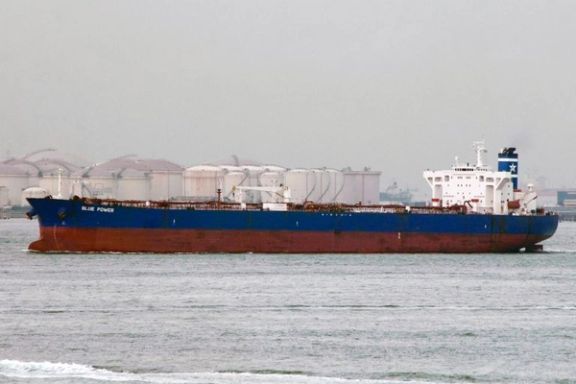
The US Treasury has issued sanctions on a new array of individuals and entities that help the Islamic Republic of Iran sell its petroleum and petrochemical products.
The Department of the Treasury’s Office of Foreign Assets Control (OFAC) said on Wednesday that the international network used a web of Persian Gulf-based front companies to facilitate the delivery and sale of hundreds of millions of dollars’ worth of Iranian goods from Iranian companies to East Asia.
Two UAE-based Iranian nationals, Morteza Rajabieslami and Mahdieh Sanchuli, two vessels (BS BRAVO and SUMMER 5) as well as 13 companies including Iran's Persian Gulf Star Oil Company, Jam Petrochemical Company, and several firms in UAE and Hong Kong have been added to OFAC's Specially Designated Nationals list.
“While the United States is committed to achieving an agreement with Iran that seeks a mutual return to compliance with the Joint Comprehensive Plan of Action, we will continue to use all our authorities to enforce sanctions on the sale of Iranian petroleum and petrochemicals,” said Under Secretary of the Treasury for Terrorism and Financial Intelligence Brian E. Nelson.
Secretary of State Antony Blinken also announced the new sanctions on the Iranian petroleum and petrochemical producers, transporters, and front companies in a tweet, saying that “Absent a commitment from Iran to return to the JCPOA, an outcome we continue to pursue, we will keep using our authorities to target Iran's exports of energy products.”
Some of the new sanctions were levied pursuant to Executive Order 13846, which would be lifted in case the US returns to the JCPOA, whose prospects are withering.