Economists Urge Iran's Government To Respect Protesters Or Face Hatred
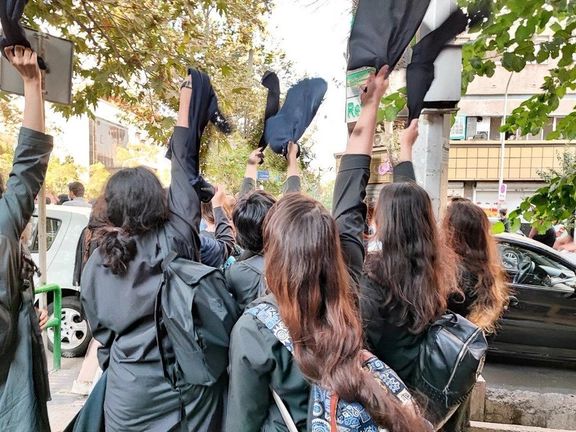
Five leading Iranian economists have suggested to the Iranian government to listen to protesters in the streets and prepare itself for fundamental changes.
Five leading Iranian economists have suggested to the Iranian government to listen to protesters in the streets and prepare itself for fundamental changes.
The economists warned the government to either listen to the protesters and pave the way for a peaceful transition from the current dangerous juncture, or wait for the people's anger to turn into hatred and violence as the driving force of social developments in Iran.
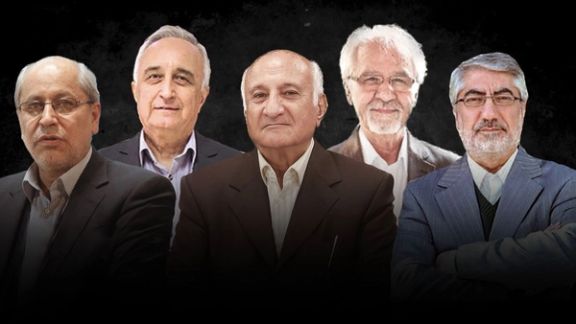
Massoud Nili, of Sharif University of Technology, Mohammad Tabibian the founder of Planning and Management Research Center, Mousa Ghaninejad of the Donya-ye Eqtesad Research Center, Mohammad Mehdi Behkish from Allameh Tabatabai University, and Hassan Dargahi, from Shahid Beheshti University in Tehran explained in a statement released in Tehran on October 7, "Why the Iranian society has been turned into an explosive store where recent sparkles can rapidly lead to an extensive blaze."
The economists observed that generational changes in the Iranian society have increased the number of young and educated Iranians, while the rise in the number of educated women has empowered the Iranian society in a way that it is not comparable to the years before the 1979 revolution.
"The Iranian society now is more urban, more educated and a main part of it is within an age range that increases the country's social energy. Meanwhile, the society's access to information [Internet] is a key factor that leads to to social developments. Individual Iranians can have access to any information they might need and at the same time, their academic level has increased their awareness in an amazing way," the statement maintained.
Based on this assessment, the economists addressed the government and said: "Running such a society requires respect for a set of rules including "taking care" of the society and "respecting its demands and tendencies." These rules, said the statement, are even more significant when we are talking about women.
"Meanwhile, with the rise in the educational and academic level, urbanization and access to information especially for women, there will be rising demands for more welfare, political participation, financial and political transparency and in a nutshell, for better governance. Nonetheless, during the past decade, particularly since 2017, what we have seen in the areas of welfare, political participation and financial and political transparency is that the government has moved in the wrong direction and against the demands of the people," the economists added.
They also highlighted the fact that the past four years have been the worst in economic terms, as low-income Iranians have been pushed more rapidly below the poverty line, while the government has used violence against protesters. "Mismanagement by the government has shifted the protests from anger to hatred," the economists said and warned that in this way, "even if decision-makers manage to suppress popular anger, this does not mean an end to protests. On the contrary, this will lead to a permanent tension between the society and the government in Iran."
The economists further warned that Iran is no longer capable to handle any new complications. They suggested that the only way out for the government is to accept cultural and social differences and diversity and seek to tackle the country's massive economic problems and foreign policy challenges. They also suggested that government should encourage and tolerate criticism in a bid to reduce tensions.


By early afternoon, demonstrations in Tehran and several other cities were noisy and large, in parallel with protests in many universities.
Demonstrations were taking place during the day in Esfahan, Shiraz, Tabriz, Rasht, Mashhad, Sanandaj, Kerman, Hamedan, and other cities.
By evening, there were reports and videos of unrest in several districts of the capital Tehran, but due to government disruption of Internet access it is hard to get a full picture of the situation in all cities.
Saturday's protests are an indication of a new strategy by activists in Iran. Instead of sporadic demonstrations every day, which is easier to control for the government, weekly protests appear to be more effective, showing government's inability to suppress protesters when crowds are larger and appear simultaneously in many cities and locations.
Street protests had become less frequent and more limited since October 2, prompting senior clerics and officials supporting the regime to claim that the uprising had been crushed. However, it was clear that civil disobedience and smaller protests were continuing amid continuing negative news about teenage protesters having been killed by security forces in September.
Haphazard government attempts to explain away the deaths as accidents or suicides were dismissed by a public extremely distrustful of the authorities who have severely restricted access to the Internet.
In the meantime, Western pressure is increasing on the Islamic Republic to respect international norms and the human and civil rights of its citizens.
While the United States imposed sanction on some officials responsible for cracking down on dissent, Canada on Friday imposed sanctions on the Revolutionary Guard that are the backbone of Tehran’s repressive machinery.
We provided live coverage of Saturday’s protests below by posting news and videos that were appearing on social media and received by our newsroom.
Our coverage lasted roughly 11 hours and ended at 00:10 Tehran time on Sunday.
----------------------------------------------------------------------------------------------------------------------------
----------------------------------------------------------------------------------------------------------------------------
Protest in Mehabad, a town in Western Iran, Saturday night.
----------------------------------------------------------------------------------------------------------------------------
----------------------------------------------------------------------------------------------------------------------------
A lone woman with hijab standing in the street with a sign bearing the name of Mahsa Amini that says, "No to the dictatorial Islamic Republic".

----------------------------------------------------------------------------------------------------------------------------
Police attacking houses that opened their doors to give refuge to protesters fleeing arrest in Karaj, a city 20 miles west of Tehran.
----------------------------------------------------------------------------------------------------------------------------
Hengaw Kurdish-Iranian human rights monitoring group reported around 20:00 local time of intense clashes between protesters and security forces in several Kurdish-majority cities in western Iran, including Saqqez, the hometown of Mahsa Amini, the woman who was killed in police custody in September.
----------------------------------------------------------------------------------------------------------------------------
Protesters are seen around 20:00 local time in Tehran chanting "Death to the dictator".
----------------------------------------------------------------------------------------------------------------------------
A video from earlier Saturday shows security forces in a Tehran street with one armed man firing a shotgun toward protesters.
----------------------------------------------------------------------------------------------------------------------------
A new video from the Saadat Abad district of Tehran shows men and women chanting "Women, Life, Liberty" in evening hours."
-----------------------------------------------------------------------------------------------------------------------------
A video has been received showing protests in the central city of Arak.
----------------------------------------------------------------------------------------------------------------------------
President Ebrahim Raisi held a meeting with the speaker of parliament and the head of Judiciary Saturday evening to discuss the ongoing unrest.

----------------------------------------------------------------------------------------------------------------------------
People blocking the roads in the western city of Sanandaj where security forces killed a driver earlier in the day.
-----------------------------------------------------------------------------------------------------------------------------
Around 19:00 local time. Demonstrations in the working class district of Nazi Abad in Tehran, reported earlier, appears to have become larger without any visible reaction from security forces.
Another video from Nazi Abad shows protesters milling around.
----------------------------------------------------------------------------------------------------------------------------
Another protest in the western part of Tehran where is big fire is burning in the street. It is hard to say if protesters have lit a fire to block the street or it is a police car ablaze.
----------------------------------------------------------------------------------------------------------------------------
Early evening in Tehran (around noon Washington DC time). Protest in Shariati Avenue, a main boulevard in Tehran.
----------------------------------------------------------------------------------------------------------------------------
Early evening in Tehran. Protest in the eastern Tehran Pars district. The tweet says the crowd is getting larger by the minute.
----------------------------------------------------------------------------------------------------------------------------
Saeed Hafezi, an Iranian journalist currently residing in Germany, has tweeted that a workers' strike has spread in the Abadan refinery near the Persian Gulf. The director of the refinery has sent a report on the strike to government officials. He added that since yesterday truck drivers at the refinery refused to work and today the strike has expanded. Oil workers are key to Iran's strategic energy sector that provides its main export and revenue.
----------------------------------------------------------------------------------------------------------------------------
It is now early evening in Tehran and a huge column of protesters are seen in Nazi Abad, a working calls district in the south of the capital.
At 18:00 local time, again in Nazi Abad.
----------------------------------------------------------------------------------------------------------------------------
At Vosughi Sqaure in Tehran protesters chant "Mojtaba, you will die before you see yourself as leader". Mojtaba is Supreme Leader Ali Khamenei's son, said to be preparing to succeed his 83-year-old father when he dies.
----------------------------------------------------------------------------------------------------------------------------
An iconic scene of security forces fleeing protesters in the western city of Sanandaj with a Kurdish population.
----------------------------------------------------------------------------------------------------------------------------
ALERT - A YOUNG WOMAN SHOT BY SECURITY FORCES IN MASHHAD. VIDEO CONTAINS SENSITIVE IMAGES.
----------------------------------------------------------------------------------------------------------------------------
A group of protesters marching in the northern city of Rasht and passing cars blow their horns to show support.
----------------------------------------------------------------------------------------------------------------------------
Protests in the western city of Hamedan and at its university on Saturday. People chant, "Women, Life Liberty".
-----------------------------------------------------------------------------------------------------------------------------
Security forces in a Tehran street attacking and beating up people, while some are aiming their guns at them.
----------------------------------------------------------------------------------------------------------------------------
Reports from Tehran say all the traditional Bazaar has shut down and merchants and retail workers have joined protests. In the video below the voice says people have taken over downtown streets near a subway station.
A smaller bazaar in northern Tehran was also on strike Saturday - Tajrish
----------------------------------------------------------------------------------------------------------------------------
A member of security forces shot and killed a male driver in Sanandaj, western Iran, because he was honking in his car in support of the protests. The incident has outraged Iranians on social media.
WARNING: DISTURBING IMAGES
---------------------------------------------------------------------------------------------------------------------------
A large crowd of students in Tehran's Polytechnic University protested on campus Saturday.
---------------------------------------------------------------------------------------------------------------------------
One of several protests in the capital Tehran. This one is in the Narmak district. The leading role of women can be seen among the chanting crowd.
---------------------------------------------------------------------------------------------------------------------------
Protesters in Esfahan (Isfahan) central Iran chanting "Death to the dictator".
---------------------------------------------------------------------------------------------------------------------------
Protests in Shiraz, southern Iran, early Saturday afternoon.
Security forces armed with shotguns seen trying to push protesters back.
Another scene of protests from Shiraz. People are chanting "Freedom, freedom"
----------------------------------------------------------------------------------------------------------------------------
By early afternoon, protests began in Tehran's Keshavarz Blvd, where the first demonstrations took place on September 19, after the killing of Mahsa Amini in the custody of Iran's notorious 'morality' police.
---------------------------------------------------------------------------------------------------------------------------
A large protest in Mashhad's Azad University, where students were chanting "Women, Life, Liberty". Mashhad is an important religious center.
----------------------------------------------------------------------------------------------------------------------------
Hundreds of students protesting at women's Al Zahra University in Tehran as President Ebrahim Raisi visited the campus. They chant "Raisi, get lost".
----------------------------------------------------------------------------------------------------------------------------
Police use tear gas near Sharif University in Tehran, where student protesters last week were surrounded and many arrested after beatings by plainclothes agents.
Gunshots are heard around Sharif University around noon time in Tehran.
---------------------------------------------------------------------------------------------------------------------------
Protest in Tehran's technical University Saturday morning.
----------------------------------------------------------------------------------------------------------------------------
A sizeable crowd protesting in Mashhad, Iran's second largest city and an important religious city controlled by a firebrand ayatollah, Ahmad Alamolhoda, who is President Ebrahim Raisi's father-in-law.
----------------------------------------------------------------------------------------------------------------------------
Security forces were heavily present in all parts of the capital Tehran since Saturday morning, as one citizen reported that they have brought buses for possibly taking away protesters, but as of mid-day no large demonstrations were reported.
----------------------------------------------------------------------------------------------------------------------------
Friday night, October 7, some individuals set fire to a large propaganda banner depicting former IRGC Quds Force commander Qasem Soleimani, who was killed in a targeted US air strike in Iraq in January 2020.
----------------------------------------------------------------------------------------------------------------------------
High school student in the western Kurdish city of Sanandaj demonstrating as they chant, "Women, Life Freedom".
There was also a general strike in Sanandaj with all shops closed as seen in this video.
----------------------------------------------------------------------------------------------------------------------------
Protest in the central city of Kerman at mid-day on Saturday, as crowds chant, "Death to the dictator".
----------------------------------------------------------------------------------------------------------------------------