Lebanon, Israel Finally Agree On US-Drafted Maritime Gas Deal
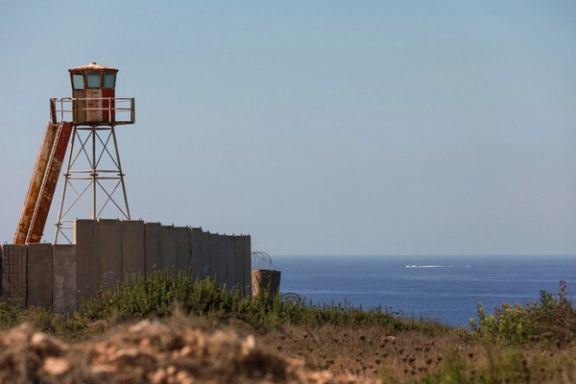
Lebanon and Israel have finally agreed on a US-brokered proposal over a disputed maritime border in a rare cooperative move since 1948 when Israel was established.

Lebanon and Israel have finally agreed on a US-brokered proposal over a disputed maritime border in a rare cooperative move since 1948 when Israel was established.
Israeli Prime Minister Yair Lapid said on Tuesday that "This is a historic achievement that will strengthen Israel's security, inject billions into Israel's economy, and ensure the stability of our northern border," referring to the significant compromise that would open the way for offshore energy exploration and easing a source of tensions between states with a history of war and hostility.
In Lebanon, President Michel Aoun said the terms of the final US proposal were satisfactory and he hoped the deal would be announced as soon as possible.
The agreement is meant to resolve a territorial dispute in the eastern Mediterranean Sea in an area where Lebanon aims to explore for natural gas. Israel is already producing natural gas at fields nearby. The deal establishes a mechanism for both countries to get royalties from TotalEnergies' exploration of the offshore gas field that straddles the boundary.
Last week, Lapid instructed negotiators to turn down Lebanon’s requested modifications, saying that any further negotiations would cease permanently if Lebanon's Iran-backed Hezbollah movement threatens or attacks Israel's Karish gas rig.
Earlier in October, Lapid said that as per the arrangement gas would be produced by a company under a Lebanese license in the disputed Qana prospect, with Israel receiving a share of revenues.
“Such a field would weaken Lebanese dependency on Iran, restrain Hezbollah and bring regional stability," he said.

It may be too early to estimate the economic impact of protests on Iran’s economy, but early signs show serious disruption in the retail ecommerce sector.
The government has been severely restricting Internet access in general and access to popular social media platforms in particular that play a key role in ecommerce. The government is extremely nervous that people use the Internet and social media to share news and images about protests, possibly motivating a larger segment of the population to join demonstrations. It also does not like videos of the popular unrest to reach abroad.
For more than three weeks, authorities have been blocking access to the Internet during certain hours of the day and slowing down connections to make uploading videos more difficult. But what impacts ecommerce is the decision to block WhatsApp and Instagram altogether.
Specially Instagram is an extremely popular platform for individuals, small family firms and larger companies with employees to offer goods and services online. Some estimates put the number of all such enterprises at close to one million units in Iran, however businesses with 10-200 employees is a small fraction of this number, although no reliable figures exists.
The Internet disruption and the ban on Instagram have immediately stopped or slowed down sales by hundreds of thousands of large and small businesses.
One report from an online business association October 8 said that ecommerce businesses with 10 and more employees are losing anywhere from $1,500 to nearly $20,000 a day. These are substantial figures in local currency.

Smaller businesses run by individuals and families would be losing much less but the impact of their loss would be detrimental to their livelihoods.
A news website said that in many cases ecommerce businesses have lost all income, but most have seen a 70-percent decrease in orders and in the best cases merchants are experiencing 50-percent losses.
An unofficial poll among 104 retailers (10-200 employees) showed that 53 percent are losing $1,500 a day in sales, while 21 percent lose up to $3,000, 18 percent three to fifteen thousand dollars and the top 8 percent lose more. The top tier are businesses with more than 200 employees.
This means that ecommerce total daily losses could run into millions of dollars a day considering the hundreds of thousands of small family businesses that each might be losing a few tens of dollars a day. Postal deliveries have also decreased by more than 25 percent.
This does not include the general damage to the economy by Internet disruptions. Some reports say that government and companies have resorted to telephone and fax to communicate.
There is no total estimate of daily ecommerce volume in Iran, but the sheer number of social media accounts and webpages running their businesses online provides a sense of the economic impact from the Internet shutdown.
It is not clear if the government intends to maintain the ban on Instagram and WhastApp if the protests end. The hardliners who have been in control of both the government and parliament for more than a year were planning to further restrict access to the Internet even without the current protests. Now, some appear to be arguing that this is the time to keep foreign apps banned forever, to protect the religious government’s ideological and political restrictions on citizens and prevent Western cultural influences.

Lebanon's Iran-backed group Hezbollah is using all its propaganda tools to show support for the Islamic Republic and misrepresent the current nationwide protests in Iran.
Trying to show the realities in Iran differently and discredit the protests, Hezbollah organized rallies in support of the regime in Tehran with students from its private educational system – the Mahdi schools.
Lebanese activists have published videos of children from Al-Mahdi schools carrying photos of Supreme Leader Ali Khamenei and Qasem Soleimani, the slain commander of Quds force, the extraterritorial wing of Iran’s Revolutionary Guard.
Hezbollah held ceremonies at the schools in which children were used to show "obedience to religious authority" and “condemning the Western conspiracy” against the Islamic Republic and its "achievements," the Lebanese website al-Modon reported.
Mahdi schools are a cornerstone of Hezbollah’s “Society of Resistance,” featuring a standard modern technology-heavy curriculum mixed with its Islamic doctrine.
Iran has been engulfed in widespread antigovernment protests since September 19, after Mahsa Amini, a 22-year-old woman was killed in the custody of hijab police.
Oslo-based organization Iran Human Rights said on Saturday that at least 185 people have been killed in the uprising ignited by the death in custody of 22-year-old Mahsa Amini. The NGO added that about 20 of the killed were minors.
The protests first erupted in Mahsa Amini’s hometown Saqqez and capital Tehran and soon spread to all over the country and garnered support from Iranian expatriate communities around the world as well as foreign governments and officials.

While outraging United States President Joe Biden, the Opec+ decision to cut oil production by 2 million barrels a day has mixed implications for Iran.
Market analyst Oilprice.com wrote Friday in its ‘Oil and Energy Insider’ bulletin that the decision had “placed the Biden Administration between a rock and a hard place, with oil prices climbing ahead of the mid-terms [November 8 US Congressional elections] and very few viable options to counter it.”
Biden’s press secretary Karine Jean-Pierre accused Opec+ of “aligning with Russia.” Biden himself said Wednesday the government would release an additional 10 million barrels in November from US strategic reserves, although the Strategic Petroleum Reserve (SPR) is already at its lowest level, 416 million barrels, since 1984.
The Wall Street Journal piled on criticism with an editorial Wednesday citing earlier lobbying efforts by senior Biden officials to dissuade the Saudis from production cuts. The Journal noted that the prospect of higher gasoline prices before the November 8 Congressional election had “sent the White House into overdrive.” The paper concluded that the Saudis “don’t seem to think risking relations with the US is all that big a deal” and had put “friendly relations with Russia above their ‘reputation’ in the US.”
Biden’s Democrats had been more optimistic, especially as oil prices eased in the summer, over their prospects for the November elections. But even before the Opec+ decision, there were encouraging signs for Republicans, including so-called “election deniers” close to Donald Trump sharing the former president’s unsubstantiated claims that the 2020 presidential election was rigged.
A shift away from the Democrats would likely increase voices in Congress critical of Biden’s efforts to revive the 2015 Iran nuclear deal, the JCPOA (Joint Comprehensive Plan of Action). At the same time, reviving the deal, and lifting US ‘maximum pressure’ sanctions targeting Tehran’s crude exports, would bear down on oil prices with perhaps an extra 1.5 million barrels a day (b/d) of Iranian oil reaching world markets.
$100 a barrel?
In the meantime, more expensive oil boosts Iranian revenues, albeit on the lower prices Tehran receives from sales of around 750,000-900,000 b/d, mainly to China exported in the face of tightening US sanctions.
In Tehran, Arman newspaper Saturday played down expectations of higher prices, although its headline noted that Opec+ aimed at an oil price of $100 a barrel. The $100 level is built into the Saudi strategic plan, Vision 2030. With the benchmark Brent crude at around $98 a barrel Friday, analysts are unsure how upward price pressure from lower production will balance downward pressure of recession fears.
Biden’s July trip to Israel and Saudi Arabia was widely portrayed as creating a new security alliance directed largely at Iran and extending the ‘normalization agreements’ made with Israel by the United Arab Emirates and Bahrain. But both Saudi Arabia and Israel have refused to follow the US line over Russia, with Riyadh coordinating with Moscow over oil production and the Israelis refusing to supply Ukraine with weapons given their own good relations with Moscow.
Washington broadsheet opinion
The Wall Street Journal, although a staunch supporter of close US ties with the Saudis and critical of the JCPOA, mocked Biden in its Wednesday editorial. “Mr Biden called Saudi Arabia a ‘pariah’ during the 2020 campaign, delayed a planned arms shipment, and continues to pursue a nuclear deal with Iran that would give the Saudis’ main enemy hundreds of billions of dollars to promote terrorism and other trouble. The President had to go hat in hand to the Saudi Crown Prince in July to ask for more oil production, and all he got was a lousy fist bump.”
The Washington Post piled in Friday, with an editorial arguing Biden was “begging foreign dictators to increase production” not only with the Saudis but by “preparing to lift sanctions on Venezuela’s narco-socialist dictatorship.” The Post said the US 264 billion barrels of untapped oil should be “unleashed” by ending Biden’s “war on fossil fuels at home.” Over half these US reserves require fracking, which is banned in much of Europe due to its heavy contribution to global warming, use of toxic chemicals, and seismic unpredictability.

Israel rejected Thursday Lebanese changes to a draft US-brokered proposal demarcating a maritime border with Lebanon, putting the fate of a deal for joint gas production in limbo.
Throwing into doubt years of diplomatic efforts to enable both enemy countries to extract gas in or around a disputed Mediterranean prospect, Prime Minister Yair Lapid instructed negotiators to turn down Lebanon’s requested modifications, according to a senior Israeli official.
Calling Beirut’s new demands “significant,” the official added that any further negotiations would cease permanently if Lebanon's Iran-backed Hezbollah movement threatens or attacks Israel's Karish gas rig, without providing further details for the volte-face.
If Lebanon-based Hezbollah tries to strike the Karish offshore gas field or threaten Israel, the talks would “end permanently, and [the terror group’s leader] Hassan Nasrallah will have to explain to Lebanese civilians why they don’t have gas rigs or an economic future,” the official noted.
The official said that Lapid emphasized that he would not compromise on Israel’s economic and security interests even if it meant that there would be no deal in the near term.
The statement cast doubt on the viability of a deal that, only days ago, Israeli officials were speaking of it as a foregone conclusion.
On Saturday, the Biden administration’s energy envoy Amos Hochstein presented what was seen as the final proposal aimed at addressing competing claims over offshore gas fields in the Mediterranean Sea.
On Thursday, Lebanon’s caretaker prime minister said the deal with Israel would avert a war in the Middle East. “We are avoiding a definite war in the region,” Najib Mikati said.

A magnitude 5.7 earthquake struck northwestern Iran on Wednesday, and medical authorities in the area reported that at least 276 people had been injured.
The quake's epicentre was close to the town of Khoy in the province of West Azerbaijan. Khoy Medical Emergency Service was quoted as saying that "276 people have been injured so far, including 68 who were hospitalised for minor fractures."
The quake was about 11.6 km (7.2 miles) from Khowy and at a depth of 10 km (6.21 miles), the United States Geological Survey said.
The quake hit at 3:51 local time and was followed by several aftershocks according to Iran seismological center. A local official sadi that the the aftershocks have prevented people from returning to their homes.
The GFZ German Research Centre for Geosciences (GFZ) earlier said that the quake was magnitude 5.5 and close to the Armenia-Azerbaijan-Iran border region.