US Rejects Iran’s Claim Of Seizing Its Unmanned Naval Vessels
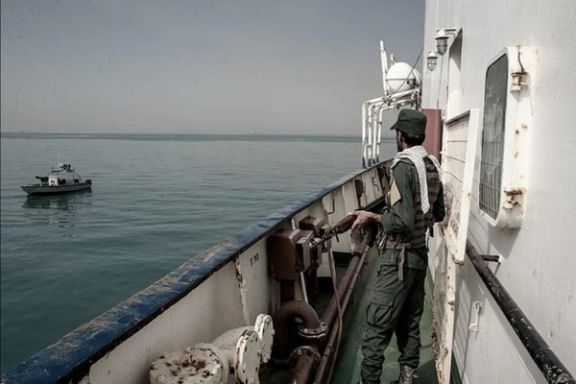
The United States has rejected reports by Iranian state media that Iran has seized two US Navy unmanned surface vessels.

The United States has rejected reports by Iranian state media that Iran has seized two US Navy unmanned surface vessels.
The US 5th Fleet said on Friday that the reports are not true whatsoever, adding that the fleet continues to operate its systems across the Middle East consistent with international law and without disruption.
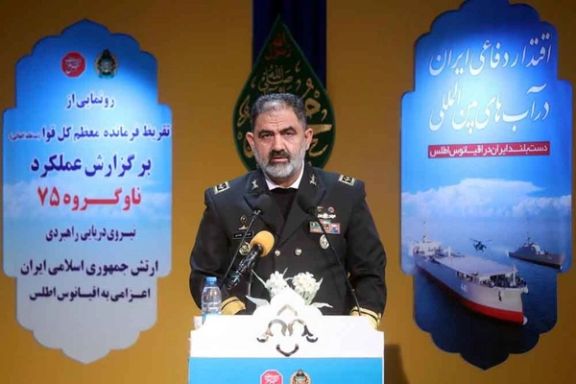
Earlier in the day, the Iranian Army's Navy commander Shahram Irani had claimed that the Islamic Republic's Navy had seized two American sea drones. He made the remarks announcing the homecoming of the 84th IRIN Information and Operation Naval Fleet at the end of their 86-day mission in free and international waters.
The development came two days after the US military made an unusual disclosure, revealing the location of its submerged nuclear-powered ballistic missile submarines in the Arabian Sea near Iran’s waters.
The US Central Command (CENTCOM) released photos showing its commander General Michael “Erik” Kurilla onboard West Virginia. It has been described as a rare decision, as the US military seldom, if ever, acknowledges where its ballistic missile subs are operating, particularly when they are stationed near an adversary's shores. Kurilla's visit may be seen as sending a message to US adversaries in the region, including the Islamic Republic, of Washington's capabilities, including submarines that can carry up to 20 ballistic missiles with multiple warheads.
Late August, the US Navy prevented an IRGC navy support ship from capturing an unmanned vessel operated by the US 5th Fleet in the Persian Gulf.

At least 10 Iranians have been killed in attacks carried out by Ukraine against Russian-held positions while Tehran insists it is not providing Moscow with drones or military advisory support.
A Ukrainian official told Israeli Public Broadcasting Corporation, Kan on Friday that the deaths occurred in two separate strikes, following recent reports that Iranian trainers were in Crimea to help Russians deploy the killer drones. The source did not provide any further details or the identities of the Iranians.
Also on Friday, Ukrainian Air force spokesman Yuriy Ihnat said the country’s military is taking down 85 percent of Iranian-made drones sent by Russia but needs its allies' support to prevent Tehran selling Moscow ballistic missiles. He said their air defense systems were proving increasingly effective against the drones but less effective against missiles.
Iranian Foreign Ministry issued a statement on Friday, calling on its nationals to leave Ukraine and scrap their travel plans, saying, "Given the intensification of military conflicts and insecurity in Ukraine, all Iranian nationals are strongly recommended to refrain from traveling to this country.”
Rejecting reports and evidence of supplying Moscow with drones and missiles as “baseless,” Iranian Foreign Minister Hossein Amir-Abdollahian said Thursday, “We have defense cooperation with Russia but sending weapons and drones against Ukraine is not our policy."
Britain, France and Germany on Friday called for a UN probe about the use of Iranian drones, allegedly violating the UN Security Council Resolution (UNSCR) 2231 endorsing the 2015 Iran nuclear deal.
The European Union and the United Kingdom Thursday sanctioned three Iranian military commanders and a defense company over allegedly supplying drones to Russia.

As the protests in Iran enters its sixth week with no sign of abating, Iranian military brass continued to blame the protests on Western enemies.
Commander-in-Chief of Iran’s traditional Army Abdolrahim Mousavi said on Friday that the United States and Israel seek to sow discord among different generations and ethnic groups.
“Seduction of the youth and discord between generations, ethnic groups, guilds and unions, political parties, classes of society, religions and sects, are the plots designed by the think tanks and research centers of the American and Zionist regime's intelligence apparatuses,” he said.
People from all the groups he mentioned have been holding protests or strikes against the clerical regime since 2017. A stronger and more enduring round of protests began in mid-September when Iran’s hijab police killed a 22-year-old woman. Mostly young demonstrators demand an end to the Islamic Republic and a democratic, secular government.
Ali Fadavi, the second highest commander in the Revolutionary Guard, said on Friday that the country’s ‘enemies’ that used to focus on ‘hard war’ against the Islamic Republic in the last decades have now adopted a hybrid approach, combined with soft power. He said popular art can be used to promote the Islamic Republic revolutionary ideology.
IRGC’s Aerospace Force Commander Amir Ali Hajizadeh also said on Friday, “We need to do creative and innovative works in the field of culture,” adding that “We have not done anything serious to celebrate and create a fresh and cheerful environment.”

The FBI has warned that the Iranian cyber group Emennet Pasargad is conducting hack-and-leak operations involving a combination of hacking and theft of data.
In a statement released on Thursday, the US agency said that since at least 2020 the group targeted entities primarily in Israel with cyber-enabled information operations that included an initial intrusion, theft and subsequent leak of data followed by amplification through social media and online forums, and in some cases the deployment of destructive encryption malware.
The FBI added that the Iranian group used false-flag campaigns under the guise of multiple personas like hacktivist or cyber-criminal groups. The company, previously known as Eeleyanet Gostar and Net Peygard Samavat, has regularly rebranded to evade US sanctions
The FBI added that the group’s techniques may be used to target US entities, as was the case during their cyber-enabled information operation to attack the 2020 US Presidential election. Saying that the FBI has identified a destructive cyberattack against a US organization, it underlined that the group remains a threat to the US.
On Wednesday, October 19, the US State Department announced a $10-million reward for information about the group’s operations or its members.
Back in February, the US offered up to $10 million for information leading to the arrest of two of the group's members for trying to influence and interfere with the 2020 presidential election.
In November 2021, the Treasury Department sanctioned six Iranian officials as well as the company for their involvement in the planned cyberattack.

The US military made an unusual disclosure Wednesday, revealing the location of its submerged nuclear-powered ballistic missile submarines in the Arabian Sea near Iran’s waters.
In a move likely to make waves across the region, the US Central Command (CENTCOM) released photos showing its commander General Michael “Erik” Kurilla onboard the west Virginia. It has been described as a rare decision, as the US military seldom, if ever, acknowledges where its ballistic missile subs are operating, particularly when they are stationed near an adversary's shores.
Praising the submarine and its crew, Kurilla called the vessel “the crown jewel of the nuclear triad,” and said that “The West Virginia demonstrates the flexibility, survivability, readiness, and capability of USCENTCOM and USSTRATCOM forces at sea.”

Kurilla's visit may be seen as sending a message to US adversaries in the region, including the Islamic Republic, of Washington's capabilities, including submarines that can carry up to 20 ballistic missiles with multiple warheads.
In June, US officials said attacks by Iranian proxies against bases housing American military personnel in Iraq and Syria were increasing. In August, the US military carried out retaliatory air strikes in Syria against facilities used by groups affiliated with Iran's Revolutionary Guards Corps (IRGC).
Late August, the US Navy prevented an IRGC navy support ship from capturing an unmanned vessel operated by the US 5th Fleet in the Persian Gulf.

Iran’s Revolutionary Guard in a provocative move has launched a pontoon bridge on the northwesternmost river of Aras near the border with Azerbaijan Republic.
A video published by the IRGC-affiliated website Tasnim shows on Wednesday the ground forces set up pontoon bridges on the river for the armored vehicles and tanks to pass.
It has also been said in the video that installing these bridges have a message and the target audience will receive and understand.
The IRGC special forces also conducted heliborne operations with Mil Mi-17 helicopters on the third day of their wargames in the Aras region.
On the sidelines of the maneuvers Commander of the IRGC Hossein Salami threatened the neighbors that “Iran’s fraternity policy continues as long as there is no plot hatched by the enemies.”
“We have interests in this region, so if something happens in any corner of it, our interests will be jeopardized, then we won’t remain neutral and will defend our interests,” said Salami.
In the meantime, the IRGC has also published a tweet in Arabic saying, “When we split the waters and rescue you!”
Some social media activists have interpreted this tweet as a threat aimed at Azerbaijan Republic saying that since its establishment in 1979 the Islamic Republic has always tried to create crises outside its borders to make up for its inability to deal with domestic problems.
“That’s why the Islamic regime launched a war with Iraq to crack down on its opposition inside Iran back in the 1980’s,” says a video tweeted by a user.
In mid-September, Iran warned that it would not tolerate any seizure of territory from Armenia by Azerbaijan after military clashes broke out between its two northern neighbors.
Azerbaijani troops entered Armenia’s southern region in a move that seemed aimed at seizing territory and cutting off Armenia from Iran. Tehran has warned that it will not tolerate losing its land connection with Yerevan.
Armenia accuses Azerbaijan of attacking its towns to avoid negotiating over the status of the mainly Armenian-populated enclave of Nagorno-Karabakh inside Azerbaijan.
Tehran in the past has also expressed alarm at alleged Israeli military presence in Azerbaijan.
The provocative launch of pontoon bridge and Iran’s message to its neighbors come at a time that the clerical regime has received the strong message from protesters who now shout, “Death to Khamenei” and “Death to Dictator” every day and night to topple the regime.