Hacktivists Release Iran Nuclear Documents After Deadline

The hacktivist group Black Reward published a throve of documents from Iran’s nuclear program Saturday after a 24-hour deadline it had given the government expired.

The hacktivist group Black Reward published a throve of documents from Iran’s nuclear program Saturday after a 24-hour deadline it had given the government expired.
Black Reward earlier had warned that it will publish the data it has obtained within 24 hours unless the Islamic Republic releases all political prisoners and detained protesters.
“The published documents contain the contracts of Iran Atomic Energy Production and Development Company with domestic and foreign partners, management and operational schedules of Bushehr power plant, identity details and paystub of engineers and employees of the company as well as passports and visas of Iranian and Russian specialists of Bushehr power plant,” stated the group on social media.
The hacktivists have also mentioned that “unlike Westerners, we do not flirt with criminal clerics, and if we promise something, we fulfil it 100%.”
As the published documents are reviewed and analyzed, we will provide an overview in the coming days.
They further called on experts in related fields and the media to publish investigative reports on these documents.
Earlier in the week, the group also announced that it hacked the emails of managers and employees of Press TV, the government’s international English news channel.

While US officials have said that Iran is not ready to revive the 2015 nuclear deal, Tehran says these comments are made to incite more antigovernment protests.
Hossein Amir-Abdullahian claimed that “such statements have domestic use and are aimed at provoking some of their agents in Iran.”
He claimed on Saturday that “not only reaching a deal is a priority for the Americans, but they are also in a rush for it.”
His allegations come as US State Department spokesperson, Ned Price, on Wednesday said reviving the 2015 nuclear deal is “not our focus right now.”
“It is very clear, and the Iranians have made very clear that this is not a deal that they have been prepared to make. The deal certainly does not appear imminent,” Price told a briefing.
“Nothing we’ve heard in recent weeks suggests they have changed their position. And so right now our focus is on the remarkable bravery and courage that the Iranian people are exhibiting through their peaceful demonstrations,” he stated.
“Our focus right now is on shining a spotlight on what they’re doing and supporting them in the ways we can,” noted Price, referring to the anti-regime protests across Iran sparked after the death of 22-year-old girl Mahsa Amini by morality police in mid-September.
However, Amir-Abdullahian alleged that Tehran and Washington have exchanged some messages “three days ago” regarding the nuclear agreement.
He said these remarks by US officials are meant to give them an upper hand in the talks through “psychological and political” pressure.

US officials have reiterated their support for the ongoing protests in Iran with Special Envoy Robert Malley saying that the talks to revive the nuclear deal are no longer on the agenda.
“This is grass roots, this is bottom up,” Antony Blinken, the Secretary of State said in remarks tweeted by the State Department Tuesday, referring to protests that began mid-September. “This is a reflection of huge frustration and anger towards the direction of their country and their leadership. This is not made in the USA, it’s not made anywhere else…”
Malley told CNN on Monday that "Right now the talks on revival of JCPOA are not on the US agenda; the focus is on what's happening in Iran as the talks are stalled," adding that “Iran has taken a position in those talks for the past two months, which is simply inconsistent with a return to the deal.”
However, he insisted that “diplomacy is the way” to prevent Iran from acquiring a nuclear weapon, noting that “We will see whether this is a government that is interested in reaching a deal.”
Malley said Iran’s leaders should “stop pointing the finger at external actors who have nothing to do with what’s happening in their country and listen to their people…” President Ebrahim Raisi Sunday said the US was “inciting chaos,” while Iranian politicians have generally denounced foreign-based media and social-media operations.
Malley went on to say that in a struggle of “peaceful protestors” against “a government using brutal repression” there was “no doubt” where the US stood. Malley denied that the US sought “regime change [in Iran] instigated in the US.” He said Washington supported human rights in Iran “just as we support human rights of citizens across the globe.”
Malley also defended the approach of President Joe Biden in seeking to revive the 2015 Iran nuclear agreement, the JCPOA (Joint Comprehensive Plan of Action), arguing the talks were “stalled” because Tehran was “making demands that have nothing to do with the JCPOA.”

France said Thursday that any sale of Iranian drones to Russia is a violation of the UN Security Council resolution that endorsed the 2015 nuclear accord, the JCPOA.
The French foreign ministry announced that it was coordinating with EU partners on how to respond, while earlier the Ukrainian officials said three Iranian-made drones were used by Russia to attack the small town of Makariv overnight targeting critical infrastructure.
"There was an overnight drone bombardment by invaders on the Makariv community," Andriy Nebytov, head of the Kyiv region police said. Russia had used more than 20 Iranian drones in its large-scale bombardment of infrastructure and cities on October 10, Ukraine said.
According to the United States, Iran has supplied Shahed 136 suicide drones to Russia and Ukraine has reported swarms of these UAVs launched against civilian targets. The drones have a low speed of 120-150km per hour and many have been shot down by Ukrainian air defenses and warplanes.
On Tuesday, October 11, President of Ukraine Volodymyr Zelensky said Russia has ordered 2,400 Iranian-made Shahed drones from the Islamic Republic.
Diplomatic efforts to reach a solution to the Iranian nuclear issue culminated in the Joint Comprehensive Plan of Action (JCPOA) on 14 July 2015 by China, France, Germany, Russia, the United Kingdom, the United States, the High Representative of the European Union (the E3/EU+3) and the Islamic Republic of Iran. On 20 July 2015, the Security Council unanimously adopted resolution 2231 endorsing the JCPOA.

The US State Department said Wednesday that the Iran nuclear deal is “not our focus right now” amid popular protests, but it has done little to help Iranians.
The reality was apparent during department spokesperson Ned Price’s Wednesday briefing, where reporters kept pressing him over the lack of progress in helping Iranians to get access to the Internet that the government blocks during protests to stifle the free flow of information.
As nationwide protests began Wednesday in Iran, the government shut down most Internet access in major cities. Washington reporters were aware of that and pressed Mr. Price for answers.
The fact is that there is very little the Administration or US technology companies can do to help connect Iranians to the Internet, at least in the near future. There are two major reasons for this.
First, gateways to Internet traffic are controlled by the government and if it decides to shut off mobile data connection or even home landlines during protests, there is hardly anything foreign entities can do to help.
Second, even if the Administration removes all impediments for US companies to sell software and hardware to Iranians, it would be an extremely difficult task to bypass Iranian government controls.
The Islamic Republic is an authoritarian regime, with 80 percent of the economy controlled by the government and the concept of business freedom is almost non-existent, except at some retail level. The government tightly controls all imports. That would block any attempt to export hardware to Iran.
In terms of software, most Iranians do not have the resources or the banking means to purchase a license from a foreign source or download software they need to pay for.
Free software can be made accessible by US or other international companies, but if the regime really wants to make it hard, it will designate procurement of such software a criminal offense and try to block access.
Apart from these difficulties, providing access to the Internet is a relatively small issue compared with the main problem, which is the use of brutal force by the government against its people.
The US has imposed sanctions on a few individuals since the protests began, but beyond that has not acted to penalize the clerical regime, even as its leader Ali Khamenei on Wednesday called for more repression against protests.
The statement by Price that the Biden Administration is not focused on reviving the Obama-era nuclear deal, which would provide tens of billions of dollars to the repressive government, was a signal well received by Iranians on social media. But many argue that the US should impose more sanctions and enforce existing ones more rigorously to pressure Tehran.
A report by The Sun on October 12 quoted several Washington sources as saying that “there is a growing rift between officials at the treasury department, who are urging Mr. Biden to intensify sanctions in support of protesters, and Mr. Malley, the special envoy who prizes a renewal of the 2015 nuclear deal above all.”
An Iranian American community organization, NUFDI, wrote to Secretary of State Antony Blinken on October 11, asking for a major review of US Iran policy and personnel changes at the State Department, namely replacing Mr. Malley as US envoy. The group emphasized that the Administration needs an envoy to the Iranian people, not a diplomat focused on reviving the nuclear deal.
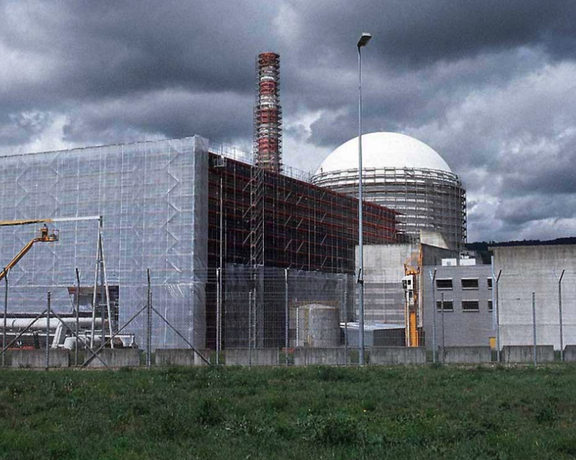
With talks over reviving the 2015 nuclear agreement in abeyance, Iran is continuing to expand uranium enrichment using relatively advanced machines.
A confidential report by the International Atomic Energy Agency (IAEA) to member states, seen by Reuters Monday, confirmed Tehran had brought onstream three clusters of IR-6 centrifuges at the underground Natanz enrichment plant. The 2015 agreement, the JCPOA (Joint Comprehensive Plan of Action), allowed Iran to use only IR-1 centrifuges, but Tehran began to exceed the agreement’s terms in 2019, the year after the United States left the JCPOA and imposed ‘maximum pressure’ sanctions.
The IAEA reported in August that Iran was carrying through plans announced in June to use three cascades of IR-6s at Natanz with just one at that time operational. These cascades are enriching to 5 percent, well short of Iran’s highest enrichment level of 60 percent, but using more advanced centrifuges enhances Tehran’s capacity, making it easier and quicker to achieve 90 percent ‘weapons grade’ enrichment – an aim Iran denies.
The Iranian parliament in December 2020 – following the killing of scientist Mohsen Fakhrizadeh widely attributed to Israel, which opposes the JCPOA – passed legislation it had drafted earlier despite objections by then President Hassan Rouhani requiring the installation of 1,000 IR-6 centrifuges by the end of 2021, a target the Atomic Energy Organization of Iran (AEOI) failed to meet.
By May, there were 538 IR-6 centrifuges in two cascades at Fordow and one cascade at the above-ground Natanz pilot plant. The AEOI announced plans in June to install two more IR-6 cascades underground at Natanz, in addition to one already planned there, which appeared to bring the AEOI in line with the 2020 law.
While IR-6 centrifuges have been used at Fordow and at Natanz above ground to enrich to 60 percent, some specialists have suggested Iran faces technical difficulties with more advanced machines with progress also hampered by the June 2021 attack on the manufacturing plant at Karaj, also attributed to Israel.
Biden anxiety
Talks aimed at restoring the JCPOA have appeared frozen since April, when Iran and the US exchanged several communiques through European Union mediators. Some analysts attribute the delay to the US November 8 Congressional elections with President Joe Biden anxious not to add Republican criticism of Iran policy to the unpopularity of high gasoline prices.
While the three European JCPOA signatories – France, Germany and the United Kingdom – have aligned with US criticism of Iran over its responses to IAEA questions over pre-2003 nuclear work, Russia and China have argued that both Washington and Tehran need to negotiate more seriously.
Iran has said both that the pre-2003 IAEA enquiries, centered on unexplained uranium traces, should be shelved, citing a 2015 precedent, and that it needs ‘guarantees’ against economic damage should the US leave a renewed JCPOA and reimpose sanctions. Wang Chang, deputy head of China’s IAEA mission, told the IAEA board last month that there was “neither urgency nor proliferation risk” in “possible nuclear activities that took place decades ago, if at all.” China is an ally of Iran and the only major buyer of Iranian oil, ignoring US sanctions.
Reports in August that US-Iran contacts had found a form of words dealing with the IAEA enquiries apparently came to naught. IAEA director-general Rafael Mariano Grossi in an interview August 23 suggested questions over the uranium trades might be better tackled with the JCPOA back in place. Grossi met with AEOI head Mohammad Eslami in New York in September.