Iran’s Currency Drops To Historic Low Amid Protests, Lack Of Diplomacy
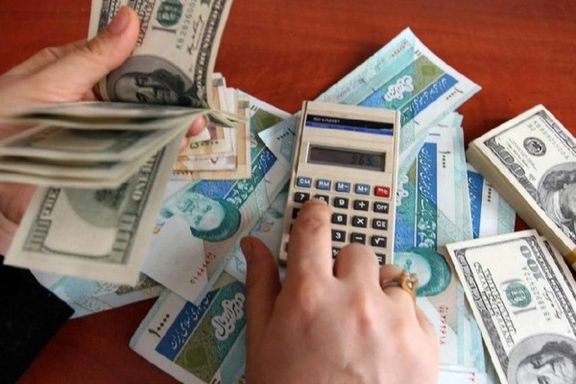
The Iranian currency, rial, has lost more than 12 percent of its value since the beginning of September as nuclear talks stopped and protests rocked the country.
The Iranian currency, rial, has lost more than 12 percent of its value since the beginning of September as nuclear talks stopped and protests rocked the country.
The rial Tuesday touched a historic low, dropping to 335,000 against the US currency, with nothing on the horizon to prevent further devaluation. In late August the US dollar stood at 295,000 rials.
The rial had regained some of its lost value at the time with intense diplomacy taking place to forge a nuclear agreement with the United States. But as it became apparent by early September that the talks to restore the 2015 nuclear accord had reached an impasse, the rial began to lose value.
The start of antigovernment protests in mid-September put the rial under further pressure, and government interventions apparently failed to defend the currency.
Although officials rarely admit they sold dollars in the local market to help the rial, signs indicted during October that Iran’s central bank was intervening on daily basis, trying to keep its currency under 330,000 to the dollar.
There are also unconfirmed reports that regime insiders might be liquidating assets and possibly trying to transfer funds abroad.
Iran’s currency has fallen tenfold since the end of 2017, when it became apparent that former US President Donald Trump might withdraw from the nuclear deal and impose sanctions on Tehran. Trump abandoned the accord, known as the JCPOA, in May 2018 and the rial steadily lost value.

A very clear indication of the impossible situation took place Saturday night when the state television in Iran placed ‘reformist’ journalist Mohammad Ghoochani, in front of ultraconservative cleric Qasem Ravanbakhsh for a dialogue about the situation that has brought millions of angry Iranians face to face with a heavily armed hardliner government.
Reformist daily Etemad on Monday wrote in a commentary on the program that Ravanbakhsh clearly "damned those who refuse to accept ruling clerics' violent behavior!" The daily concluded that "belief in dialogue in the ruling political faction is either too weak or non-existent."

Trying to convince the cleric to have sympathy with young Iranian protesters, Ghoochani asked Ravanbakhsh whether he feels sad for the death of Mahsa Amini, the young woman who was murdered in police custody in mid-September and her death triggered the current wave of nationwide uprising. The ultraconservative cleric who happens to have four daughters, responded: "No. I do not feel any sadness. Many girls die every day and Mahsa was one of them." Etemad slammed Ravanbakhsh's annoying rhetoric calling it "a behavior against religious principles."
Ravanbakhsh, the editor of Qom's hardliner weekly newspaper Parto, who has for two decades levelled all sorts of accusations against reform-minded politicians and activists in Iran, said this in cold blood while looking deep into the TV camera. His attitude defied the idea of bringing if not the people, at least the leading members of opposing political factions in Iran closer to each other.

Ghoochani, who has been the editor of several reformist newspapers and magazines during the past two decades, was speechless before this man although he acknowledged that reformist parties in Iran act like a safety valve to release the explosive pressures in society. Iran's hardliners have banned nearly every publication Ghoochani used to publish. He is currently a political bureau member of the Centrist Executives of Construction Party and the editor of Agahi-ye No magazine, which has a pro-reform slant.
In another indication of Tehran's unpreparedness for holding dialogue with relatively open-minded activists took place last week when a debate between a reform-minded sociologist and another ultraconservative figure was turned into a monologue by the latter as the former was kicked out of the studio as soon as he went off-camera at the beginning of the debate.
Many, including Etemad's commentator believe that it is too late to begin a dialogue with angry protesters in the streets, and that dialogue should have started long ago, before the Iranian society became extremely polarized.

Some Iranian politicians including lawmaker Mohammad-Hassan Asafari have claimed they have already "received" protesters in their offices and held dialogues with them, but in the absence of convincing evidence, and in view of the deep distrust between the people and government officials, it is doubtful if they have really held such meetings.
Meanwhile, as the article in Etemad pointed out, some Iranian officials who talk about the need to hold dialogue with protesters, put forward funny conditions such as "those taking part in the dialogue must not have been influenced by foreign media." This is obviously based on the assumption that "any protest, even by workers who demand their unpaid wages is planned by foreigners."


Their call came in a statement published by the Iranian Etemad and other newspapers on Sunday.
Iranian journalists and social media activists have also condemned a joint statement issued by the country's top intelligence organizations that accused the two female journalists of instigating "riots" in Iran by covering Amini’s death.
Iran's Ministry of information that operates under President Ebrahim Raisi's administration and the IRGC Intelligence Organization which operates directly under Supreme Leader Ali Khamenei and reports to him had in a joint statement on October 28 accusing Niloufar Hamedi and Elahe Mohammadi, two women journalists arrested days after protests began in September, of spying for several foreign agencies including the CIA, MI-6 and Mossad.
Many Iranian journalists, including Hassan Namakdoust Tehrani have pointed out that "what Hamedi and Mohammadi did was simply fulfilling their responsibility as journalists."
Reformist daily Sharq, for which Niluofar Hamid worked wrote: "Niloufar has been in jail for more than a month. Saturday, October 29 is her birthday, and we hope that she and all other journalist in jail return to their newspapers soon."

Meanwhile, Washington Post’s Jason Rezaian, an Iranian American journalist who was a hostage in Iran in mid-2010s and was released as part of a prisoner swap after the 2015 nuclear deal with the West, wrote on Saturday, "In a rare moment of agreement the Islamic Republic’s Ministry of Intelligence & the Intelligence unit of the IRGC issued a ridiculous statement claiming journalists Niloofar Hamedi & Elahe Mohammadi are agents of the CIA, MI6, Mossad, Saudi intelligence & several other countries."
Reformist commentator Abbas Abdi referred to the Iran intelligence agencies accusation that the two journalists were trained by foreigners to report on Mahsa Amini's death, wrote: "Sending a prominent journalist such as Elaheh Mohammadi to a training session to learn to report is like sending a person with a Ph.D. in mathematics to a class to learn the rules of multiplication."
The managing editor of Ham Mihan, the newspaper where Elaheh Mohammadi's report about Mahsa Amini's death was published wrote that her coverage was similar the the IRGC-linked Fars news agency's account of the event and what other agencies had reported at the time with even more details. Gholamhossein Karbaschi pointed out that it is not easy for a reporter to work in a security atmosphere.
He said the authorities have told him that the accusations against the journalist had nothing to do with her job as a journalist. Nonetheless, the statement by the intelligence organizations is about Ms. Mohammadi's role as a reporter, Karbaschi said, adding that this attitude toward journalism is not in the interest of Iran's media environment. Referring to the point the agencies made about the reporters' trying to be the first to break the news, Karbaschi said this is what every good journalist does, and the authorities had better change their attitude.
He added: "No news will remain concealed forever and it will reach the whole world soon." Kartbaschi pointed out that "It is in the interest of the country to have the right news disseminated by domestic press rather than creating a situation in which Iranians get the news first from foreign-based media," referring to Persian broadcasters abroad.
Prominent Iranian journalist Niloufar Ghadirian, the former editor of Hamshahri daily wrote: "Niloufar Hamedi and Elaheh Mohammadi will be always remembered as honest, brave and dedicated journalists. Their names will be remembered in journalism courses for many years."


Yashar Soltani, who has spent some time in jail in 2016 for disclosing financial corruption at Tehran Municipality under current parliament speaker Mohammad Bagher Ghalibaf, added in an interview with Etemad Online that the way government treats financial corruption is woefully disappointing.
The multi-billion dollar case involving the former mayor, a figure close to Supreme Leader Ali Khamenei, ended in the arrest of Isa Sharifi, one of Ghalibaf's deputies and was finally pushed under the carpet although Khamenei in 2018 called for investigation into the case. Sharifi's name came up once again in February 2022 along with Ghalibaf's in a major corruption case at the IRGC, which also remained inconclusive after a few weeks of controversy stirred by rival political factions in Iran.
The controversy about the IRGC corruption case was silenced soon possibly because even former IRGC Qods Force Commander Qasem Soleimani was also involved, as revealed in an audio tape that was leaked in the public domain presumably by those who benefitted from the revelations.
As a whistleblower who has been exposing financial corruption in Iran since the 1990s, Soltani says that corrupt individuals have never left the system even after their performance was exposed, and corruption is constantly on the rise. He added that the Iranian justice system discriminates in favor of corrupt individuals when they are close to the core of the regime, namely Khamenei's household.

He said: "Fighting corruption is part of the people's demands as the magnitude of government corruption is so high that the regime has no way but to try to control it through introducing reforms in the system." However, he acknowledged that most of the rhetoric about fighting government corruption is just a show, often with the intention of winning the people's attention at election times or to calm the situation when there are major protests.
Soltani pointed out that while corruption trials were held openly and the people could watch hearings on live TV in the 1990s, corruption cases are now shrouded in an aura of secrecy. Soltani reiterated that as long as talk about corruption is aimed at beatifying the political system or garnering support for a group of candidates, there will be no hope in controlling it.
Nonetheless, there seems to be some progress in the process. "When I disclosed the astronomical real estate case [in Tehran municipality] in 2016, I was jailed immediately, but five years later I was called for consultation for writing a new law to prevent that kind of corruption as part of which the Municipality gave land and buildings to influential individuals to garner their support," Soltani recalled.He added that regardless of his help, the Iranian Judiciary has been summoning him during the past 11 years to subtly warn him about his whistleblowing activity.
"They ask why me and not the intelligence agencies investigate a case. Well, the intelligence agencies did their own research but what they got nowhere because there are flaws in the structure of the government," he said, adding that, "There are only four or five people who continue as whistleblowers, and all of them like me work single-handedly without any support from anyone in the system."
Referring to the problems in the system, he said the corruption case at the Petrochemical Complex (PCC) was a major case. But there were a few stage-managed court sessions and nothing more happened.
He was referring to a case of hundreds of million of dollars embezzled by officials who were tasked to sell Iran’s petrochemical products through obscure channels and return the money to the treasury during international sanction in 2010-2013.
Soltani concluded: "There are so many inconclusive cases about financial corruption in Iran. In a corrupt structure you cannot claim to be dealing with corruption."