Iran-Backed Houthis Cause 300% Surge To UK Business Costs Via Blockade
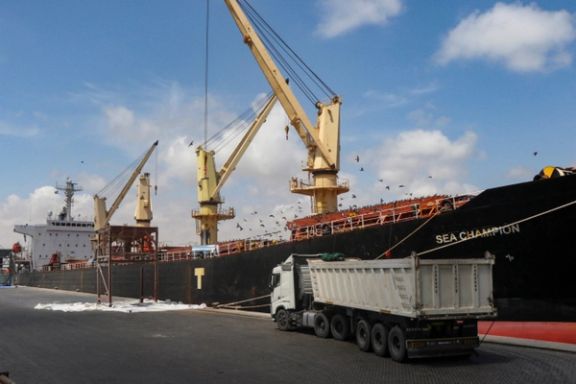
Recent attacks on cargo ships by Iran-backed Houthi rebels have affected British retailers and exporters, with more than half feeling the impact.
Recent attacks on cargo ships by Iran-backed Houthi rebels have affected British retailers and exporters, with more than half feeling the impact.
According to a survey by the British Chambers of Commerce (BCC), the shipping costs from Asia to Europe have surged by up to 300% for certain businesses, while logistical delays have extended delivery times by three to four weeks. Such delays are causing cashflow challenges and shortages of components on production lines, impacting the economy at large.
The Houthi rebels, backed by Iran and controlling significant parts of north-western Yemen, have been targeting merchant vessels in the region since November. They claim the actions are in solidarity with Palestinians amid the conflict between Israel and Hamas in Gaza.
In response to the disruptions, the US and the UK have conducted airstrikes against 18 Houthitargets in Yemen over the weekend, including weapons storage facilities. However, despite the efforts, the disruption persists with no sign of abating.
William Bain, the head of trade policy at the lobby group, is urging the government to provide support for exporters in the upcoming budget, citing weak global demand and rising costs.
“There has been spare capacity in the shipping freight industry to respond to the difficulties, which has bought us some time. And recent [government] data also indicates the impact has yet to filter through to the UK economy, with inflation holding steady in January,” Bain said.
Furthermore, disruptions at the Suez Canal have forced shipments from China to Europe to take longer routes around Africa, doubling shipping costs since December. Issues at the Panama Canal, stemming from low rainfall, have also led to restrictions on traffic passing through its locks, exacerbating the challenges faced by businesses.


The US military also shot down in "self-defense" two one-way unmanned aerial attack vehicles over the southern Red Sea on Sunday, Central Command (CENTCOM) said. This followed joint US and British air strikes on a string of Houthi targets in Yemen.
Iran accused the United States and Britain of escalating tensions on Sunday, following the two countries' joint strikes. The Houthis have received extensive Iranian military support and control a substantial part of Yemen.
This was the fourth round of joint strikes to “degrade” the capabilities of the Houthis and came after a marked increase in attacks by the Iran-backed group on ships in the Red Sea and Gulf of Aden last week.
Shortly after the attack, Iran’s foreign ministry issued a statement, accusing the US and Britain of seeking to “escalate” regional tensions and “expand the scope of war and instability.”

“This kind of arbitrary and aggressive military operation, aside from aggravating insecurity and instability in the region, will not achieve anything for these aggressor countries,” said Iran’s foreign ministry spokesman Nassar Kanaani.
Iran is known to be the prime sponsor of the Houthis, funding, arming, and even “serving side by side” their forces on the ground. Iranian officials maintain that the Houthis don’t take orders from Tehran, but the relative quiet in Syria and Iraq following the targeted assassinations of a few high-ranking IRGC commanders and US air strikes show that Iran may hold just enough leverage to stop its proxies if and when it finds the alternative too costly.
The Houthis too had all but stopped their attacks for a couple of weeks since early February. But they resumed targeting commercial vessels last week, including a US-owned, flagged and operated ship and a UK-owned, Belize-flagged cargo ship, which remains anchored half-sunk in the Red Sea, leaving behind a 30 km oil slick.
In just three days last week, the Houthis targeted or hit more ships than the preceding 3 weeks combined. Some experts linked the sudden rise in attacks to Iran’s spy ship Behshad resuming operation in the region after 17 days anchoring near a Chinese port-base in Djibouti.
The extensive, joint strike early Sunday (Yemen Time) seems to have been a direct response to the resumption of Houthi attacks –and the targeting of US and UK ships, in particular. About 18 sites across a number of locations were hit in the recent strike, targeting missiles, launchers, rockets, drones and unmanned surface and underwater vehicles, according to US officials.
"We will continue to make clear to the Houthis that they will bear the consequences if they do not stop their illegal attacks,” US defense secretary Lloyd Austin said following the operation, reiterating that the objective was to “further disrupt and degrade the capabilities of the Iranian-backed Houthi militia."
Critics of the Biden administration say the said objective is too conservative as it does not aim to stop and deter. Therefore, they argue, it’s a failure even if it succeeds. Iran can (and does) attempt replenishing the ‘degraded’ capabilities, despite US disruptions –such as their seizure of Iranian weapons shipment to the Houthis.
For more than three months –since the Houthis began their attacks in support of Palestinians following the Israeli onslaught on Gaza– President Biden has been warning that he will not tolerate Houthi attacks against commercial shipping.
But the attacks have continued and have even escalated, taking into account the recent targeting of British and American ships, and the Houthi announcement that the blockade of the Red Sea has been extended from Israel-related vessels to those of the US and the UK.

A former Iranian minister said the government’s recent deals with Chinese companies to build residential units in the capital are an "insult to Iran's engineering community" while the local economy is in freefall.
“We have given China privileges that are unprecedented in our country,” said Ahmad Khorram, former Roads and Transportation Minister under President Mohammad Khatami, in an interview with Jamaran News website.
Earlier this month, Tehran’s municipality announced that China will soon start building housing units in the capital. Mayor Alireza Zakani said several contracts have been signed with Chinese companies to revamp the capital’s infrastructure, including construction and transportation projects, at the expense of local businesses amidst a crippling economic crisis.
According to Khorram, such decisions are like “punching Iranian people in the face” and do not serve their interests. “Our private-sector companies are much smarter and much more specialized than the Chinese ones … If they [Tehran’s municipality officials] give this concession to Iranian contractors, they will run with enthusiasm to get the project off the ground.”

Lambasting the close ties between Tehran and Beijing, the reformist politician stressed that China has undertaken the projects in return for buying Iran’s sanctioned oil 30 percent below the global price.
“The 30 percent oil money they don’t pay is all profit for them. For 25 or 30 percent of the rest of the oil money, they export goods to Iran, and by giving us goods, they make more than 50% profit,” he pointed out.
According to reports, China’s importation of oil from Iran increased by 60 percent in 2023, with Tehran selling 90 percent of its oil to Beijing. International tanker tracking companies say a huge amount of Iranian oil is sold to China via middlemen and brokers and by ship-to-ship transfers which take place in international waters. The cargoes are mostly rebranded as Malaysian oil but apparently Malaysia does not interfere.
Khorram further noted that building housing units will also guarantee a profit of over 100 percent for the Chinese companies. According to the former minister, Tehran provides Beijing with all these privileges to guarantee its support in the UN Security Council.
Both China and Russia have collaborated with the US over banning Iran’s nuclear program and were the first countries to back the Security Council’s resolutions against Iran, he went on to say.
Earlier in February, economic journalist Reza Gheibi told Iran International that Chinese encroachment into Iran's construction sector would have adverse effects related to opacity in the financial details of the scheme and its impact on local companies. There has been no word from the Chinese side confirming such a deal.
Tehran grapples with severe housing and transportation challenges, characterized by exorbitant real estate prices that are beyond the means of ordinary Iranians, who can barely afford rent.
According to Iran's leading economic daily Donyaye Eqtesad (World of Economy), owning a home in the Iranian capital Tehran has become virtually impossible while key indicators of quality of life are also in decline. The average time people need to save money to be able to buy a residence in Tehran has increased to a staggering 112 years, from about 22 years in 2005, the report added.