Iran Detains Female Writer, Religious Scholar
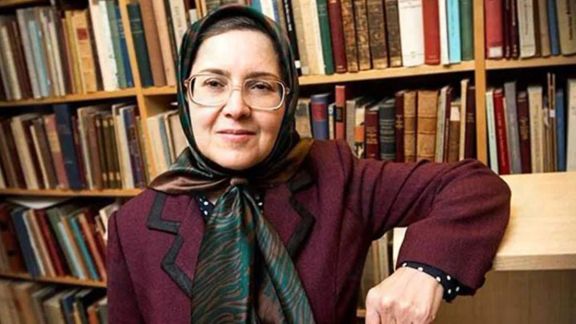
Sedigheh Vasmaghi, a prominent writer and Islamic scholar in Iran, was apprehended by the country's security forces on Saturday and subsequently transferred to prison.

Sedigheh Vasmaghi, a prominent writer and Islamic scholar in Iran, was apprehended by the country's security forces on Saturday and subsequently transferred to prison.
The development follows Vasmaghi's outspoken criticism of compulsory hijab laws and her characterization of Ali Khamenei, the Supreme Leader of the Islamic Republic, as a “dictator”, and the ruling regime as “oppressive”.
Mohammad Ebrahimzadeh, Vasmaghi's husband, confirmed her arrest in a conversation with Emtedad News in Tehran, revealing that authorities had confiscated her mobile phone and personal laptop. He expressed concern over the lack of transparent information regarding his wife's situation, whereabouts, and the entity detaining her.
The sequence of events leading to Vasmaghi's detention includes her announcement on March 4 via Instagram of being summoned to the Evin Courthouse, a summons she declared she would not comply with until the reason and the plaintiff were clarified.
In a recent audio file shared on her Instagram, Vasmaghi continued her critique, particularly targeting Ali Khamenei's stance on hijab, asserting that he lacked the authority to dictate women's clothing choices and criminalize dissent.
Vasmaghi's activism against compulsory hijab gained attention after she removed her own hijab in protest, following the death of Armita Geravand, a teenager killed by hijab-enforcement agents in the Tehran metro last year.
The situation escalated in March 2023 when Vasmaghi was assaulted by security forces following Armita's funeral ceremony. Subsequently, in April 2023, she penned an open letter to Khamenei, directly holding him responsible for the adverse consequences of enforcing compulsory hijab laws on women, encompassing financial, physical, mental, social, and political ramifications.

Several Iranian clerics have criticized hardline policies regarding compulsory hijab, after public outcry over a clergyman filming a young mother who was not wearing a headscarf.
The video, exclusively sent to Iran International last week, captured a tense exchange between the young woman and the cleric who was filming her while she held her baby with a loosely worn hijab in a clinic in Qom, a religious city. Hardliner hijab enforcers collect evidence of women not wearing hijab for possible police action and prosecution.
The incident sparked widespread reactions on social media, with many Iranians condemning the video as evidence of the oppressive nature of the Islamic Republic and its strict hijab laws.
In an unusual move, a Friday Prayers Imam in Iran publicly has criticized the actions of the cleric in Qom, condemning the practice of photographing or intimidating women without compulsory hijab and challenging the notion that all those who do not conform to hijab laws are morally corrupt.
The Friday Prayers Imam of Ilam, Shamsollah Seraj, also called for a revision of Iran's new hijab bill, expressing concerns that its implementation would lead to societal problems. The bill, titled "Protection of Family Through Promotion of Hijab and Chastity Culture," has already gained parliamentary approval and awaits validation by the Guardian Council.
“If you see a woman [without compulsory hijab] and you take a picture or pretend to take a picture, this is wrong,” said Shamsollah Seraj, arguing that “It is not acceptable to think that all those who do not conform to compulsory hijab are promiscuous and corrupt.”
The enforcement strategy in the bill includes surveillance measures such as facial recognition technology and scrutiny of online content to identify violators. Earlier in the month, lawmaker Amir-Hossein Bankipour, announced that according to the bill, fines for women who do not comply with hijab laws will be directly deducted from their bank accounts, without the need for their permission.
Meanwhile, former lawmaker Ahmad Mazani, himself a clergyman, cautioned against harsh measures adopted by government agencies, police forces, and basij militias to monitor and control people's behavior. He emphasized the importance of teaching clerics how to treat people with compassion, especially in healthcare settings like the Qom clinic incident.
In an article published in Etemad daily on Saturday, Mazani wrote in reference to the Qom clinic incident: “The seminaries should not allow clerics to be demoted to the role of officers of some [governmental] institutions and should instead teach them how to treat people. Healthcare facilities are frequented by patients and their companions who might at times be perturbed due to the challenges of the illness. A woman who is breastfeeding her child needs love and respect the most.”
The negative reactions among clerics highlight divisions within conservative circles regarding the hardline policies of the Iranian government. Senior cleric Mohammad-Taghi Fazel Meibodi condemned the behavior of the cleric in the clinic, stating that such conduct is inappropriate for someone in clerical attire.
Meibodi stressed the need to de-escalate tensions, warning that incidents like these could fuel civil protests, referencing the recent public discontent following the death of Mahsa Amini, who died in morality-police custody after her arrest for improper hijab in 2022, sparking the Woman, Life, Freedom movement across Iran.
Armita Geravand, a sixteen-year-old girl, became one of the latest victims of Iran's repressive hijab policy when she died on October 28 after sustaining brain damage during a violent encounter with hijab enforcers at Tehran’s subway stations.

Iranian lawmaker Moineddin Saeedi has condemned the lack of justice for citizens who were killed by security forces during protests in the city of Zahedan in September 2022.
Marking it as an unprecedented disaster in the history of Iran's Sunni-populated city, Saeedi expressed dismay over the failure to prosecute the perpetrators and instigators of the violence that claimed nearly 100 lives and left dozens injured during anti-regime protests on Friday, September 30, 2022.
"The bloody Friday in Zahedan was a bitter incident that can be said to have permanently affected the conditions of the province in a way," Saeedi told Didban Iran website.
Despite widespread calls for accountability, none of the security personnel involved in the violence have faced justice. Saeedi lamented the government's inaction in holding those responsible accountable, stating, "We expected the perpetrators and instigators of the Black Friday to be prosecuted."
Previous attempts to seek justice have been marred by controversy, with reports indicating attempts to resolve the matter through blood money settlements, disregarding the demands of the victims' families.
Saeedi also criticized the government's response to the recent floods that devastated the Sunni-majority province of Sistan-Baluchestan, highlighting the contrast between the swift action taken to transport ballot boxes for parliamentary elections on March 1 and the lack of assistance provided to flood victims.
"How could you bring ballot boxes with a boat, but couldn't help the flood victims?" Saeedi questioned.
Furthermore, Saeedi revealed that the bank accounts of individuals collecting donations for flood victims have been blocked, exacerbating the plight of those affected by the disaster.
The southeastern province of Sistan-Baluchestan, home to a large Baluch population, has historically faced economic deprivation and persecution. Estimates suggest that around half a million people in the region have been left homeless and stranded following the devastating flash floods in early March.

Tehran is doubling down on its rejection of a UN report that found the regime committed crimes against humanity during its crackdown on nationwide protests.
The Secretary of Iran's High Council for Human Rights, Kazem Gharibabadi, accused Western countries of influencing the decisions of the United Nations’ Human Rights Council – and reiterated that the Council does not recognize the Council’s fact-finding mission.
The Iranian regime uses its High Council to defend itself against international criticism for human rights abuses.
“By complying with the political and mostly illegitimate demands of Western countries in 2023, the United Nations Human Rights Council has caused more suffering to the victims of human rights violations and become a tool for political interference [in other countries’ affairs,” Gharibabadi said in response to the UN fact-finding mission’s preliminary report published on March 8.
Established by the UN human rights council in November 2022, in response to the widespread Woman, Life, Freedom protests that engulfed the nation, the fact-finding mission primarily centers on Iran's nationwide 2022-2023 protests. Its experts have expressed regrets over the Iranian authorities' lack of meaningful cooperation, despite repeated requests for information, including details regarding the killing and injury of security forces, as well as their denial of access to the country and its people.
In contrast, Gharibabadi referred to the mandate of the fact-finding mission, claiming that Iran “deals responsibly” with matters related to “riots in the country” while underlining that President Ebrahim Raisi appointed a national committee to investigate the “riots.”
The country’s Supreme Leader Ali Khamenei, along with Iranian officials, have consistently dismissed the characterization of the uprising as peaceful, instead arbitrarily labeling protesters as "rioters" and accusing them of engaging in "terrorist acts."

Regime denies deliberately shooting protesters' faces
In November 2022, more than 370 ophthalmologists reported that numerous protesters struck by rubber bullets, metal pellets, and paintball bullets fired at close range during the protests were treated at medical centers. Many suffered permanent loss of eyesight in one or both eyes.
Backing up those reports, the fact-finding mission’s investigation found that “security forces used unnecessary and disproportionate force which resulted in the unlawful killing and injuries of protestors. A pattern of extensive injuries to protesters’ eyes caused the blinding of scores of women, men and children, branding them for life. The Mission also found evidence of extrajudicial killings.”
Moreover, the report highlighted that female protesters had been deliberately singled out due to their gender. They were subjected to close-range shootings aimed at their faces and genitals.
“A witness, who lost the sight in one eye, recalled a member of the security forces directing a paintball gun loaded with rubber bullets to the head from 1 m away. The mission notes the deterrent and chilling effect of such injuries, as they permanently marked the victims, essentially “branding” them as protesters. In a context where protests are effectively criminalized, the mission is satisfied that such an effect was intended,” the report read.
“These acts form part of a widespread and systematic attack directed against the civilian population in Iran, namely against women, girls, boys and men who have demanded freedom, equality, dignity and accountability,” said Sara Hossain, chair of the UN fact-finding mission.
Human rights organizations have compiled the names of at least 550 protesters, including 68 children, who were killed by security forces.
The full 400-page report is scheduled to be published on March 18th.

Fired faculty members from the University of Tehran are challenging the chancellor who recently claimed no professors have been expelled amid mass crackdowns on dissent.
Prominent sociologist, Ebrahim Bay Salami, himself fired in January last year, remarked, "My colleagues and I are prepared to engage in a debate with the chancellor of the University of Tehran," after thousands of academics around Iran have been forced to retire or had contracts terminated in the wake of the 2022 uprising.
The controversy arose when Mohammad Moghimi, the university's chancellor, declared in an interview, "We have not expelled any professors at the University of Tehran. When allegations of expulsion are raised concerning a professor, it signifies the unilateral termination of the professor's contract with the university due to various reasons. If any cases of expulsion are identified, please introduce them to me. I am fully prepared to hold a session with the media present and debate with any professor claiming to have been expelled."
Salami, speaking in an interview with Khabar Online, urged Chancellor Moghimi to release his complete academic dossier and disclose any issues that led to his expulsion.
Azin Movahed, another university faculty member, said he and his colleagues had also received notices of dismissal, expressing willingness to debate with Moghimi on the matter.
Recent reports reveal the extent of academic pressure in Iran. Etemad, a prominent reformist daily, published a list documenting the dismissal, forced retirement, or banning from teaching of 157 tenured professors between 2006 and August 2023. The trend extended to non-tenured lecturers, purportedly replaced by individuals aligned with the government's ideological stance.
A further 32,000 associate professors have been removed from their positions at various branches of the Islamic Azad University in Iran, it was revealed last year, amidst a major reshuffling of academic roles in the country's higher education system.
The situation escalated amid protests triggered by the death of Mahsa Amini in morality police custody in September 2022, prompting a crackdown by the Raisi administration, including summoning, detaining, and suspending professors aligned with the demonstrators.

Iran’s exiled prince Reza Pahlavi warned against threatening the Iranian armed forces with revenge and reprisals in the process of overthrowing the regime.
During an online meeting, Pahlavi said that the armed forces will act to ensure the survival of the regime if dissidents and activists employ vindictive rhetoric against them during the campaigns to topple the Islamic Republic.
“We are not seeking revenge. We want hatred and revenge to be replaced by coexistence and reconciliation. If the regime changes and our culture is still to take revenge, we have done nothing,” he stressed.
According to the exiled prince, if as little as 3.5% of the Iranian population can act in concert in an organized manner, it can lead to a regime change based on the principles of non-violent struggle.
“However, at the end of the day, it all comes down to whether the armed forces, who protect the regime, will stand in front of the people or not,” he went on to say.
Pahlavi further remarked that the most important thing at the moment is to save Iran from an inhuman regime for the sake of the future secular democracy in the country.
The armed forces have been at the front lines of the regime's oppression against the uprising. At least 500 civilians have been murdered by brutal crackdowns around Iran since the uprising of 2022 as the country's state security imposes harsh punishment for protesters and dissidents.