Kurdish Prisoner Executed After 14 Years’ Incarceration
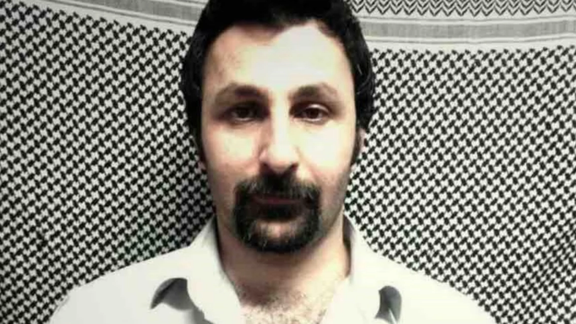
Sunni Kurd and political prisoner Anwar Khezri was executed on Wednesday after 14 years of imprisonment as Iran continues its wave of executions.

Sunni Kurd and political prisoner Anwar Khezri was executed on Wednesday after 14 years of imprisonment as Iran continues its wave of executions.
Human Rights Activists News Agency (HRANA) reported that the death sentence was carried out at Karaj's Ghezel-Hesar Prison.
Khezri was part of a case involving six other Sunni minority individuals, four of whom have already been executed.
They were detained in December 2009 on charges related to the murder of Abdolrahim Tina, the Imam of a mosque in Mahabad, who was assassinated by unidentified individuals in 2008.
The seven were charged with "acts against national security," "propaganda against the system," "membership in Salafi groups," and "waging war against God and corruption on earth."
After being initially sentenced to death in 2017, the Supreme Court overturned the verdict and referred the case to Branch 15 of the Revolutionary Court in Tehran for further review. They were, however, sentenced to death again by Branch 15 in June 2018. The Supreme Court confirmed the death sentences in February 2020.
In November, Ghasem Abasteh and Ayoub Karimi were executed, and in January, Davoud Abdollahi and Farhad Salimi. Following Khezri's execution, two others, Khosrow Besharat, and Kamran Sheykha, face the same fate.
According to Amnesty International, the seven Sunni Kurds were at risk of execution in February 2021 due to their unfair trials and tortured confessions.
Human rights organizations have repeatedly condemned the severe torture inflicted on the prisoners and the forced confessions extracted from them.
Minority Kurds in Iran have suffered massive persecution since the founding of the Islamic Republic. Of the more than 800 record high executions last year, huge numbers of those were Kurdish.

A pro-government ideologue in Iran says the Islamic Republic can use the potential of pro-Palestinian protesting students at US campuses to form a new proxy group in America.
“I think the potential to repeat in the US what the Islamic Republic did in Lebanon is much higher. Our Hezbollah-style base in the US is much larger than what we have in Lebanon,” said University of Tehran professor Foad Izadi in an interview with Iran’s state TV.
Iran played a major role in the foundation of the Lebanese Shiite militant group Hezbollah in the early 1980s. Since then, the group has been involved in attacks against Israeli and American targets in the Middle East and elsewhere.
Izadi urged the Iranian government to engage “on an operational level” with protesting students in the US and try to “recruit connections and build networks” among them. “We are watching the demonstrations and we like what we see, but it should not end with this,” he stressed.
The commentator called the pro-Palestinian students “our people,” further saying that “if tensions between Iran and the US rise tomorrow or the day after, these are the people who should take to the streets to support Iran.”
On Wednesday, Supreme Leader Ali Khamenei voiced support for pro-Palestinian protests at American campuses.
“Despite the extensive efforts of Zionists and their American and European supporters, the issue of Gaza remains the top global concern. Protests against the crimes of the Zionist regime in American universities and their expansion to European universities are signs of the continued sensitivity of public opinion worldwide to the Gaza issue,” he remarked.

Iran’s Foreign Ministry announced that the country has imposed sanctions against five entities and seven individuals in the US over their support for Israel.
The ministry claims the targets have been allegedly involved in “terrorist acts and gross violations of human rights through their support for the Zionist regime’s brutal actions against Palestinians, particularly the people in the Gaza Stip.”
Among the sanctioned entities are the Lockheed Martin Corporation, General Dynamics Corporation and Skydio, which Iran’s Foreign Ministry claims have armed Israel in its war against the Iran-backed Palestinian militants, Hamas and Palestinian Islamic Jihad.
Chevron Corporation has also been targeted due to its “cooperation with Israel in the drilling of gas wells in the eastern Mediterranean,” the statement said, further adding that an intelligence company called Kharon has been banned over collaborating with the US Treasury and trying to cut off Hamas and Islamic Jihad’s access to the cryptocurrency exchange network.
US government reports reveal that the IRGC has been using cryptocurrency in recent years to fund Palestinian militant groups. Families of victims of the Hamas terror attacks of October 7 and the families of hostages taken to Gaza have sued cryptocurrency exchange Binance for its role in funding the terror group between 2017 and 2023.
Iran has also slapped sanctions on seven Americans. Among them is Jason Greenblatt, the former executive vice president and chief legal officer to Donald Trump, Michael Rubin, a senior fellow at the American Enterprise Institute, Clifford D. May, the president of the Foundation for Defense of Democracies and Bryan Patrick Fenton, the commander of the US Special Operations Command.
It is as yet unclear how these sanctions will be imposed by Iran, which itself is already heavily sanctioned for its nuclear program, rights abuses and military support for Russia's war on Ukraine.
Also included is Brad Cooper, a US Navy vice admiral, Gregory J. Hayes, the CEO of RTX defense corporation, and Jason Brodsky, Policy Director at United Against Nuclear Iran (UANI), who has been a vocal critic of Tehran.
Hamas’s deadly October 7 invasion of Israel claimed the lives of 1,200 mostly civilians and saw over 250 taken hostage to Gaza. The invasion was the most deadly single day for Jews since the Holocaust. It triggered the longest and bloodiest Gaza war since Hamas took control of the strip in 2007.
For months after the start of the Israel-Hamas war, the Iranian government avoided direct involvement in the conflict and used its proxies such as Yemeni Houthis, Hashd al-Shaabi, and Hezbollah to target Israeli and American targets in the region.
However, on April 13, Iran launched its first ever direct offensive against Israeli territory with more than 350 drones and cruise and ballistic missiles, 99% of which were downed, according to the Israeli army. The attack was in response to an alleged air strike by Israel killing a senior Quds Force commander and IRGC officials in Damascus last month.
In response to Iran’s operation, the US and the EU imposed new sanctions against Iran’s missile and drone programs, though Iran remains defiant in the face of global sanctions.
There have also been calls from both Iranian dissidents and international figures to designate the IRGC as a terrorist organization over its role in suppressing dissent in Iran and orchestrating attacks abroad.

Several teachers have been arrested amid nationwide rallies addressing the country's ongoing education crisis.
A Bushehr Teachers Union member, Reza Amanifar, was arrested as Iranian educators took to the streets on Thursday. The demonstration followed the Coordination Council of Iranian Teachers' Trade Associations' call for a nationwide rally with protests held in the face of a heavy presence of security forces in areas such as Yasuj and Rasht.
Also, three education activists were arrested in Tehran for demonstrating in front of the Planning and Budget Organization. According to the Teachers Association Telegram channel, they were released shortly thereafter, amid intenstified security and judicial pressures on teachers' union activists.
On Wednesday, International Workers' Day, Esmaeil Abdi, a teacher, civil activist, and member of the Iranian Teachers’ Trade Union who has been arrested and imprisoned for his union activities on multiple occasions, was summoned by the Islamic Revolutionary Guard Corps (IRGC) intelligence. An additional 17 teachers and union activists from Sanandaj city have also been summoned to the city's security institutions.
A statement issued by the Teachers Association before today’s gatherings pointed out a “decrease in student motivation for learning due to the high cost of living and inflation" with many excluded from education since 2022 for supporting the nationwide uprising sparked by the death in morality-police custody of Mahsa Amini.
“Security forces and the judiciary suppressed and threatened demanding teachers rather than battling embezzlers and corrupt individuals,” the statement added, with wide-sweeping sacking of teachers who have supported protests since 2022.
In December, a report slammed the country's education system saying it "has turned into an arena for those in power to pursue their political goals,” explaining that schoolbooks and teacher training and selection have become engineering tools to ensure the political and ideological goals.
Religious censorship has invaded many textbooks, including literature and history, and reports indicate that religious extremists controlling parliament and enjoying influence in the presidential administration, have begun hiring thousands of their followers as teachers and school principals, regardless of qualification.
Amid the 2022 uprising, thousands of students suffered mysterious poisoning, suspected to have been a state-sanctioned means of suppression as the country rose up in its biggest anti-government action since the founding of the Islamic Republic.

The UN called the recent BBC investigation into the death of Iranian teenager Nika Shakarami “very very troubling”.
“The Secretary-General has repeatedly spoken about his concern of human rights violations in Iran. There is a special rapporteur on Iran and there are other human rights mechanisms. And I think whatever information the BBC has brought should be sent to those mechanisms,” Stéphane Dujarric, Spokesman for the Secretary-General, told reporters on Wednesday.
Shakarami, 16, was an iconic figure in Iran’s 2022 Woman, Life, Freedom movement triggered by the death in morality-police custody of Mahsa Amini.
Citing a “very confidential” document addressed to the the IRGC's commander-in-chief, BBC World released a report Tuesday on how the teenager was arrested, sexually assaulted and murdered by the regime’s security forces in September 2022.
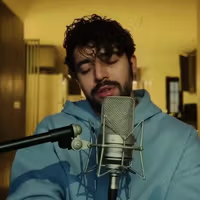
Meanwhile, Dujarric was asked to provide the UN’s stance on the death sentence handed down to Iranian dissident rapper Toomaj Salehi.
“We have stood and continue to stand against any use of the death penalty. And we very much hope that this does not come to pass … These are issues that have been regularly brought up with the Iranian authorities,” he went on to say.
Last week, an Iranian revolutionary court sentenced the outspoken artist to death for his songs supporting the 2022 nationwide uprising.
Interior Minister Ahmad Vahidi is the highest-ranking Iranian official who has so far reacted to the BCC’s report on Shakarami’s rape and murder. On Wednesday, he rejected the report as “false and far from reality,” further saying that it has covered a “very ridiculous topic all aspects of which are clear.”
Meanwhile, the Iranian state media reiterated the same stance as that of the interior minister towards the BBC probe.
IRNA, Iranian state news agency, accused the broadcaster of addressing issues that can “disturb and anger the Iranian society.”
IRNA also referred to “inconsistencies” in BBC’s report, saying it fails to match the remarks made by Shakarami’s mother and aunt regarding the time and location of her disappearance.
Following the news of Shakarami’s disappearance and murder in September 2022, the Iranian state TV conducted interviews at that time with her mother and aunt who confirmed the government’s narrative that the teenager had committed suicide.
However, their later remarks regarding Shakarami’s murder prove that their interviews with the Iranian state TV were made under the pressure of the regime’s security forces, who have been notoriously involved in a long-standing tradition of forced interviews.
The flagship hardliner newspaper Kayhan and Javan daily, affiliated with the IRGC repeated the same accusations against the BBC investigation.
Meanwhile, Farhikhtegan newspaper, close to Iran’s hardliners, criticized the reactions of some ‘reformist’ politicians and figures to the report of the rape and murder of the protesting teenager.
“In Iran, several political figures that are opposed to some social policies, immediately endorsed the BBC report without any consideration,” Farhikhtegan wrote, further warning any confirmation of the report can “pave the way for a new crisis” in the country.
The relatively independent media in Iran, however, have been largely silent on the BBC investigation into the murdered teen in what seems an urgent order from the regime’s security and intelligence agencies. On Wednesday, the Tehran Prosecutor's Office filed charges against several journalists who have shared the report.

Canada’s Minister of Foreign Affairs announced the start of the second round of a commemorative scholarship in honor of those who lost their lives in the unlawful downing of the Ukraine International Airlines Flight 752.
The Flight PS752 Commemorative Scholarship Program was launched last year and will run for five years with 176 one-year scholarships being awarded, averaging $25,000 per recipient.
The Government of Canada's website stated on Wednesday, “Among these victims were brilliant minds and dedicated students who made significant contributions to Canadian educational institutions.”
Students must have a field of study that aligns with a victims’ academic or professional backgrounds or focuses on the prevention of air disasters, as the program aims to commemorate the tragedy.
The Iranian Revolutionary Guards (IRGC) shot down the plane shortly after it took off near the Imam Khomeini International Airport near Tehran on January 8, 2020, killing all 176 people on board, including 82 Iranians, 63 Canadians, 11 Ukrainians, ten Swedes, four Afghans, and three Britons.
In July, Britain, Canada, Sweden, and Ukraine filed complaints against Iran at the International Court of Justice, alleging that the Islamic Republic purposefully shot down the plane. In January, they also filed a complaint with the UN Aviation Council to hold Iran accountable for the downing.
In April last year, a Tehran military court sentenced the operator of the system who fired missiles at the plane to 13 years in prison. No high-ranking military or government officials of the Islamic Republic were named among the military personnel accused.