Iran Ramps Up Executions, Averaging One Every Five Hours
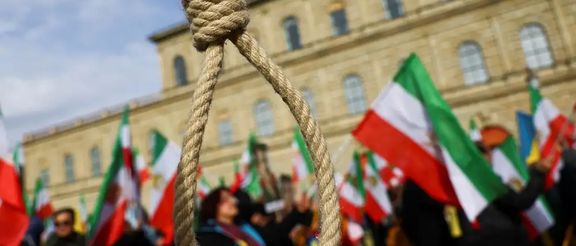
Over the course of two weeks, from April 16 to April 30, the Iranian government executed 63 individuals, averaging one execution every five hours, continuing a trend that began last year.
Over the course of two weeks, from April 16 to April 30, the Iranian government executed 63 individuals, averaging one execution every five hours, continuing a trend that began last year.
The data presented by the Iran Human Rights Organization (IHRNGO), headquartered in Norway, highlights a broader pattern of capital punishment in Iran.
Since the beginning of 2024, 171 people have been executed across various prisons in the country.
Mahmood Amiry-Moghaddam, the director of IHRNGO, criticized the international community's silence on the issue, stating, "In the last two weeks, the Islamic Republic has executed one person every five hours without any political cost. States that adhere to human rights and have diplomatic relations with Iran must react to the wave of executions in Iran. Silence paves the way for more executions."
The organization's latest figures indicate that at least 71 people were executed in 24 different Iranian prisons during April alone, with 63 of the executions occurring in the latter half of the month. Out of these, 44 were executed for drug-related offenses, 26 faced 'qisas' (retribution-in-kind) for murder, and one for rape.
The surge in executions follows the onset of the Woman, Life, Freedom protests in 2022, after which the Iranian government has significantly increased the pace of carrying out death penalties. In 2023 alone, the country saw at least 834 executions.
An April press release from 82 Iranian and international human rights organizations pointed out that over half of the executions in 2023 involved individuals arrested on drug-related charges. The statement emphasized the low cost of the drug-related executions to the government, signaling a potentially punitive approach towards non-violent offenses.

The Islamic Republic’s targeted repression of journalists has led to the country's dismal ranking in the RSF Index, placing it 176th out of 180 countries assessed.
Since nationwide anti-regime protests began in 2022, “Iran has reinforced its position as one of the world’s most repressive countries in terms of press freedom,” RSF said.
The regime’s crackdown killed at least 550 and saw the arrest of tens of thousands, including scores of journalists, leading Iran to previously be ranked as the one of the world’s worst jailer of journalists in CPJ’s 2022 prison census.
“Iran – with its mass imprisonment policy – holds on to its extremely low ranking,” the report says.

Since 2002, the Islamic Republic's suppression of dissent has consistently placed the country in the bottom 15 countries on the RSF Index.
“The Islamic Republic continues to exact its revenge against journalists who, since 16 September 2022, have fulfilled their duties in serving the public’s right to news and information,” said the head of RSF’s Middle East desk Jonathan Dagher in 2023.
Today’s RSF ranking places the country below China, and just ahead of North Korea, Afghanistan, Syria and Eritrea.
On the global scale, the RSF report highlights a trend of escalating political attacks on press freedom over the past year, with the Maghreb-Middle East Region having the “worst situation for press freedom.”
Four of the world’s 10 biggest jailers of journalists are in the Middle East. Alongside Iran (176), Israel (100), Saudi Arabia (166) and Syria (179) have perpetuated the detainment and harassment of journalists, contributing to a climate of fear and censorship, the report said.
Iranian Journalists Face Censorship, Suppression
Between 2023 and 2024, there were at least 226 cases of journalists and media in Iran facing suppression by authorities, through detention, trial, legal summons, or legal action, according to a separate annual report by the US-based Midpoint Journalism School.
Suppression methods also involved violent physical encounters such as torture, flogging, shooting, attacking journalists' homes, and detaining family members, particularly in provinces outside Tehran.
The journalism hub, which offers educational resources and courses for aspiring young journalists, also publishes reports focusing on the plight and status of journalists in Iran.
The actual number of cases is likely higher, the report notes, as many instances remain concealed or unreported due to security threats by authorities.
In addition, the media school said that censorship patterns by Iranian authorities have shifted, with security institutions employing newer methods to prevent the free flow of information and manage news content before publication.
Though Tehran saw significant suppression of journalists, the expansion of websites and news channels in provinces has led to increased pressure on journalists outside the capital.
Media coverage of the regime's crackdown on women who refuse to wear mandated hijabs, criticism of the Iranian leadership and government agencies, as well as the disclosure of corruption among officials, constituted the main targets of censorship by Iranian security institutions. Reporting on poverty and suicide were also key subjects subjected to censorship by authorities.


This suggestion has sparked widespread discussion among the Iranian public this week, eliciting divergent reactions. Mehdi Nasiri, the proponent of this contentious idea, previously served as Khamenei’s representative at the hardline newspaper Kayhan and was its chief editor during the late 1980s and early 1990s.
While some view the proposal as an outreach effort by Iran's reformists to forge an alliance with the country's opposition abroad, others speculate it may have originated from within the regime's inner circle to exploit both factions for Khamenei’s benefit.
Nasiri specifically mentioned several reformist figures inside Iran, including Nobel Peace Prize laureate Narges Mohammadi, former president Hashemi Rafsanjani's daughter Faezeh Rafsanjani, and former deputy Interior Minister Mostafa Tajzadeh, all currently imprisoned in Tehran. He also cited former Prime Minister Mir Hossein Mousavi, who is under house arrest. On the other end of the spectrum, Nasiri referenced Prince Reza Pahlavi, heir to the pre-1979 monarchy, now residing in exile in the United States. He portrayed these individuals as representing opposing poles of the political spectrum capable of forming an alliance against Khamenei.

One of the things that sounds odd about the suggestion is that Nasiri neither represents Prince Reza Pahlavi nor the reformists in Iran. Although he has been criticizing Khamenei during the past two years, he is ultimately a regime insider whose track record includes nothing other than hardline conservatism. He is a man who often claims to have been sending messages directly to Khamenei about the affairs of the state.
Neither the prince, nor the reformists in Iran have shown any reaction to Nasiri's interview. But politicians and social media users in Iran and abroad have expressed their views about Nasiri's initiative. According to the reformist daily Etemad, Nasiri's critics have called him a “super hardliner who now offers suggestions for regime change," and charged that "Nasiri used to offer guidelines to the regime for suppressing the critics. "
Mahmoud Sadeghi, a former reformist MP, who like Nasiri used to be a cleric but shed his turban and robe and chose to wear a suit, said in a critical tweet that "Tajzadeh, as a pro-democracy reformist who opposes centralized power, has nothing in common with the prince who believes in hereditary succession."
Another prominent figure in the reformist camp, Mohammad Ali Abtahi, who served as the chief of staff to former President Mohammad Khatami, offered his perspective on Nasiri's proposal, stating: "As a former staunch hardliner, Mehdi Nasiri has the right to express his views and transition into a leading opposition figure. However, neither his previous hardline stance managed to undermine the reformist movement, nor does the reform camp require a newcomer like him. Contrary to his assertion, there is little likelihood of collaboration between Prince Reza Pahlavi and Mostafa Tajzadeh, nor does Tajzadeh express any interest in such cooperation. Furthermore, the individuals Nasiri mentioned are currently incarcerated in various forms. It appears someone may be misleading him."

Yet another reformist figure close to the Reform Front, Javad Emam pointed out that "a return to the constitutional monarchy would be a step back. Approaching the prince will be a move in the wrong direction by Iran’s reformists."
Politicians who belong to the so-called reform camp in Iran are mostly former Islamist or leftist revolutionaries, who are critical of Khamenei but except in a few cases have hardly called for dismantling the Islamic Republic.
On social media, a twitter user who tweets under the alias name Noah's Wise Son wrote: "It appears that the Islamic Republic and its reform front have no winning card to play. When the Islamic Republic started to groom Nasiri in diaspora media as a reformed Islamic intellectual it was evident that it was a plot to deceive political activists."
The user suggested that the Islamic Republic and reformists in Iran who have lost their social base, are trying to benefit from the prince's popularity in Iran. He charged that "those who cooperated with the Islamic Republic to suppress intellectuals and patriotic people wish to cleanse their criminal record by approaching the prince as a popular figure now that the regime is doomed to fall."
Nasiri says he is visiting his son who is a student in Canada and will return to Iran at a later date, but if what he says is his genuine idea, he can hardly get away with its consequences once he sets foot in Tehran.
A different scenario neither Iranian politicians, nor social media users have thought of is the possibility of Nasiri being a messenger from Khamenei who is either trying to save a regime that has lost the nation's support and trust or in a more complicated game, he is tasked by Khamenei to discredit both the royalists and the reformists.