USCIRF Urges More Sanctions Over Iran's Hijab Enforcement
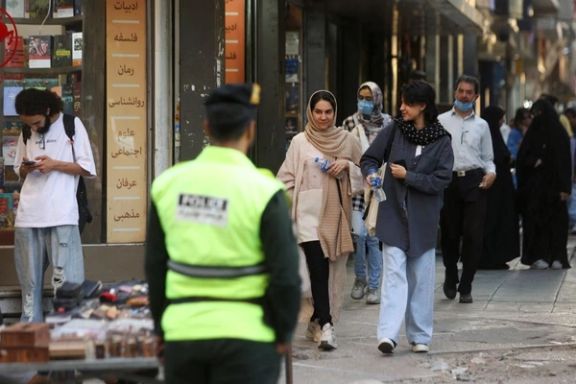
The United States Commission on International Religious Freedom (USCIRF) has called for intensified sanctions against Iranian authorities for the brutal enforcement of hijab.

The United States Commission on International Religious Freedom (USCIRF) has called for intensified sanctions against Iranian authorities for the brutal enforcement of hijab.
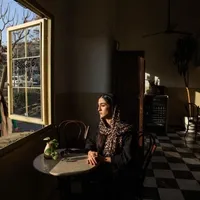
In a Monday statement, it condemned the ongoing crackdown on Iranian women and girls who are at the center of a nationwide defiance of the country’s mandatory hijab laws, policies which the UN has branded 'gender apartheid'.
USCIRF Commissioner Susie Gelman said the US must do more to hold Iran accountable amid mass human rights abuses as Iran continues undeterred in spite of global sanctions. Just last year, record numbers of Iranians were executed as the regime fights for its survival in the biggest uprising since the founding of the Islamic Republic.
“Iranian authorities callously violate women’s religious freedom and target any individual advocating for freedom of religion or belief. The US government has continued to support global efforts to hold Iran accountable for its heinous acts."
"However, USCIRF urges additional sanctions on Iranian government agencies and security officials responsible for particularly severe violations of religious freedom by freezing their assets and barring their entry into the United States,” she stated.
The push for increased sanctions coincides with the Iranian regime’s new Noor initiative, an enforcement campaign of the hijab which has increased the severity and frequency of crackdowns on Iranian women.
The initiative is part of a broader effort to stifle dissent across various sectors, including human rights activists, journalists, and students, with a new wave of arrests reported recently.
In its annual report on Thursday, USCIRF advocated for the US government to support the UN Independent International Fact-Finding Mission on Iran and to document human rights abuses.
Furthermore, the USCIRF highlighted the systematic harassment, arrest, and torture of protesters, including minors, underlining an escalation in the enforcement of hijab laws, surveillance, and covert operations by morality police throughout 2023.

The UN nuclear watchdog chief Rafael Grossi traveled to Iran Monday, hoping to achieve what his agency has been pursuing in vain for more than two decades: transparency and assurances that Tehran’s nuclear program is peaceful.
Grossi met Iran's nuclear chief Mohammad Eslami on Tuesday, one of many meetings in the past 32 months, which have failed to resolve any of the outstanding issues. However, this did not stop Eslami from claiming that the discussions were "positive and productive."
Grossi has been at his job for less than five years, but his organization, the International Atomic Energy Agency (IAEA) has been grappling with the ‘Iran issue’ for more than two decades, ‘raising concerns’, ‘demanding explanations’, ‘assessing compliance’, and ultimately ‘expressing disappointment’.
All the while, the regime in Tehran has been slowly but steadily moving towards nuclear weapons capability. It has never been closer, according to Grossi, who estimates that a ‘bomb’ is only weeks – not months – away, if the Supreme Leader Ali Khamenei chose to ‘go for it.’
Iranian officials, of course, maintain that their nuclear program is entirely peaceful. There may exist a mountain of circumstantial evidence to the contrary, but they would like Grossi and other concerned parties to ignore it all, resting on the claim that Khamenei has issued a religious ruling (or fatwa) against all weapons of mass destruction. Although Khamenei has never officially issued a fatwa, but even if he had, it could be overturned in one sweep without much fuss.

So what are the facts?
The fact is that Iran is now enriching uranium up to 60% purity, according to the IAEA, just one step from the 90% required for making bombs. The fact is that Iran is now in possession of a nuclear stock 27 times the limit that it set in the nuclear deal with US, Britain, China, Russian, Germany, France and the EU in July 2015. And the fact is that virtually every time that the IAEA has found something significant about Iran’s nuclear activities, it has been in spite of, not with the help of, Iran's government.
IAEA experts, including Grossi himself, say such levels of enrichment cannot be justified or explained in the absence of a weapons program. Still, there’s very little Grossi could do to make rulers of Iran think twice, since world powers, including the US, are reluctant to antagonize the regime, refusing even to confront it in the IAEA’s quarterly Board of Governors meetings – the latest of which will commence on 3 June.
"Everyone knows this is a game Iran plays ahead of the Board of Governors meetings, where it routinely over-promises in order to avoid a censure and then underdelivers," analyst Eric Brewer of the Nuclear Threat Initiative told Reuters. "Grossi is well aware of that strategy, too. The key question is whether he can get anything concrete from Iran."
He felt he did that last time he visited Iran – in March 2023. The now-devalued Joint Statement he delivered alongside Iranian officials was supposed to be the first step towards expanded surveillance of Iran’s nuclear facilities. As it turned out, it was the only step, according to Grossi’s last report to IAEA member states.
Grossi’s latest trip to Iran is unlikely to yield much more than the previous one. Some believe that it’s not only futile, but counterproductive.
“Iran has violated its nonproliferation obligations, refused to answer the IAEA’s questions, and is on the threshold of nuclear weapons,” wrote Anthony Ruggiero, Adjunct Senior Fellow at the Foundation for Defense of Democracies on FDD’s website. “The IAEA should not be celebrating Iran’s nuclear program at a conference in Iran.”
Many hold the view that the 2015 deal was the world’s best hope to stop Iran’s slow march towards nuclear weapons capability. Former president Donald Trump abandoned that deal, giving Tehran what it perhaps wanted most: an excuse to roll back cooperation with the IAEA and accelerate its uranium enrichment.
Others argue that the 2015 JCPOA agreement was a poor attempt at stopping Iran's nuclear ambitions. The deal had clear sunset clauses that would expire and Tehran just needed to be patient and wait.
President Joe Biden spent the first half of his term trying to revive the 2015 nuclear deal – and failed. He then turned to chasing an informal agreement, looking the other way as China purchased tens of billions of Iran’s sanctioned oil, and releasing billions in frozen funds, all to encourage the regime in Tehran to limit enrichment, even temporarily.
Iran did indeed slow its production of highly-enriched uranium last summer, only to resume it in Autumn, according to an IAEA report last December.
Last month, following an Israeli air strike against an Iranian air defense system near a major nuclear site in central Iran, a senior IRGC commander warned that the regime could “change” its nuclear doctrine. The statement was read by many as a thinly veiled threat that the Islamic Republic could break ties with IAEA and ‘go for’ nuclear weapons.
No course of action is guaranteed to stop that, according to most diplomats and nuclear experts. That’s the reason, perhaps, that Grossi found himself accepting yet another invitation from Tehran, shaking hands and smiling with officials whose sincerity he may trust even less than the efficacy of his trip.

Canadian MPs met with a delegation of Iranian civil activists at the Canadian parliament on Monday to address the needs of the Iranian diaspora.
Over the course of two days, approximately 25 activists will engage in around 40 separate meetings with the agenda including pressing for assistance for asylum seekers as Iranians continue to flee the oppressive conditions in Iran. Currently, around a quarter of a million Iranians reside in Canada.
The forums will also address the needs of the Association of Families of the Ukrainian Flight PS752 who have still seen no justice for the loss of the 176 lives, including 82 Iranians and 63 Canadians, when the Iranian Revolutionary Guards (IRGC) shot down the plane shortly after it took off near the Imam Khomeini International Airport in January 2020.
The two-day meeting with parliamentarians will also demand the proscription of the IRGC and continue the push of the ongoing investigation into Iran's interference in Canada. In September, Canada launched a public inquiry into the interference of foreign governments, including Iran, in the country’s federal electoral processes and democratic institutions.
While Canada has sanctioned many Iranians and state-affiliated entities, the lobbying group wants to see more sanctions against the Islamic Revolutionary Courts and other judiciary officials for the continued rights abuses being committed against dissidents in Iran, a move sparked by the recent death sentence of rapper Toomaj Salehi.
The meetings with members of the Canadian Senate and House of Commons have been organized by the Iranian Justice Collective in collaboration with other civil bodies and independent activists.

The bickering of political rivals in Iran has brought to light the role of “trust companies” in funneling back proceeds from sanctioned crude oil sales and the corruption involved in such operations.
During the international sanctions of the first half of the 2010s and the US sanctions imposed since 2018, Iran faced restricted access to the international banking system. To circumvent these limitations, it relied on an extensive network of so-called ‘trust companies’ and foreign exchange outlets.
Through these channels, Iran covertly transferred proceeds from its sales of crude oil, petroleum, and petrochemical products worldwide for a range of purposes, including funding its proxies.
The Revolutionary Guards (IRGC) and its global oil laundering network are heavily involved in establishing and operating such clandestine networks.
These complex networks usually operate in the United Arab Emirates, Turkey, Singapore, Hong Kong, Iraq, Malaysia, Cyprus and Malta, as well as some Western countries as indicated by the US Treasury’s sanctions lists.
Last week a controversy over Tehran Mayor Alireza Zakani’s secretly concluded agreement with a Chinese construction firm to import transport and traffic surveillance equipment, worth nearly two billion euros, opened a pandora box that included, among other things, inadvertent references to the use of trust companies.
Under fire from critics who said the Chinese company, Poly Changda Overseas Engineering (PLCD), was ill-equipped for procurement of the equipment needed by the city, the mayor and his supporters argued that the agreement would help funnel back the funds accrued in China.
The funds, they said, could otherwise not be repatriated due to global sanctions that have blocked Iran's access to the international banking system so this was a “golden opportunity” that had to be urgently utilized.
As professional enablers of financial secrecy, trust companies also orchestrate the crude oil sales to overseas buyers while concealing its origins and the involvement of the Iranian government by rebranding products and falsifying documents.
Trust companies registered abroad, which represent the interests of the Iranian government and sanctioned entities, report their ownership by unrelated, nominal parties. They are often given vast legal powers to be able to administer and manage the financial assets of the beneficiary, that is the Iranian government, including accepting payments from buyers of Iranian oil and using it to make purchases on its behalf.
To prove the association with these entities and individuals with the Iranian government is very hard or even impossible. In many cases the trustees are not even Iranian nationals.
The role and influence of these intermediaries declined somewhat after the 2015 JCPOA nuclear deal with the West, which allowed oil revenues to be repatriated through the official banking system.
The situation changed when in 2018 the Trump administration withdrew from the JCPOA and re-imposed oil export sanctions on third parties and Iran’s banking system. Subsequent attempts by the Biden administration to restore the agreement have failed.
Those in favor of a nuclear deal with the United States in Iran have always accused their opponents of profiteering from sanctions-busting operations and dubbed them as “sanctions profiteers”. This is mainly because IRGC circles organize the secret financial networks, which can manipulate oil exports and money laundering to enrich themselves.
Officials of the government of President Ebrahim Raisi often boast of their success in circumventing sanctions that has provided enough foreign currency to the Islamic Republic to survive.
The country is now exporting nearly 1.5m barrels of oil per day most of which goes to China whereas it could barely export 200,000 bpd after the full re-imposition of US sanctions in 2019.
The government’s recent budget bill shows that it is currently outsourcing some of its oil sales to military and religious entities, and real persons representing them, rather than selling it through the National Iranian Oil Company (NIOC) which according to the Iranian Constitution should have a monopoly in oil exports.
Whistle-blowers have revealed some cases in which the trustees of the government amassed the funds being paid into their accounts for some time but later delayed payments to the government, using the funds for their own investments, or embezzling billions of dollars.
During his high-profile corruption trial in 2019, for instance, the former CEO of Mellat and Parsian banks, Ali Divandari, said one such company used to bypass sanctions operating out of the United Arab Emirates had moved around $70b for the bank. He accused several other individuals of embezzlement, one of whom he said had fled Iran with 220m UAE dirhams.
“It was not possible to register our names in trust companies because these companies were foreign and would be exposed if this was done,” he told the court.
The Iranian government is unable to take legal action against the trustees in these circumstances due to the secrecy involved in such operations.
In relation to the latest controversy and rising to Mayor Zakani’s defense, hardliner lawmaker Malek Shariati revealed in a tweet on May 3 that the anti-sanctions committee of the secretariat of the Supreme National Security Council (SNSC) had secretly blessed the deal.
Referring to the Chinese company as a “trust company”, Shariati said in response to one of the critics, former Communications Minister Mohammad-Javad Azari-Jahromi, that the Chinese side of the agreement was to provide access to hard currency for imports of basic goods, medicine and other things including subway cars and buses.
The lawmaker also argued that disclosing the contents of the SNSC’s directive would be “treason”. Zakani himself had earlier protested to the disclosure of the company’s name by a whistle-blower and claimed that the Chinese side may decide to withdraw from the agreement due to the failure of the Iranian side to preserve its anonymity.
Azari-Jahromi’s counterargument was a brusque reference to the case of the oil tycoon Babak Zanjani as a reminder of the massive corruption often involved in such clandestine financial dealings.
Zanjani sold Iran's oil in the oil black markets through a host of “trust companies” and banks in various countries such as the Malaysia-based International Safe Oil (ISO), Dubai-based Sorinet Commercial Trust Bankers (SCT Bankers), and Malaysia-based First Islamic Investment Bank (FIIB) he had established.
He was sentenced to death in 2016 for withholding $2.7bn of the proceeds of oil sales. His request for clemency was approved by Supreme Leader Ali Khamenei last week and his sentence was commuted to twenty years in prison.
Zanjani is likely to be freed soon as he has served almost half of the twenty-year sentence. Authorities claim he “cooperated” in locating his assets abroad, which he had refused to do until now, and the assets were recovered to pay all his debts to the government.

Controversy is swirling around another public park in Iran’s capital as residents express outrage over the municipality's extensive fencing of Laleh Park in central Tehran.
This after Tehran's city council chairman and members disclosed plans for the construction of a cultural center within the park, one of the largest in Tehran, on Sunday.
Images circulating online showing the fenced areas, approximately 3,000 square meters in size, have intensified concerns about construction within this green space.
This plan follows another controversy sparked by plans to construct a mosque in Gheytarieh Park, a park in the north of the city.
Critics denounced that project as either a misuse of public funds or driven by hidden motives, including the expansion of Basij militia bases stationed at the parks.
Speaking to reporters this weekend about Laleh Park, Mehdi Chamran, chairman of the City Council of Tehran, defended the decision despite the area already being fenced off, with no official detailed information about the proposed building released so far.
Chamran cited a need for such projects post-Ramadan and assured that "no trees would be felled," arguing that people should wait for the presentation of the city’s plan.
Tehran City Council member Soudeh Najafi revealed she received informal information from the municipality about plans for a cultural center in the fenced area.
Expressing skepticism about the municipality's claims of having no role and no trees being cut, she questioned, "Does it mean that there are no trees in this large fenced area of about 3,000 meters?"
Echoing Nafafi's concerns, another city council member, Mahdi Eghrarian took to social media to voice his concerns, sharing a video and tagging Tehran's mayor and hardliner politician Alireza Zakani on the platform X, stating: "Noble people of Tehran: A group of colleagues of the council are against the marginal actions of Alireza Zakani and we will not allow the execution of trees in Laleh Park. It is wrong to build a cultural center at the cost of destroying trees and green spaces."
Some experts, including Mohammad Darvish, have also voiced concerns, citing potential illegality in altering the park's use.
The environmental expert told Rouydad24 news website that Tehran's per capita green space in parks and gardens falls short by about 4 square meters compared to the standard.
He argued for Tehran's dire need for green spaces, emphasizing the importance of maintaining current park areas. With only 16 square meters of green space per capita compared to the 25 square meters standard, any reduction in greenery would worsen the city's environmental and mental health challenges.
“This is illegal and under no circumstances should the people of Tehran, Iranian Department of Environment, Natural Resources Organization of Tehran City Council should not allow Tehran Municipality to make such a gross mistake,” Darwish said.
Legally only 3% of the area of parks can be changed for purposes such as toilets and cultural centers, and Laleh Park has reached capacity in this regard, he argued.
While Tehran’s municipality has claimed to have planted 636 hectares of trees within the city over 30 months, Darwish raised doubts about the figure – calling for transparency and verification of the claims.
With recent backing from figures such as Hassan Nowrozi, a member of Iran’s parliamentary legal and judicial commission, advocating for tree removal to facilitate mosque construction in parks like Gheytarieh Park, the future of Laleh Park hangs in uncertainty.

Iran’s health ministry's food and drug administration has announced that if pharmacies fail to enforce mandatory hijab the government will reduce their allocation of medications.
Non-compliant pharmacies risk facing legal consequences, as stated by Heidar Mohammadi during a briefing at the Presidential Communications Center on Monday. However it is not clear if the official was referring to violations by pharmacy staff or customers.
Mohammadi emphasized that the organization was among the pioneers in enforcing the mandatory hijab, leading to the implementation of specific dress code regulations within pharmacies. Describing non-compliance as a "deviation," he noted that "compliance with norms" is crucial for pharmacies to maintain their quota allocations.
“If a pharmacy fails to adhere to the norms, it will initially receive a warning. Should the warning prove ineffective, more severe deterrent measures will be executed. Continuous non-compliance will lead to legal actions against the violators,” Mohammadi added.
The food and drug administration of Iran, which oversees the policies and guidelines for a wide range of products including drugs, food, and medical devices, introduced hijab mandates for female pharmacy staff in August 2021. The mandates, which were reinforced in February 2023, require all female employees to wear a black veils among other dress code rules.
In the wake of the 2022 Woman, Life, Freedom protests triggered by the death of Mahsa Amini in police custody, several pharmacies were sealed across various Iranian cities for failing to comply with the regulations.
The protests highlighted widespread discontent with mandatory hijab laws among other issues related to women's rights in the country.