Iranian Cleric Claims Hubble Telescope Images Fabricated
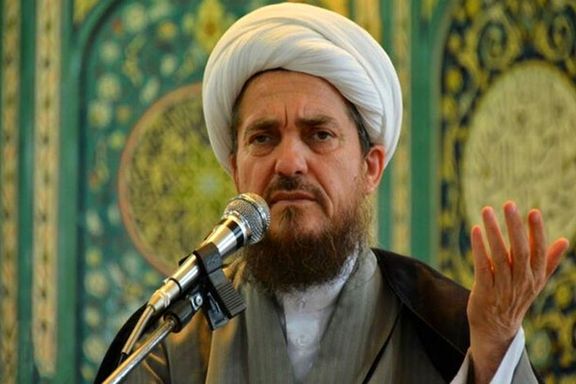
Abbas Tabrizian, a controversial Iranian Shia cleric known for his advocacy of Islamic Medicine, has made headlines again calling NASA’s Hubble Space Telescope a sham.

Abbas Tabrizian, a controversial Iranian Shia cleric known for his advocacy of Islamic Medicine, has made headlines again calling NASA’s Hubble Space Telescope a sham.
According to a post on his Telegram channel, Tabrizian alleged that the images from the iconic telescope are created inside a water basin and said that as the moon is ‘made of water and light’, the presence of soil and rocks is a nonsense.
Tabrizian, who resides in Qom—the religious capital of Iran—has been a polarizing figure in the country, often dismissed as a figure of ridicule by many.
He has authored several books on what he terms Islamic Medicine and operates an Islamic Medicine Center. The center promotes various products under the guise of religious compliance, including Islamic toothbrushes, Islamic soap, and even Islamic ink.
His views on medicine have sparked controversy, particularly his description of immunization as a "colonialist medicine" plot.
He asserts that following Islamic teachings can cure any ailment and that living a "true Islamic lifestyle" eliminates the need for conventional medical treatment. Tabrizian also provides his followers with diagnostic guidance, including advice for "womb preparation" and "treatment of brain debility," as well as prescriptions for medications like "nerve strengthener" and "blood detoxifier."
Tabrizian's notoriety surged during the COVID-19 pandemic when he suggested bizarre and unscientific remedies, such as applying violet oil to the anus as a cure for the virus. His statement in February 2021, claiming that COVID-19 vaccinations cause homosexuality, sparked backlash and mockery.
In January 2020, a video of Tabrizian burning a copy of Harrison's Principles of Internal Medicine went viral, leading to public condemnation by Iranians.

Iraj Fazel, the president of the Iranian Society of Surgeons and former Minister of Health, warned that if the exodus of doctors continues, Iran will be forced to import specialists and send patients abroad.
Fazel attributed the shortage to the economic struggles facing medical students and the government's educational policies. He said the number of students applying for medical degrees is also in decline.
“In the latest rounds, we observed no candidates for vascular surgery, and other specialties also saw similar vacancies,” Fazel explained, painting a grim picture of the future of Iranian medicine.
The sentiment was echoed by Mohammad Raiszadeh, the head of the Iranian Medical Council.
“The rate of job migration among doctors is even higher than the general emigration from the country,”he said.
Hossein Ali Shahriari, head of the parliament’s Health and Medical Commission, reported that around 10,000 Iranian specialists have sought jobs abroad in the past two years, primarily heading to Arab nations. The trend was so concerning that there were official calls in December to ban doctors from migrating abroad.
Compounded by the economic hardships faced by healthcare workers, who earn as little as $200 to $300 a month, the situation has also impacted their mental health. The Iranian Psychiatric Association reported an increase in suicide rates among medical residents, with 16 suicides in the past year alone.

Iranian media and soccer fans suspect that verbal and physical violence against female football fans is deliberately staged by authorities at stadiums to justify re-imposition of the ban on their presence.
Suspicions grew after a recent incident at Tehran’s Azadi Stadium on Wednesday, May 1, during a Champions League match between Sepahan FC and Persepolis FC. During the match male fans of Sepahan hurled sexually charged abuses against female fans of Persepolis and threw stones at them injuring at least one woman.
The incident has provided further ammunition for those opposed to women’s presence at men’s soccer matches who always argue that male football fans swear profanities, so the atmosphere of stadiums is not suitable for women even if they are seated in a separate section.
Sepahan FC-Persepolis FC match at Tehran’s Azadi Stadium Wednesday
“To say that it looks like a scheme to close stadiums to women one by one is underway is neither illusion nor pessimism,” an editorial entitled “Hardliners’ New Scheme To Ban Women’s Entry to Stadiums,Trench by Trench and Stadium by Stadium” in the reformist Etemad newspaper Sunday said.
The article called the alleged scheme a “clever” move to avoid direct defiance of the world’s soccer authority (FIFA) that insists on allowing unrestricted access to stadiums to women in Iran.
Authorities banned one Sepahan fan from attending all matches for ten years for disrespecting women.
“This time, rather than issuing a universal ban on women’s entry to stadiums, every big and small incident that happens during games is to be used as an excuse to ban women from entering that same stadium. FIFA will probably be told that the entry of women into the stadium is not prohibited but has been stopped in a certain stadium "for the time being" for certain reasons and that entry will be allowed in the near future after creation of infrastructures [to accommodate women],” the article added.
In an article entitled “The Suspicious Wednesday At Azadi [Stadium]” on Sunday, the conservative Farhikhtegan also alleged that “certain groups” were behind the incident to put an end to female fans’ presence at men’s soccer matches. “Some incidents have taken place in various stadiums in the past few weeks that seem strange and perhaps suspicious,” Farhikhtegan wrote.
Hardliners have been heavily campaigning against female fans’ presence in the past few weeks. In a statement on April 18, fundamentalist seminarians of Tabriz protested to the province’s governor for authorizing women’s attendance at a match.
“The Yadgar Imam Stadium turned into a parade ground for some unveiled women who violated [the hijab] norms,” they said in their statement.
A week earlier, a female fan’s hugging of a player had caused uproar from hardliners. Hossein Hosseini, the goalkeeper of Esteghlal FC was suspended for embracing the young girl as any physical contact including an embrace with unrelated females is forbidden by Sharia.
The Islamic Republic banned female spectators from football stadiums for over four decades. FIFA tried to convince the authorities for nearly a decade to lift the unwritten ban and threatened to ban Iran from international competitions if it did not comply.
The matter was finally settled in January by the National Security Council which decided that women could be allowed to attend soccer matches in stadiums.
Prior to that authorities had allowed women on a limited scale to watch some matches at the stadium but a few months after hardliner President Ebrahim Raisi took office, the ban was reimposed despite FIFA’s objections.
In March 2022, hundreds of women who had purchased tickets online to watch the World Cup qualifier between the national team and Lebanon in the religious city of Mashhad were refused entry.
The women were tear-gassed, and pepper sprayed by security forces when they insisted that they had the right to watch the game and protested. Several women were reportedly injured in the incident.
Without apologizing for the violence against women, Iran's football federation blamed “ticket forgers” and women who it accused of lying about their gender at the time of the purchase of online tickets.

A top Iranian official said on Wednesday that Tehran has no blocked funds in Iraq, after the Biden administration issued sanction waivers in 2023 and this year to allow Baghdad to release the Iranian funds.
After a cabinet meeting in Tehran, President Ebrahim Raisi’s legal affairs deputy Mohammad Dehghan told reporters, “We do not have blocked assets in Iraq. Sometimes some obstacles are created that are resolved through dialogue.”
Iran is exporting natural gas and electricity to Iraq, but according to US banking sanctions on Tehran since 2018, Baghdad was not able to transfer hard currency payments for its debts. In June 2023 and again earlier this year, the Biden administration issued waivers, allowing Iraq to send the money abroad.
As of June 2023, Iraq owed Iran an estimated $11 billion, which Iraq could only pay by financing Iran’s food and medicine purchases from its domestic markets. Iran always insisted on receiving the hard currency cash.
Iran's deputy Minister of Economy, Ali Fekri also denied that Iran has any funds held back in Iraq. In an interview with ILNA in Tehran on Wednesday, Fekri denied that Iraq still owes $11 billion. “Such a thing does not exist at all, and we have no outstanding claims or issues in Iraq.”
The US administration claims that Iran can use the funds only for buying non-sanctionable goods, but critics argue that money is fungible, and if Iran can spend the Iraqi payments to purchase civilian necessities, it can use other funds for malign and military activities.
The controversy intensified after last year’s Hamas attack on Israel, believed to have been facilitated by Iran’s financial and military assistance.

The US Central Command (CENTCOM) reported that on Monday Iranian-backed Houthi forces launched three uncrewed aerial vehicles (UAVs) from Yemen over the Gulf of Aden.
According to CENTCOM, a coalition ship intercepted one of the drones, US forces took down another, and the third crashed into the Gulf. There were no injuries or damages reported.
“Later, at approximately 5:02 a.m. (Sanaa time) on May 7, Iran-backed Houthi terrorists launched an anti-ship ballistic missile (ASBM) over the Gulf of Aden. There were no injuries or damages reported by US, coalition, or merchant vessels,” added CENTCOM.
Yemen's Houthi attacks in the Red Sea area, which they claim are in support of the Palestinians in Gaza, have disrupted international shipping routes. The Red Sea blockade has led companies to opt for lengthier and costlier routes around southern Africa. The assaults started in mid-November following a call by Iran's Supreme Leader Ali Khamenei for Muslims to blockade Israel to force it into a ceasefire amid the Gaza war.
This latest development comes shortly after CENTCOM forces destroyed three similar unmanned systems last week in a region of Yemen under Houthi control.
In response to the escalated threat from the Houthis, whose attacks have targeted global shipping, not only Israeli linked vessels, the United States, in cooperation with the United Kingdom, has ramped up military operations within Yemen.

Chinese President Xi Jinping and his French counterpart, Emmanuel Macron, have reiterated their commitment to a political resolution of the ongoing Iranian nuclear issue as Iran continues to exceed enrichment limits.
President Xi traveled to France as part of his first European tour in five years. The latest declaration follows a previous joint statement made in April last year, where both countries underscored their dedication to diplomatic solutions regarding Iran's nuclear ambitions, as stated on the official Elysee Palace website.
The statement last year stressed the importance of adhering to United Nations Security Council resolutions without compromising their authority or effectiveness.
Despite assurances from Iranian officials that Tehran’s nuclear program is intended solely for peaceful purposes, nuclear experts largely agree that the levels and quantities of uranium enrichment conducted by Iran since 2021 suggest otherwise.
According to the International Atomic Energy Agency (IAEA), Iran is currently enriching uranium to 60% purity, nearing the 90% threshold typically necessary for producing nuclear weapons. Last month, the IAEA's chief said Iran is 'weeks not months' away from nuclear weapons with Iran's nuclear stockpile now significantly exceeding the limits set by the 2015 nuclear deal with world powers.
Rafael Grossi, the director general of the IAEA is in Tehran this week in a bid to repair strained relations and bolster cooperation between the agency and Iran after a year in which Iran has blocked vast numbers of the agency's inspectors and continued to breach regulations.