Khamenei’s Mouthpiece Calls for Expulsion of IAEA Inspectors
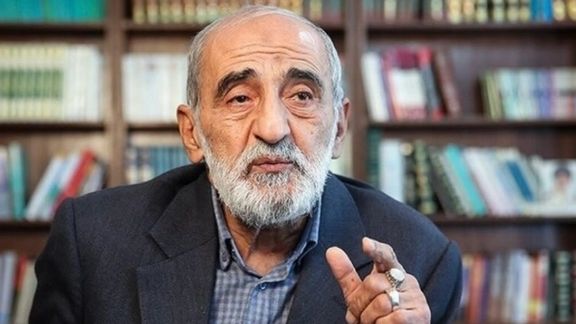
The representative of Supreme Leader Ali Khamenei at the Kayhan newspaper has called for the expulsion of International Atomic Energy Agency (IAEA) inspectors from Iran.

The representative of Supreme Leader Ali Khamenei at the Kayhan newspaper has called for the expulsion of International Atomic Energy Agency (IAEA) inspectors from Iran.
Shariatmadari’s piece pushed for "the suspension of all Iran’s commitments under UN Security Council resolutions, including those concerning the nuclear dossier, and the expulsion of IAEA inspectors." His statement comes amid heightened rhetoric following the IAEA chief’s recent visit to Iran, which seems to have emboldened Iranian officials’ nuclear ambitions.
“This is the undeniable and legal right of our country. Do not trample on this undeniable right,” said Shariatmadari.
Meanwhile, Kamal Kharrazi, the Supreme Leader’s foreign policy advisor and former Iranian foreign minister, threatened a shift to nuclear deterrence if Israel attacks Iran’s nuclear facilities. The statement has been met with minimal reaction from the international community, with the US State Department merely labeling it "irresponsible."
“We have no decision to build a nuclear bomb but should Iran's existence be threatened, there will be no choice but to change our military doctrine,” Kharrazi said.
During his visit, Grossi noted that although there was “no specific timeframe or deadline” for Iran to address its nuclear issues, he underscored the expectation for Iran to act quickly.
The escalatory dialogue follows the February 2024 announcement by former Iranian Atomic Energy Chief, Ali Akbar Salehi, who claimed Iran’s readiness to quickly produce sufficient fissile material for nuclear armament.
Grossi, recently warned that Iran is alarmingly close to achieving nuclear weapons capability, suggesting that the development of a nuclear bomb could be weeks away, should Khamenei decide to proceed.

Several public universities in Iran have stepped up suppression of students by restricting and banning their online activities, subjecting them to harsh penalties.
On Wednesday, K. N. Toosi, one of Iran's top five technological research universities, announced that students are not allowed to join online platforms such as X (formerly known as Twitter), Facebook, and Instagram, already banned in the country and only accessible via vpn services.
Students must also obtain a permit if they plan to join or create groups with over 100 members in messaging services such as Telegram. This is while Telegram channels are one of the main ways student unions share news.
Any unauthorized activity will result in severe punishments, including temporary study bans and, in extreme cases, a complete ban from studying in any university for up to five years, the university said.
The news comes as students have recently shared pictures online of posters they hang on campus with the headline "the war of women" to protest the recent crackdown on women for hijab. Since mid-April, morality police have returned to the streets, using violence to enforce hijab.
Additionally, universities attempt to prevent female students who have "improper" hijab from entering their campuses. In late April, after the morality police banned over 200 students from entering Amir Amirkabir University of Technology in Tehran, many students went on strike.
K. N. Toosi University has cited the disciplinary rules approved at the height of nationwide protests in Iran in 2022, as the source of these newly disclosed measures.
Students in Iran played a prominent role in protests during the Woman, Life, Freedom movement, which was sparked by the death in custody of 22-year-old Mahsa Amini, who died in the custody of morality police for allegedly not wearing her hijab “properly.”
Students joined other protesters in Iran and chanted slogans against the government. It is estimated that over 700 students have been arrested for demonstrating at universities as well as being attacked and beaten by government forces.
Moreover, universities began summoning, suspending, and expelling students, in addition to imposing new rules and requirements.
On Friday, Tarbiat Modares University of Tehran also texted students, warning them to refrain from any online activity on Telegram channels.
Telegram's Amir Kabir News channel, a student-led group that shares university news, described this action as "ridiculous" and posted a screenshot of the text message.
In the text message sent by the Security Cyberspace Monitoring Center of this university, the students were asked to terminate their membership in the "Twitter of Tarbiat Modares Students" Telegram group, as their online activities were monitored.
On Tuesday, the same channel reported about the pressure put on female students by the disciplinary committee at K. N. Toosi University: "Several female students have received a message that they are wearing their hijab inappropriately.”
In another recent case of intensifying restrictions on students' activities, including in cyberspace, the Telegram channel United Students announced that in the past few months, at least five students were charged with social network activities in the disciplinary committee.
According to the student group, the documents in the cases contained screenshots of tweets and photographs of the students.
Several reports indicate that students protesting the violation of their rights have been punished, and one of the latest cases involves the expulsion from the dormitory of a protesting student at Tarbiat Modares University.
According to the Telegram channel Pishro Students, Ahmed Pirouznia, a PhD student at Tarbiat Modares University, has been permanently banned from the dormitory, canteen, financial services and studying for six years by the disciplinary committee.
As recently as last week, the secretary of the union of Iranian university professors warned that the Interior Ministry and the National Security Council now control Iran's universities.
“Unfortunately, there has been a lot of government interference at the universities. The power of the Ministry of Science has diminished, and it seems the Interior Ministry gives orders to universities,” said Karen Abrinia in an interview with the relatively independent news website Khabaronline.

A bill aimed at further tightening internet control in Iran has been reintroduced in the Iranian parliament in a last minute bid to deepen social repression as the current parliament comes to its season's end.
The ILNA news agency reported that the 'Legislation to Protect Cyberspace Users' aims to intensify internet restrictions and with the new parliament set to officially commence on May 27, there is a final push to enact the bill before the changeover.
Over the past two decades, Iran has routinely blocked websites and social media applications, though many citizens circumvent the restrictions using VPNs (Virtual Private Networks) and other tools.

Legal expert Kambiz Norouzi said the new measures will not succeed, as people find alternative ways to get online. "Fighting realities only leads to failure," he said.
Mohammad Javad Azari Jahromi, Minister of Communications during Hassan Rouhani's administration, said the move is a desperate last minute attempt to push through the repressive measures. "The planners have lost hope for passing the plan in the next parliament considering its composition. With the current performance, they believe there is a high chance that the government will be a one-term administration, therefore they want to pass a law to permanently remove the internet development mandate from the control of administrations."
A recent report by the Tehran E-commerce Association has pointed fingers directly at President Ebrahim Raisi, alleging his role in the ongoing internet censorship efforts. The report criticizes the direct involvement of all three branches of government in censorship processes, particularly highlighting the President's responsibility due to his appointment power over the committee that filters websites.
"Iran's internet situation is akin to that of poor and underdeveloped countries, but the main difference is that in Iran's case, these conditions are self-inflicted," the report added.
However, hardliner Tehran representative Mostafa Mirsalim expressed his frustrations about the stalling of the legislation in parliament, citing the "lawlessness" online as causing significant societal damage.
The resurgence of interest in tightening internet restrictions traces back to July 2021 when Ali Khamenei, Iran's supreme leader, criticized the "unrestrained" nature of cyberspace.
Critics argue that the approval of the plan will mark a shift towards a more security-oriented approach by the regime towards the internet, potentially leading to increased censorship and restricted access.
Following the nationwide protests that erupted in mid-September 2022 after Mahsa Amini was killed in a morality police detention center, several popular internet services, including Instagram and WhatsApp were blocked by the government.
Iran not only blocks a wide range of websites including major social media platforms and international services like Google Play but also implements a reverse filtering system known as Iran Access. This system restricts users outside Iran from accessing numerous Iranian sites, including those of government bodies, banks, and financial institutions. The measure aims to lower the risk of foreign hacking attacks which frequently target government organizations.

Iran’s strict enforcement of hijab has reached a new level of intensity, with reports emerging of invasive surveillance and increased police presence at Tehran International Book Fair to ensure hijab compliance.
The recent 35th Tehran International Book Fair, taking place from 8 to 18 May, has become a battleground for Iran’s intensified crackdown on unveiled women.
This crackdown comes as part of Iran’s “Noor Plan” initiative introduced in April to clampdown on unveiled women, implemented across the country at the directive of Iran’s Supreme Leader, Ali Khamenei.
The presence of hijab enforcement officers and the use of drones equipped with cameras to identify women not adhering to the dress code has sparked outrage among attendees.
Quadcopters, fitted with cameras, were deployed to identify women not adhering to hijab regulations, eyewitnesses told Iranwire on Friday. These drones captured images of the individuals and transmitted their locations, facilitating direct confrontations by the hijab enforcers.
Reports suggest that women who tried to enter the Book Fair without wearing hijabs were refused entry, with security forces positioned at each entrance.
Fair attendees' reports on the platform X further illustrate the atmosphere at the fair, with one user describing the overwhelming presence of police officers, and billboards promoting hijab compliance.
Another user expressed her dismay with her experience of attending the fair reporting heavy police presence, tents, vans, guards, and security personnel “to ensure that any woman without hijab can be arrested like a terrorist.”
Another user recounted being turned away from the entrance due to her "trousers being too short" highlighting the stringent enforcement of dress codes.
Furthermore, criticisms were directed at the content and atmosphere of the fair, with complaints about high book prices, and the dominance of religious and state-affiliated publications.
Many Iranians mocked the juxtaposition of banners at the fair promoting “quotes” from literary figures like Leo Tolstoy with messages advocating for chastity and hijab. In last year’s bookfair, another Tolstoy quote was promoted, which was identified as a fake one by researchers.
This year’s Tolstoy banner quoted the Russian writer, stating:
“In the West, women are given freedom, but they still see it as a means of pleasure. The reason for calling the status of women slavery in the West is nothing but men's desire to use women as a means of pleasure.”
This also appears to be a fake quote, as searches did not turn up any Tolstoy statement to this effect.

One X user mocked the banner and stated that if Tolstoy knew that years after his death he would appear on a banner at a Tehran book fair, “not for the promotion of his literary works but to justify the abuse of women, he would die once again in his grave”
Another billboard quoted Wendy Shalit, an American conservative writer, ironically with an unveiled image of the author stating:
“There is a general rule nowadays, the more respect you want, the more modest you should dress.”
Meanwhile, in 2020 Shalit stated on X that she “does not support the Iranian government and that she was “keenly aware of their mistreatment & abuse of women” further adding that they are using her name “to spread lies” against Iranian journalist women’s rights activist Masih Alinejad.

Additionally, another billboard quoted Will Durant, agnostic American author and historian stating:
“Women realized that flirting is a source of taunt and humiliation and they taught this to their daughters that chastity makes a woman strong.”
Moreover, in a bizarre display, photos emerged of books being pierced and arranged into a makeshift arch, presumably as a decorative element for the fair. However, the unconventional art piece was met with criticism and ultimately relegated to a corner.

Former Iranian Parliament Speaker Gholam Ali Haddad Adel has called for the establishment of a ministry dedicated to promoting population growth as Iranian families witness reduced birth rates and the exodus out of Iran continues.
Haddad Adel, closely associated with Supreme Leader Ali Khamenei, pointed to global trends where countries have set up similar ministries to preemptively tackle potential demographic crisis.
"Focusing on the youth of our population is crucial. We must address this before it's too late," he stated.
He cited South Korea as an example, saying despite its economic progress, it is facing severe population growth challenges and has consequently decided to create a ministry to address population growth issues.
Haddad Adel also commented on socio-economic disparities affecting birth rates, stating that "those who are poorer have more children, while the wealthier have fewer, largely due to lower marriage rates and fertility."
His call comes in response to Iran’s troubling demographic trends. Despite government expenditure, with at least 250 trillion rials ($500m) a year allocated to enhance birth rates, the population growth has continued to decline.
Iran's population growth rate has plummeted to 0.6 percent from 1.23 percent two years ago, a sharp decline from the 4.21 percent recorded in 1984, just five years after the Islamic Revolution. With Iran’s population having doubled from 40 million in the early 1980s to 84 million now, Supreme Leader Khamenei has underscored the necessity of increasing Iran's population to at least 150 million by 2050 to avoid an aged demographic profile.
In line with Khamenei's directives, the Iranian parliament passed the Supporting Family and Regenerating Population Act in March 2021, which includes measures to encourage marriage and childbearing, alongside penalties for promoting birth control. The law also saw the prohibition of government health services from providing family planning services and scrapped routine prenatal screening for genetic diseases or disabilities, though without a total ban.
An exodus of professionals, including the health sector, is also deepening the population crisis amid Iran's economic disaster. According to a recent article in the Tehran newspaper Arman Melli, during the past year about 30,000 personnel of different medical professions, including doctors, nurses, and paramedical technicians, have applied for Certificates of Good Standing with intent to immigrate to Oman. Many more have gone abroad to the likes of the UAE and Canada.

At least 23 women have been killed in Iran by their husbands or male relatives since late March this year according to a report on Saturday by Iran's 'reformist' Etemad news outlet.
Last year Etemad had reported that in a period of two and a half months, from late March 2023 to the beginning of June 2023, at least 10 women were killed by their male relatives as a result of domestic violence or so-called 'honor' based violence.
This means the number of such murders in Iran has more than doubled this year.
Tahereh Taleghani an Islamic expert told Etemad that she considered the lack of laws to protect women in Iran as one of the reasons for these murders.
Taleghani added that "a society that is suffering from various crises, problems, and issues, unconsciously goes towards tension and violence. This tension and violence extend into families."
Highlighting the ongoing crises faced by women and girls in Iran, she underscored the insecurity they experience both in the streets and at home. She emphasized: "Violence at home leaves women feeling helpless, as neither the law nor the men in their families respect their rights."
Details of the murders and motives
Critics have highlighted the Islamic legal system, along with Iran's deeply entrenched patriarchal culture and traditions, as factors contributing to the rise of such killings. Others in the past have attributed the cause of 'honor killings' to fanatical beliefs.
Etemad cited the various motives behind these murders as being dissatisfaction with the way of cooking, marriage proposals being declined, refusal to have sex, requests for divorce, family disputes, and honor-based violence.
Among the women killed in, a 21-year-old girl was killed by her father on 29 March in one of the border villages of Abadan city with an ‘honor' motive.
In Ahvaz, a 27-year-old woman was stabbed to death by her brothers on 7 April, also with ‘honor’ motive. The brothers of this young woman killed her in front of her husband and injured him too as he tried to intervene.
On 4 May, a man in Mashhad killed his wife based on ‘honor' motives and injured the wife's 16-year-old sister and brother with knife stabs. The victim's sister is still in a coma.
On 1 May, a young woman named Shahin Govili died of severe injuries in Kausar Hospital after her husband set her on fire.
On 3 May, an Afghan woman who was six months pregnant was killed by her husband in Mashhad for being "disobedient" according to her husband's confession.
In Tabriz, one of the daughters of the family, fearing that her father would kill her in addition to killing her mother, attempted suicide twice.
In one of the murders in Tehran, the father of the family killed his own son along with his wife.
Prevalence of ‘honor-based’ killings
A number of the murders reported were associated with honor-based motives. Historically some provinces in Iran have had a higher number of such forms of violence against women.
During her interview with Etemad Taleghani pointed out the higher prevalence of honor-based killings in certain provinces in comparison to other provinces and attributed this to a lack of modernization in those regions.
In the cases of honor-based killings, Taleghani stated that in Iran, one of the causes of honor killings is attributed to child marriage, further adding that “honor killings occur due to some inefficient laws or the lack of laws protecting women”.
“The female representatives in the parliament should also understand that some of the country's laws are oppressive to women and should be amended," she added.
According to Article 630 of the Islamic Penal Code, if a man catches his wife in the act of consensual adultery, he is allowed to kill both parties without facing publishment. This law only applies to women. Additionally, the killing of a child by the child's father or paternal grandfather is exempt from the Qesas (retribution) sentence.
In this regard, Taleghani argued that “we do not have a word called ‘honor’ in the Quran" and that Iran's Islamic Penal Code is “ineffective and does not work to solve today's problems".
According to the human rights organization, Hengaw, "at least 50 cases of femicide have been recorded in various cities of Iran since the beginning of 2024, with 10 of these cases, equivalent to 20%, being classified as honor" killings".
Moreover, Human Rights Activists News Agency (HRANA) reported 40 cases of honor killing, in the Iranian calendar year that started in mid-March 2023.
Iranian Kurdish Women’s Rights Organization (IKWRO) based in the UK asserts that it is imperative to understand the distinct characteristics of ‘honor’ based abuse and “not to conflate it with other forms of violence against women and girls, such as domestic abuse” warning that this can “dangerously undermine the ability to safeguard those at risk".