Iran’s Ex-FM Blames US for Raisi Chopper Crash
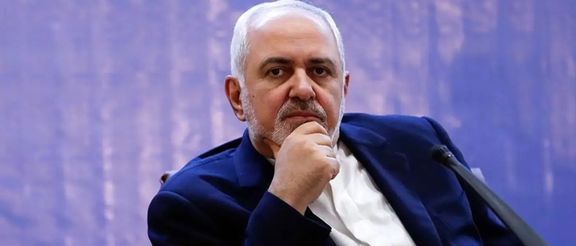
Mohammad Javad Zarif, former Foreign Minister of Iran, blamed American sanctions on aviation parts for the crash of a chopper carrying President Ebrahim Raisi.

Mohammad Javad Zarif, former Foreign Minister of Iran, blamed American sanctions on aviation parts for the crash of a chopper carrying President Ebrahim Raisi.
In an interview with state TV, he said the sanctions compromise Iran's access to modern aviation facilities, thus implicating the US in the Sunday chopper crash in northwestern Iran killing Ebrahim Raisi and his entourage including Foreign Minister Hossein Amir-Abdollahian.
"One of the culprits behind yesterday’s tragedy is the United States, because of its sanctions that bar Iran from procuring essential aviation parts," Zarif asserted during the interview.
His statement comes amid the ongoing geopolitical tension where Iran has increasingly aligned itself with Russia and China, raising questions about its continued reliance on outdated American helicopters like the Bell 212.
The Bell 212, a civilian adaptation of the Vietnam War-era UH-1N "Twin Huey," crashed in heavy fog while traversing mountainous terrain. Developed in the late 1960s for the Canadian military and introduced in 1971, this model was designed to offer enhanced carrying capacity with its dual turboshaft engines.
However, in spite of sanctions, Iran continues to manufacture and supply its own armed forces and proxies around the region, in addition to Russia, with state of the art missiles and drones. Armed groups like Hezbollah in Lebanon, the Houthis in Yemen and Iran’s own Quds Forces boast long range high-tech weaponry.

Questions are arising regarding who would immediately succeed Iran's President Ebrahim Raisi who was killed in a helicopter crash on Sunday.
According to Article 131 of Iran's constitution, in the event of the death or incapacitation of the president, specific procedures are set in motion to ensure interim continuity of leadership of the current administration until a new election is held.
As per the constitutional provision, if the president is unable to fulfill their duties, the first vice president assumes the role of president. Currently, Mohammad Mokhber holds the position of first vice president in Iran.
However, all constitutional provisions legally and in practice hinge on the approval of the Supreme Leader, who can determine if Mokhber can simply assume the duties of President by himself, or a council should be appointed, which would include the first vice president.
Theoretically, Ali Khamenei can also decide that having just one year left to the next presidential elections, perhaps no quick election is needed and either Mokhber or a council can finish Raisi's four-year term and hold elections on schedule in June 2025.
Mokhber, a close confidant of Supreme Leader Ayatollah Ali Khamenei, holds a prominent position in Iran's economic landscape as the former leader of the Execution of Imam Khomeini's Order (EIKO).
This conglomerate wields significant influence across various sectors of the Iranian economy, including energy, telecommunications, and financial services, with its operations overseen by the Office of the Supreme Leader of Iran.
As first vice president, Mokhber was also Raisi's point man on economic matters, and shares the blame for chaos in the past 33 months, as the Iranian currency lost 50% of its value. He also stands accused of corruption in the labyrinth of rumors and public opinion, shaped by tidbits of leaks within a controlled media environment.
Article 131, however, outlines the formation of a Council tasked with arranging for a new presidential election within a maximum period of 50 days.
This Council comprises the speaker of parliament, the chief justice, and the first deputy of the President.
The Council's responsibility is to ensure a smooth transition of power and the continuation of governance during this interim period.
In 2021, the US Treasury Department imposed sanctions on Mokhber and EIKO, citing their involvement in human rights violations and the suppression of dissent within Iran.
"EIKO has systematically violated the rights of dissidents by confiscating land and property from opponents of the regime, including political opponents, religious minorities, and exiled Iranians, while, according to its leader Mohammad Mokhber, being tasked by the Supreme Leader to implement a 'resistance economy,'" emphasized the US Treasury in a statement issued in January 2021.
Mokhber's continued prominence within Iran's economic and political spheres and current appointment as first vice-president reflects his loyalty to the Supreme Leader's agenda.
This possibly solidifies his position as a useful figure in Iran's political landscape, potentially positioning him as the next interim Iranian President depending on Supreme Leader Khamenei's decision.

The news of Raisi’s helicopter crash and death has caused speculation about the question of presidential succession and its implications for the Islamic Republic of Iran.
Even before it became clear that President Ebrahim Raisi was killed in a helicopter crash, Iran’s Supreme Leader, Ali Khamenei, had already assured the public that they should have no fear of any disruptions in the administration of the state.
To those unacquainted with the intrigues and intricacies of the Iranian political system, such debates may come across as illustrious of a vibrant political system where rival factions vie for power. The plentiful memes and jokes about Raisi’s death by many Iranians inside and outside Iranian is most revealing of the dire legitimacy crisis that has afflicted the regime.
Per articles, 60, 113, and 114-142 of the Constitution of the Islamic Republic of Iran (amended in 1989), the Iranian president technically holds “the second most powerful” office after the Supreme Leader. The president also chairs the State’s National Security Council (176) and is an ex-officio member of the Expediency (Exigency) Council (article 177).
However, the importance of the office of the president should not be exaggerated. As detailed in a seminal survey of the Iranian presidency (The Quest for Authority in Iran: A History of The Presidency from Revolution to Rouhani) by St Andrews University’s Siavush Ranjbar-Daemi, the Islamic Republic of Iran’s presidents have traditionally and constitutionally served at the pleasure of the Supreme Leader and that of Parliament (the Majles), which itself has historically deferred to “the Sultanistic Edicts” (Ahkam-i Sultani) of the Supreme Leader.
The undisputed paramount powers of the state reside in the office of the Supreme Leader, as detailed under article 108. The Supreme Leader enjoys plenipotentiary powers, both spiritual and temporal, over all branches of government (the executive, the legislative, and the judiciary), that are substantially comparable to those of the popes of Rome and Muslim Caliphs of the Middle Ages. Indeed, Supreme Leader Khamenei has ensured that his all too powerful station progressively eclipsed the office of the president and reduced it to that of chief administrator of the state.
Yet, what set Raisi apart from his predecessors, including Khamenei, who himself held the office of the president from 1981 until the death of Khomeini in 1989, is that he epitomized the ideal “executive servant” to the Supreme Leader. His political profile and stature set him apart from all his predecessors.
Since he came Supreme Leader in 1989, Khamenei oversaw the constitutional amendments that eliminated the office of the prime minister, turned the president into a chief executive mandarin, and enshrined “the preponderant” powers of the Supreme Leader into the letter of the constitution. From 1989 to 2021, all presidents of the Islamic Republic of various reformist, moderate, and ultraconservative factions (Hashemi Rafsanjani, Khatami, Ahmadinejad, and Rouhani) squabbled, openly or privately, with Khamenei, and sought to assert their office as “directly elected officials”, but to no avail.
Raisi was an alumni of the faith-based Shia secondary school: the Haqqani School. He along with many of his classmates became revolutionary judges, members of the assembly of experts (responsible for the appointment and dismissal of the supreme leader), appointed representatives of the supreme leader in the praetorian IRGC and the security-intelligence apparatus of the Islamic Republic over the past forty years. They are a most zealous cohort of revolutionary clerics with unequivocal allegiance to the supreme leader. Raisi’s presidency afforded Khamenei the trophy subservient servant he had always wished for.
He rose through the ranks in the Judiciary from a town prosecutor to a provincial prosecutor. In 1988. Raisi presided over the summary secret retrials of thousands of political prisoners who were already imprisoned in the dungeons of the Islamic Republic. In collaboration with zealous prosecutors like Hamid Nouri, Raisi was the hanging judge who sent thousands of political prisoners to the gallows.
Raisi’s curriculum vitae was one of a careerist revolutionary cleric. After Khomeini’s death, Raisi became the Chief Prosecutor for Tehran. Khamenei saw in Raisi a protégé whom he could reward for his loyalty, and thus appointed him head of the State General Inspectorate in 1994. Between 2004 to 2014, Raisi served as the Deputy of the Chief Justice of the State (the Judiciary Chief’s deputy). In 2014-2015, he served as the State’s Attorney General. Between 2015 and 2019, Raisi served as the Chief Trustee of Astan-e Quds, the wealthiest multibillion dollar, religious trust in Iran.
In 2016, Raisi was elected as a member of the Assembly of Experts, and since 2023 he has been the deputy speaker of the Experts Assembly. In 2019, Khamenei appointed Raisi as Judiciary Chief. He proved his loyalty to Khamenei by orchestrating “anti-corruption” trials of former high-ranking judiciary officials, and even though secondary and tertiary officials were prosecuted, the true target of the trials were the powerful Larijani brothers, who had at some point held the Speakership of the parliament as well as the office of the Judiciary Chief.
Finally, in 2021, Raisi was elected president with the helping hand of Khamenei’s appointed Guardian Council. The Guardian Council disqualified many “otherwise qualified” candidates from running, paving the way for Raisi to become president in a low-turnout election which was boycotted by most Iranians.
In view of Raisi’s membership of the Haqqani revolutionary clerics’ circle, and his overtures to the IRGC top brass at the time he was at the helm of the judiciary, his election to presidency in 2021 was an auspicious confirmation to many that he indeed was Khamenei’s heir apparent. Conversely, and against the backdrop of some clerical speculations and objections, some have argued that Khamenei’s son, Mojtaba, is his heir apparent. In a regime like that of Iran’s, a supreme leader’s legitimacy largely hinges on the power of the military and the security and intelligence apparatus as well as the ruling ideological elite.
Currently, the IRGC (praetorian guard of the regime) controls much of the country’s economic infrastructure as well as large swathes of the private sector and has a strong grip over the Iranian armed proxies in the region. Mojtaba is revered by the security and intelligence establishment, the IRGC top brass, and many deputies in the Assembly of Experts, and has been chiefly in charge of running the supremely powerful “Office of the Supreme Leader” for his father for almost two decades. Such debates about succession now that Raisi is dead are moot. As to the fate of the presidency, article 131 of the constitution stipulates that:
In case of death, dismissal, resignation, absence, or illness lasting longer than two months of the President, or when his term in office has ended and a new president has not been elected due to some impediments, or similar other circumstances, his first deputy shall assume, with the approval of the Leader, the powers, and functions of the President. The Council, consisting of the Speaker of the Islamic Consultative Assembly, head of the judicial power, and the first deputy of the President, is obliged to arrange for a new President to be elected within a maximum period of fifty days. In case of death of the first deputy to the President, or other matters which prevent him to perform his duties, or when the President does not have a first deputy, the Leader shall appoint another person in his place.
What makes the present situation most dire is that if Khamenei dies before a new president has been elected, the country may potentially plunge into nationwide unrest. If the 2022-2023 nationwide “Woman, Life, Freedom” uprising is any guide, and in view of Iran’s ongoing decrepit economic situation that has pushed over sixty percent of Iranians into poverty, the regime already grapples with an endemic crisis of legitimacy. Thus, it is Khamenei’s demise that can potentially trigger a manifold crisis.
In sum, the prime directive, and the categorical imperative, that guides the members of the Assembly of Experts, and the entire ruling echelon of the Islamic Republic is: “the Survival of the Regime.” Under a scenario that the regime is at once devoid of both the supreme leader and the president, the Assembly of Experts may indeed swiftly elect Seyyed Mojtaba Khamenei who enjoys the unquestionable loyalty of the IRGC top brass and the security and intelligence establishment. If so, Seyyed Mojtaba Khamenei’s leadership shall usher in an era of theocratic dynasty in the Islamic Republic following the same model of early medieval Shia imamate dynastic succession.

Ebrahim Raisi, effectively appointed by Iran’s Supreme Leader as president in June 2021, was killed in a helicopter crash on May 19, exactly 63 years and five months after his birth in northeastern Iran.
This is the story of a young member of the Death Committee that ordered the execution of around 5,000 political prisoners serving their prison terms in 1988. He loyally served the clerical regime for 45 years and finally was elected President after Ali Khamenei’s men barred most serious rivals from running as candidates.
"The greatest crime in the Islamic Republic since the beginning of the revolution was committed by you. In the future, you will be remembered among the criminals of history." These were the words that Ayatollah Hossein Ali Montazeri, the dismissed deputy of the Islamic Republic’s first Supreme Leader, Ruhollah Khomeini, said to a group of five that later became known as the Death Committee on August 15, 1988. One of them was the 28-year-old deputy prosecutor of Tehran, Ebrahim Raisi. The eighth president of the Islamic Republic was killed in an aviation accident taking many secrets to the grave with him. Ebrahim Raisi was born in December 1959 in Mashhad and completed his primary education at Javadiyeh Elementary School in this city, after which he enrolled in a seminary and never received a standard education.

He entered the seminary in Qom in 1975 and began his clerical studies at Boroujerdi School, supervised by Morteza Pasandideh, the elder brother of Ruhollah Khomeini. In fact, when the Islamic Republic was established in 1979, Raisi was 19 years old and four years into his clerical studies. At 20 years old, with only five years of clerical study, he was appointed as a deputy prosecutor in Karaj. Islamic law needed clerical prosecutors and judges whose main education was knowing the Sharia.
In 1982, at the age of 22, he became the prosecutor of Hamedan and married Jamileh Alamolhoda, daughter of Ahmad Alamolhoda, the current Friday prayer Imam of Mashhad. At 25, in 1984, Raisi was appointed deputy head of the Revolutionary Court and, in 1988, as deputy prosecutor of Tehran, he joined the Death Committee, which directed the execution of thousands between August and September 1988.

After Khomeini's death, from 1989 to 1993, he served as Tehran's first prosecutor under Ali Khamenei's leadership. From 1993 to 2003, he was the head of the General Inspection Organization. From 2003 to 2013, under the judiciary chiefs Mahmoud Hashemi Shahroudi and Sadeq Larijani, he served as the first deputy head of the judiciary. For a short period from 2014 to 2015, he was the Attorney General of Iran. From 2015 to 2019, Ali Khamenei appointed him as the custodian of Astan Quds Razavi, an important and wealthy Shiite shrine. During this period, rumors about his potential succession to Khamenei intensified, fueled by images of his meetings with IRGC commanders and a special envoy from Putin.
Raisi attempted to change his appearance, wearing a cloak instead of his traditional robe, and engaged with people in Khorasan, hoping to win the 2017 presidential election. However, he was defeated by Hassan Rouhani, receiving about 16 million votes compared to Rouhani's 24 million. Following Sadeq Larijani's controversial departure from the judiciary, Raisi, after failing to secure the presidency, was appointed head of the judiciary by Ali Khamenei.

Images of senior IRGC commanders meeting with Ebrahim Raisi at Astan Quds fueled speculation about his potential succession after Khamenei. During his tenure, he conducted high-profile trials, such as that of Akbar Tabari, the former deputy of Sadeq Larijani, building an anti-corruption image while sidelining Larijani, who was considered a potential successor to Khamenei. During this time, he held another significant position. From June 2012 to September 2021, he was the prosecutor of the Special Clerical Court, an institution established by Ruhollah Khomeini and operating outside the judiciary, directly overseen by the Supreme Leader, dealing with clerical infringements.
In 2021, Raisi entered the presidential race again, winning one of the lowest-turnout elections in the history of the Islamic Republic. His presidency was marked by severe economic recession and inflation, as sanctions imposed by former US President Donald Trump and worsening mismanagement and corruption ravaged the economy.
His weak and often blundering speeches cast a shadow over his aspirations for succession. Three years into his presidency, economic indicators reached unprecedented lows.
The most intense wave of protests, strikes, and the revolutionary uprising of 2022 occurred during his tenure.
On May 19, 2024, at the age of 63, Ebrahim Raisi died without realizing his ultimate dream of becoming the Supreme Leader.
He will be remembered by Iranians for his many blunders that revealed his lack of education, and his role in the Death Committee -- overseeing the deaths of thousands of innocent lives.

Iranians around the world are celebrating the disappearance and possible death of Iran President Ebrahim Raisi's after the helicopter carrying him and his foreign minister crashed on Sunday.
There is still no confirmation on any deaths, but many Iranians inside Iran and in the diaspora are rejoicing at the possibility.
While State media halted all of its regular programming to show prayers being held for Raisi across the country, a different narrative emerged on social media, and in the homes of Iranians across the globe.
Iran International has obtained footage of celebratory fireworks in the skies of Iran.
"Let's celebrate the good news of Ebrahim Raisi’s chopper crash," said one Tehran resident heard in a video sent to Iran International.
More videos obtained by Iran International show Iranians watching and cheering on fireworks set off reportedly in response to the news.
There are reports that the Islamic Revolutionary Guard Corps (IRGC) is increasing its presence in response to prevent an uprising.
"Aside from being one of the most conservative presidents Iran has ever seen, Raisi rose to prominence in the Islamic Republic through the brutal judicial system where he was a member of the notorious ‘Panel of Death,’ sending thousands of political prisoners to the gallows. There’s a reason why he earned the moniker ‘Butcher of Tehran," said Jonathan Harounoff, Israel and Iran journalist and analyst.
Harounoff told Iran International news that Raisi has become synonymous with everything opponents to the Islamic Republic inside Iran and abroad despise.
"Widespread bureaucratic corruption, woeful economic mismanagement, sky-high inflation, high unemployment. Not to mention tight censorship and severe punishment or death for political dissent," said Harounoff.
Women's rights activist Masih Alinejad declared today as "World Helicopter Day" and said this is "the only crash in history where everyone is worried if someone survived."
Videos circulating on the platform X also show Iranians inside Iran dancing to the news outlets coverage of Raisi's crash, and potential demise.
And Iranians in the diaspora are rejoicing too. In London, people came out to show their happiness, throwing a dance party in front of the embassy of the Islamic Republic of Iran.
“Some Iranians online were posting mockingly that while Raisi’s whereabouts and condition remain unknown, conspiracy theories are likely to proliferate, especially concerning whether or not the Mossad was behind this. Even though this was more likely than not a crash related to inclement weather," said Harounoff.
Harounoff said there's one joke that exploded and gave new meaning to not to believe everything you read.
One particular joke that eventually got out of hand was that the helicopter pilot’s was actually a Mossad agent named Eli Copter - and Hamas’ main Telegram page went on to cite that as a fact.
The victims of the Iranian government are also taking to social media to express their joy.
The daughters of anti-regime protestor Minoo Majidi, a 62- year-old mother, who was shot by security forces with 167 shotgun pellets in Kermanshah and died during the Woman-Life- Freedom uprisings in 2022, posted themselves having a drink and toasting to the news.
Two Iranian women, who were brutally attacked by Iran's security agents during nationwide uprisings in 2022, posted a video on X together celebrating the potential end of a man who enforced discriminatory laws that led to their torture.
Mersedeh Shahinkar was at a protest with her mom in Tehran, triggered by the death of Mahsa Jina Amini, when a security agent shot a projectile that took out her eye.
The other woman in the video is Sima Moradbeigi. Morabeigi, a young mother, lost her mobility in her right arm after being shot by an Iranian revolutionary guard in the arm during Woman-Life-Freedom protests.
Near the end of the video, Mersedeh says, “we are returning [to Iran] with these suitcases.”

Reaction is pouring in from around the world, after reports of a helicopter carrying Iranian President Ebrahim Raisi crashing near Iran’s border with Azerbaijan.
With Raisi’s fate unknown, world leaders, opponents of the Islamic Republic as well as its apologists are rampant with posts on social media.
Armenia’s Ministry of Foreign Affairs tweeted their concerns for Raisi and other Iranian officials on that flight and reaffirmed their commitment as a close ally of Iran.
The Republic of Azerbaijan tweeted their alarm over the news, and declared themselves a friendly nation of the Islamic Republic, willing to provide any necessary support.
The President of Azerbaijan, IIham Aliyev, posted on X, that he was “profoundly troubled by the news” and sent his “prayers” to Raisi and all involved. Raisi was returning to Iran from a visit to the Azerbaijani border where he met with Aliyev, and they cut the ribbon on a major dam along their shared border.
The official X account of the President of Pakistan also expressed their “heartfelt prayers & good wishes for the well-being & safety of President Raisi."
India's Prime Minister Narendra Modi posted to X his deep concern over reports of the helicopter crash and said he prays for the Iranian president and his entourage.
The US State department reportedly told Margaret Brennan of CBS News that it has “no further comment at this time.”
While government loyalists expressed prayers and hopes for Raisi’s well-being, people against the Islamic Republic expressed joy at the unconfirmed news of his potential death.
Prominent human rights activist Masih Alinejad posted to X a video of the daughters of Minoo Majidi, a 62-year-old woman who was killed by the government security forces during the September 2022 Woman-Life-Freedom uprisings in Iran, as having a toast to the news.
Alinjead also declared today as "Happy World Helicopter Day," and wrote that "this is the only crash in history where everyone is worried if someone survived."
Many social media users critical of the Iranian regime, posted videos of fireworks in Iran, reportedly celebrating the news.
Human rights advocate Nazanin Boniadi wrote that Iranians are celebrating this as “karmic justice,” as he was responsible for the execution of thousands of political prisoners in 1988, and is widely known as the “butcher of Tehran.”
A popular anchor with Israeli media, Emily Schrader with Ynet news, tweeted that the incident involving Iran's President could lead to another massive uprising in Iran.