Calls for Accountability in Wake of Iranian President Death
Following the helicopter crash that killed Iran's President Ebrahim Raisi, Iranian groups have called for accountability for his crimes.
Following the helicopter crash that killed Iran's President Ebrahim Raisi, Iranian groups have called for accountability for his crimes.
Hengaw Human Rights Organization, a Kurdish advocacy group, has urged other human rights organizations and civil society groups in Iran to persist in "registering and documenting the various aspects of the crimes of the Islamic Republic” including Raisi, dubbed The Butcher of Tehran.
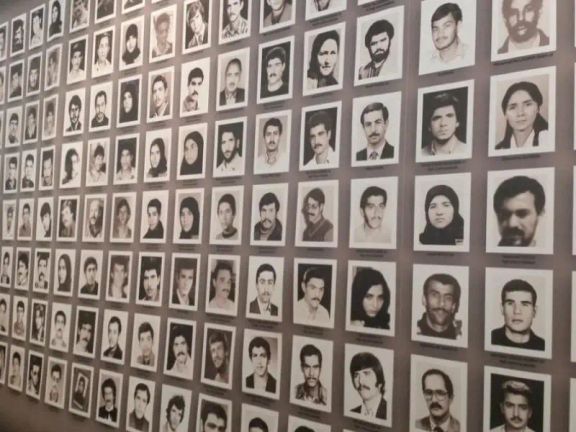
In 1984, at the age of 25, Raisi became the deputy head of the Revolutionary Court. By 1988, serving as the deputy prosecutor of Tehran, he was a member of the "Death Committee," which was responsible for the mass execution of thousands of dissidents between August and September of that year.
Since the uprising of 2022, over 500 protesters were murdered under his watch and over 800 more executed last year alone in a record wave of killings.
Echoing Hengaw’s sentiments, the Coordinating Council of Iranian Teacher Trade Associations also commented on Raisi's death, expressing hope that those responsible for child killings, particularly in Iran, would "face the consequences of their actions in a public and fair trial."
The council criticized Raisi's tenure as head of state, highlighting severe setbacks in the education sector and severe human rights abuses under his rule.

Amid controversial international messages of condolences for the death of Iranian President Ebrahim Raisi, former US Vice President Mike Pence says “the world is a safer place” without him.
In a post on X on Monday, Pence wrote, “Iranian President Ebrahim Raisi is dead and the world is a safer place. Raisi was responsible for the murder of thousands of Iranian political prisoners he ordered executed in 1988, 1,500 Iranians slaughtered in the 2019 protests and the years of terrorist violence sown by Iran across the region that claimed American lives.”
The US government, NATO, the UN Security Council and some European entities and politicians expressed condolences to the Iranian people for Raisi death in a helicopter crash on Sunday, while many Iranians were celebrating the demise of a man they call “The Butcher of Tehran.” Raisi was a member of a “Death Committee” in 1988 that oversaw the summary executions of thousands of political prisoners serving prison terms.
Other Western politicians condemned the expression of sympathy highlighting Raisi life-long role in persecuting dissidents and involvement in thousands of executions.
Pence in his message also said, “My hope and prayer is that Raisi’s death will give the people of Iran a chance to claim their birthright of freedom and end Iran’s long reign of terror.”

Following the news of President Ebrahim Raisi and Foreign Minister Hossein Amir-Abdollahian's deaths, messages of condolence quickly poured in from some predictable corner of the world.
Among them were Turkish President Recep Tayyip Erdogan, Chinese leader Xi Jinping, and Hungarian Prime Minister Viktor Orbán.
Backlash, however, erupted over the reactions from several EU officials and a NATO spokesperson.
On Monday, NATO spokesperson Farah Dakhlallah said that the Western defense alliance sends its "condolences to the people of Iran for the death of President Raisi, Foreign Minister Amir-Abdollahian, and others who perished in the helicopter crash."
Iranians, who have widely celebrated the deaths of the senior government officials, swiftly reacted with outrage to the statements of condolence.
“I am flabbergasted by this tweet. This is completely inappropriate on so many levels.,” former NATO Assistant Secretary General Marshall S. Billingslea said on X.
In their responses, Iranians have been quick to highlight Raisi’s role in the 1988 massacre of thousands of political prisoners, the regime’s backing of terror groups – and the use of Shahed drones to terrorize Ukrainian civilians.
Outrage from Iranians only intensified when the President of the EU Council and the EU’s top diplomat both tweeted their “condolences.”
“The EU expresses its sincere condolences for the death of President Raisi and Foreign Minister Abdollahian, as well as other members of their delegation and crew in a helicopter accident. Our thoughts go to the families,” EU Council President Charles Michel wrote.
A statement posted by the EU’s Foreign Policy Chief Josep Borrell reads: “The EU expresses its sympathies to the families of all the victims and to the Iranian citizens affected.”
MEPs and European MPs have since weighed in, stating their opposition to the comments made by the EU’s leadership.
Conservative UK parliamentarian Alicia Kearns said she found herself “bemused” by the expression of condolences for “a President whose regime has committed femicide” and “transnational repression and attempted assassinations across Europe.”
“It is an absolute mystery to me how the EU Commission can show #EU solidarity with Iran. What a miserable hashtag, what a mockery of the brave fighters for human rights in Iran. I expect an explanation for this,” German politician and defense veteran Marie-Agnes Strack-Zimmermann wrote.
Before news of Raisi’s death was confirmed, controversy first erupted when the European commissioner for crisis management posted on X, confirming the provision of satellite assistance to Iranian rescuers with and ending his post with “#EUSolidarity.”
According to Politico, a Commission official said that while the tweet was consistent with the EU’s guidelines on humanitarian aid, they personally found the expression of solidarity “odd.”
In response to the condemnation, Commission spokesperson Balazs Ujvari wrote: “Neither the EU Civil Protection Mechanism nor the Copernicus satellite system are driven by political considerations. Any country can request assistance of humanitarian or civilian nature through these channels, and the [Commission] does its best to help.”
Flemish MEP Assita Kanko, with the right-wing European Conservatives and Reformers group said she was “shocked” that Lenarčič posted a message on behalf of the EU proposing to activate EU solidarity to save the Iranian president.
“The people in Iran are literally and figuratively strangled by the regime… European solidarity? With whom. And with whose money?,” she wrote.

As Iran watchers and analysts rush to predict the next chapter of the Islamic Republic’s rule – many takes are emerging following the deadly helicopter crash that took the life of the country’s President.
Ebrahim Raisi, along with the country’s Foreign Minister Hossein Amir-Abdollahian, was traveling in a helicopter, when it crashed in a remote mountainous area in northwest Iran, killing all onboard.
The country's 85-year-old Supreme Leader, Ali Khamenei, faces the loss of not just two senior officials – but also his protégé.
Raisi, a hardline fundamentalist notorious for his involvement in vast crimes against humanity in Iran, was one of the two key figures considered to succeed Khamenei as the country’s ruler.
Now, Iran faces a dual succession crisis, as the Wall Street Journal’s Sune Engel Rasmussen argues. Khamenei must not only appoint a new President but also find someone who could ultimately succeed him as the country’s Supreme Leader.
Beyond the orchestrated presidential election that is set to take place in 50 days, the next weeks and months will likely be closely watched by observers.
Iran analyst and expert Karim Sadjadpour argued that Raisi’s death would create a succession crisis in the country.
The cleric, a close confidante of the Supreme Leader, was reportedly groomed for years to one day take up Khamenei’s position.
The only other name that has prominently been floated to succeed as the country's ruler—albeit unofficially—is Khamenei’s own son, Mojtaba.
His anointment, Sadjadpour said, could “trigger popular unrest.”
“His lack of legitimacy and popularity means he’d be entirely reliant on the Revolutionary Guards to maintain order. This could hasten the regime's transition to military rule or its potential collapse,” Sadjadpour wrote.
Complicating Mojtaba’s potential selection is the notion of hereditary rule—something the first Supreme Leader reportedly staunchly opposed.
But, citing an Iranian source close to Khamenei’s office, Reuters reported that “Khamenei has indicated opposition to his son's candidacy because he does not want to see any slide back towards a system of hereditary rule in a country where the US-backed monarchy was overthrown in 1979.”
Ali Ansari, however, in an interview before Raisi’s death was firm in his view that Khamenei would keep things in the family.
“It’s either Mojtaba or his brother Mustafa. People say this is impossible, it’s a republic, it’s a revolutionary regime, but to be honest, hereditary autocracy is not unusual in Iranian history. The anomaly is the republic,” the professor of Middle East history at St Andrews University said.
With Mojtaba, author Afshon Ostovar contends, Khamenei would name a successor whose positions closely align with his own – and that of the IRGC.
Mojtaba, who does not hold an official position, is a mid-ranking cleric. He has largely remained behind the scenes, though he has reportedly played an influential role as a close aide to his father.
“Indeed, the moments that have given Mojtaba the most public exposure, such as the crackdown on protesters in 2009, have also revealed his close affiliation with the security forces,” Ostovar writes.
Alireza Arafi, 67, an influential cleric and member of the Assembly of Experts, the group responsible for selecting a new supreme leader, has also on occasion been floated as a possibility for succeeding Khamenei.
That looming transition, after Khamenei dies, would mark only the second change of Supreme Leader since the inception of the Islamic Republic in 1979.
The news of Raisi’s death, and what it will mean for Khamenei’s succession, comes amid increased tension over Tehran’s support for terrorism in the Middle East and a domestic legitimacy crisis, as discontent with the regime has solidified over recent years.
“After many years of internal and domestic unrest from opposition groups and dissident groups, this is a delicate moment for [Iran],” Sky's Middle East correspondent Alistair Bunkall said in one of his recent reports.
Though nationwide protests have peaked and receded over the decades, the regime’s grip on power and its use of violence to stifle and kill dissent have prevented the formation of any official and organized opposition group inside the country.
“It’s self-evident that if a liberal alternative to the Islamic Republic fails to organize itself, what will follow the Islamic Republic will be an illiberal outcome, much like post-Soviet Russia,” Sadjadpour warned in a recent interview.
Ostovar notes that no matter how much the Iranian regime prepares for the eventuality of Khamenei’s death, his departure can easily spark a crisis.
Ultimately, the decision on who will succeed Khamenei will likely need the approval of the powerful IRGC, which has helped Khamenei stay in power for nearly 35 years and has a vested interest in maintaining its tight control over the country.

Iranians flooded social media platforms with jokes and speculations about the circumstances and the cause of the air-crash that killed President Ebrahim Raisi, many pointing fingers at Mojtaba Khamenei, the Supreme Leader’s son.
Mojtaba is widely seen as the frontrunner to succeed his 85-year old father. The premise of, and the main theme running through, most such posts is that Raisi could have been a contender in the unofficial, unspoken race to become the next ruler of the Islamic Republic, and therefore had to be ‘removed.’
The word ‘removed’ (or ‘erased’) is, in fact, quite telling, as it suggests a human intention and action instead of an accidental air crash.
There is, of course, no conclusive evidence—nor even much circumstantial evidence, so soon after the incident—to prove the assertion that Raisi’s death wasn’t an accident or that Mojtaba had any involvement. But evidence is the purview of courts of law; it is an integral part of due process. Neither exists in Iran today, nor does public trust in the state and its institutions. What does exist in abundance, however, are rumors, hearsay, and conspiracy theories.
“In Iran's conspiratorial political culture few will believe Raisi’s death was accidental,” Karim Sadjadpour of Carnegie Endowment for Peace posted on X Sunday night, hours before it Raisi’s death was confirmed.
And there was no need to wait, as far as ordinary Iranians are concerned. There was no need, no point, in waiting for official announcements, because “they never tell the truth anyway,” according to Amirhossein, a 35-year electrician turned activist after losing a close relative when the IRGC shot down a Ukrainian aircraft minutes after it took off from Tehran’s international airport.
“They lied then, they lie now. They’re actually incapable of telling the truth,” Amirhossein added. “Many hours after [Raisi’s] death was confirmed, they published pictures of the crash scene that were found out to be from another crash a few years back. Why would you do that if you didn’t think that real photos of the crash site could contain clues that would help experts establish this wasn’t an accident?”
This has indeed been a recurring question by many Iranians on social media: why publish photos of another accident if you have nothing to hide?
Not everybody is that serious, of course. Many Iranians' preferred reaction is to ‘mock and walk’, not attaching enough value to official statements to try and disprove or discredit them. The regime, as far as these Iranians are concerned, has been completely found out. Suffice it to remind the crowd of what they all know, have a laugh, and move on.
As far as the Iranian regime is concerned, the jokes are perhaps hardest to suppress –and perhaps most impactful. They spread around like wildfire and reduce the officials, from the Supreme Leader down to local apparatchiks, to burnt sticks, devoid of all authority –and clothes.

There are several theories as to what may have led to the chopper crash that killed Iran's President Ebrahim Raisi and other officials in the mountainous terrain near Azerbaijan.
From humorous "conspiracy theories" about an alleged Israeli Mossad agent named "Eli Kopter" planning the crash, to the more plausible theory of inclement weather, there is no shortage of speculation.
According to Iran experts, one narrative emerging from Iranian regime insiders seems to play over and over again like a broken record: blame the US.
Iran's former foreign minister, Mohammad Javad Zarif, who was part of the administration responsible for the shooting down of Ukraine International airlines PS752 in January 2020, said the US sanctions on Iranian aviation were one of the main factors behind the crash.
In a phone interview with state TV on Monday, Zarif said the sanctions prevent Iran from having good aviation facilities.
"One of the culprits behind yesterday’s tragedy is the United States, because of its sanctions that bar Iran from procuring essential aviation parts," said Zarif during the interview.
Hossein Mousavian, a controversial Princeton University academic, who is being investigating by the US Congress for his pro-Iran regime activities echoed Zarif's sentiments on the platform X.
Patrick Clawson, a Research Counselor at The Washington Institute said he's not surprised regime loyalists would blame the US.
"It certainly fits with Iranian style, right? I've seen. Iranians are prone to believe in conspiracy theories, personal life, business life, and political life," said Clawson.
Clawson said since the year 2000, there have been at 20 deadly crashes in Iran, killing more than 1700 people, and that figure is not including the shooting down of PS752.
"Out of those 20 crashes. Well, eight of them were US made planes. And nine of them Russian made planes or planes with license to the Russians. And three of them European planes. So there weren't any sanctions on the Russian?
"20 crashes ...give me a break, folks. Your aircraft safety record is just dreadful," Clawson told Iran International.
Blaming US sanctions, he said, is a joke.
"Who the heck takes off in a helicopter, which is a hard thing to fly in in foggy weather and rain and night approaching with the president on board? Give me a break," he added.
Defense and security analyst Farzin Nadimi, a Senior Fellow with the Washington Institute, specializing in Iranian military affairs, said "this is a clear case of choice. To fly or not to fly."
Nadimi said "they chose to fly on US made helicopter that was built 30 or 40 years ago. Yes that was their choice."
While he acknowledges that the helicopter was under US sanctions, and that Iran would likely have to get spare parts using methods that are not recommended by the original manufacturer, he also said they had Russian made helicopters at their disposal.
"They shouldn't have any problems with that," said Nadimi referring to the Russian made helicopters.
The crash, he said, is the responsibility of the Iranian government, not the country that sanctioned them.
Senior fellow with the Atlantic Council and curator of The Iranist newsletter Holly Dagres said the onus is on the Islamic Republic.
"The upper echelons of the clerical establishment are always looking to find a way to blame the United States and Israel for their failings and mishaps. In this latest iteration, former Foreign Minister Mohammad Javad Zarif is blaming US sanctions on why the helicopter crashed when it was flying in adverse weather conditions," said Dagres.
Dagres, an Iranian-American, said this has more to do with Islamic Republic's mismanagement than it does with US sanctions.
"This is just another classic example of the Islamic Republic’s systemic mismanagement. Who decided to put the Iranian president and foreign minister on a helicopter without visibility due to dense fog?, " said Dagres.
She said the Iranian regime has no issues investing in drones and missiles even in the face of crippling sanctions.
"It’s well-known that the Islamic Republic has an outdated air fleet that uses parts purchased on the black market due to US sanctions. But this is the same government that believes in a “resistance economy” and prides itself on domestically made drones and missiles, which begs the question of why it hasn’t invested in aviation," said Dagres.
Could Zarif's messaging be an attempt to impress Iran's Supreme leader Ali Khamenei in a time of political turmoil?
Dagres said "Zarif talks like he wants to run for president."
The helicopter in question was a US Bell chopper made in the 1970s and purchased by Iran during the monarchy. The government confiscated it from an oil company in the 1980s and used it for official business, probably without making sure that it had the necessary parts to keep it in a safe flying condition.
The Islamic government also has close ties with Russia and China and could have acquired newer helicopters with a steady stream of spare parts.